
Two weeks ago, almost nobody outside Silicon Valley defence circles had heard of Perennial Autonomy. The California startup, with barely three years of operating history, was a small dot on the counter-drone industry map.
On May 18, the Pentagon handed it half a billion dollars.
The $500 million indefinite-delivery, indefinite-quantity (IDIQ) contract is one of the largest single counter-drone awards the Department of War has ever made to a non-incumbent company. And it tells you exactly how panicked the Pentagon now is about cheap drone attacks.
Quick Facts
Company: Perennial Autonomy (California-based, founded 2023)
Contract: $500 million IDIQ ceiling, announced 18 May 2026
Mission: Counter-drone defensive systems for US military bases
Products: Merops interceptors, Bumblebee quadcopters, Hornet mid-range strike drones
Context: Sharp year-on-year rise in drone incursions over US bases
Notable: One of the largest counter-drone awards to a non-incumbent vendor
What Perennial Actually Builds
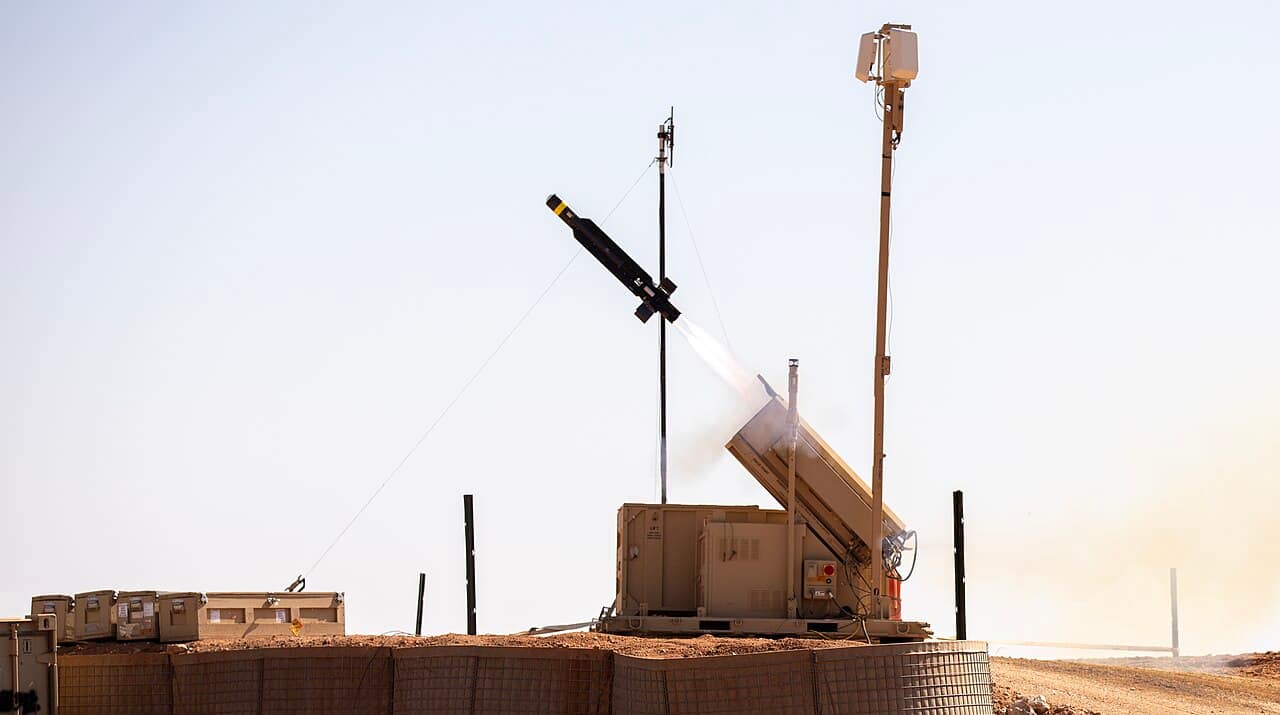
Perennial Autonomy’s product line is built around the lesson the US military learned the hard way during Operation Epic Fury: you cannot defend a forward base with a single layered air-defence system. You need many small, cheap, autonomous interceptors that swarm in response to a swarm.
The contract covers three of Perennial’s systems:
- Merops — small interceptor drones designed to hunt and physically kinetic-kill incoming Group 1 and Group 2 UAVs.
- Bumblebee — autonomous quadcopters that swarm to overwhelm enemy drone formations.
- Hornet — a mid-range strike drone that can both intercept and conduct stand-off strikes against ground-launch sites.
The IDIQ structure means Perennial doesn’t get $500 million tomorrow — but the Pentagon has cleared the ceiling for that amount over the contract’s life. The first delivery orders are expected to follow quickly.
Why a Startup, Not Lockheed
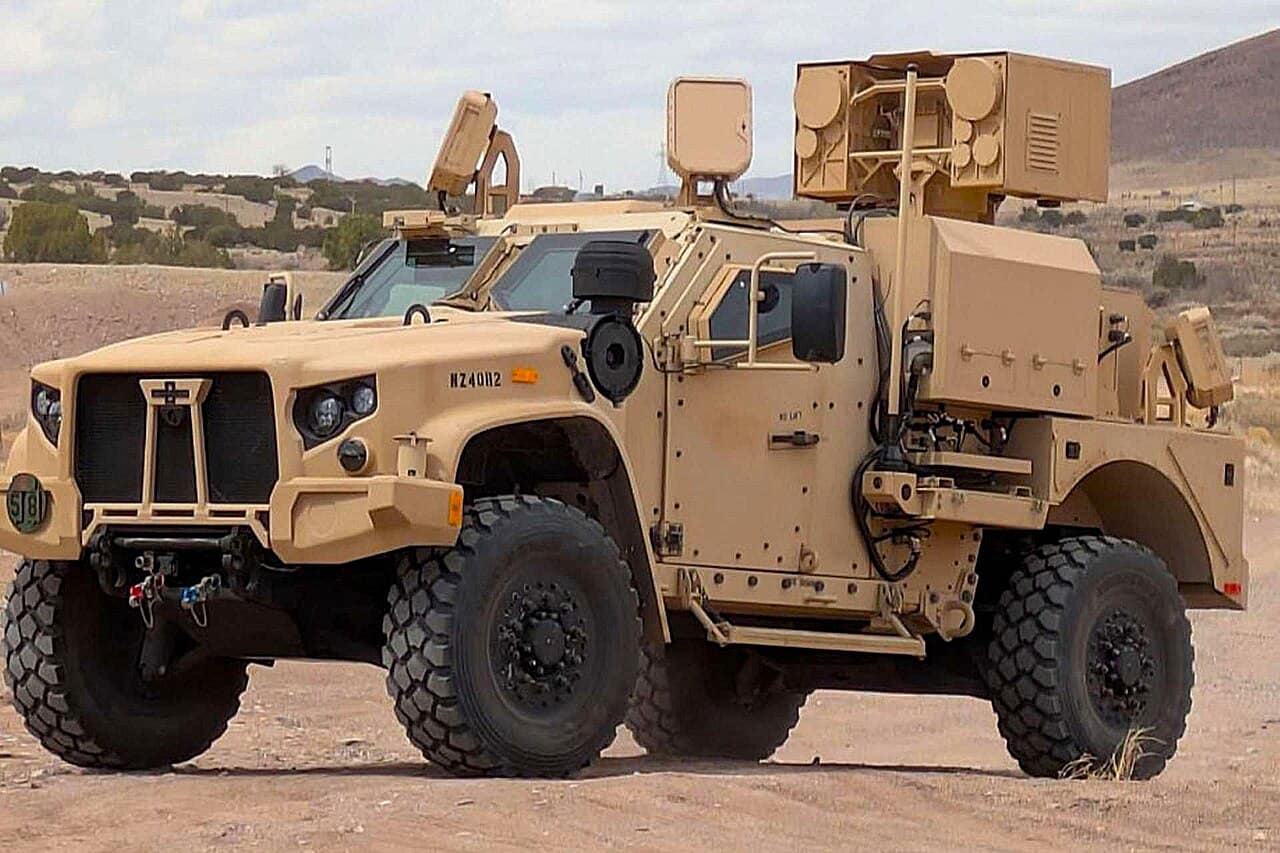
The Perennial award is a deliberate slap at the traditional defence primes. Lockheed Martin, Northrop Grumman, Raytheon and Boeing all bid into the counter-drone space — usually with systems that cost $500,000 to $2 million per interceptor. Perennial’s pitch is that the threat is too cheap to be solved with that kind of unit cost.
The startup’s interceptors are reportedly produced for around $10,000–$30,000 each, depending on configuration. That puts Perennial in the same cost-per-shot category as the threat it is supposed to defeat, which is exactly where the Pentagon has been telling industry to get to for two years.

The contract is structured so that production can be rapidly scaled and sustained in response to evolving threats — a deliberate shift away from the traditional exquisite-interceptor model.
The Bigger Bet
This is the second major counter-drone announcement this month. The Department of War is rapidly building a portfolio of small, fast-iterating drone defence vendors, recognising that no single technology — kinetic, electronic warfare, directed energy — will solve the problem alone.
Perennial’s $500 million is also a signal to Silicon Valley: the era of dual-use, software-heavy defence startups being able to win at primes’ scale is here. Anduril paved the road. Shield AI followed. Perennial is the latest, and it almost certainly will not be the last. Expect at least two more nine-figure counter-drone announcements before the August recess.
What it means on the ground, in Eastern Europe or the Middle East or the South China Sea, is harder to model. The threat curve is moving as fast as the procurement curve, and the side that adapts faster wins. Right now the Pentagon is at least running.
Sources: Department of War announcement; Air Force Times; Defense Daily; Defense News.

 English
0 Comments