Midnight. The radar screens at Poland’s Operational Command light up like a switchboard. Across the border in Ukraine, the sky fills with roughly 600 Russian drones and 90 missiles — cruise missiles, ballistic missiles, every category of aerial threat Moscow can throw. It is the largest combined strike since 7 September, and the shockwaves are heading west.
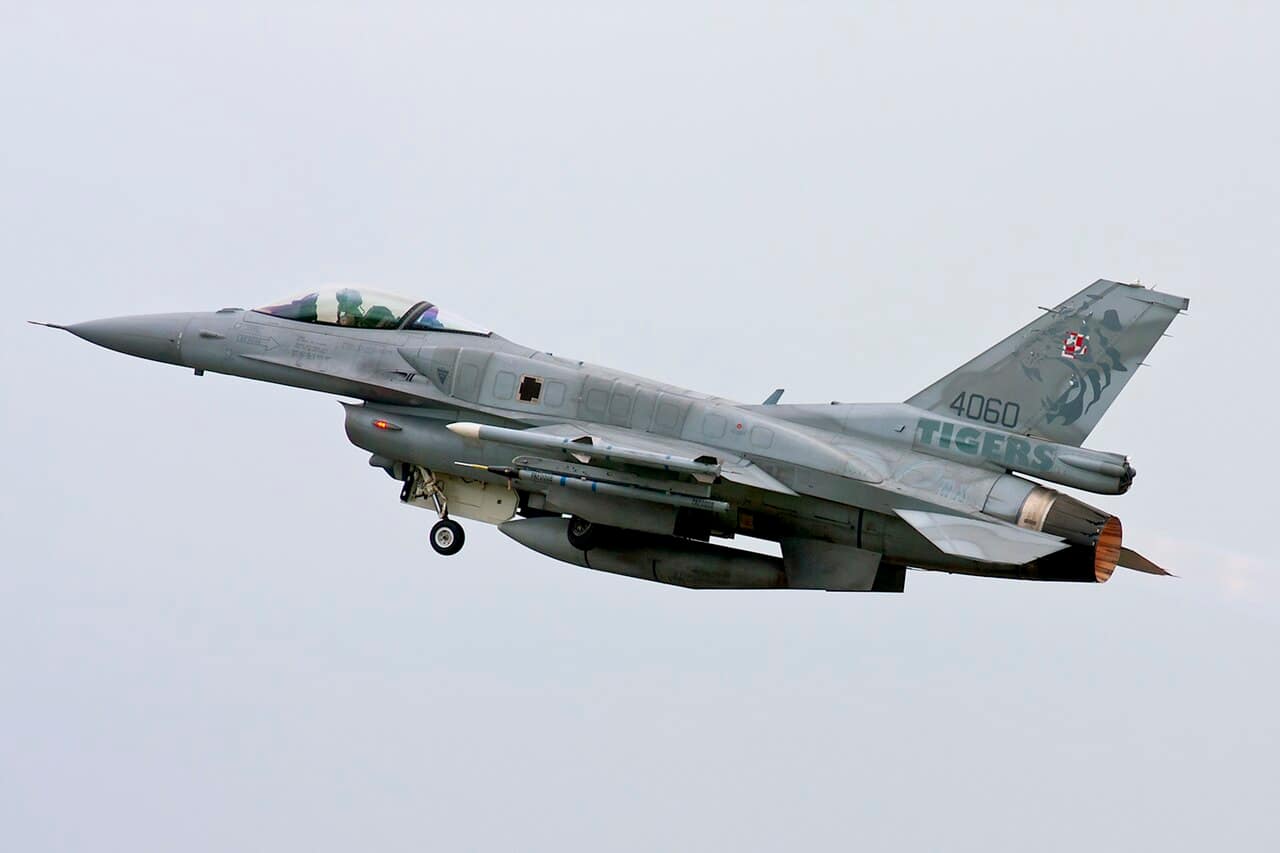
Within minutes, the order goes out. Poland scrambles every available F-16 fighter jet. NATO airborne early warning aircraft surge into the sky. Ground-based Patriot batteries and radar stations along the 535-kilometre Polish-Ukrainian border snap to maximum alert. Airspace over southeastern Poland is temporarily restricted. For the next several hours, the Polish Armed Forces operate at a tempo not seen since the full-scale invasion began in February 2022.
No Russian weapon crosses into Polish territory. But the margin of safety is measured in kilometres, not hundreds of kilometres — and every officer on that border knows it.
Quick Facts
Date: Overnight 23–24 May 2026
Russian strike package: approximately 600 drones + 90 missiles (cruise and ballistic)
Ukrainian intercepts: 549 drones and 55 missiles shot down or suppressed
Impacts: 16 missiles and 51 drones struck 54 locations across Ukraine
Poland’s response: F-16s scrambled, NATO AWACS airborne, ground-based air defences at maximum alert
Airspace restricted: Parts of southeastern Polish airspace temporarily closed
Scale: Largest combined Russian strike on Ukraine since 7 September
Roughly 600 Drones, 90 Missiles, One Night
Ukraine’s Air Force confirmed the staggering scale of the assault on the morning of 24 May. Russia launched a saturation campaign targeting deep-theatre infrastructure and civilian population centres across 16 locations. Ukrainian defenders performed remarkably under the onslaught, downing or suppressing the vast majority of the approximately 600 drones and intercepting more than half of the 90 missiles launched.
But 16 missiles and 51 drones got through. In a country where every impact means destroyed homes, shattered hospitals, and severed power grids, sixteen missiles are sixteen too many.
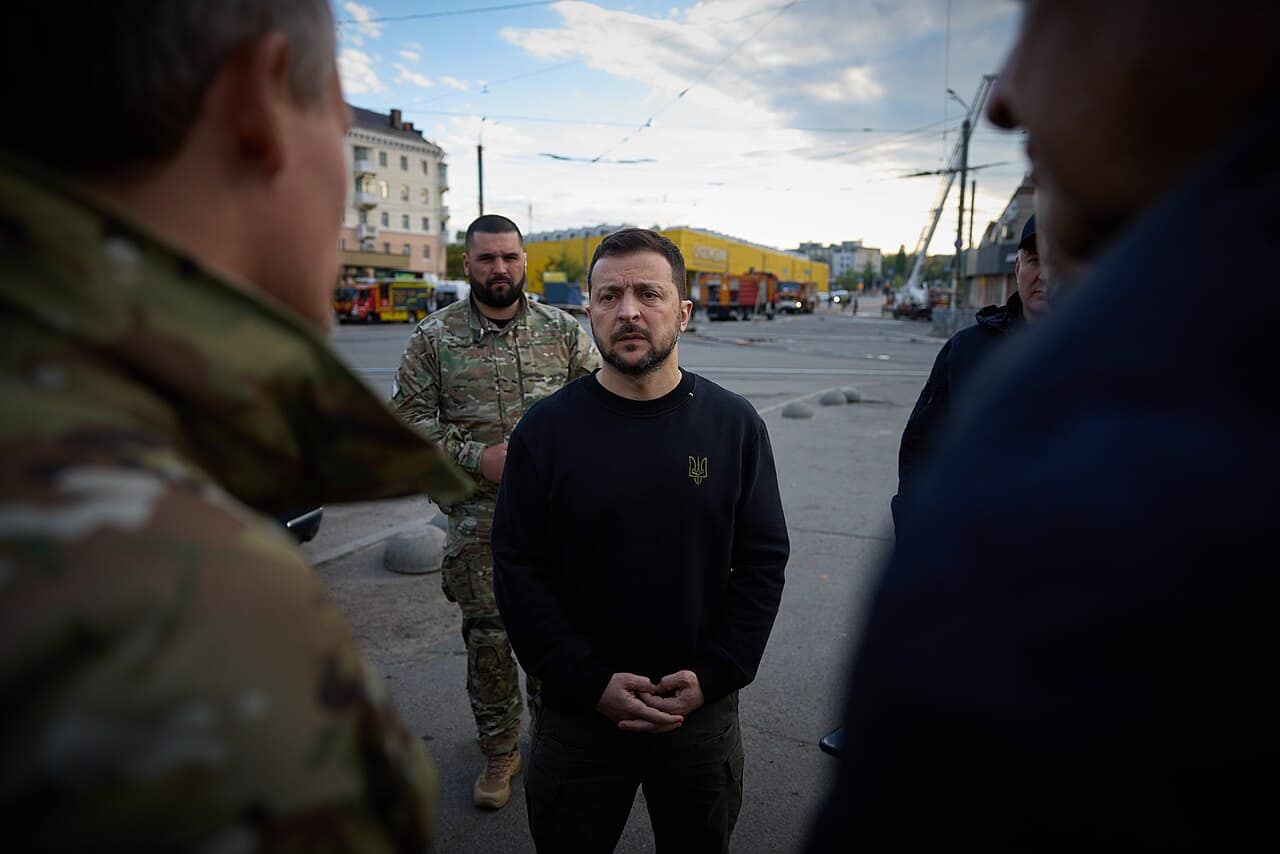
Aftermath of a Russian missile strike on Dnipro — the kind of devastation that triggers air defence scrambles along NATO’s eastern border. President Zelenskyy / Wikimedia Commons
The bombardment followed a pattern that Polish air defence commanders have become grimly familiar with: cruise missiles launched from strategic bombers over the Caspian Sea, Kalibr missiles from Black Sea warships, Iskander ballistic missiles from Belarus, and the ever-present Shahed-series drones flying low and slow from the east. The threat axis that brings these weapons closest to NATO territory runs directly along Poland’s southeastern border — the Lublin-Rzeszów corridor.
Poland’s Iron Wall
The Polish response was immediate and comprehensive. The Operational Command scrambled pairs of F-16C Block 52+ fighters from bases including Krzesiny and Łask. A NATO Boeing E-3 Sentry airborne early warning aircraft provided the high-altitude radar picture, vectoring the Polish jets into patrol orbits along the border.
On the ground, Patriot PAC-3 batteries — deployed to eastern Poland following the November 2022 Przewodów incident, when a Ukrainian air defence missile landed on Polish soil and killed two farm workers — elevated their launchers and locked their radars onto the incoming tracks. Short-range air defence units covered lower altitudes.
“These actions are preventative in nature and aimed at ensuring the safety of Polish airspace, particularly in areas adjacent to the risk zone near the border with Ukraine.”
Polish Armed Forces Operational Command — Official statement, 24 May 2026
Airspace over parts of southeastern Poland was temporarily restricted, forcing civilian traffic to reroute. The restriction was lifted within hours once the bombardment subsided and no airspace violations were detected.
The New Normal on NATO’s Eastern Flank
This was not the first time Poland has scrambled fighters in response to a Russian barrage. Newsweek and ABC News have documented multiple similar incidents since the full-scale invasion, each triggered by large-scale Russian strikes that send debris, drones, or stray missiles dangerously close to the 535-kilometre border. What made the overnight 23–24 May scramble notable was its scale: the deployment of all available tactical aviation assets, the maximum alert posture across the entire ground-based air defence network, and the temporary airspace closure.
For Poland, the war in Ukraine is not a distant conflict watched on television. It is a physical threat that triggers fighter scrambles in the middle of the night, puts Patriot batteries on combat alert, and forces civilian aircraft to divert from their routes. The Polish Armed Forces have adapted to this reality with the kind of systematic readiness that only comes from practice — and from the uncomfortable knowledge that the next Russian strike package might not stop at the border.
The overnight scramble is over. The fighters land. The alert level drops. But nobody in the Operational Command expects this to be the last time.
Sources: Kyiv Post, Newsweek, ABC News, TVP World, Polish Armed Forces Operational Command
Every so often, a clip resurfaces online claiming that the Hollywood star Emma Stone made history as “the first civilian to fly in an F-22 Raptor.” It collects millions of views, a flurry of amazed comments, and the occasional breathless re-share. It is...
Ask almost anyone which aircraft won the Battle of Britain and you will get the same answer: the Spitfire. It is one of the most beautiful machines ever built, and it has earned its legend. But it is, at best, only half the story. The aircraft that actually shot down...
In a refrigerated room hidden beneath London’s Smithfield Meat Market in 1943, behind a screen of hanging animal carcasses, a future Nobel Prize winner was busy perfecting a recipe. Not for food — for a building material. His task: prove that you could...

 English
0 Comments