
✈ Quick Facts
- Location: Tadjmart village, Kidal region, northern Mali
- Date of strike: May 17, 2026 (announced by FAMa)
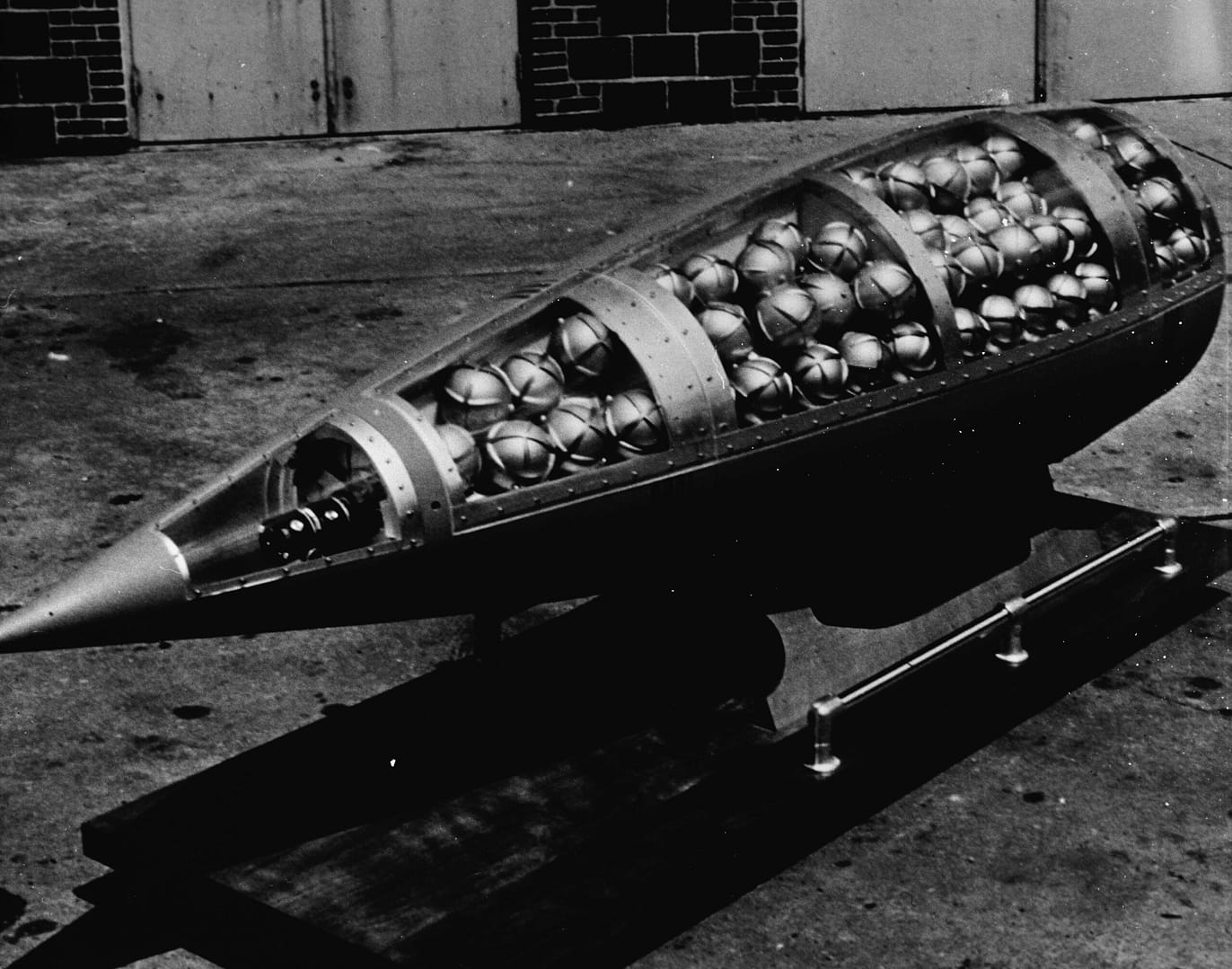
- Munition: ShOAB-0.5 fragmentation submunitions from RBK-500 cluster dispenser
- Origin: Russian-manufactured
- Delivery platform: Likely Su-24M — one spotted at Bamako airport
- Investigation: Bellingcat, published May 26, 2026
- Legal status: Mali is a signatory to the Convention on Cluster Munitions; Russia is not
The Evidence at Tadjmart
Bellingcat’s investigation relied on photographs and video taken at the strike site, satellite imagery, and open-source data. The analysts identified distinctive remnants of ShOAB-0.5 submunitions — small, spherical fragmentation bomblets designed to scatter from a cluster bomb dispenser and detonate on impact, each dispersing hundreds of steel fragments. The ShOAB-0.5 is a Soviet-era design, manufactured exclusively in Russia. The submunitions were matched to the RBK-500 series cluster bomb, a standard Soviet/Russian air-dropped weapon that releases hundreds of submunitions over a wide area. The RBK-500 is not in Mali’s known weapons inventory — but it is standard equipment for Russian tactical aircraft. Bellingcat geolocated the strike site to Tadjmart using satellite imagery and corroborated the timing with FAMa’s own public statement claiming an operation in the area on May 17.The Su-24 Connection
Satellite imagery first published by France 24 in April 2025 showed a Sukhoi Su-24M strike aircraft at Bamako-Sénou International Airport, Mali’s main airport and military airfield. The Su-24M is a Soviet-designed, twin-engine, variable-sweep wing attack aircraft capable of carrying RBK-500 cluster dispensers. Mali does not operate the Su-24 in its own air force, but whether the aircraft at Bamako is operated by Russia’s Africa Corps (formerly Wagner Group) or by Malian forces remains unclear. The Su-24M has the range and payload capacity to conduct strikes in northern Mali from Bamako, a distance of approximately 1,200 kilometers. Open-source flight tracking and satellite imagery have previously documented Su-24 operations from Bamako in the context of Mali’s counterinsurgency campaign.Cluster Munitions: Banned but Deployed
Cluster munitions are prohibited under the 2008 Convention on Cluster Munitions (CCM), which bans the use, production, transfer, and stockpiling of these weapons. The convention has 112 states parties, with a dozen more signatories yet to ratify, according to the Cluster Munition Coalition. Mali signed the CCM in December 2008 and ratified it in June 2010. Under the treaty, Mali is legally bound not to use cluster munitions or allow them to be used on its territory. Russia has not signed the convention. This creates a legal gray zone. Mali’s government invited Russian forces to operate on its territory and has publicly taken credit for operations in the Kidal region. If Russian forces used cluster munitions during a FAMa-announced operation, the question of complicity under international law becomes directly relevant to Mali’s treaty obligations.The Convention on Cluster Munitions prohibits signatories from assisting, encouraging, or inducing anyone to engage in activities prohibited by the treaty. Whether Mali’s military cooperation with Russian forces using these weapons constitutes “assistance” is a critical legal question.
— Convention on Cluster Munitions, Article 1(1)(c)

 English
0 Comments