
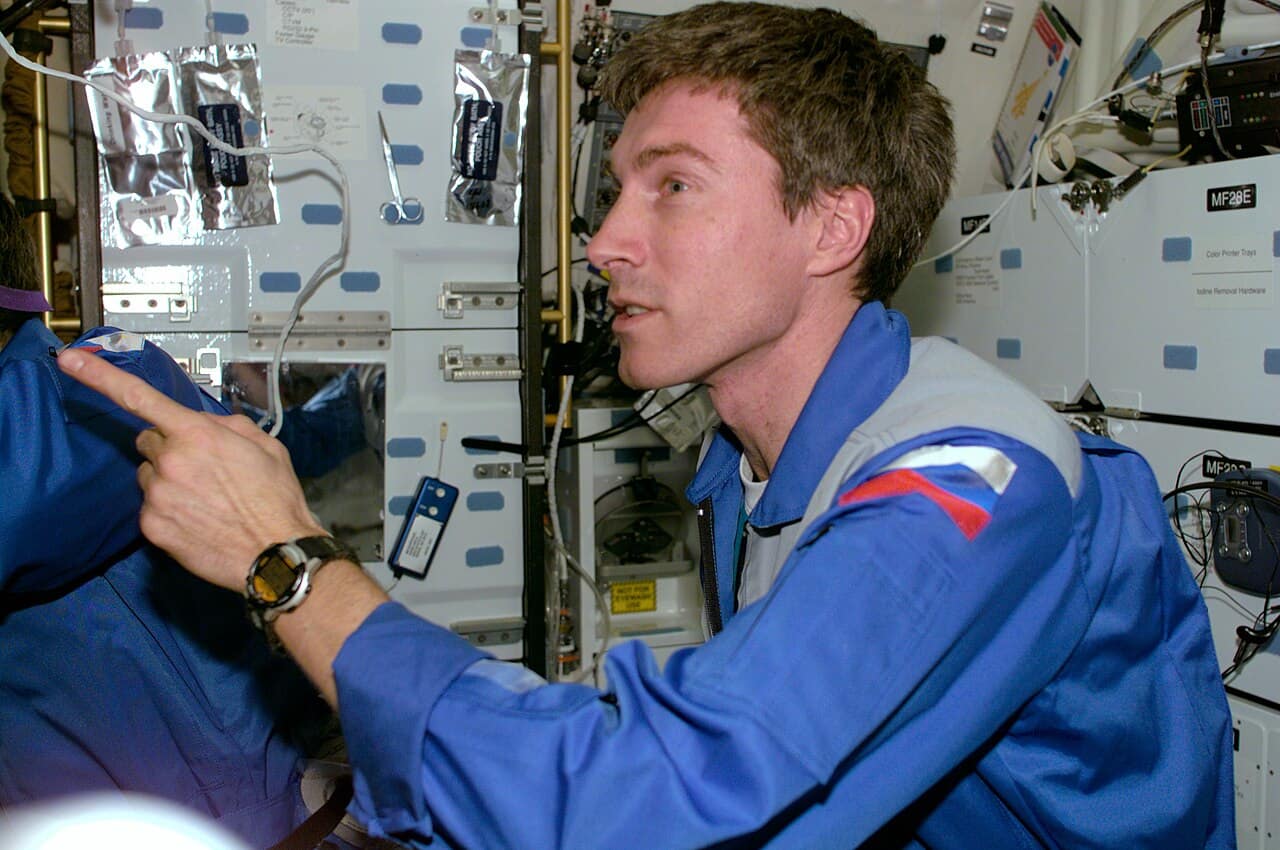
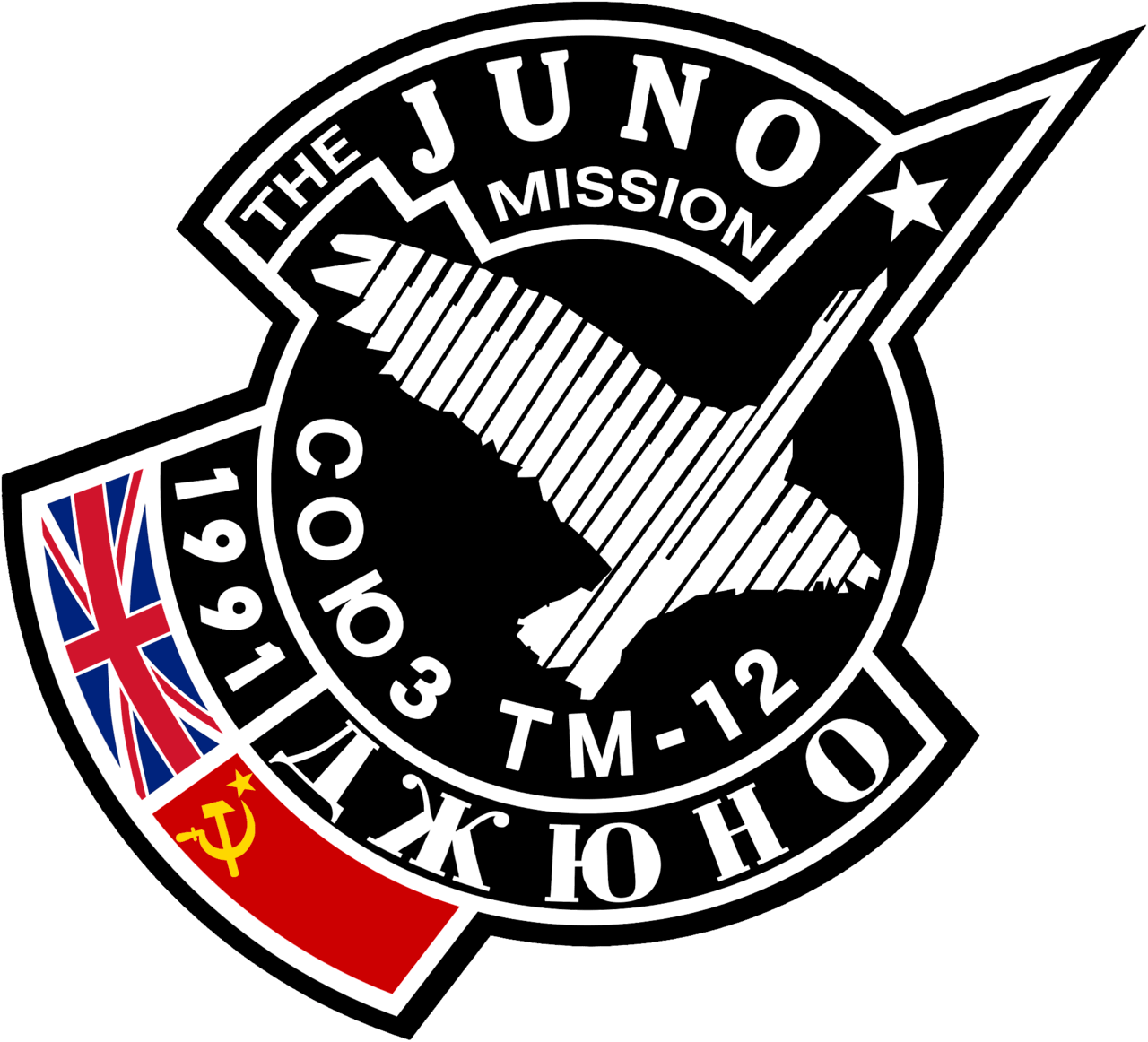
On 18 May 1991, Soyuz TM-12 lifted off from the Baikonur Cosmodrome in the Kazakh Soviet Socialist Republic. Strapped into the centre seat was a flight engineer named Sergei Konstantinovich Krikalev. The launch went perfectly. The docking with the Mir space station was nominal. The five-month mission ahead of him was routine in every way except one: when Krikalev came back to Earth, the country that had launched him would no longer exist.
He had been told to expect five months on Mir. He stayed for ten. In the gap between his launch date and his actual landing on 25 March 1992, the Soviet Union ceased to be a country, Baikonur became a foreign cosmodrome on Kazakh soil, and the man flying serenely two hundred miles above all of it became the unwitting holder of the strangest title in the history of spaceflight: the last Soviet citizen.
Quick Facts
| Cosmonaut | Sergei Konstantinovich Krikalev, Flight Engineer |
| Launch | Soyuz TM-12, 18 May 1991, from Baikonur Cosmodrome |
| Original mission length | Approximately 5 months (155 days) |
| Actual mission length | 311 days, 20 hours, 1 minute |
| Soviet Union dissolved | 26 December 1991 — while Krikalev was in orbit |
| Return to Earth | 25 March 1992, aboard Soyuz TM-13, near Arkalyk, Kazakhstan |
| Total career time in space | 803 days, 9 hours, 39 minutes — 4th most in history |
Five months. Ten months. A different country.
The original plan was straightforward. Krikalev would fly to Mir with British astronaut Helen Sharman and Anatoly Artsebarsky. Sharman would return after a week. Krikalev and Artsebarsky would stay until October, when a fresh crew would relieve them. October became December. Then it became March. Then it became “we don’t know.”
The reason was not technical. The reason was geopolitical. Mir was a Soviet state programme, with Glavkosmos — the agency that marketed Soviet spaceflight abroad — selling visiting seats like Helen Sharman’s. By August 1991, the Soviet Union was unravelling in real time. There was a failed coup against Gorbachev. Independence movements declared sovereignty in Latvia, Estonia, Lithuania, Ukraine, Georgia, Armenia. The Baikonur Cosmodrome — the only launch facility for crewed spacecraft — sat in Kazakhstan, whose leadership was openly debating whether they wanted to remain in any successor union at all.
The replacement crew never launched. Four scheduled missions were cut to two. Neither carried space for a second flight engineer. Krikalev, who had been planning to come home in October, was politely informed by ground control that he should expect to stay until at least the following spring. He had not signed up for that. His wife and infant daughter had not signed up for it either. He stayed anyway.
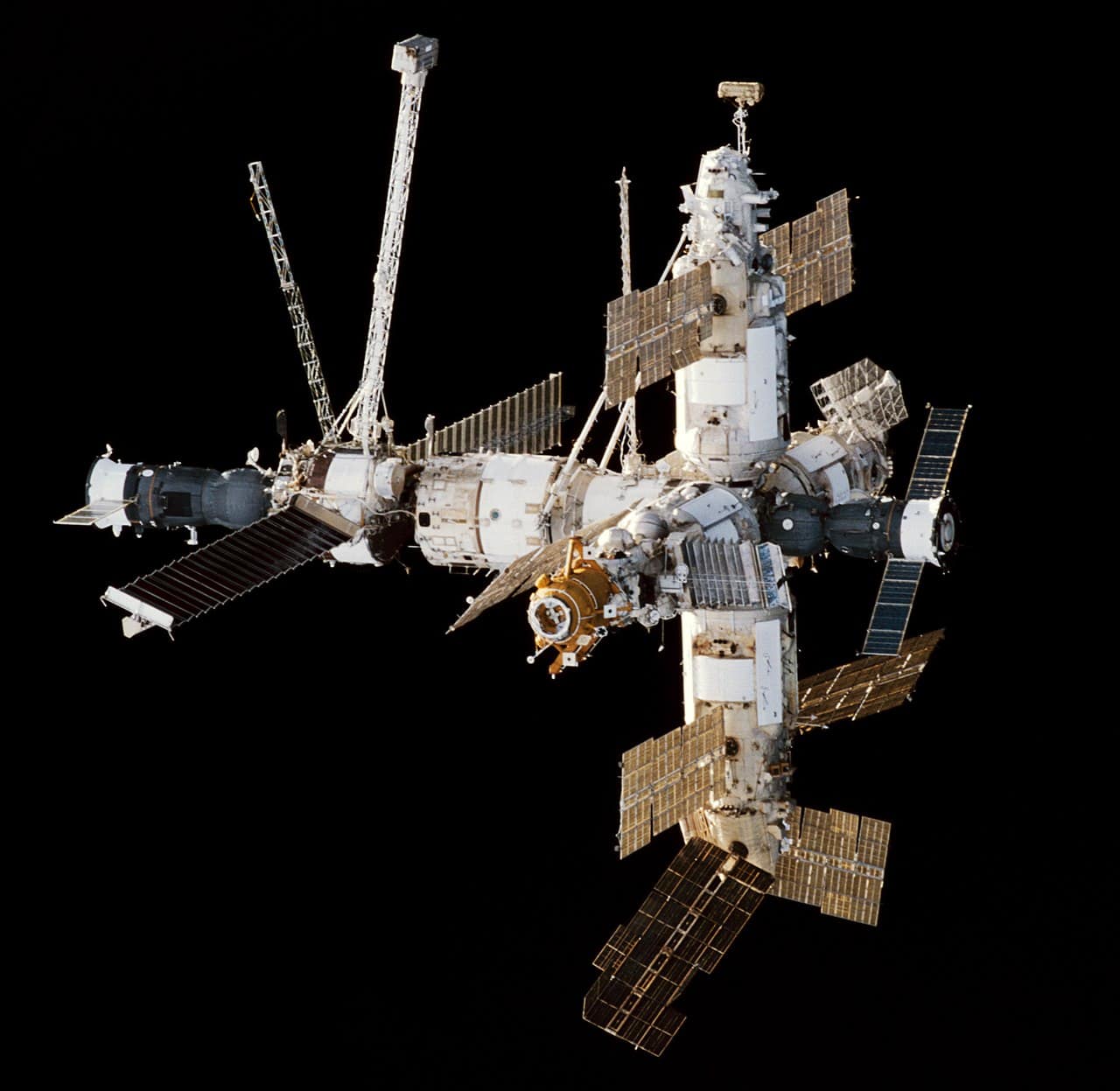
The ride home he refused to take
Krikalev had an out. He could have come home in October 1991 aboard Soyuz TM-12, when his commander Anatoly Artsebarsky returned to Earth. But the flight engineer who was supposed to replace him had been cut from the schedule — the visiting seats went instead to politically important short-duration guests from Kazakhstan and Austria — and the incoming commander, Alexander Volkov, needed an experienced flight engineer beside him to keep the station running. Without one, Mir’s operations would have been crippled.
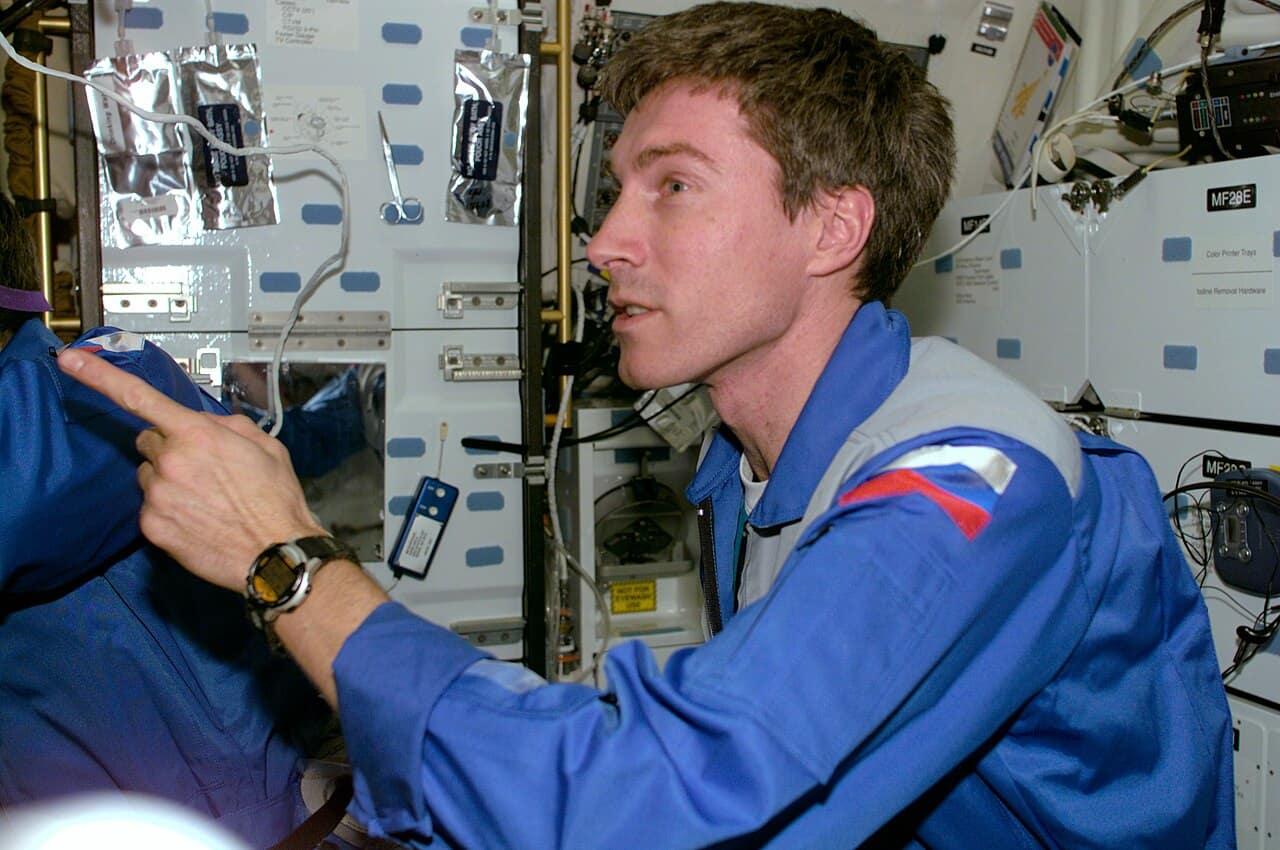
So he stayed. He went on running experiments. He logged the data. He spoke to Mission Control in Moscow — a Mission Control that was, for a few weeks, technically operating in a country called the Russian Soviet Federative Socialist Republic, then suddenly operating in a country called the Russian Federation. The flag on his shoulder patch was the flag of a country that no longer existed.
26 December 1991
On 25 December 1991, Mikhail Gorbachev resigned, and the hammer-and-sickle came down from the Kremlin as the white-blue-red of the Russian Federation went up. The next day, 26 December, the Supreme Soviet of the USSR voted itself out of existence. Boris Yeltsin became head of state of a new country called Russia. The Soviet Union, as a legal entity and as a flag, ceased to be.
Two hundred miles above the Kremlin, Krikalev was somewhere over the Pacific. He was Soviet when he went to sleep that night. He was Russian when he woke up. He didn’t know it for several days because nobody wanted to be the one to tell him. When he was finally told over the voice loop, he said something brief and characteristically unsentimental, then asked about his next experiment schedule.
The most poignant detail of his stay is also the most boring. He kept working. He kept running the experiments. He kept reading out telemetry numbers to a country whose name had changed beneath him. The station was the country. The mission was the country. Everything else was politics.
The landing
On 25 March 1992, Soyuz TM-13 fired its retros over the Indian Ocean and came down in a snowfield near Arkalyk, Kazakhstan. Krikalev climbed out of the capsule into a country called Russia, on territory that now belonged to a foreign sovereign nation called the Republic of Kazakhstan, into the arms of recovery teams who were still figuring out which flag to fly on the rescue helicopters.
His country of citizenship, on the day he had launched, had been the USSR. His country of citizenship, on the day he had landed, was the Russian Federation. The technicians joked that he was the last Soviet citizen. The joke was not really a joke. He was the last person to leave Earth as a Soviet and return as something else.
Krikalev did not retire. He flew on Space Shuttle Discovery on STS-60 in 1994 — the first Russian cosmonaut to fly on an American shuttle. He flew on STS-88, the first ISS assembly mission, in 1998, and in 2000 launched as part of Expedition 1, the station’s first resident crew. He commanded ISS Expedition 11. By the time he retired from active spaceflight in 2007, he had logged 803 days, 9 hours and 39 minutes in orbit — the fourth-largest career total in history. None of it was as strange as the 311 days he spent watching his country disappear from the windows of Mir.
The full story of “the last Soviet citizen” — how Sergei Krikalev outlived the country that sent him to space.
Sources: Wikipedia; New Mexico Museum of Space History; IFLScience; Russia Beyond; HistoryNet; Foreign Policy Association; NASA Johnson Space Center oral history.


 English
0 Comments