
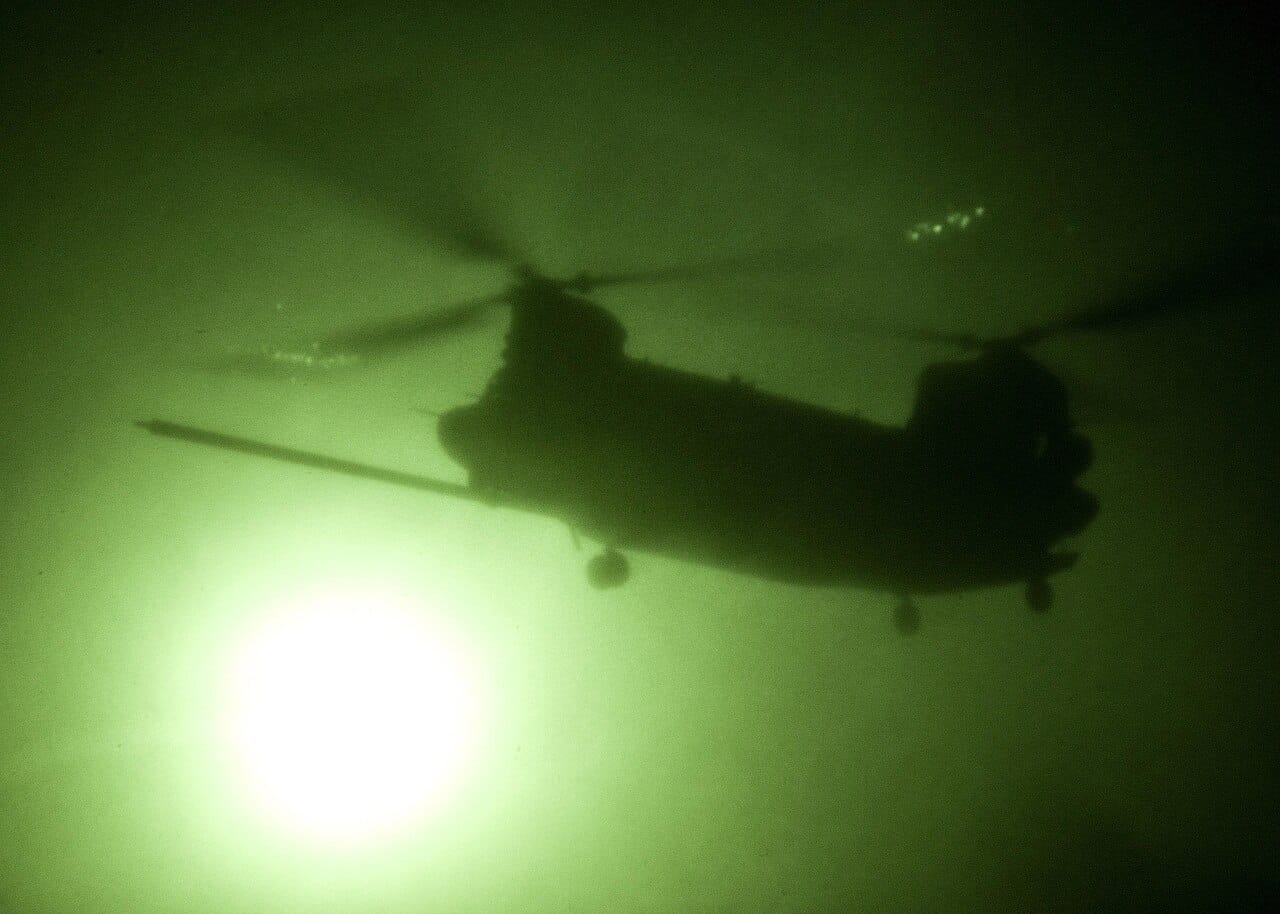
For nearly twenty years, U.S. Special Operations Command has had a quiet, classified advantage. When the 160th Special Operations Aviation Regiment — the Night Stalkers — takes an MH-47G Chinook into bad terrain at 30 metres above ground, in zero visibility, at night, the radar that keeps them from flying into a hill is called Silent Knight. It is the reason their crews come back. It has never been sold abroad.
SOCOM still considers the radar too sensitive to export — but it has just opened the door. Aviation Week reports that the command is now calling on industry to offer an exportable terrain-following radar that delivers much of what Silent Knight does, for allied special-forces aviation units and potentially the wider U.S. Army and Air Force. Translation: the capability, if not the secret radar itself, is going on the market.
Quick Facts
- System: AN/APQ-187 Silent Knight Radar (SKR) — Raytheon (now RTX)
- Function: Terrain-following / terrain-avoidance, 100 ft AGL or lower, at night, in any weather
- Platforms: MH-47G Chinook, MH-60M Black Hawk, CV-22 Osprey, MC-130J Commando II
- Why exportable: SOCOM wants allies to operate alongside Night Stalker missions without becoming the weak link
- Current users: U.S. SOCOM only — fielded progressively since the late 2010s
- Programme value: Production contracts worth hundreds of millions, including a $321 million SOCOM order
Why low-flying terrain-following radar still matters
The romance of stealth aircraft has obscured a simpler tactical truth: nothing is harder to detect than something flying so low it’s below the radar horizon. Pilots have done it visually for a century. Doing it at night, in cloud, over ridges and power lines, without crashing, requires a sensor that can see ahead.
That used to mean Texas Instruments’ terrain-following radars on the F-111 and B-1B. Those systems work, but they shout: a long-pulse, high-energy radar lights up the spectrum from kilometres away, telling anyone with electronic-support measures exactly where you are. Silent Knight is the opposite. Frequency-agile, low-probability-of-intercept, narrow-beam, with software that classifies returns as terrain, weather, or threat. It tells you what’s coming, without telling the enemy you’re there.
For the Night Stalkers, that capability is the difference between a successful insertion and an aircraft on a hillside. For European and Asian allies trying to fly alongside them — British SF, Polish GROM, Australian SAS, Italian Carabinieri TUSCANIA — the lack of equivalent kit has been a years-long awkwardness. American crews simply can’t operate in formation with helicopters that can’t follow them down.
Who’s likely to buy it
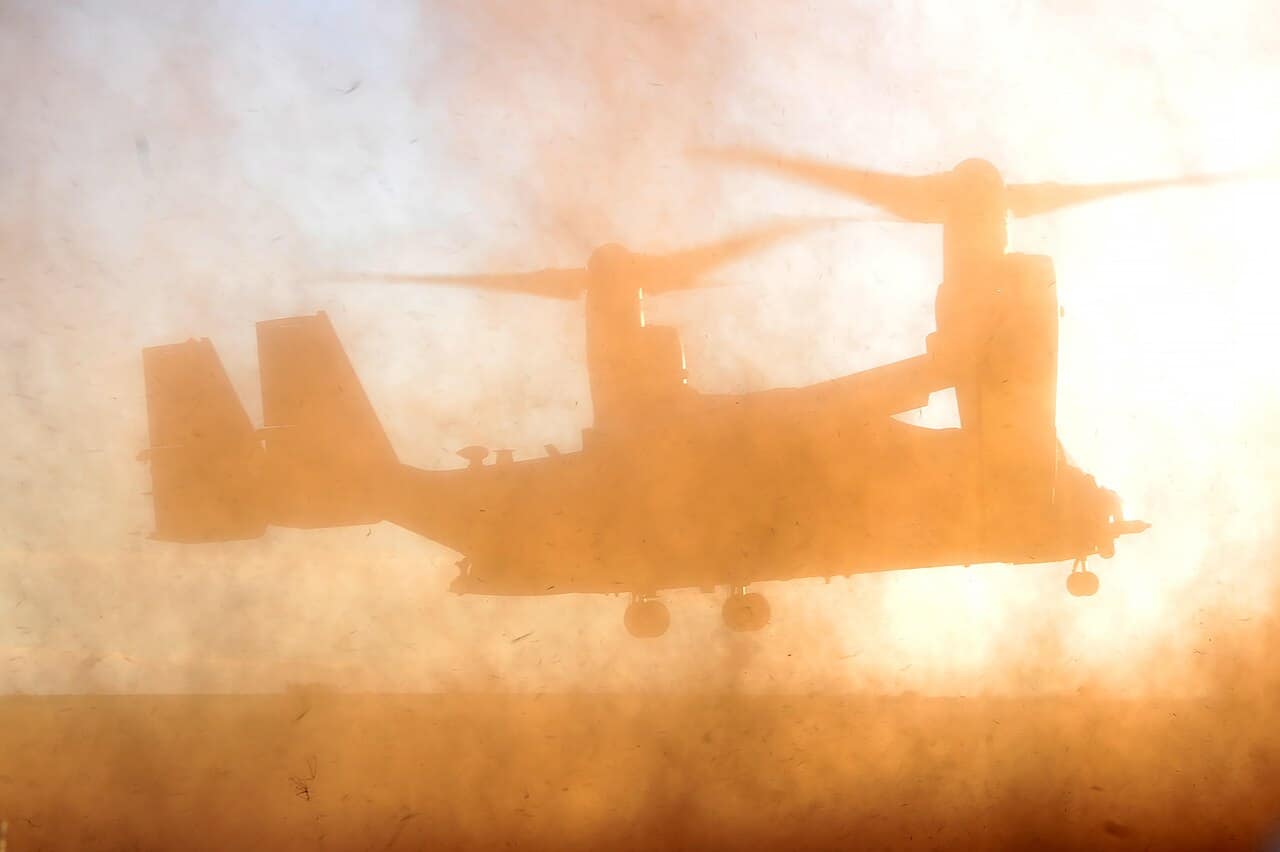
The export brochure has not been published, but the customer list writes itself. The UK is the obvious first call: its special-forces aviation units fly Chinooks and AW101 Merlins that need exactly this capability. Italy operates AW101s for special-mission roles. Poland, Norway and Australia all have existing 160th-SOAR-pattern relationships with U.S. forces.
The classified-tech export problem in 2026
Selling Silent Knight isn’t politically simple. Export-approved variants typically arrive with degraded waveforms and a less-capable software baseline, which is exactly what frustrates allies looking for parity. SOCOM has signalled that the new approach addresses that head-on: rather than degrading Silent Knight for export, it is asking industry for a radar that offers most of the capability in an exportable package — with the understanding that countries fielding it would operate closely within U.S.-led security arrangements.
If the pitch lands, it’s the kind of capability transfer that quietly reshapes alliances. Night Stalker missions become coalition missions. The American special-ops force keeps its edge by sharing the capability that makes it possible to fly the missions in the first place. And one more piece of formerly closely-held U.S. military technology becomes the international norm — on the U.S. terms.
Sources: Aviation Week, RTX (Raytheon) public technical briefs, The War Zone, U.S. Special Operations Command release.


 English
0 Comments