
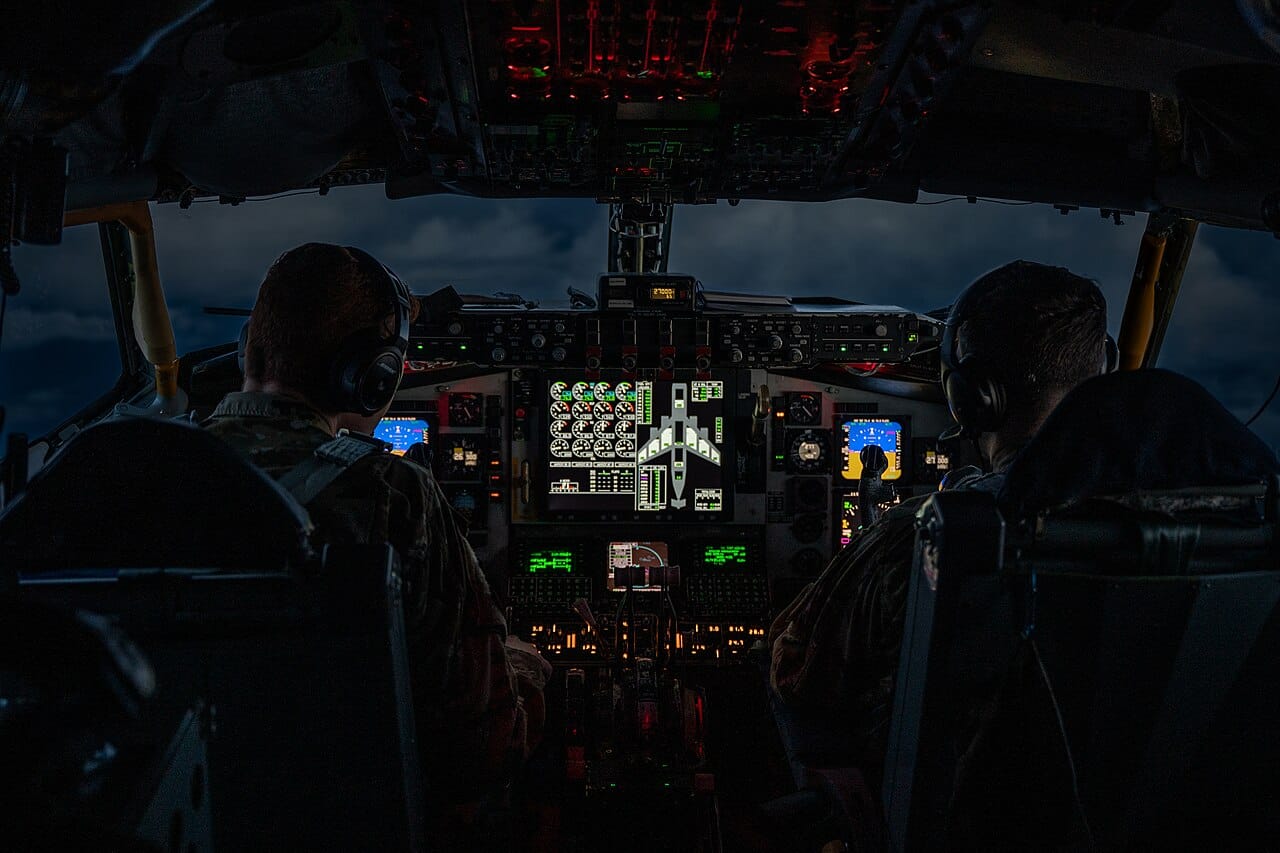
Fifteen U.S. military aircraft lifted off from southern Spain on Sunday and scattered across Europe. Nine KC-135 Stratotanker aerial refueling planes flew north to Ramstein Air Base in Germany. Two flights headed for southern France. Four more simply disappeared from public flight trackers. The exodus was not voluntary.
Spain had just kicked them out.
On Monday, Spanish Defense Minister Margarita Robles made it official: Spain has closed its entire airspace to American military aircraft involved in the war in Iran. The ban covers not just the U.S. bases at Rota and Morón in southern Spain — it extends to every square kilometer of Spanish sky.
Spain airspace ban
A Mediterranean Lifeline — Cut
This is not a symbolic gesture. Rota and Morón are two of the most strategically important American bases in Europe. They sit at the western mouth of the Mediterranean, perfectly positioned for aerial refueling operations that keep U.S. strike packages airborne on the long transit to the Middle East. Without them, every sortie heading east from the Atlantic gets harder, longer, and more expensive.
The KC-135 tankers that left Morón are the workhorses that make long-range air operations possible. Moving them to Ramstein adds hundreds of kilometers to their positioning flights and complicates the aerial refueling choreography that underpins Operation Epic Fury. It is a logistical headache the Pentagon did not need in the middle of an active air campaign.
Spanish Prime Minister Pedro Sánchez has been the loudest European critic of the U.S.-Israeli military operation in Iran, calling it “reckless and unjust.” His government’s position hardened over weeks. First came the denial of base access for Iran-related operations. Then the full airspace ban. The escalation has been deliberate and very public.
NATO’s Cracks Widen
The historical parallels are striking. In 1986, France and Spain denied overflight rights to American F-111s on their way to bomb Libya, forcing the jets on a massive detour around the Iberian Peninsula and through the Strait of Gibraltar. In 2003, Turkey refused to let the U.S. Army’s 4th Infantry Division cross its territory to open a northern front in Iraq, upending the entire invasion plan.
Both times, the denial of access by a NATO ally forced costly improvisation. Both times, the operations went ahead anyway — but with scars that took years to heal.
Spain trade response
Spain’s move fits the same pattern. NATO headquarters in Brussels declined to comment, referring questions to national authorities. That silence speaks volumes. The alliance has no mechanism to force a member state to open its airspace for operations it considers illegal, and Spain’s government has made clear it views the Iran campaign as exactly that.
President Trump responded with a familiar weapon: a threat to cut trade with Madrid. Whether that threat carries weight against a country embedded in the European Union’s single market is another question entirely.
What Happens Next
The immediate military impact is manageable. The U.S. has plenty of bases in Germany, Italy, and the Gulf states. Tankers can reposition. Flight plans can be redrawn. The war in Iran will not stop because Spain closed a door.
But the political signal is harder to absorb. When a NATO ally publicly calls your war “profoundly illegal and profoundly unjust” — and backs that language with concrete action — it damages the coalition narrative in ways that outlast any single refueling detour. Other European capitals are watching Madrid closely. If Spain pays no real price, the next airspace ban may come from a country whose geography matters even more.
Sources: Al Jazeera, Military.com, Washington Post, Reuters
 English
0 Comments