
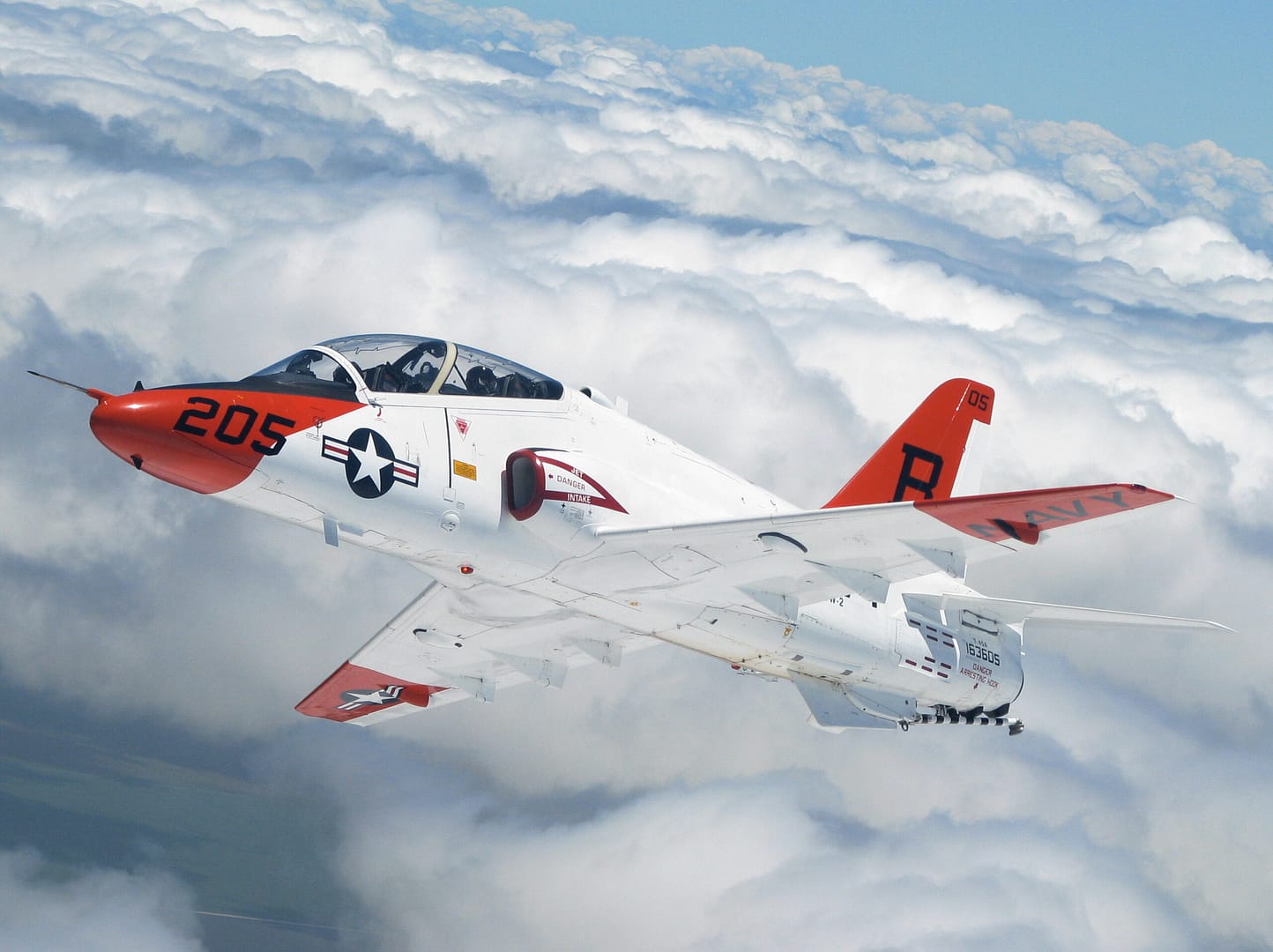
Two Martin-Baker ejection seats fired into a Mississippi sky on the afternoon of 26 May 2026. The T-45C Goshawk they had just left came down on private farmland in Noxubee County, Mississippi, near Naval Air Station Meridian. Both crew members ejected safely and were taken to a local medical centre for evaluation — and counted as the Goshawk’s latest reminder of its age.
It is the second US military jet trainer lost in a single month. And it lands in the middle of a US Navy programme — the Undergraduate Jet Training System replacement — that is already trying to decide what flies after the Goshawk before the Goshawk grounds itself.
Quick Facts
Date: 26 May 2026
Location: Near NAS Meridian, Mississippi
Aircraft: McDonnell Douglas T-45C Goshawk, US Navy
Crew: Two aviators of Training Air Wing One — both ejected safely
Fleet: ~190 T-45C aircraft, service since 1991
A trainer at the limits
The T-45C is the carrier-capable derivative of the BAE Hawk, built by McDonnell Douglas (now Boeing) under a Cold War licence. It has been the only jet teaching the US Navy’s brand-new fast-jet aviators since the late 1990s. Every Hornet, Super Hornet, Growler and now F-35C pilot has flown the Goshawk first — including the carrier-qualification phase that puts a student on a moving deck for the first time in his career.
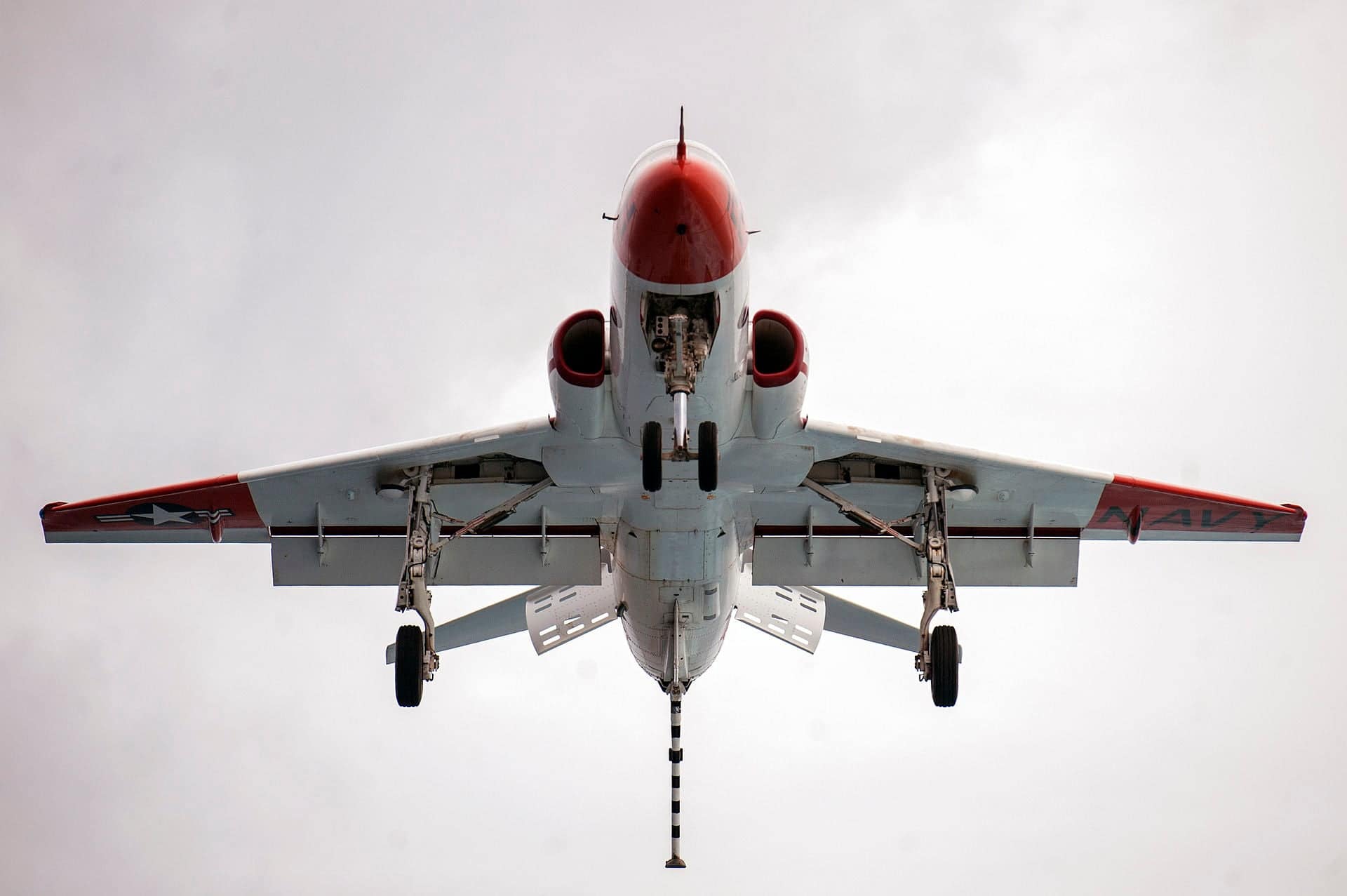
The aircraft is aging out. Originally fielded with a service-life ceiling of 14,400 hours, the fleet is now hitting that wall. The Navy briefly grounded the whole T-45 force in 2017 after pilots reported “physiological events” — hypoxia-like symptoms — traced to the oxygen-concentration system. That fleet-wide stand-down is still inside the Goshawk’s institutional memory.
What we know about the May 26 crash
The Navy has not yet released a flight number or named the crew. What it has said is that both crew members ejected safely and that the jet came down on private farmland in Noxubee County, with no reports of civilian casualties. Local emergency services and military first responders secured the site, and the two aviators were taken to a local medical centre for evaluation.
A bad month for trainers, and a replacement contest
The Goshawk went down just two weeks after a US Air Force T-38C Talon from Columbus AFB crashed in Alabama on 12 May — its crew also ejected safely — prompting an operational pause for the Talon fleet. And the Navy’s tally of Class A mishaps for fiscal 2026 has, by late May, already matched the whole of fiscal 2025. The Navy’s formal T-45 replacement competition — the Undergraduate Jet Training System (UJTS) — went into source selection in April 2026, with Boeing’s T-7A Red Hawk, the Lockheed Martin / KAI T-50, and Textron Aviation’s M-346N variant all in play.
None of them, importantly, will be carrier-capable. The Navy quietly decided the next-generation jet trainer will land like an Air Force trainer — on a runway — and that carrier qualification will move to live Hornet or Super Hornet flights. The Goshawk, when it finally retires, will close out a 35-year monopoly on the cat-and-trap rite of passage. And the unanswered question is whether the replacement enters service before another T-45 incident forces the issue.
Sources: The Aviationist, US Navy, Chief of Naval Air Training.


 English
0 Comments