
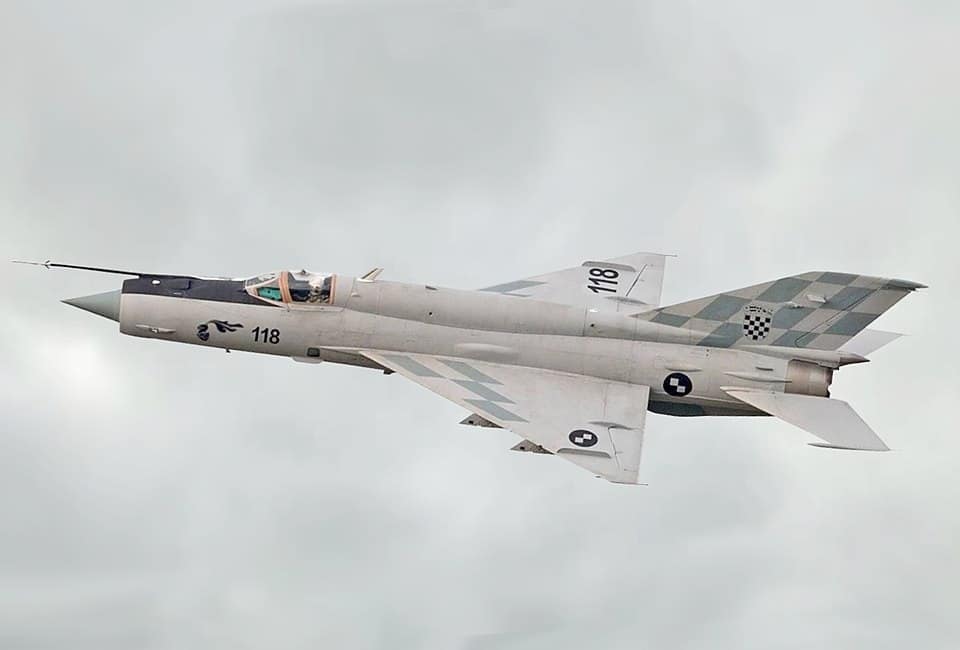
Over 11,000 built. More nations flew it than any supersonic fighter in history. The Soviets created something extraordinary: a machine so brutally efficient that seven decades later, it still haunts the skies of multiple continents. The MiG-21 Fishbed wasn’t the fastest, wasn’t the most advanced, wasn’t the most expensive—it was simply unstoppable.
This is the story of how a relatively simple Soviet interceptor became the most-produced supersonic fighter jet ever built, how it dominated conflicts from Vietnam to the Middle East, and why some nations still refuse to retire it even as the world moves on to fifth-generation stealth.
Related: Surgical Green at Mach 2: The MiG-21 Cockpit Mystery
The Philosophy That Changed Aviation
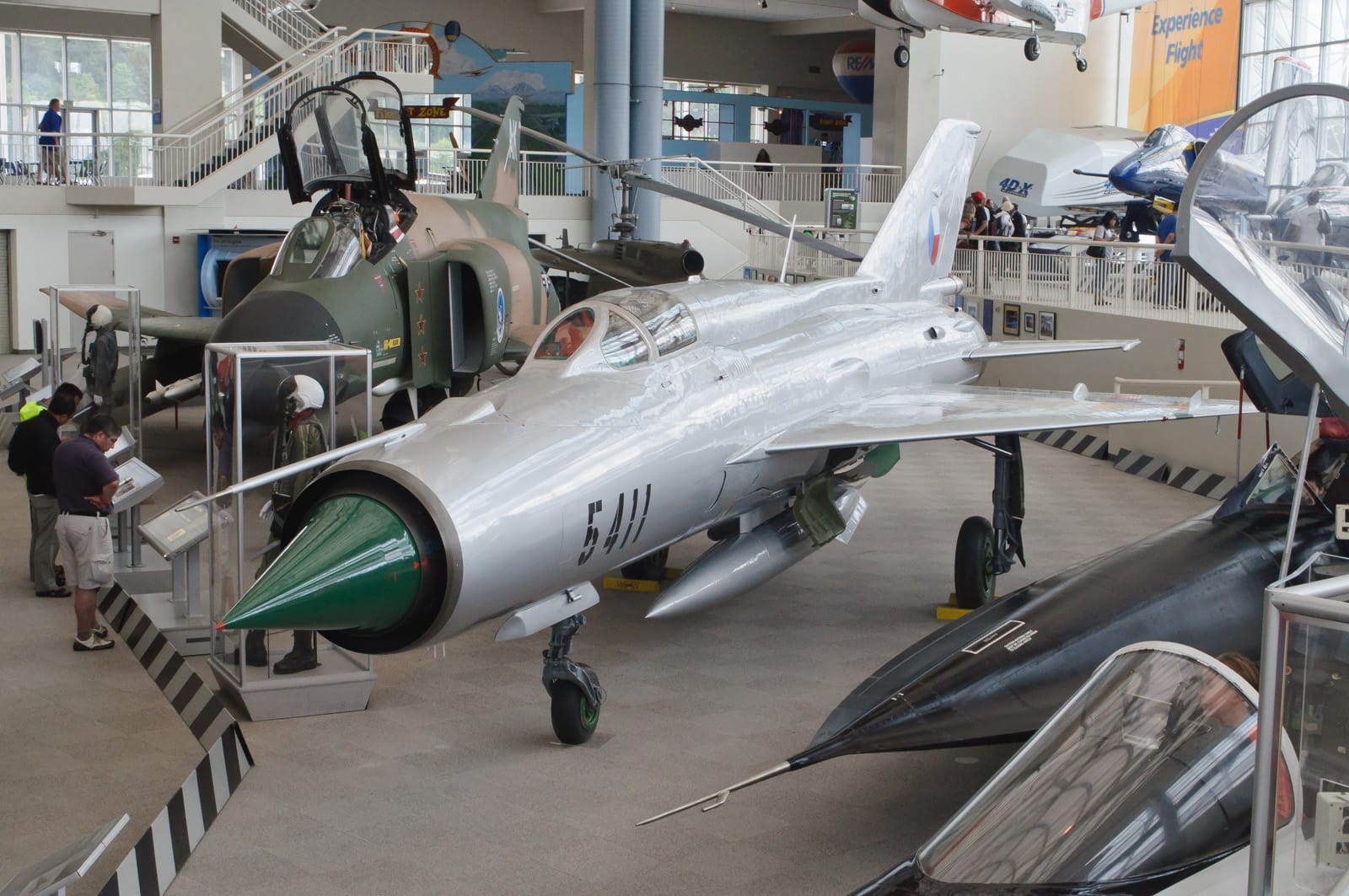
In the mid-1950s, the Soviet Union made a radical decision: forget complexity. Sergei Ilyushin’s bureau had just finished the sprawling MiG-19, a temperamental beast that required constant fiddling. The Mikoyan-Gurevich designers asked a different question: what if we built something so simple, so cheap, and so fast that we could arm every allied nation on Earth?
The result was genius stripped of everything non-essential. One Tumansky turbojet. Minimal avionics. A single 23mm cannon. Two missiles. A fuselage so small that early MiG-21 pilots had to fold their legs in the cockpit. The aircraft weighed just 9.7 tons—less than half the bloated F-4 Phantom that would face it in Vietnam.
Speed was baked into its DNA. The MiG-21 screamed to Mach 2.05 at altitude, making it one of the fastest aircraft ever built for its era. With a climb rate of 58,000 feet per minute, it could leap from the tarmac to the edge of space in under two minutes. Armies didn’t care about endurance or comfort or advanced radar—they wanted interceptors that could sprint to the fight, kill, and return.
The Numbers That Tell a Story
Between 1958 and the late 1980s, 10,645 MiG-21s rolled off Soviet assembly lines. The Gorky aircraft plant alone produced 5,765 of them. Add Czech and Indian license production—194 examples from Czechoslovakia, 657 from Hindustan Aeronautics—and the total swells beyond 11,000. No supersonic fighter before or since has come close to these numbers.
But raw production numbers don’t capture the true reach. Over 60 nations operated the MiG-21: Egypt, Syria, Iraq, India, Pakistan, Vietnam, North Korea, Cuba, Angola, Zimbabwe, Myanmar—the list sprawls across continents. During the Cold War, if you were aligned with Moscow and you wanted air power, you got a MiG-21. It wasn’t a choice. It was the only logical option.
Some air forces took one variant, others cycled through five. The Fishbed came in fighter, interceptor, reconnaissance, and trainer flavors. The simplicity of its design made modifications trivial. Need a more powerful engine? Slap in the R-25-300. Need better avionics? Bolt on a new radar package. The airframe was a blank canvas for whatever regional conflict needed solving.

Vietnam: The Upset That Shocked America
When American F-4 Phantoms first tangled with MiG-21s over North Vietnam in 1966, the results were humbling. The Phantom was bigger, heavier, loaded with missiles, equipped with sophisticated radar. It also had engines so smoky that Vietnamese pilots could spot them miles away. The nimble MiG-21, by contrast, could vanish into a turn and reappear on a Phantom’s six o’clock in seconds.
In horizontal dogfighting, the MiG-21 ruled. American pilots—trained to fight with missiles at distance—suddenly found themselves forced into vertical combat where the Phantom’s weight became a liability. Before Top Gun existed, before rules of engagement shifted, American kill ratios against the Fishbed sat around 2:1. Unacceptable for a nation that was supposed to own the sky.
“For me personally, I preferred the MiG-21 because it was superior in all specifications in climb, speed and armament. The Atoll missile was very accurate and I scored four kills with the Atoll. In general combat conditions, I was always confident of a kill over an F-4 Phantom when flying a MiG-21.”
— Nguyễn Nhật Chiêu, Vietnamese ace with four confirmed kills
Chiêu was one of the war’s top MiG-21 aces. The psychological impact was immense. The American public watched footage of a Soviet fighter—primitive by Western standards—bleeding Phantoms from the sky. The reality was more nuanced: the MiG-21’s advantages in agility and rate of climb mattered only if the pilot was exceptional. Most Vietnamese pilots were. Most American pilots weren’t ready for that kind of fight.
The Middle East: Where Quantity Met Doctrine
In the 1967 Six-Day War, Egypt fielded over 90 MiG-21s—the spine of its air defense. Israel struck first with surgical precision. Within hours, 90 MiGs were burning on the tarmac or shot down. The MiG-21 wasn’t at fault. Egyptian doctrine, unprepared pilots, and Israeli pilots trained in dissimilar air combat were the killers. War isn’t about aircraft in a vacuum. It’s about systems, training, and surprise.
Six years later, in the Yom Kippur War of 1973, the MiG-21 had evolved. Better missiles, better tactics, more experienced pilots. Israel claimed 73 kills against Egyptian MiG-21s—65 confirmed. But the Fishbed no longer felt obsolete. It was battle-tested. It was feared. Syrian MiG-21s claimed eight Israeli kills in their own right, and the speed advantage of the Soviet fighter meant it could fight on terms of its own choosing.
The AK-47 of the Skies
Here’s the secret that Western analysts took years to understand: the MiG-21’s genius wasn’t in performance metrics. It was in reliability. An AK-47 will function in a swamp, a desert, or a frozen tundra. A MiG-21 pilot needs only a rough airfield, basic fuel, and a mechanic with a wrench and a manual. There’s no mystery. No black box electronics. The airframe is steel, aluminum, and physics.
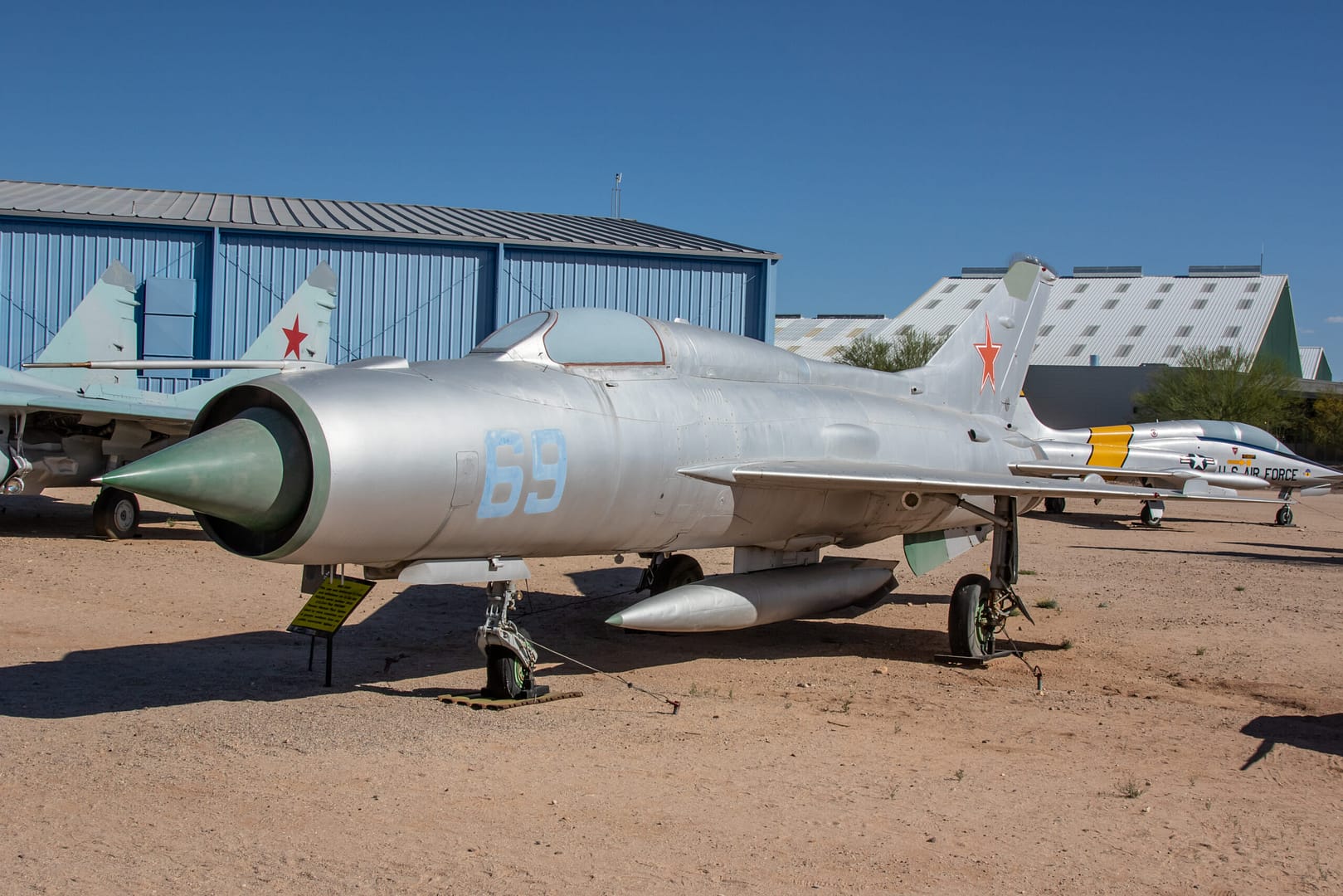
Nations with limited training pipelines and minimal infrastructure could still generate combat-effective fighters. A Pakistani mechanic could maintain a MiG-21. A Zimbabwean pilot could master its systems. An Indian air force could operate hundreds of them for six decades without depending on foreign support networks. This was democracy in military aviation.
The Fishbed’s longevity is staggering. India retired its last MiG-21s in September 2025, after more than sixty years of service. Europe’s final examples—Croatia’s fleet—stood down in 2024. Yet countries like North Korea, Myanmar, Angola, and a handful of others still maintain active squadrons. The Chinese derivative, the Chengdu J-7, soldiers on in even more nations. Death, it turns out, has been greatly exaggerated.
The Pilot’s Perspective: Unforgiving Beauty
Flying a MiG-21 demands a different breed of pilot than a modern fighter. There are no autopilots, no fly-by-wire systems, no computers second-guessing your inputs. In the words of one veteran MiG-21 pilot: \”The MiG-21 requires a higher degree of skill, reflexes, and mental capacity to fly it like you own it. Definitely not for the faint-hearted.\”
Indian pilots who flew the Fishbed into its twilight years developed a deep respect for its unforgiving nature. No margin for error. No systems to bail you out. Raw flying, by day and night, over mountains, seas, deserts, and jungles. The aircraft took everything you had and demanded more. Those who mastered it became something rare: true aviators, not just stick-and-rudder operators.
The Living Legend
Today, the MiG-21 is a relic of an era when aircraft design meant compromise and philosophy over raw capability. It never had the range of the F-104. It never matched the avionics of the F-5. It certainly never approached the complexity of fourth-generation fighters like the F-15 or the MiG-29. Yet it outlasted most of them in frontline service and captured the imagination of the world in ways more advanced machines never could.
Today, the MiG-21 legacy lives on in an unexpected way. MiGFlug offers one of the last opportunities on Earth to fly the MiG-21 at supersonic speeds — a chance to experience Mach 2 in the same cockpit where Cold War pilots once sat on nuclear alert.
The Fishbed proved that you don’t need the most advanced technology to change the world. You need a clear idea, fearless execution, and production in numbers so vast that your enemy can’t ignore you. The MiG-21 was all three. It was the fighter that shouldn’t have been as good as it was, the simple machine that outflew expectations, and the Cold War’s ultimate answer to the question: what if we stopped overthinking and started building?
Over 60 countries. Seven decades of service. Thousands still airworthy. The MiG-21 isn’t just a fighter jet—it’s a masterclass in elegance through constraint.
Sources: Simple Flying: How Many MiG-21 Fighter Jets Were Built?, WION News: Over 11,000 Built, Warfare History Network: F-4 Phantom vs MiG-21, Hush-Kit Aviation: Flying & Fighting in the MiG-21


 English
0 Comments