

On the morning of March 6, 1990, two men strapped themselves into the most advanced aircraft ever built. One sat in front, the other behind. Both knew what they were about to do: fly the fastest airplane in history for the last time.
Lieutenant Colonel Ed Yeilding and Lieutenant Colonel Joseph Vida had been chosen for a mission that would be part delivery flight, part funeral procession, part victory lap. They were going to fly SR-71 Blackbird serial number 64-17972 from Palmdale, California, to Washington, DC—a distance of nearly 2,000 miles—and they were going to set four speed records doing it. But there was something else: when they landed at Dulles International Airport, the Blackbird would fly no more. The fastest jet in the world was retiring.
What happened between sunrise and sunset that day tells a story about the limits of aeronautical engineering, the cost of perfection, and the bittersweet moment when an era ends.
Quick Facts
- Final flight date: March 6, 1990
- Aircraft: SR-71 Blackbird, serial number 64-17972
- Crew: Pilot Lt Col Ed Yeilding, RSO Lt Col Joseph Vida
- Route: Palmdale, CA to Dulles, Washington DC (1,982 miles)
- Flight time: 64 minutes 20 seconds (average speed 2,124 mph / Mach 3.2)
- Records set: Four speed records on delivery flight
- Destination: Smithsonian National Air and Space Museum
Why the Blackbird Had to Go
The SR-71 program had been in slow decline for years. By 1990, the Cold War was thawing. The satellite reconnaissance systems that had made the Blackbird famous in the 1960s and 1970s had evolved dramatically. Spy satellites no longer required the Blackbird’s risky reconnaissance missions over hostile territory. Manned flights over the Soviet Union, China, and North Korea had stopped in 1974, and the aircraft was increasingly relegated to missions the satellites could handle just as well.
But cost was the real killer. The SR-71 was astronomically expensive to operate. Each flight required specialized fuel, specialized crews, specialized support infrastructure. The program consumed millions per year for diminishing intelligence returns. In an era of budget cuts and technological obsolescence, the Air Force made the decision: retire the Blackbird.
It was a practical decision. It was also, in some sense, a tragedy.
The Blackbird had been the fastest, highest-flying aircraft in the world for nearly 25 years. No fighter, no bomber, no civilian transport had ever approached its performance. It operated at altitudes where the sky turned black at midday. It flew so fast that thermal friction heated its titanium skin to 1,000 degrees Fahrenheit. It had been the most classified aircraft in American history, locked away in a hangar labeled “Project Oxcart” when people thought it was a secret B-70 Valkyrie. It had proven that the limits of human flight could be pushed far beyond what anyone thought possible.
And now it was being put out to pasture.
The Flight Plan: Making History One Last Time
Yeilding and Vida knew what they had. They also knew they might never get another chance to prove it. Sometime before that morning, a decision was made: if this was going to be the last flight, it was going to be spectacular.
The route from Palmdale to Dulles was carefully plotted. The flight would follow the coast northward, climb to altitude over the Great Lakes, and make a high-speed dash across the eastern United States. It was optimized not just for fuel efficiency but for speed.
The Blackbird would need a tanker rendezvous. No SR-71 could reach the East Coast without mid-air refueling. But that tanker rendezvous would be coordinated to occur at high altitude, allowing the aircraft to accelerate hard and maintain its cruise at Mach 3+ for the entire transcontinental leg.
Everything had to work perfectly. Weather, coordination, tanker positioning, maintenance. One mechanical issue, one coordination failure, one headwind gust, and the record attempt would be impossible. But neither pilot was willing to let this moment slip away.
The Mission Unfolds: From Palmdale to Mach 3
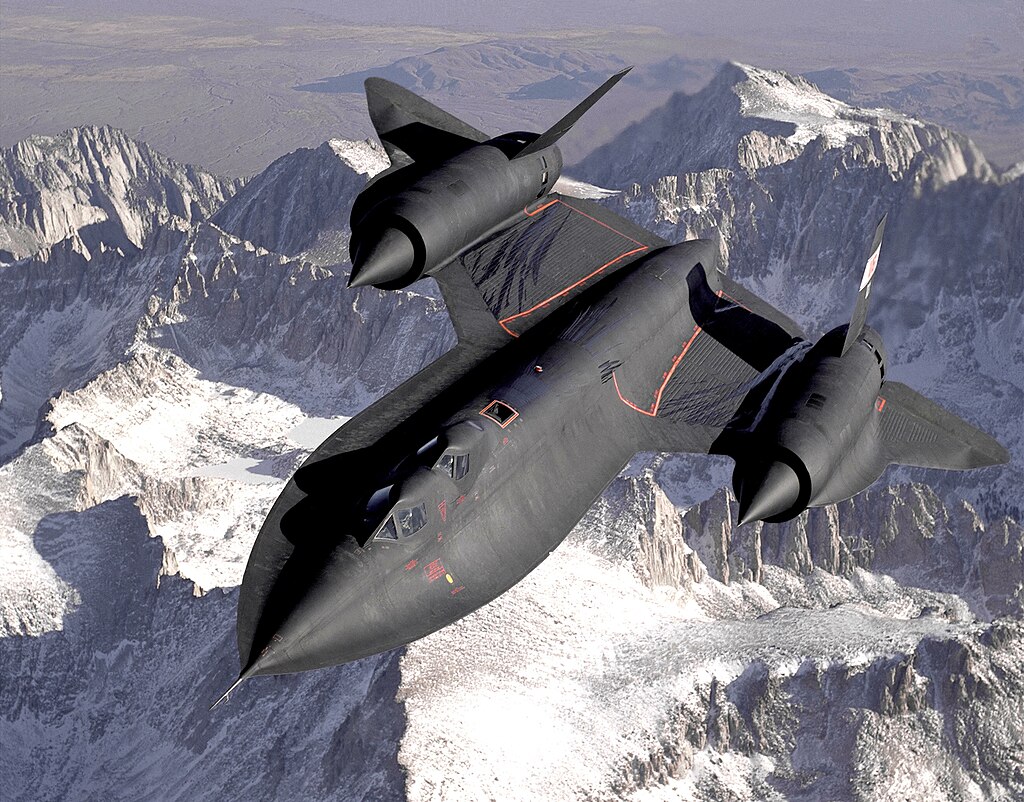
The Blackbird launched from Palmdale at dawn. Unlike commercial jets that explode off the runway, the SR-71 took off like a normal aircraft, then accelerated gradually as it climbed. The engines—two J-58 turbojets, each producing over 32,000 pounds of thrust—hummed to life.
Yeilding pointed the nose northward and climbed. The aircraft needed to reach altitude and smooth air to go supersonic. Commercial traffic was routed out of the way. Military radar sites were alerted. No one wanted a Blackbird at Mach 2 appearing on civilian ATC screens and causing a panic.
At 40,000 feet, still accelerating, the Blackbird hit Mach 2. The afterburners screamed. The air friction began to heat the skin. Yeilding continued to climb and accelerate. At 50,000 feet, the Blackbird crossed Mach 2.5. The cockpit was getting warm. The fuel consumption was extreme. But the plan was working.
The tanker rendezvous occurred over the Great Lakes region. A KC-135Q, specially modified for Blackbird operations with a drogue refueling system, was waiting at altitude. Getting an SR-71 to accept fuel at Mach 3 is not like refueling a fighter jet at Mach 1.5. The forces are immense. The closure rates require precision flying. Yeilding smoothly moved the Blackbird into position, the boom operator confirmed contact, and the fuel began to flow.
Topped up with fuel, Yeilding turned east and accelerated harder. At 80,000 feet, the sky was black. The sun was a thin disk on the horizon. The Blackbird was now traveling so fast that the curvature of the Earth became visible. Mach 3.2 was the target, and Yeilding held it steady.
Behind him, Vida monitored systems and recorded data. Everything was nominal. The engines were running at peak efficiency. The inlets were adjusting automatically to feed the engines unburned air at subsonic speeds, even though the aircraft outside was hurtling at three times the speed of sound. The materials science was working. The engineering was perfect.
The Numbers: A Goodbye in Four Records
The numbers that emerged from that flight were staggering:
64 minutes and 20 seconds, Palmdale to Dulles. 2,000 miles covered. Average speed: 2,124 miles per hour.
That’s Mach 3.2. No other aircraft, before or since, had gone that fast cross-country.
Four speed records were set that day:
Los Angeles to Washington, DC: 64 minutes 20 seconds
Speed over a recognized course: 2,124 mph average
Absolute speed record: Peak velocity during the flight exceeded 2,200 mph
Time-to-climb record: From Palmdale to operational altitude in under 20 minutes
These records would stand unchallenged. No aircraft has ever flown faster cross-country. No aircraft has ever sustained Mach 3.2 for an entire transcontinental flight. The Blackbird had one last thing to prove, and it proved it magnificently.

Into the Sunset: Landing at Dulles
The descent was almost anticlimactic. From 80,000 feet, Yeilding began to slow. The air was getting thicker, warmer, heavier. The Mach number dropped: 3.0, 2.5, 2.0, subsonic. The thermal stress on the airframe was easing. The aircraft was cooling. By the time Dulles came into view, the Blackbird was moving at normal jet speeds.
Yeilding lined up for the approach. The runway looked impossibly long and flat after hours in the stratosphere. The landing gear extended—wheels that hadn’t touched earth in nearly 64 minutes—and the Blackbird touched down. The landing was smooth. The aircraft was whole, the crew safe, the mission complete.
As the Blackbird rolled to a stop at Dulles, something strange happened. Yeilding and Vida, professional test pilots trained to keep their emotions in check, felt the weight of the moment. This was the end. Not of a program—programs end all the time. But of an era. The fastest airplane ever built had just made its final flight. It would never fly again. From this moment forward, it would be museum piece, monument, memory.
The aircraft was towed to its display location at the Smithsonian National Air and Space Museum, where it remains today, suspended from the ceiling in the Udvar-Hazy Center in Washington, DC. Thousands of visitors walk past it every year. Most have no idea they’re looking at the fastest, most advanced aircraft ever designed, or that they’re standing beneath the last place this machine was truly free.
Legacy: The Moment Flight Reached Its Limit
The SR-71 Blackbird remains unmatched. No aircraft has flown faster in sustained level flight. No aircraft has operated at such extreme altitudes. No aircraft has demonstrated such complete mastery over materials science, thermodynamics, and aeronautics.
Yeilding’s final flight with Vida set records that have never been broken, because the physics required to break them would demand an aircraft that doesn’t exist. The Blackbird was purpose-built for speed, and nothing since has needed to be faster.
The era of the Blackbird is ancient history now—more than 30 years in the past. The Cold War has ended. Spy satellites have become ubiquitous. The SR-71’s classified reconnaissance missions seem quaint in an age of real-time surveillance and drone warfare.
But on March 6, 1990, for 64 minutes and 20 seconds, two pilots pushed an aircraft to the very edge of what physics allows. They proved that human engineering, ingenuity, and courage could achieve something that seemed impossible. And when they landed, they made sure the world would never see it happen again.
That’s not how most aircraft say goodbye. But then, the Blackbird was not like most aircraft.
Sources: Lockheed Skunk Works Archives, SR-71 Flight Records (USAF), Smithsonian National Air and Space Museum, “The Last Flight of the SR-71 Blackbird” by Lt Col Ed Yeilding, NASA Technical Reports


 English
0 Comments