
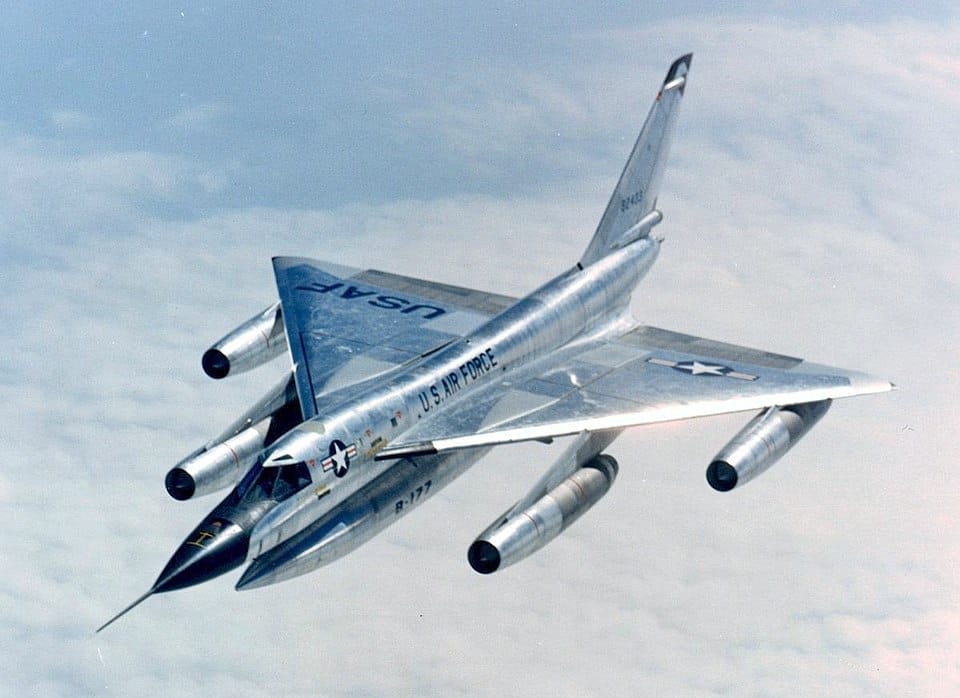
During the Cold War, the US Air Force had a problem. They had built the B-58 Hustler — the first operational bomber capable of Mach 2 — but nobody knew if a human could survive ejecting from an aircraft traveling at twice the speed of sound. The solution? Strap bears into the ejection seats and launch them out of a jet at supersonic speeds. Yes, actual bears. This is that story.
Quick Facts
🐻 Test subjects: Himalayan and American black bears
💨 Maximum ejection speed tested: Mach 2+ (1,300+ mph)
📅 Testing period: Late 1950s to early 1960s
🛩 System tested: Stanley Aviation enclosed ejection capsule
✅ Result: Led to the first supersonic-rated crew escape system
Why Bears? A Surprisingly Logical Choice
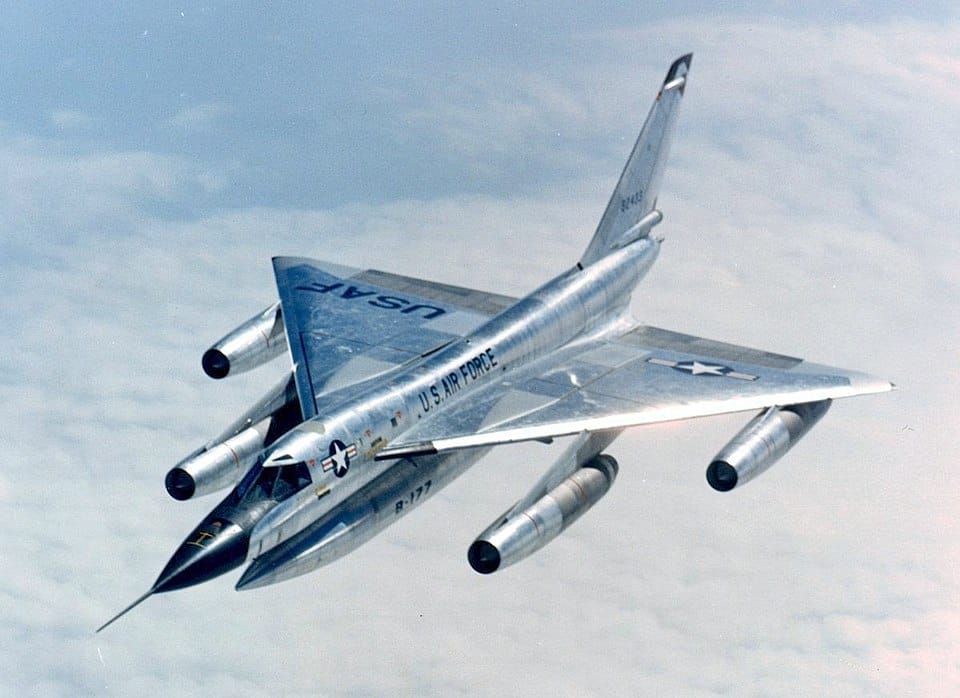
The B-58 Hustler was a revolutionary aircraft, but it created an unprecedented survival problem. At speeds above Mach 1, the windblast forces on an ejecting crew member would be lethal. The air hitting a human body at 1,300 mph would be like getting slammed by a concrete wall. Traditional ejection seats — the kind where you’re basically thrown into the wind on a rocket-powered chair — simply wouldn’t work.
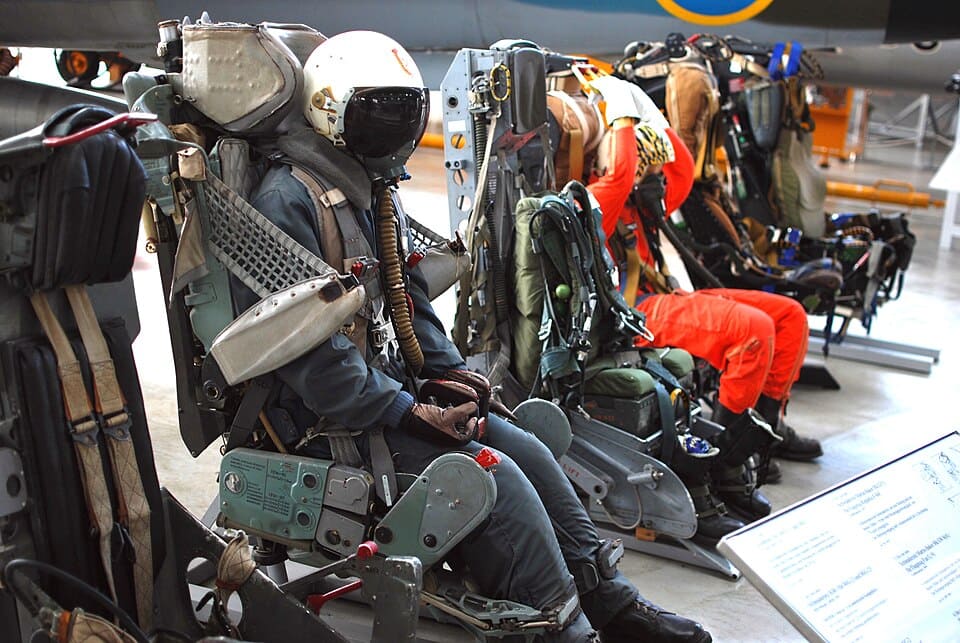
Stanley Aviation developed a radical solution: an enclosed ejection capsule. The crew member’s entire seat would be surrounded by a clamshell enclosure before ejection, protecting them from the windblast. But before they could strap humans into this contraption and blast them out of a jet at Mach 2, they needed to test it on something roughly human-sized. Enter the bears.
Why bears specifically? They were chosen because their body mass (150–300 lbs) was similar to that of an adult human male, and their skeletal structure was robust enough to provide meaningful data about the forces an ejecting crew member would experience. The bears were anesthetized before each test — they slept through the entire experience.
The Tests: Supersonic Teddy Launch

Starting in the late 1950s, a series of tests were conducted at Edwards Air Force Base and other locations. Anesthetized bears were placed into the B-58’s escape capsules, the capsules were sealed, and the bears were ejected from the aircraft at various speeds — from subsonic all the way up to Mach 2.
The capsule worked on a simple but elegant principle: before ejection, the clamshell doors would close around the crew member, creating a pressurized, aerodynamic cocoon. The capsule had its own oxygen supply, a parachute system, and even flotation devices for water landings. Once ejected, the capsule would stabilize itself with small drogue chutes before the main parachute deployed.
The results were, frankly, remarkable. The bears survived. At speeds that would have torn an unprotected human to shreds, the bears — snug in their capsules — came through with minimal injuries. Some bears reportedly woke up from anesthesia seemingly confused but otherwise unharmed, probably wondering why they were dangling from a parachute in the desert.
Not All Fun and Games
It should be noted that while many bears survived these tests, the program wasn’t without controversy — even by 1960s standards. Some bears did sustain injuries, and the ethical questions about using live animals for military testing would later contribute to significant changes in how such research was conducted. By modern standards, strapping a bear into a supersonic bomber and blasting it out with a rocket would be… frowned upon, to put it mildly.
But in the context of the Cold War, the calculus was simple: the Air Force needed to know if its crews could survive ejecting from the fastest bomber ever built. The bear tests provided that data and directly saved human lives when B-58 crews later had to eject for real.
The Legacy: From Bear Capsules to Modern Escape Systems
The B-58’s escape capsule system, validated by the world’s most extreme bear rides, became the first operational crew escape system rated for supersonic speeds. The technology developed for the Hustler directly influenced the escape systems used in later aircraft, including the F-111 Aardvark’s crew escape module — another capsule system that enclosed the entire cockpit.
Today’s ejection seats — like the Martin-Baker Mk.16, used in the F-35 — can handle speeds up to 600 knots, partly because of the data gathered from those bear tests decades ago. Every modern ejection seat owes something to those brave, unwitting, and very sleepy bears who took the world’s most extreme nap at Mach 2.
The B-58 Hustler: A Brief but Brilliant Career
The B-58 itself had a career almost as wild as its ejection seat tests. It set 19 world speed records, could outrun most fighters of its era, and looked like something from a science fiction movie. But it was expensive to operate, difficult to maintain, and was retired after just 10 years of service. Of the 116 built, 26 were lost in accidents — a sobering 22% attrition rate that underscored just how important those escape capsules (and their bear test pilots) really were.
So the next time you see a pilot walk away from a supersonic ejection, raise a glass to the bears of Edwards Air Force Base. They took the ride so humans didn’t have to.
Sources: USAF Flight Test Center historical archives, Stanley Aviation company records, “B-58 Hustler: Convair’s Cold War Mach 2 Bomber” by Bill Yenne, National Museum of the United States Air Force


 English
0 Comments