
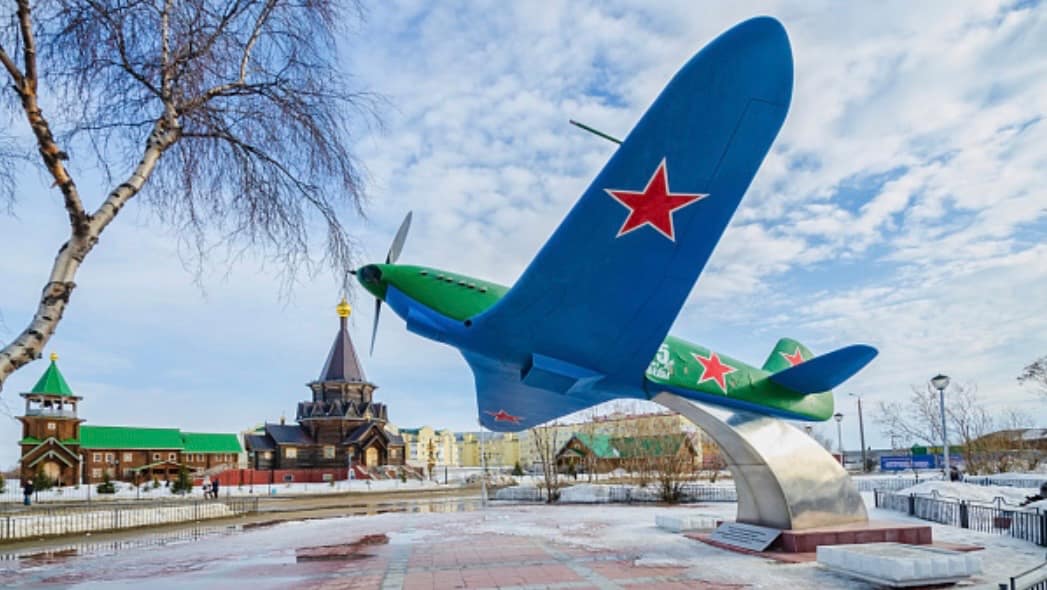
This week at Warbirds Over Wanaka—New Zealand’s premier warbird airshow—the most historically significant Russian fighter aircraft ever to fly in the Southern Hemisphere will take to the sky. The world’s only airworthy Yakovlev Yak-7B is coming. Not the Yak-9, not the famous successor, but the original Soviet fighter that changed everything. And it’s painted in the colours of Normandie-Niemen, the French fighter squadron that flew these machines into hell against the Luftwaffe.
If you know anything about Soviet aviation history, you’re already stunned. The Yak-7B has been lost to time for eight decades. No aircraft survived WWII intact. No examples were preserved. And yet somehow, in New Zealand, in an aircraft owned by collector Mike O’Rourke, the ghost of Soviet fighter aviation has been resurrected and is about to cross the Southern Hemisphere sky.
The Aircraft That Shouldn’t Exist
The Yakovlev Yak-7 began not as a fighter at all. Alexander Yakovlev designed it as an advanced trainer—a powerful, capable machine that would prepare Soviet pilots for frontline combat before they climbed into a real fighter. The original design had room for two pilots, tandem seating, making it simple to have an instructor on board while a student learned what eighteen thousand horsepower felt like under the stick.
But the moment it flew, the Soviet Air Force saw something unexpected: this trainer was capable of being a fighter. Engines that powerful. Controls that sharp. Airframe that could handle stress. The decision came quickly: convert the two-seat trainer into a single-seat fighter. Remove the instructor’s cockpit. Install a 20mm cannon. Armor the seat. The Yak-7 went from training aircraft to frontline combat machine in a single design revision.
By August 1942, the Yak-7B was seeing action near Stalingrad. Approximately 5,120 were built in various configurations. It became the bridge between the earlier Yak-1 and the legendary Yak-9. Every Soviet fighter pilot who survived the war, who became an ace, who led squadrons and trained the next generation—many of them cut their teeth on the Yak-7.
And yet not a single original survives. Not one. Every airworthy Yak-7B in existence today is a reconstruction, a modern rebuild from salvage and spare parts, flown by collectors and preservationists who understand that losing the Yak-7 from living history would be losing a crucial chapter of WWII.
The Normandie-Niemen Connection
The Yak-7B at Wanaka isn’t wearing anonymous Soviet colors. It’s painted in the exact livery of Normandie-Niemen, a fighter squadron that defies easy explanation. Normandie-Niemen was a Free French military unit—volunteers fighting for the French government in exile. They flew with the Soviet Air Force. They flew Soviet aircraft. And they became one of the most decorated fighter squadrons in European history.
The story is this: after the fall of France in 1940, some French fighter pilots refused to accept defeat. They escaped, regrouped, and made their way to the Soviet Union. Stalin, surprisingly, was willing to let them fly. The Normandie Squadron was formed—French pilots in Soviet cockpits, fighting the Luftwaffe on the Eastern Front. Later, after the battle of the Niemen River, they earned the name Normandie-Niemen, forever linking the liberation of France with the Soviet frontier.
In Yak-7s and later Yak-9s, the Normandie-Niemen pilots racked up 273 confirmed victories. They flew in the most brutal air campaign in history, over frozen steppes against the best the Luftwaffe had to send. They became aces. They earned Soviet Hero of the Soviet Union medals. They fought for France while flying for Russia, and their combat record stands as one of the most extraordinary examples of Allied aviation cooperation.
Why the Yak-7B Matters
The Yak-7 was never as famous as the Yak-9 that followed, or as celebrated as the Bf 109 that it battled. In Western aviation history, it’s often overlooked. But the Yak-7 was the aircraft that proved Yakovlev’s design philosophy was sound. It was tough, agile, and reliable in ways that made it beloved by Soviet pilots who flew it. At altitude it struggled—the Yak-7B was optimized for low-level combat where Soviet air doctrine demanded it excel. But at three thousand feet, in a turning fight, against an Me-109, a Yak-7 pilot could hold their own.
The design that made it work: a wooden airframe that was light and easy to repair in field conditions. An M-105PF engine producing 1,240 horsepower at takeoff. Retractable landing gear. Self-sealing fuel tanks—damage wouldn’t mean an automatic fireball. Armament of one 20mm cannon firing through the propeller hub and two 12.7mm machine guns in the cowling. Simple. Effective. Devastating at the right altitude and in the right pilot’s hands.
It was the aircraft that Soviet pilots trusted with their lives. That’s the real measure of a fighter.

The Resurrection at Wanaka
The Yak-7B currently flying at Wanaka is a modern reconstruction, originally built from an Egyptian Yak-11 airframe that was modified to represent the Yak-7B as closely as engineering would allow. The high-back fuselage is distinctive Yak-7 architecture. The engine is era-correct. The control surfaces are built to original specifications. And Mike O’Rourke, the aircraft’s owner, brought it to New Zealand to be flown, to be celebrated, and to remind the world that Soviet aviation legacy is more than just MiG fighters and political ideology.
It took courage to resurrect the Yak-7B. The paperwork alone would destroy most aviation projects. The technical challenges of rebuilding an aircraft from a design that last flew in 1944, using engines and components that are antiques, without original technical drawings, would stop most people. But O’Rourke understood something important: if we don’t keep these aircraft flying, if we don’t keep them alive in our museums and airshows and memories, then the pilots who died flying them—French volunteers and Soviet heroes alike—disappear from history.
That’s what’s arriving at Wanaka this week. Not just a warbird. A time machine. Proof that history can be resurrected. That the courage and sacrifice of the past can be honored by bringing it back to the sky.
The Military Legacy That Matters
At MiGFlug, we’ve spent two decades letting civilians experience Soviet fighter aviation. The MiG-29, the L-39 Albatros, the training flights that put ordinary people into the cockpit of the most advanced combat aircraft ever created. What we’re doing is keeping a tradition alive—the Soviet tradition of putting powerful machines in skilled hands and trusting them to handle it.
That tradition started in the 1930s with Alexander Yakovlev. It lived through the Yak-7, the Yak-9, the postwar fighters that followed. It survives today in every pilot we take to altitude, every civilian who experiences what it felt like to be a Soviet fighter pilot in training. The Yak-7B at Wanaka is carrying that same torch—proof that the machines matter, the history matters, and the pilots who flew them deserve to be remembered.
Quick Facts: The Yak-7B at a Glance
| First Flight | July 23, 1940 |
| Type | Single-seat fighter (originally advanced trainer) |
| Engine | Klimov M-105PF V-12 liquid-cooled, 1,240 hp at takeoff |
| Armament | 1x 20mm ShVAK cannon, 2x 12.7mm UBS machine guns |
| Max Speed | 571 km/h (355 mph) at 5,000m |
| Service Ceiling | 9,500 meters (31,170 feet) |
| Production | ~5,120 Yak-7B variant built |
| Combat Debut | August 1942, near Stalingrad |
| Combat Record | Bridge between Yak-1 and Yak-9, trusted by Soviet and French pilots |
| Surviving Examples | No originals. Modern reconstructions exist worldwide. |
The Yak-7B is arriving at Warbirds Over Wanaka April 3-5, 2026. If you’re anywhere near New Zealand’s South Island, if you have any interest in WWII aviation or Soviet fighter history, this is an event not to miss. The world’s only airworthy Yak-7B will take to the sky and write history in the present tense. That’s what warbirds do. They bring the past into the current moment and remind us why the people who flew them mattered.
Wanaka has long been one of the world’s premier warbird airshows, a gathering place for living history. But this year, with the Normandie-Niemen Yak-7B in the air, it becomes something more. It becomes a memorial to the pilots who flew these machines, fought in them, and sometimes died in them. And it becomes proof that history, when honored properly, never truly dies.
 English
0 Comments