

Quick Facts
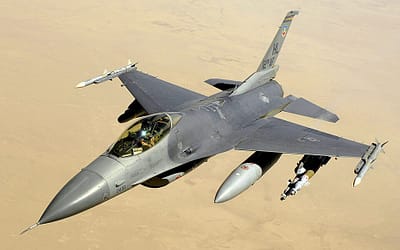
- Aircraft: F-16AM/BM Fighting Falcon (Block 15/20 MLU variants)
- Operator: Ukrainian Air Force
- Threat environment: Russian S-300/S-400 SAMs, Su-35S fighters, layered drone/cruise missile attacks
- Targets destroyed: Over 1,000 aerial targets as of early 2025
- Key challenge: Pilot shortage — far fewer than the 2:1 pilot-to-aircraft ratio needed
Western Tactics, Eastern Skies
The problem was fundamental. NATO air combat doctrine assumes air superiority — or at least air parity — as a starting condition. Western pilots train to suppress enemy air defences with dedicated SEAD packages, establish combat air patrols at medium altitude, and engage threats from positions of advantage. The entire framework rests on controlling the electromagnetic spectrum and owning the sky above 15,000 feet. Ukraine’s F-16 pilots inherited none of those luxuries. Russian S-300 and S-400 batteries blanket the front lines with overlapping coverage. Su-35S fighters patrol with long-range R-37M missiles that can reach out to 200 kilometres. And the sheer volume of incoming threats — cruise missiles, Shahed drones, glide bombs — means Ukrainian fighters are almost always reacting, not initiating. The unnamed pilot whose account was published by The War Zone described the first weeks as a process of systematic unlearning. Altitudes that NATO doctrine considered safe were suicide zones under Russian SAM coverage. Engagement timelines that assumed seconds of decision-making compressed to fractions. Radio procedures had to be rewritten from English-language NATO standard into something that worked in Ukrainian under combat stress.
Learning to Fly All Over Again
The language barrier alone was staggering. Ukrainian pilots trained for years on Soviet-era aircraft with Russian-language procedures and metric instruments. Transitioning to the F-16 meant learning not just a new aircraft but an entirely new way of thinking about flight — in a foreign language, under time pressure, with instructors who spoke no Ukrainian. Emergency procedures, radio calls, threat warnings, weapons employment — every muscle memory built over thousands of hours in MiG-29s and Su-27s had to be overwritten. One pilot described the cognitive load as “flying two aircraft simultaneously: the F-16 with your hands, and the MiG-29 with your instincts trying to take the controls back.”The Tactics That Work
What emerged from this trial by fire is a hybrid doctrine that borrows from NATO’s technology and Ukraine’s hard-won survivability instincts. Low-altitude approaches that Soviet-trained pilots knew intimately are combined with the F-16’s superior radar and electronic warfare capabilities. Hit-and-run intercepts replace the sustained combat air patrols that NATO doctrine prescribes but Ukrainian airspace doesn’t permit. The results speak for themselves: over 1,000 aerial targets destroyed. Ukrainian F-16s have become the primary interceptors against Russian cruise missiles and Iranian-designed Shahed drones, often launching from dispersed airfields with minimal ground support.
Not Enough Pilots, Not Enough Time
The biggest constraint isn’t aircraft — it’s people. To sustain combat operations, squadrons need roughly two pilots per airframe. Ukraine is far below that ratio. The training pipeline, split between European allies and domestic fast-track programs, cannot produce F-16 pilots fast enough to replace losses and expand the force simultaneously. Every sortie carries outsized risk because every pilot is irreplaceable. The loss of a single experienced F-16 aviator represents not just a human tragedy but a tactical catastrophe — taking with it months of institutional knowledge about tactics that exist nowhere in any NATO manual. The playbook Ukraine’s pilots wrote in blood and adrenaline is now the most relevant air combat doctrine on the planet. Western air forces would be wise to study it.Sources: The War Zone, Militarnyi, Defense Express
 English
0 Comments