
For sixty years, the map of American nuclear weapons in Europe has barely moved. Six nations — Belgium, Germany, Italy, the Netherlands, Turkey and, most recently again, the United Kingdom — quietly host U.S.-owned B61 gravity bombs under NATO’s nuclear sharing arrangement. Now that map may be about to grow eastward, into territory the bombs were once aimed at.
According to a report by the Financial Times, citing three people briefed on the discussions, Washington has signalled openness to talks that could see additional NATO members host American dual-capable aircraft — jets certified to deliver nuclear strikes. The countries knocking loudest on the door: Poland and the Baltic states of Latvia, Lithuania and Estonia.
For a continent rattled by Russia’s grinding war against Ukraine, stray drones hitting apartment buildings in Romania, and open nuclear threats from the Kremlin, the symbolism could hardly be heavier. U.S. nuclear weapons have never been stationed on former Warsaw Pact soil.
Quick Facts
- What: U.S.–NATO talks on expanding the nuclear sharing programme, first reported by the Financial Times on 2 June 2026
- Who wants in: Poland and the Baltic states (Latvia, Lithuania, Estonia)
- Current hosts: Belgium, Germany, Italy, Netherlands, Turkey, UK — six nations holding U.S.-owned B61 bombs
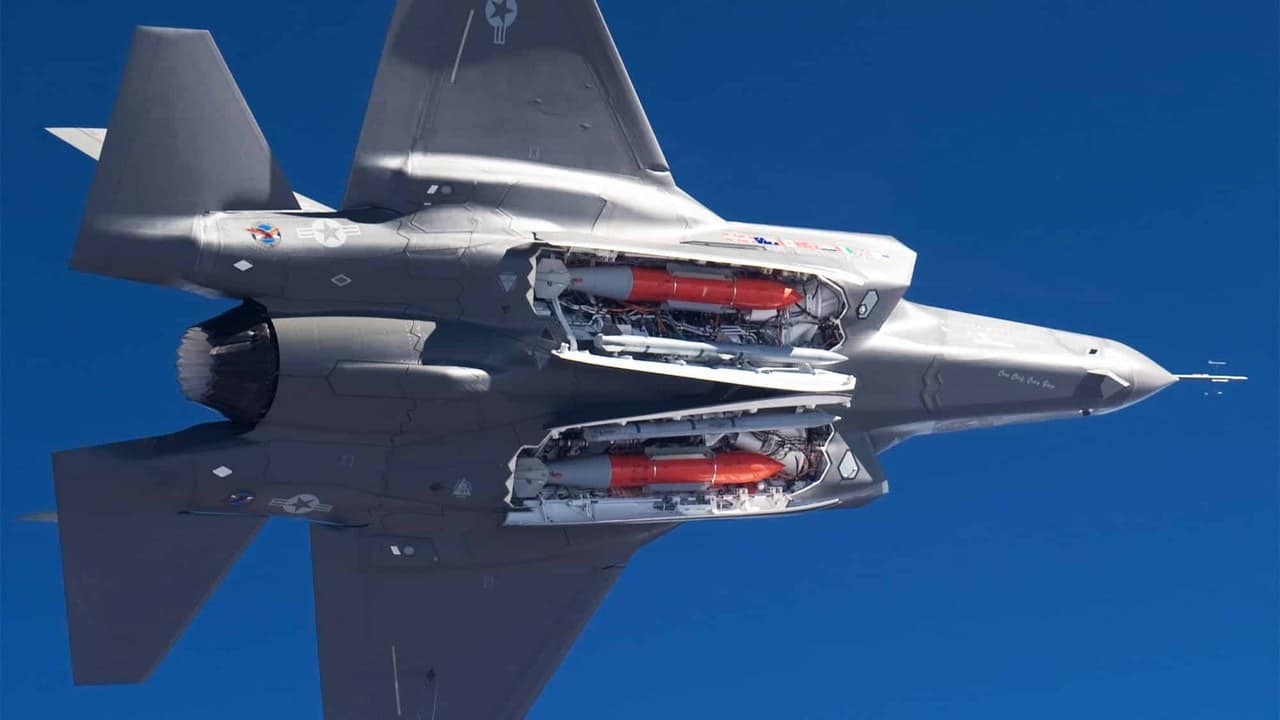
- The weapon: B61 family, in service since 1968; modernised B61-12 certified on the F-35A
- Why now: reassurance for the eastern flank as Washington plans conventional troop drawdowns in Europe
- Timeline: no agreement is imminent — hardened storage vaults would take years to build
A Door Opens to the East
The conversations centre on what the Pentagon calls dual-capable aircraft — fighters wired and certified to carry the B61. Today that increasingly means the F-35A, which formally gained its nuclear certification in October 2023. And here Poland holds a strong hand: its first F-35A “Husarz” jets arrived at Łask Air Base only last month, giving Warsaw exactly the airframe NATO’s nuclear mission is converging on.
The report set off a chain reaction across European capitals. None of the officials involved would speak on the record, but nobody denied the substance either.
Polish enthusiasm is no secret. Warsaw has courted a nuclear role for years, and the country’s leadership has been increasingly explicit about it since Russia stationed tactical nuclear weapons in neighbouring Belarus.
President Karol Nawrocki has made the case personally, framing participation as a matter of national survival on NATO’s most exposed flank.

In March, Nawrocki’s chief foreign policy adviser went further, calling negotiations with the United States on nuclear sharing a “priority” for Warsaw. Poland is simultaneously talking to Paris about France’s own proposal to extend its independent nuclear umbrella — a parallel track that gives Warsaw leverage with both capitals.
Vaults, Not Just Words
Expanding the club is not a matter of flying a few bombs east. The weapons live in WS3 vaults — Weapons Storage and Security Systems sunk into the floors of protective aircraft shelters, hardened against attack and laced with classified anti-tamper measures. None exist in Poland or the Baltics today. They would have to be built, certified and garrisoned before a single live B61 crossed the old Iron Curtain line.
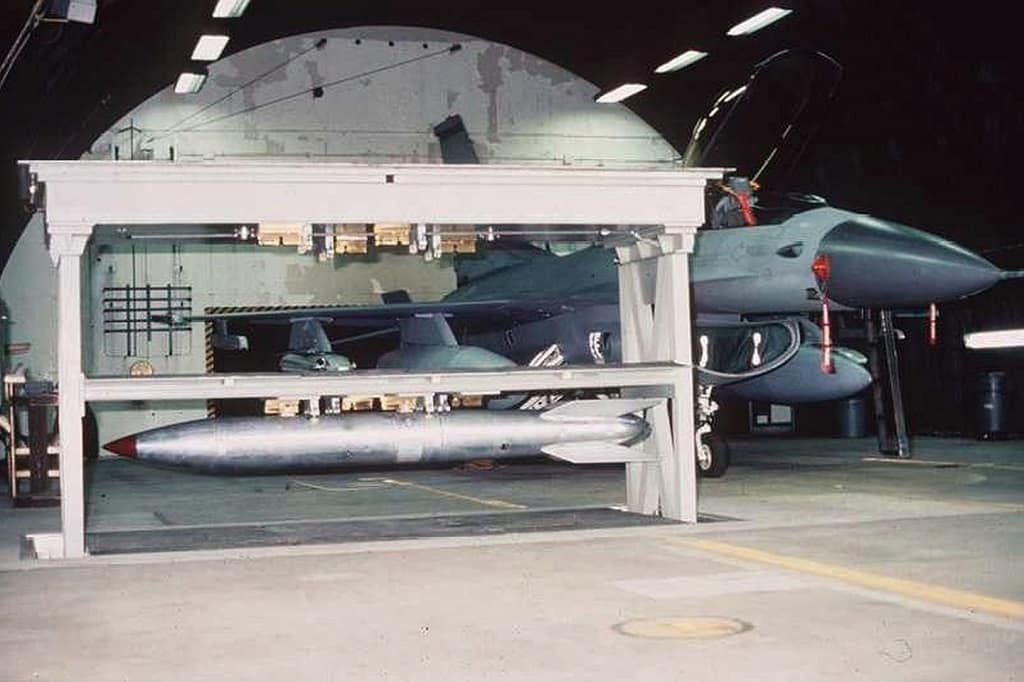
The British precedent shows how slow this machinery turns. RAF Lakenheath already had its WS3 vaults from the Cold War, and it still took several years between the first discussions of returning U.S. nuclear weapons to England and the apparent deliveries that finally resumed the mission after a 17-year absence.
For nations that share a border with Russia or its Kaliningrad exclave, the security requirements would be more demanding still. Even if the political agreement were signed tomorrow, the bombs themselves would be years away.
The Strategic Trade-Off
There is a paradox at the heart of the offer. The Trump administration wants to pull conventional forces out of Europe — plans for troop withdrawals are expected to be presented to allies this month, including a reduction of up to 5,000 personnel in Germany. Forward-deployed nuclear weapons, which require a comparatively small footprint, may be Washington’s way of squaring that circle: fewer boots, bigger deterrent.
Whether Europeans find that arithmetic reassuring is another question. A cancelled-then-reinstated troop rotation to Poland this spring left deep marks in Warsaw, and Bulgaria has threatened to evict U.S. tanker aircraft from Sofia over an unrelated visa dispute. Against that backdrop, the B61 talks are as much about anchoring America to the continent as they are about deterring Russia.
One thing is certain: a B61 stored on Polish soil would be the most consequential movement of American nuclear weapons in Europe since the end of the Cold War — deployed, with grim historical irony, to places earlier versions of the same bomb were designed to destroy.
The video below shows the weapon at the centre of all this: a Sandia National Laboratories flight test of the B61-12 released from a U.S. Air Force F-35A.
Sources: Financial Times, Defense News, Euronews, Air & Space Forces Magazine, Notes from Poland


 English
0 Comments