
Photographers watching the B-2 Spirits taxi out for another Iran mission on March 25 noticed something odd. Rows of white rectangular patches — uniformly sized, black-bordered — running along the leading edges of both wings. On two separate aircraft. Nobody at the Air Force is explaining them.
The patches are prominent and unmistakable. For the world’s most secretive bomber — whose stealth coating is maintained with near-obsessive care — something conspicuous appearing on the wings before a live combat sortie is unusual, to say the least.
Three Theories, No Confirmation
Aviation analysts have converged on a short list of explanations. The most mundane is maintenance: after weeks of high-tempo operations, the B-2’s radar-absorbent coating may have sustained damage or erosion. The patches could be temporary repair seals, protecting vulnerable areas before another long-range mission.
The more intriguing possibility is electronic. The patches’ placement along the wing leading edge is consistent with antenna arrays or sensor apertures. Iran’s air defence network has been severely degraded since Epic Fury began — but the electromagnetic environment is still contested. A new electronic warfare capability or upgraded radar warning receiver, quietly fielded mid-campaign, would explain the timing perfectly.
A third theory: deliberate signature management. Masking panels designed to alter the B-2’s radar cross-section, making it appear as a different aircraft type to any surviving Iranian radar operators. As Iran’s defences adapt, so must the bomber.
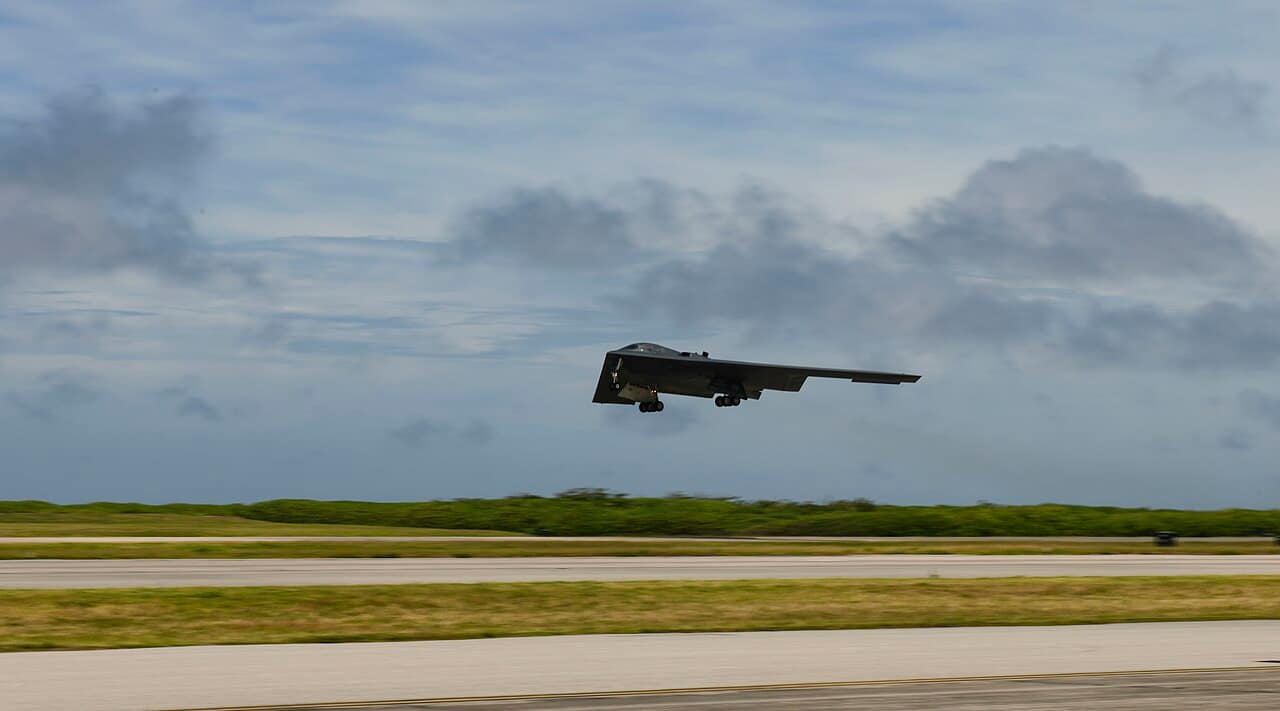
The Bomber That Keeps Secrets
The B-2 Spirit is one of the most classified aircraft in existence. Its stealth coating formulation, radar cross-section measurements, and mission systems are among the most tightly held secrets in the U.S. Air Force. That a novel external modification would appear without explanation — on a live combat aircraft, heading to war — is entirely consistent with how the B-2 programme operates.
What is unusual is that it was photographed at all. The patches appeared, the bombers flew, the images circulated globally. Whatever those white squares are, the world now knows they exist. The Air Force, for now, is saying nothing.
Sources: The War Zone; SOFX; The Aviationist


 English
0 Comments