
| Quick Facts | |
|---|---|
| What It Is | The FAA practical test for an Instrument Rating — the licence to fly in clouds, fog, and low visibility |
| Prerequisites | Private Pilot Certificate, 50 hours cross-country PIC, 40 hours actual or simulated instrument time, instrument ground school, instructor endorsement |
| Duration | Typically 3-5 hours total (1-1.5 hours oral, 2-3 hours flight) |
| Pass Rate | Approximately 70-75% on first attempt |
| Examiner | Designated Pilot Examiner (DPE) appointed by the FAA |
| Key Manoeuvres | Holding patterns, precision and non-precision approaches, partial panel, missed approach, unusual attitudes |
| Instant Failures | Descending below minimums, deviating from assigned altitude/heading beyond PTS standards, unsafe aircraft operation |

You’ve passed your private pilot checkride. You can fly in blue skies on clear days. Now you want the rating that changes everything — the licence to disappear into clouds and come out on a runway centreline, in fog, at night, with 200 feet of ceiling and half a mile of visibility. The instrument rating is the most transformative certification a pilot can earn. And the checkride to get it is the hardest day of your flying career so far.
Here’s exactly what happens, from the handshake to the sign-off.
The Oral Exam: They Want to Know You Think
You show up at the FBO or examiner’s office with a stack of paperwork: logbook, endorsements, written test results, aircraft maintenance records, current charts, and a planned instrument cross-country. The Designated Pilot Examiner (DPE) checks everything. One missing endorsement, one expired chart, and the ride is over before it starts.
Then comes the oral portion — typically 60 to 90 minutes of questions that probe whether you understand the instrument flying environment, not just whether you’ve memorised answers. The DPE will ask about weather: how to read a prog chart, what a convective SIGMET means for your flight, when you’d cancel. They’ll ask about regulations: when do you need to file IFR, what are your alternate requirements, what’s the difference between the MEA and MOCA on a Victor airway? They’ll ask about systems: how does your GPS determine a position, what happens when the vacuum pump fails, what instruments do you lose?
The DPE isn’t looking for textbook recitation. They want to see a pilot who can make decisions. The oral is a conversation, not an interrogation — but it’s a conversation where wrong answers have consequences.
The Flight: Under the Hood, Under Pressure
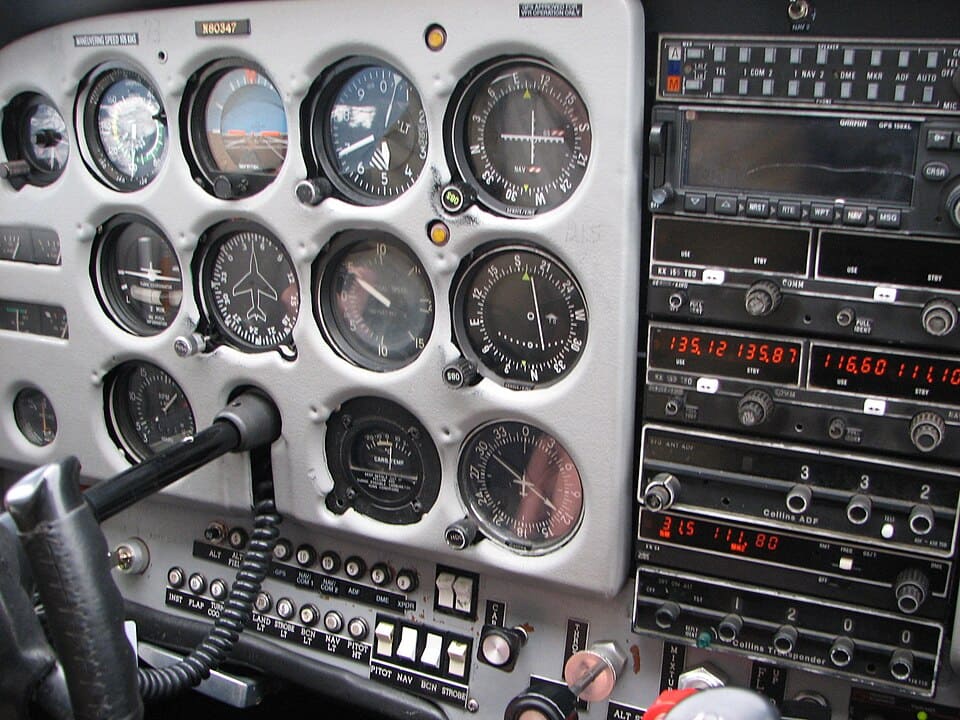
If you pass the oral, you fly. The entire flight is conducted under simulated instrument conditions — you’ll wear a view-limiting device (foggles or a hood) that lets you see the instruments but not outside. The DPE is your eyes for traffic and terrain. Your eyes are on the panel.
The first test is often a holding pattern. The DPE will give you a holding clearance — usually at a VOR or GPS fix — and watch whether you can figure out the entry (direct, teardrop, or parallel), fly the pattern to standards (one-minute legs, proper wind correction), and maintain altitude within 100 feet. Holding sounds simple. Under stress, with the DPE scribbling notes beside you, it is anything but.

The Approaches: Where Checkrides Are Won or Lost
You’ll fly at least two instrument approaches — one precision (ILS) and one non-precision (VOR, RNAV/GPS, or localiser-only). On the ILS, you follow two radio beams — the localiser for left-right guidance and the glideslope for vertical guidance — down to a decision altitude of typically 200 feet above the runway. At that altitude, you look up. If you see the runway environment, you land. If you don’t, you execute the missed approach. Period. Descending below minimums without the runway in sight is an automatic failure.
The non-precision approach is harder than it sounds. Without glideslope guidance, you’re managing your own descent using step-downs — crossing specific fixes at specific altitudes, then levelling off at the minimum descent altitude (MDA) until you either see the runway or reach the missed approach point. The temptation to “duck under” — to cheat a few feet lower to find the runway — is the instinct that kills instrument pilots. The DPE is watching for it.
At some point during the flight, the DPE will simulate an instrument failure — usually by covering your attitude indicator and heading indicator (simulating a vacuum pump failure). Now you’re flying “partial panel,” using only the altimeter, airspeed indicator, turn coordinator, and magnetic compass. This is where smooth, disciplined pilots shine and panicky ones unravel. You may be asked to fly an approach on partial panel. It’s difficult, and it’s supposed to be.
Unusual Attitudes and the Missed Approach
The DPE will also test unusual attitude recovery. You’ll close your eyes (or look down) while the examiner puts the aircraft into an unusual nose-high or nose-low, banked attitude. Then: “You have the aircraft.” You open your eyes, interpret the instruments, and recover — smoothly, without over-correcting, without losing more altitude than necessary. In a nose-low, bank-and-pull situation, the wrong instinct (pulling first instead of levelling the wings) can overstress the aircraft or deepen the dive.
The missed approach is tested on at least one approach. When the DPE says “missed approach” or you reach minimums without the runway, you execute: full power, pitch up, clean up, and fly the published missed approach procedure — which often includes a climb to an altitude, a turn, and re-entry into a hold. The missed approach is essentially a go-around at its most complex, combined with navigation to a new fix, under the hood, while managing configuration changes. It is the hardest single sequence on the checkride.

How to Pass
The instrument checkride isn’t about perfection. It’s about standards. Stay within 100 feet of your assigned altitude, 10 degrees of your assigned heading, and track the ILS needles within one dot. Brief every approach out loud before you fly it. Tell the DPE what you’re doing and why. Communicate clearly with ATC. And when something goes wrong — because something always goes wrong — fix it calmly and keep flying.
The pilots who fail don’t usually crash the checkride in one dramatic moment. They accumulate small errors — altitude creeping, heading wandering, falling behind the aircraft — until the DPE has seen enough. The pilots who pass are the ones who catch their own mistakes before the examiner does, correct smoothly, and never stop flying the aircraft.
When it’s over — when the DPE shakes your hand and signs your temporary certificate — you’ll own the rating that separates fair-weather flyers from real pilots. The instrument rating doesn’t just let you fly in clouds. It makes you a fundamentally better, safer, sharper aviator in every condition.
And you’ll never forget checkride day.

 English
0 Comments