

On or around 31 August 2026, over an Egyptian air base, a Chinese tanker extended its hose and refuelled a French-built Rafale. The Egyptian military spokesman released the image; Chinese accounts amplified it within hours. It is, as far as anyone can document, the first time a Chinese aerial refueller has passed fuel to a Western-built fighter.
That photograph is a better guide to what has changed about China’s armed forces than any carrier launch. Aircraft carriers are what people photograph. Tankers are what decide how far an air force can actually go.
And on the numbers, the tanker is where China has moved fastest — from a single YY-20 airframe in early 2022 to a fleet the International Institute for Strategic Studies now puts at around 40. The rest of the picture is more complicated, and in places a good deal less impressive than the headlines suggest.
Quick Facts
Y-20 airframes built: roughly 95–100 of all variants by 2026 (IISS; Lowy Institute)
Of which tankers: about 40 YY-20A/B (IISS Military Balance 2026)
US refuelling fleet: 471 KC-135R/T and KC-46A as of 30 Sept 2025; IISS counts 550-plus across all services
Average age, KC-135: 62.7 years
Confirmed overseas bases: two — Djibouti (2017) and Ream, Cambodia (2025)
Aircraft carriers: three — Liaoning, Shandong, Fujian (commissioned 5 Nov 2025)
China’s last major war: Vietnam, February–March 1979
The tanker is the story, not the carrier
Aerial refuelling is the least glamorous capability in aviation and the one that most reliably separates a regional air force from a global one. Without it, combat radius is a fixed number set by internal fuel. With it, the number becomes a matter of how many tankers you can put on the track.
China commissioned the YY-20 into PLAAF service on 1 August 2022. Janes tracked the fleet growing from one aircraft in early 2022 to at least eight within a year. The IISS Military Balance 2026 now lists roughly 30 YY-20A and 10 of the re-engined YY-20B. The Lowy Institute, counting every type including the ageing H-6U and Il-78, puts the total at around 35.
The offload matters as much as the count. The YY-20A is credited with roughly 90 tonnes of transferable fuel — Il-78 class. With the more powerful WS-20 engines, Lowy assesses that the Y-20B tanker may roughly match the Airbus KC-30A and the Boeing KC-46A. This is a credible peer-class tanker, not a compromise.

The proof came in August 2026. For Exercise “Eagles of Civilization 2026”, the PLAAF flew six J-16 fighters more than 6,000 km across two continents and four countries in nearly nine hours, refuelled en route by a YY-20A. It was the first J-16 deployment to Africa. A KJ-500 airborne early-warning aircraft, four to five Y-20 transports and a Y-9LG jammer went with them.
Once there, the Chinese jets flew air combat training against Egyptian Rafales and MiG-29M fighters — and then the tanker refuelled one of the Rafales. For an air force that sells aircraft abroad, demonstrating that your tanker can service someone else’s fighter is not a footnote. It is a sales pitch.
The airlifter underneath it all
Every YY-20 is a Y-20 with plumbing. The transport came first, and its story is an engine story. Early aircraft flew on four Russian Soloviev D-30KP-2 turbofans, which were never enough to reach the design payload of 66 tonnes. The Shenyang WS-20, derived from the WS-10 fighter engine core, is what unlocked the airframe; Janes assessed it as entering operational service in March 2023, and new-build Y-20Bs were spotted at PLAAF bases in December 2024.
Fleet estimates diverge and anyone quoting a single precise figure is over-claiming. IISS lists 55 pure transports within a 95-aircraft total. The Lowy Institute counts about 98 airframes built since 2013, at an average of 8.1 per year. Call it 95 to 100, of which roughly 55 are transports.
What the fleet has actually done is more revealing than what it might do. Six Y-20s landed overnight at Belgrade in April 2022 carrying FK-3 surface-to-air missile systems — the largest airlift delivery of Chinese arms to Europe to date. Two flew more than 10,000 km to Tonga after the 2022 tsunami. Six carried 105 tonnes of aid to Afghanistan after the June 2022 earthquake. In April 2026 a Y-20B made the variant’s first overseas trip, to South Korea, to repatriate the remains of Chinese soldiers killed in the Korean War, returning escorted by four J-20 fighters.
That is a real expeditionary record. It is also, notably, almost entirely humanitarian, ceremonial or arms-delivery work — not the sustainment of forces in combat far from home.
The bombers that keep flying other people’s coastlines
China operates roughly 234 H-6 airframes of all marks, according to IISS figures. The H-6K, re-engined and carrying CJ-10A or KD-20 cruise missiles, has a combat radius of about 3,500 km; with those weapons its effective reach extends to 4,000–5,000 km. The Pentagon notes its capability against Guam explicitly.
The H-6N is the strategically significant one: the only refuellable H-6, with a recessed fuselage for an air-launched ballistic missile. Roughly 20 aircraft are assigned to the 106th Air Brigade at Neixiang. It is the airborne leg of China’s nuclear triad, and it exists as a strategic system only because it can take on fuel in flight.

Since 2019 the H-6 has flown eleven joint strategic air patrols with Russian bombers, the most recent on 27 June 2026. The landmark remains 24 July 2024, when NORAD intercepted two H-6Ks and two Tu-95MS inside the Alaska air defence identification zone — the first time Russian and Chinese aircraft were intercepted together, and the closest Chinese bombers have operated to North America. They stayed in international airspace, about 320 km off the coast.
And the H-20? For a decade it has been the aircraft that is always about to appear. No government has confirmed it has flown. There is no confirmed test flight, no photograph of a complete airframe, no flight date. In March 2024 a PLAAF deputy commander said it would be revealed “very soon”. It missed the September 2025 parade. By early 2026 US officials were describing visible progress as frozen, with service entry expected in the 2030s at the earliest. Claims of leaked images showing internal weapons bays circulate on second-tier outlets and remain unverified.
The carriers are the slower half of the story
Fujian was commissioned at Sanya on 5 November 2025 with Xi Jinping present. At roughly 80,000 tonnes and fitted with three electromagnetic catapults, it makes China the second nation after the United States to field EMALS. During 2025 sea trials it launched J-15T, J-35 and KJ-600 aircraft.
The KJ-600 is the genuinely important item, and it is the one least discussed. Neither Liaoning nor Shandong can operate fixed-wing airborne early warning at all — a ski-jump forbids it. Catapults are what make carrier-borne early warning possible, and that changes what a Chinese carrier group can see rather than merely what it can launch.

But 2026 has been a quieter year afloat than the commissioning suggested. Shandong entered dry dock at Yulin around 20 January and was still docked in imagery dated 26 April. Fujian’s documented movements are Taiwan Strait transits and South China Sea operations; there is no confirmed report of it crossing the first island chain as of early September 2026. Chinese state media expect full readiness by the end of the year, but Western analysts describe a multi-year workup, and that projection should not be reported as fact.
The high-water mark remains June 2025, when Liaoning and Shandong operated simultaneously beyond the first island chain for the first time, and Liaoning was detected east of Iwo Jima — the first Chinese carrier to cross the second island chain. There has been no dual-carrier operation since.
Two bases, and a long list of maybes
China has exactly two confirmed overseas military facilities. The PLA Support Base at Doraleh, Djibouti opened on 1 August 2017. The China–Cambodia Joint Logistics and Training Center at Ream was inaugurated on 5 April 2025, after the PLA had kept two naval combatants continuously at its pier since December 2023.
Djibouti is instructive precisely because it underperforms. The Pentagon’s December 2025 report to Congress states the base “has had minimal participation in the protection of China’s citizens or investments” — its publicly stated purpose — and has neither supported noncombatant evacuations nor assisted with the Red Sea crisis. It has a helicopter apron and hangars, but DoD assessed as recently as 2024 that no helicopters are based there. Its runway is roughly 400 metres. A Y-20 cannot use it. There is no air bridge.
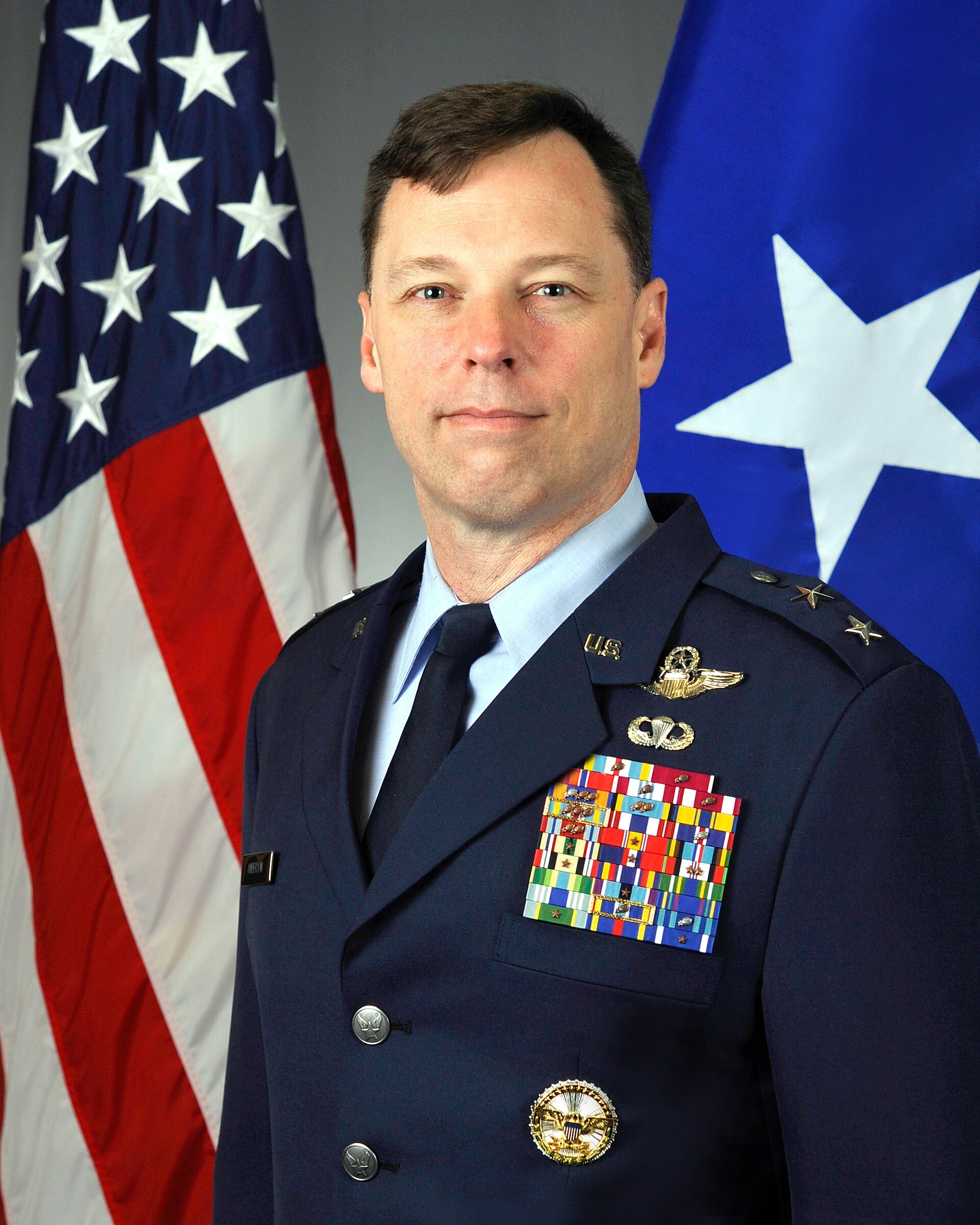
Anderson was describing what a Chinese base on Africa’s Atlantic coast would mean. It is worth being precise about what exists and what does not: no Chinese base exists on that coast, and no hosting agreement has been announced by either party. The 2021 Wall Street Journal report of Chinese intent at Bata in Equatorial Guinea has never been confirmed and is now five years old.
The Pentagon’s 2025 report does name one country on the record — in March 2025 Gabon’s president confirmed Chinese interest in a Gulf of Guinea base — and lists twenty countries China has “likely considered”. That is a US intelligence judgement about Chinese deliberation, explicitly hedged. It is not evidence of negotiations.
Two of those twenty moved the other way in 2026. The Solomon Islands’ new prime minister pledged in June to review the 2022 security pact with China, whose signed text has still never been published. Australia and Vanuatu signed the Nakamal Agreement on 29 June 2026, under which Vanuatu shall not permit its territory to be used for any foreign military base.
What still holds it back
The gaps are large and none of them close this decade. On tankers the ratio is roughly ten to one in America’s favour. On strategic airlift, the USAF fields 222 C-17As and 52 C-5Ms against China’s 55-odd Y-20 transports. On bases it is somewhere around 750 US sites against two.
The honest counterpoint is that the American numbers are old. The KC-135 averages 62.7 years and makes up eighty per cent of USAF tanking; C-17 production ended in 2015. China’s fleet is new and its production line is hot. Trends and totals point in different directions.
The tightest constraint is not aircraft at all. China operates only two Type 901 fast combat support ships, the vessels that sustain a carrier group at distance. Sustained blue-water operations need one on station, one in transit and one in maintenance. With two hulls China can surge a carrier group far from home; it cannot keep one there.
Then there is experience. China’s last major war ended in March 1979 and its last lethal naval action was in 1988. The most compelling evidence for the problem is the PLA’s own vocabulary — PLA Daily editorials about “peace disease”, and the officially promulgated “five incapables”, which hold that commanders cannot judge situations, understand higher intent, make operational decisions, deploy troops or handle the unexpected. RAND has argued the inexperience is real but overrated, given how forensically the PLA has studied American operations since the 1990s.
And the command structure is under visible strain. Nine generals were expelled on a single day in October 2025, including CMC Vice Chairman He Weidong, the most senior officer purged in the modern era. In January 2026 the other vice chairman, Zhang Youxia, and Joint Staff chief Liu Zhenli were announced as under investigation. Five of seven Central Military Commission members have now been purged.
So the reach is lengthening, and the tanker photograph over Egypt is real. But an air force that can fly six fighters to Africa and refuel a Rafale is not yet an air force that can keep them there, and the men who would have to run the campaign keep disappearing.
Sources: US Department of Defense, Annual Report to Congress: Military and Security Developments Involving the People’s Republic of China (23 December 2025); IISS The Military Balance 2026; Lowy Institute (8 January 2026); Janes; Aviation Week; USNI News; The Aviationist; CSIS China Power and AMTI; Air & Space Forces Magazine 2026 USAF Almanac; Japan Ministry of Defense Joint Staff; AP; Defense News; RAND; Jamestown Foundation.


0 Comments