
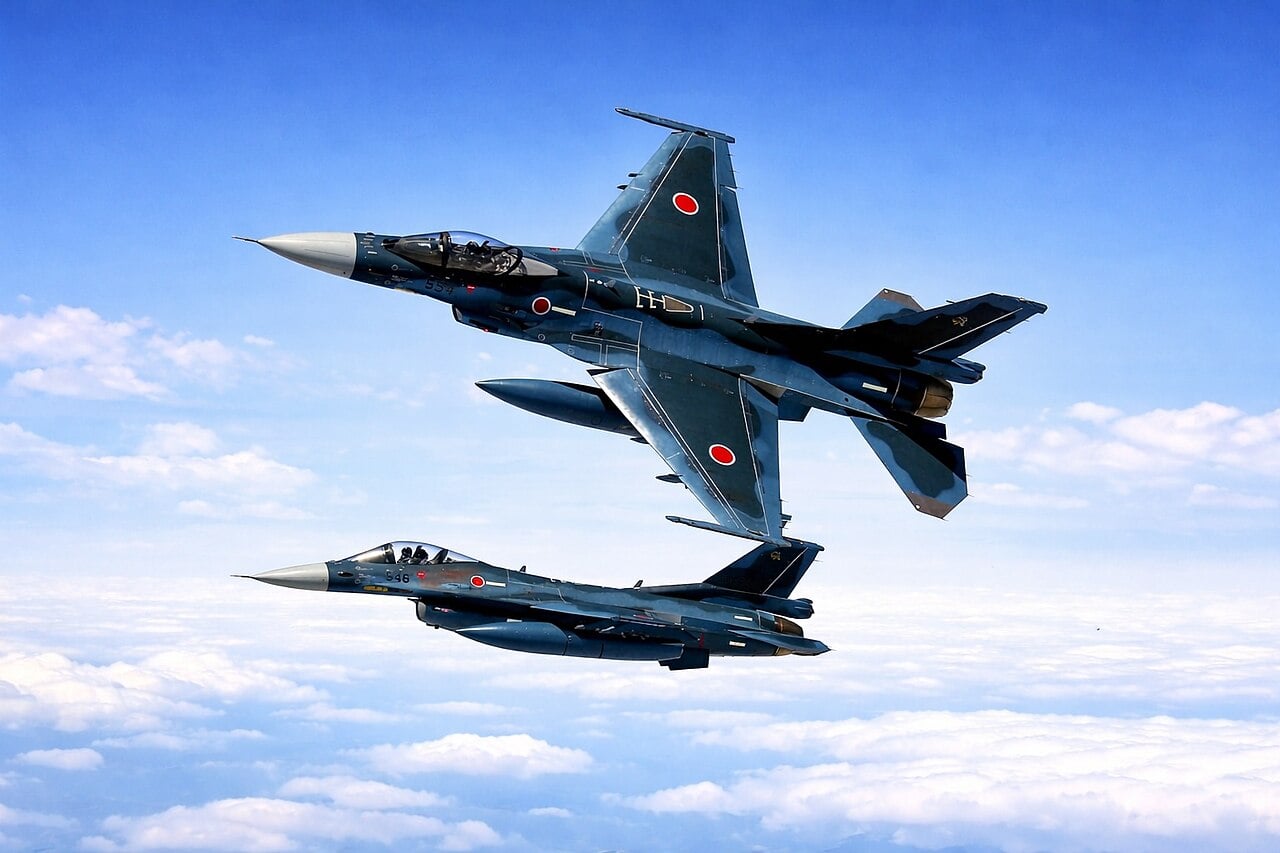
Three Mitsubishi F-2As landed at Air Force Station Jodhpur this month, and in doing so did something no Japanese fighter had ever done: deploy operationally to an Indian air base.
Exercise Veer Guardian 26 runs from 9 to 21 September at Jodhpur and in the surrounding Rajasthan airspace. It is the second edition of a bilateral series that began in Japan in 2023, but the first held on Indian soil — and for Japan, whose fighter force has spent most of its existence operating from home islands, that is the whole point.
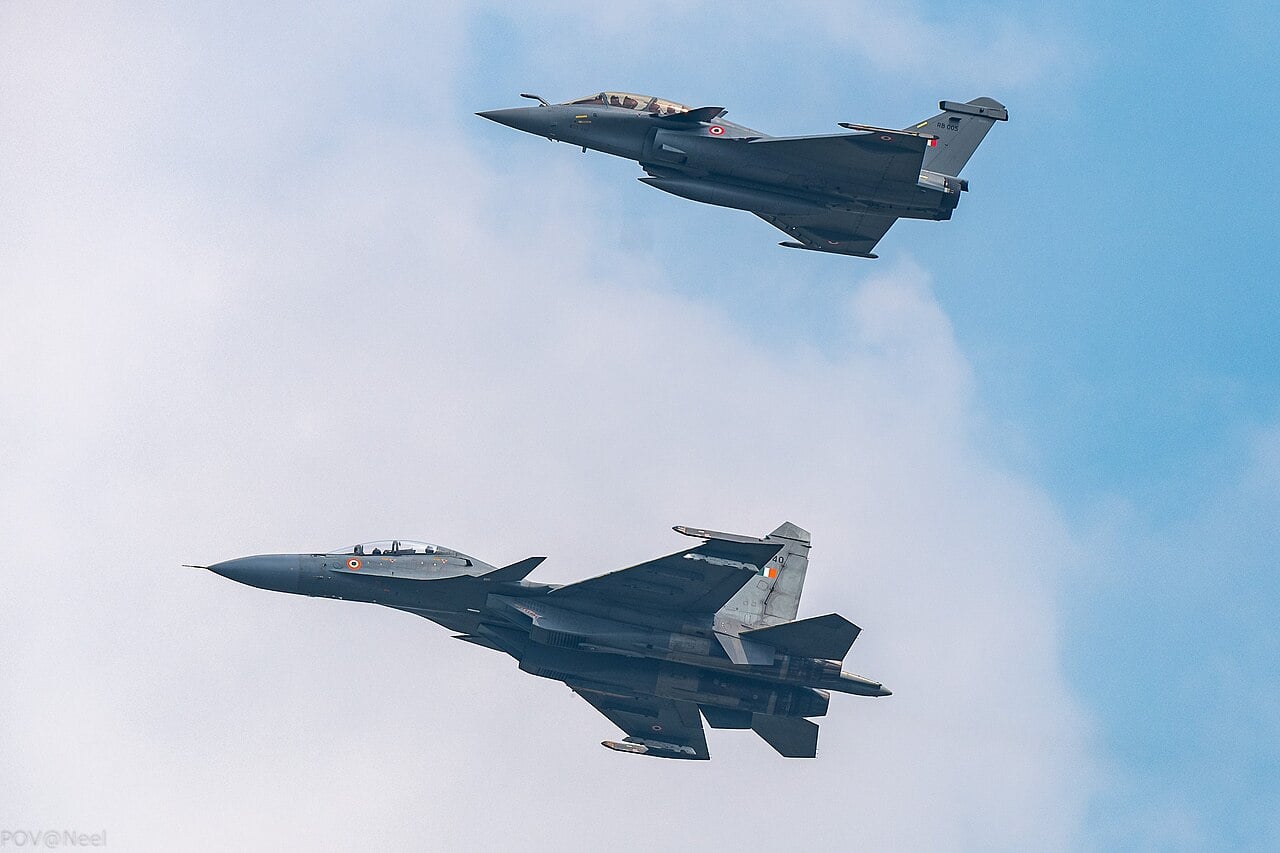
On the Indian side the opposition is unusually varied: Su-30MKI, Rafale and the indigenous HAL Tejas. Three very different aircraft, flown against a fighter almost nobody outside Japan gets to fly against.
Quick Facts
Exercise: Veer Guardian 26, the second edition. The first was held in Japan in January 2023
Dates: 9 to 21 September 2026 per the JASDF Air Staff Office release. The Indian release gives 22 September. Deployment window 1 to 30 September
Location: Air Force Station Jodhpur, Rajasthan, and surrounding airspace
JASDF force: 3 Mitsubishi F-2As of the 8th Air Wing, Tsuiki Air Base, Fukuoka Prefecture, plus approximately 110 personnel
IAF force: Su-30MKI, Dassault Rafale and HAL Tejas
Training: air combat manoeuvring, joint mission planning and operational execution
First: the first operational deployment of Japanese fighter aircraft to an Indian air base
Why Three Aircraft Is a Bigger Deal Than It Sounds
Three fighters is a token force by the standards of a multinational exercise. Tarang Shakti drew dozens. But Japanese fighters almost never leave Japan, and when they do it is usually to Guam or to Alaska for Red Flag. A deployment to Rajasthan is roughly 6,000 km from Tsuiki, across airspace Japan has no standing arrangements with.
The 110-person support element is the tell. Moving three single-engine fighters that far and keeping them serviceable for a fortnight in September heat is a logistics exercise wearing a tactics exercise as a disguise, and it is exactly the capability Japan has spent the last decade deciding it needs.
The F-2 Is the Interesting Aircraft in the Room
The F-2A is often described as a stretched F-16, which undersells it. Mitsubishi and General Dynamics developed it jointly from the F-16C, but the wing is about 25 per cent larger, built substantially from co-cured carbon-fibre composite, and the aircraft carries a Japanese-developed active electronically scanned array radar — the J/APG-1, one of the first AESA sets fitted to a production fighter anywhere.
That last point is why Indian planners are interested. The F-2 is an F-16-class airframe with a large wing and an indigenous AESA, optimised for anti-shipping work with four heavy missiles. Several air forces India cares about fly F-16 derivatives. Very few IAF pilots have flown against one.
The Quad Subtext
Neither air force says the quiet part, and the official language is all interoperability and friendship. But India and Japan are two of the four Quad members, and both have an unresolved land or maritime border problem with the same neighbour.
India has run bilateral air exercises with France, the United States, the United Kingdom, Singapore and the UAE. Japan has been slower to build that habit. Veer Guardian is Japan learning to do the thing India already does routinely, which is show up somewhere else with fighters and make it look ordinary.
Sources: JASDF Air Staff Office press release, 25 August 2026; Indian Air Force exercise release; The Diplomat; ANI.

0 Comments