
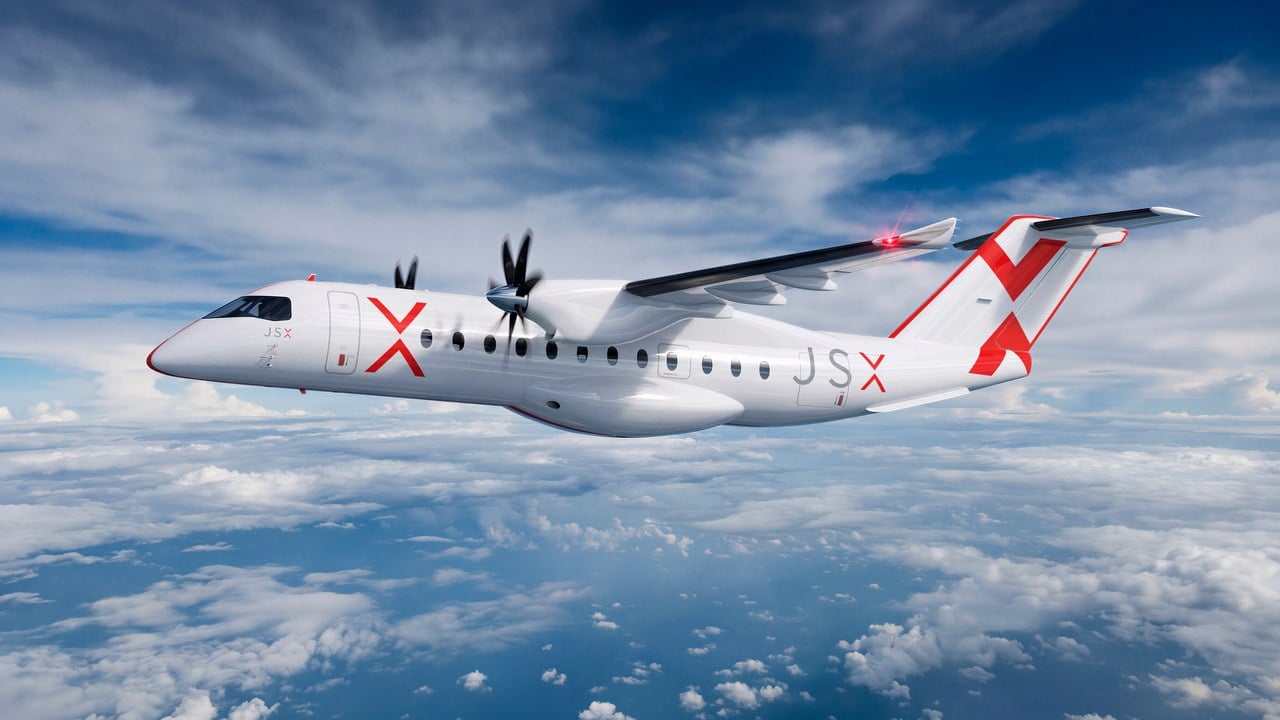
Heart Aerospace has thrown away its own aeroplane and drawn a better one.
On Wednesday the Swedish company unveiled the ES-36, a 36-seat hybrid-electric regional airliner that replaces the ES-30 it has been promoting since 2022. Six more seats, 1,415 lb more payload, two engines instead of four, and half as far again on hybrid power. JSX converted a letter of intent it signed in 2023 into a deposit-backed order for 50 aircraft, with purchase rights for 50 more.
The interesting part is what did not change: the maximum takeoff weight and the battery capacity are the same as the ES-30’s. All of the extra capability came out of the aerodynamics.
Quick Facts
| Aircraft | Heart Aerospace ES-36 hybrid-electric regional airliner |
| Unveiled | Wednesday 23 September 2026 |
| Seats | 36, up from 30 on the ES-30 |
| Propulsion | Two series-hybrid powertrains, each with a 1.65 MW electric motor driving a propeller |
| Range on batteries | 125 miles (200 km) plus reserves |
| Hybrid range | 745 miles (1,200 km) plus reserves, up from 500 miles |
| Range extender | A megawatt-class turbogenerator in each powertrain, driven by a commercial gas turbine |
| Operating cost target | At least 40 per cent below legacy regional aircraft |
| Launch order | JSX, 50 aircraft deposit-backed, with rights for 50 more |
| Timeline | First preproduction flight targeted late 2028; certification targeted 2031 |
Four Propellers Down to Two
The most visible change is the nacelle count. The ES-30 carried four; the ES-36 carries two. Heart says the switch reduces drag, simplifies the integration of the hybrid-electric propulsion system, shrinks the wing and cuts maintenance costs, for the straightforward reason that there is half as much propulsion hardware to look after.
Each of the two powertrains pairs a 1.65-megawatt electric motor driving a propeller with its own megawatt-class turbogenerator, which in turn is driven by a compact commercially available gas turbine. That is a series hybrid: the turbine never drives the propeller, it makes electricity, and the electric motor does all of the propulsion. Batteries charged on the ground give 125 miles of flying with no fuel burned at all; beyond that the turbogenerators come on and extend the range to 745 miles.
Why a Launch Customer Matters More Than the Aircraft
Electric and hybrid-electric aircraft programmes are not short of good drawings. What they are usually short of is an airline willing to put money down, and JSX has now done that: the 2023 letter of intent has become a deposit-backed purchase commitment, which also buys the carrier early delivery positions.
JSX is an unusual fit. It runs a public-charter model out of private terminals, with cabins capped at 30 seats and no middle seat, which means it already operates in exactly the segment the ES-36 is sized for, and it is not fighting for slots at congested hubs where a 36-seat aircraft makes no economic sense.
The Dates Are the Risk
Heart is targeting first flight of a preproduction ES-36 in late 2028 and certification in 2031. Those are the numbers to hold the company to, and the ones most likely to move: certifying a novel propulsion architecture is a regulatory problem as much as an engineering one, and the certification basis for a megawatt-class hybrid powertrain carrying fare-paying passengers is still being written.
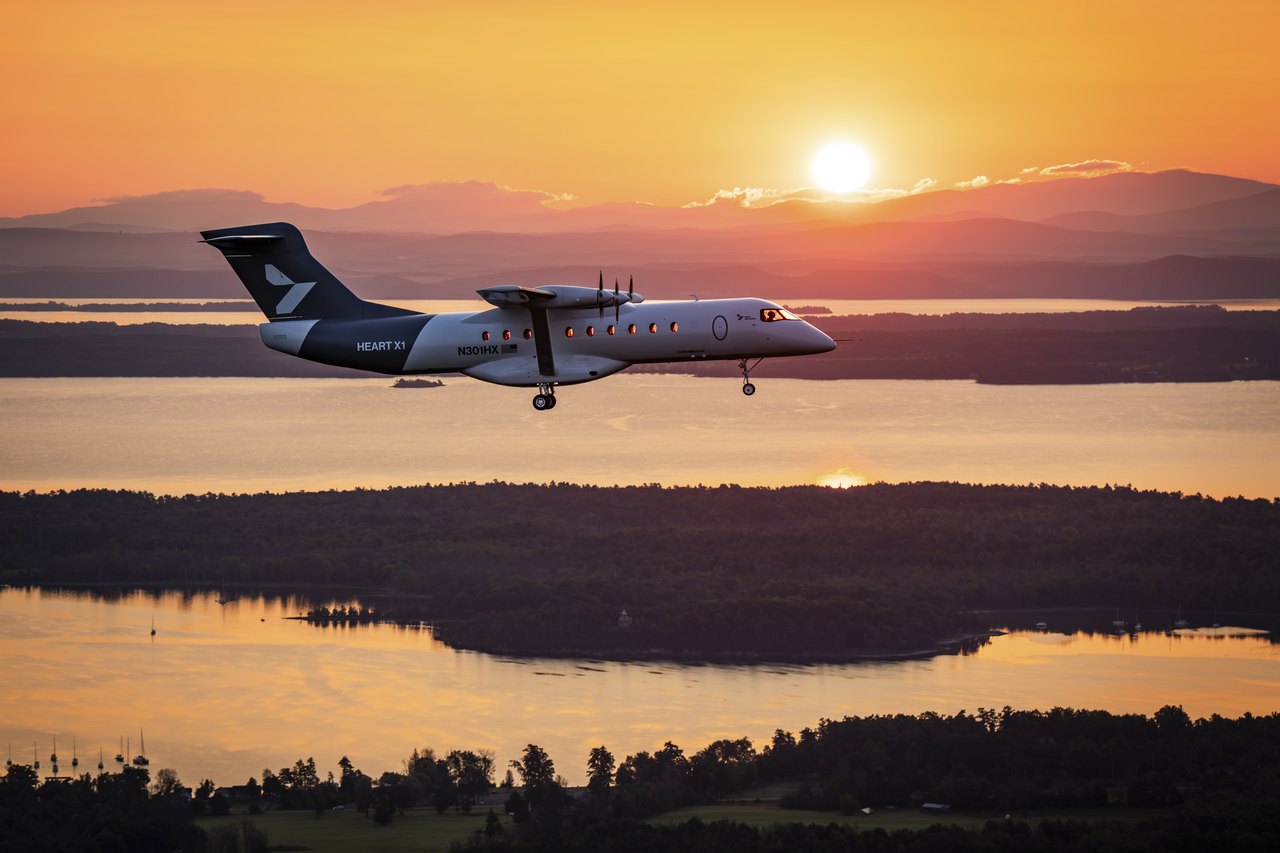
Heart Aerospace’s own film of the X1 demonstrator’s first flight in August 2026.
What is different about Heart is that it has actually flown something. The X1 demonstrator took to the air in August, and the redesign announced this week is explicitly the result of what that aircraft taught the engineering team. A company that has already discovered what it got wrong is in a better position than one that has not started finding out.
Sources: Heart Aerospace; FLYING Magazine; Aviation Week; Economy Class & Beyond; Reuters.


0 Comments