
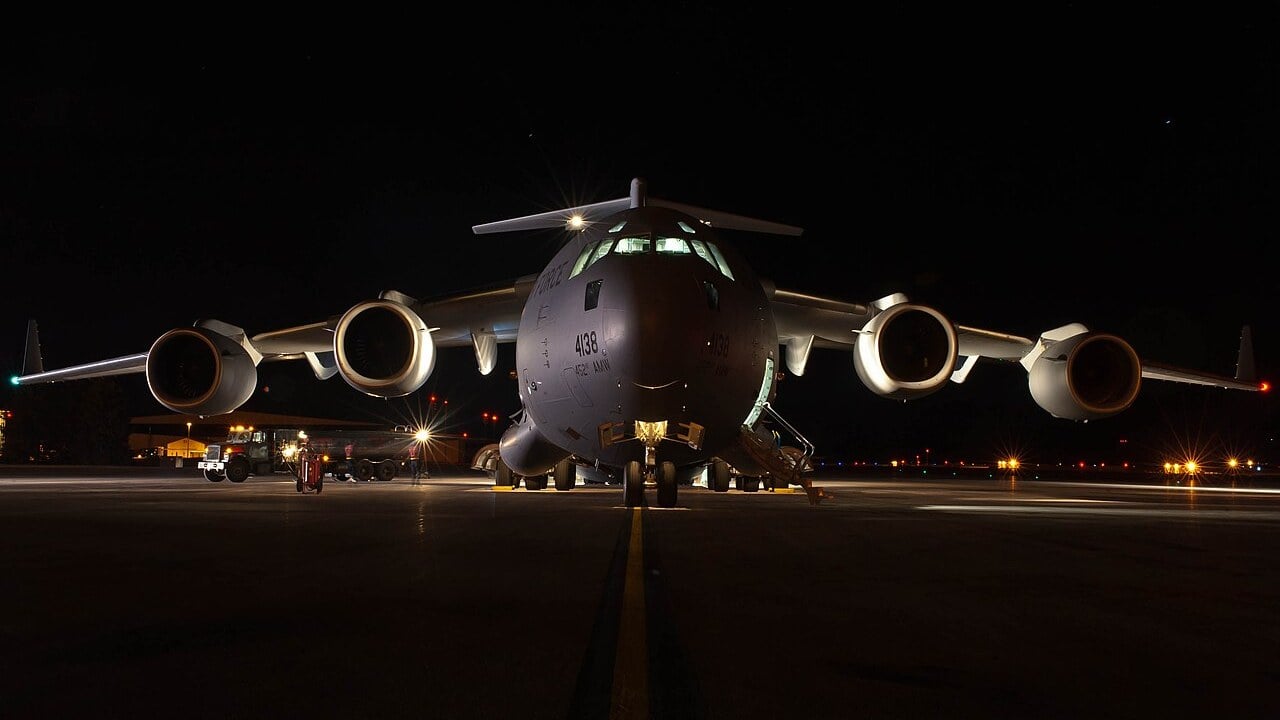
On 15 August 2021, a US Air Force C-17 Globemaster III with the call sign REACH871 sat on the ramp at Hamid Karzai International Airport in Kabul while Afghans who had made it through the gates climbed up the open ramp. The crew decided to take off with the aircraft packed full. The first count, made on buses after landing in Qatar, came to around 640 people. When the Air Force added the children who had sat on adults’ laps, the figure rose to 823.
According to Air & Space Forces Magazine, that broke the C-17’s previous record of 670, set evacuating Tacloban after Super Typhoon Haiyan in 2012. A C-17 configured for large passenger loads normally carries about 300. A recording of the radio exchange that night captured a controller trying to take the number in.
Reach 871 became the image of the Kabul airlift. But the flight itself was the visible tip of a much larger machine: the system that lets a country move an army, or a city’s worth of evacuees, across an ocean by air. That system is called strategic airlift.
Quick Facts
- Strategic airlift: Moving troops, vehicles and materiel over long distances between theatres, as opposed to tactical airlift within one
- Main types: C-17 Globemaster III, C-5 Galaxy, An-124 (largely by charter); A400M sits between tactical and strategic
- C-17 payload: Up to 164,900 lb (about 75 t) according to Boeing
- Payload-range: C-17: more than 6,200 nmi with no payload; roughly 2,400 to 2,800 nmi unrefuelled with 160,000 lb
- CRAF: About 450 airliners committed in 2021-2022 (changes monthly); three stages, 24 to 72 hours to respond
- CRAF activations: Three: Desert Shield/Storm (1990-91), Iraq, and the Kabul evacuation (Stage I, 22 August 2021, 18 aircraft)
- C-17 record: 823 people on REACH871 out of Kabul, 15 August 2021
Strategic versus tactical
Military airlift comes in two kinds. Tactical airlift moves people and supplies within a theatre of operations, typically with turboprops such as the C-130 Hercules that can land on short, rough strips and drop loads by parachute. Strategic airlift moves vehicles, materiel and troops over long distances between bases that are nowhere near each other, bringing forces into a theatre from the other side of the world.
The line between them is blurrier than it used to be. The C-17 was designed to do both: Boeing describes it delivering large equipment, supplies and troops directly to small, austere airfields anywhere in the world, combining long-range haul with short-field performance. The Airbus A400M sits deliberately in between, carrying loads too large for a C-130 while still using rough strips, and the Embraer C-390 works mostly at the tactical end. Our comparison of the C-390, C-130J and A400M sets out what their makers actually publish.
The heavy end of the fleet
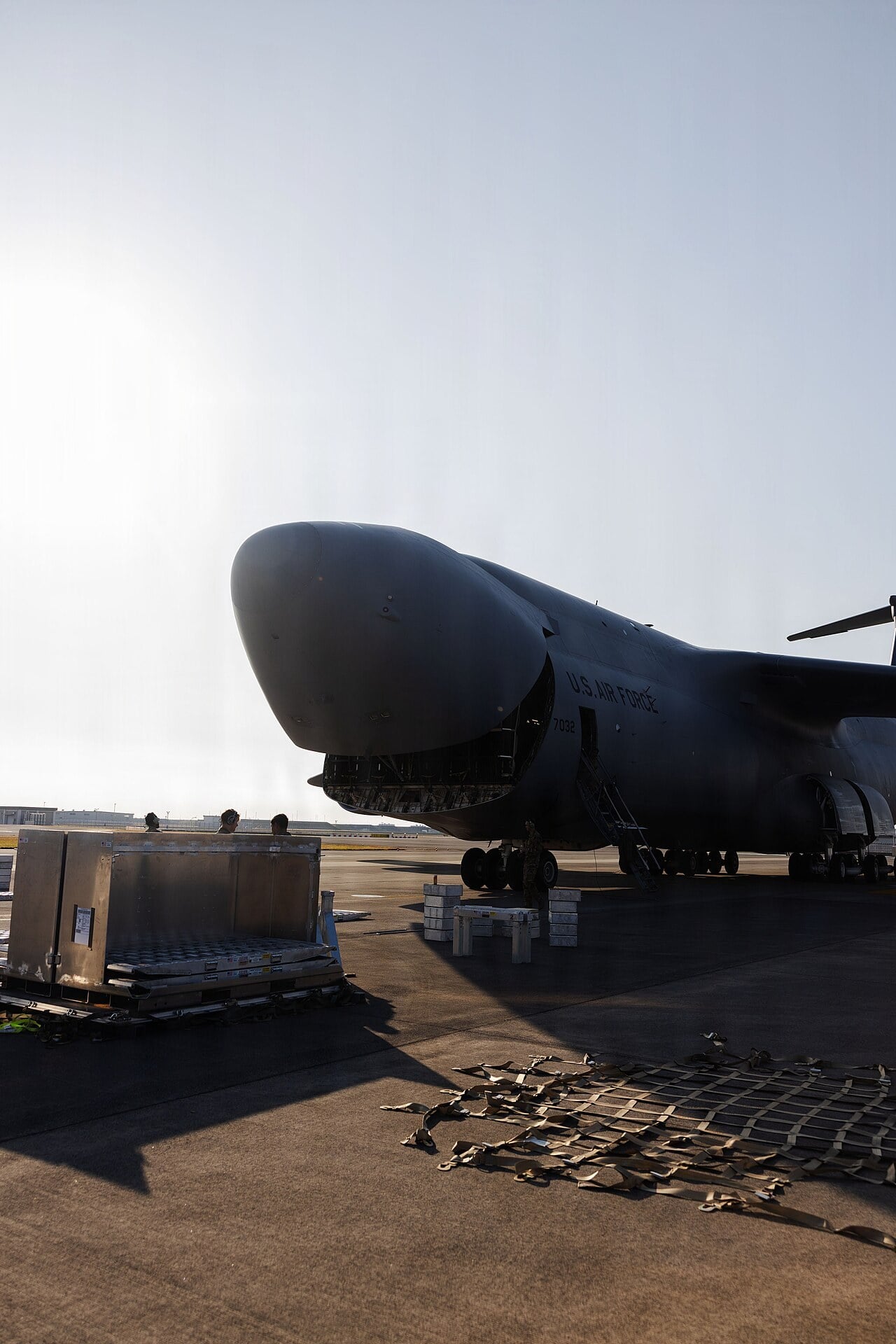
At the top of the scale sit the outsize lifters. The Lockheed C-5 Galaxy gives the US Air Force heavy intercontinental strategic airlift and can carry outsized and oversized loads, including all air-certifiable cargo. Its cockpit sits well above the cargo deck so that loads can go in through a nose door, and the modernised C-5M carries new General Electric engines fitted under the Reliability Enhancement and Re-engining Program that began in 2006.
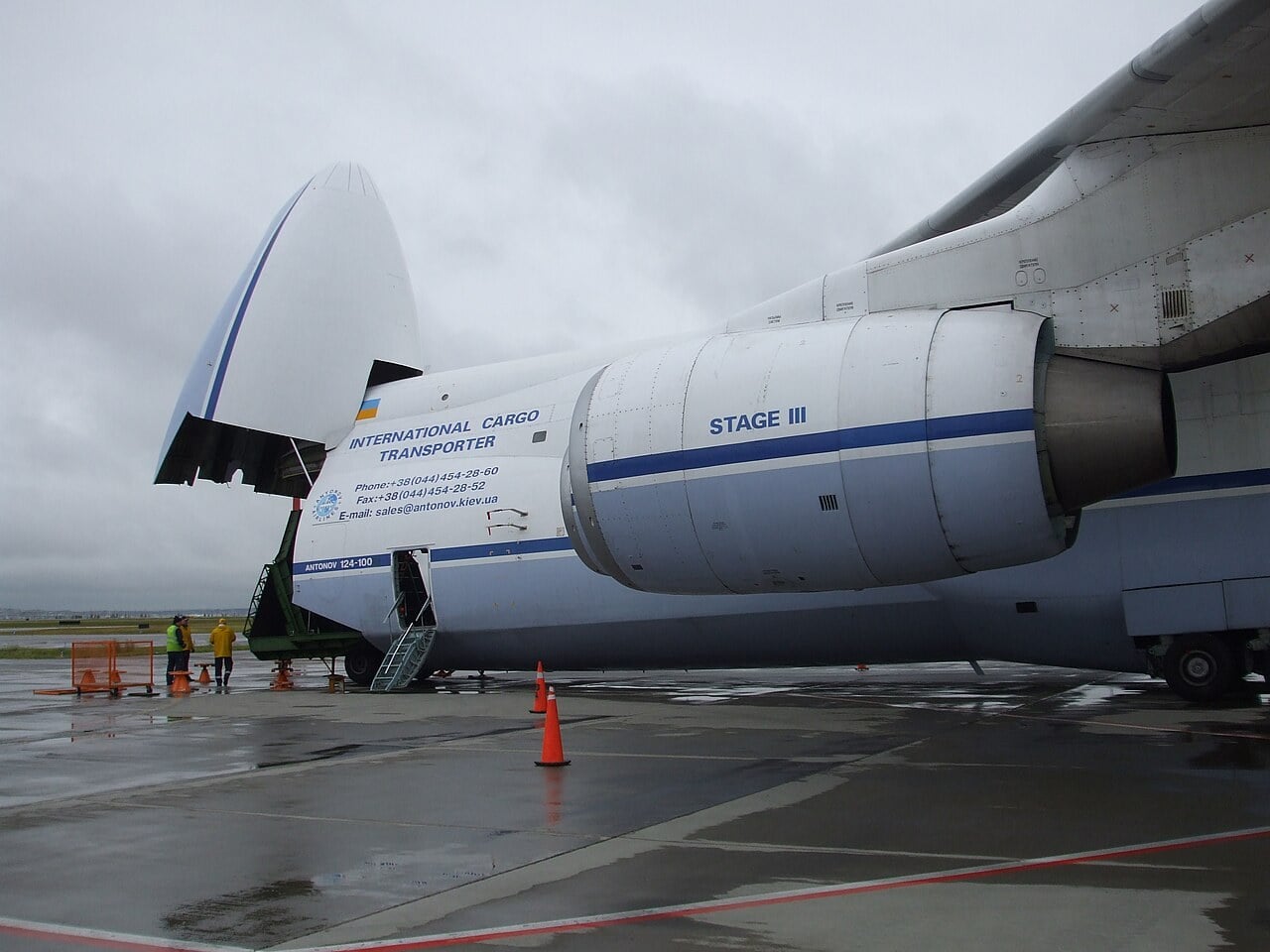
The Soviet answer was the Antonov An-124 Ruslan, which bears many external similarities to the C-5, including a double fuselage that allows a rear cargo door to open in flight, and a nose that opens for loading. In the West it now works largely through charter, which is how European air forces have long bought outsize lift, as explained in our pieces on the An-124 charter business and on why nothing can replace it.
Smithsonian Channel on the way cargo is loaded into a C-5 Galaxy.
Payload against range
Every airlifter lives on one trade-off. Maximum takeoff weight is fixed, so every kilogram of fuel taken on board is a kilogram of cargo left behind. Carry the heaviest load and the range shrinks; fly the longest leg and the load shrinks. Planners read it off a payload-range chart, and it decides how many aircraft a deployment needs and where they must stop.
The C-17 shows the spread. Boeing says it carries up to 164,900 pounds, about 75 tonnes, and can fly more than 6,200 nautical miles with no payload. With a load of 160,000 pounds the unrefuelled range falls to roughly 2,400 nautical miles for the first 71 aircraft and about 2,800 for later ones fitted with an extra centre wing tank. Air-to-air refuelling, which the C-17 can take, is what turns a chain of fuel stops into a direct flight.
That is why strategic airlift is a network rather than a fleet. It needs tankers, en-route bases and permission to overfly. Operation Nickel Grass in 1973, when C-5s and C-141s flew a lifeline to Israel via the Azores, is the classic case; we have told that story in Nickel Grass: The Airlift That Saved Israel.
The airline reserve
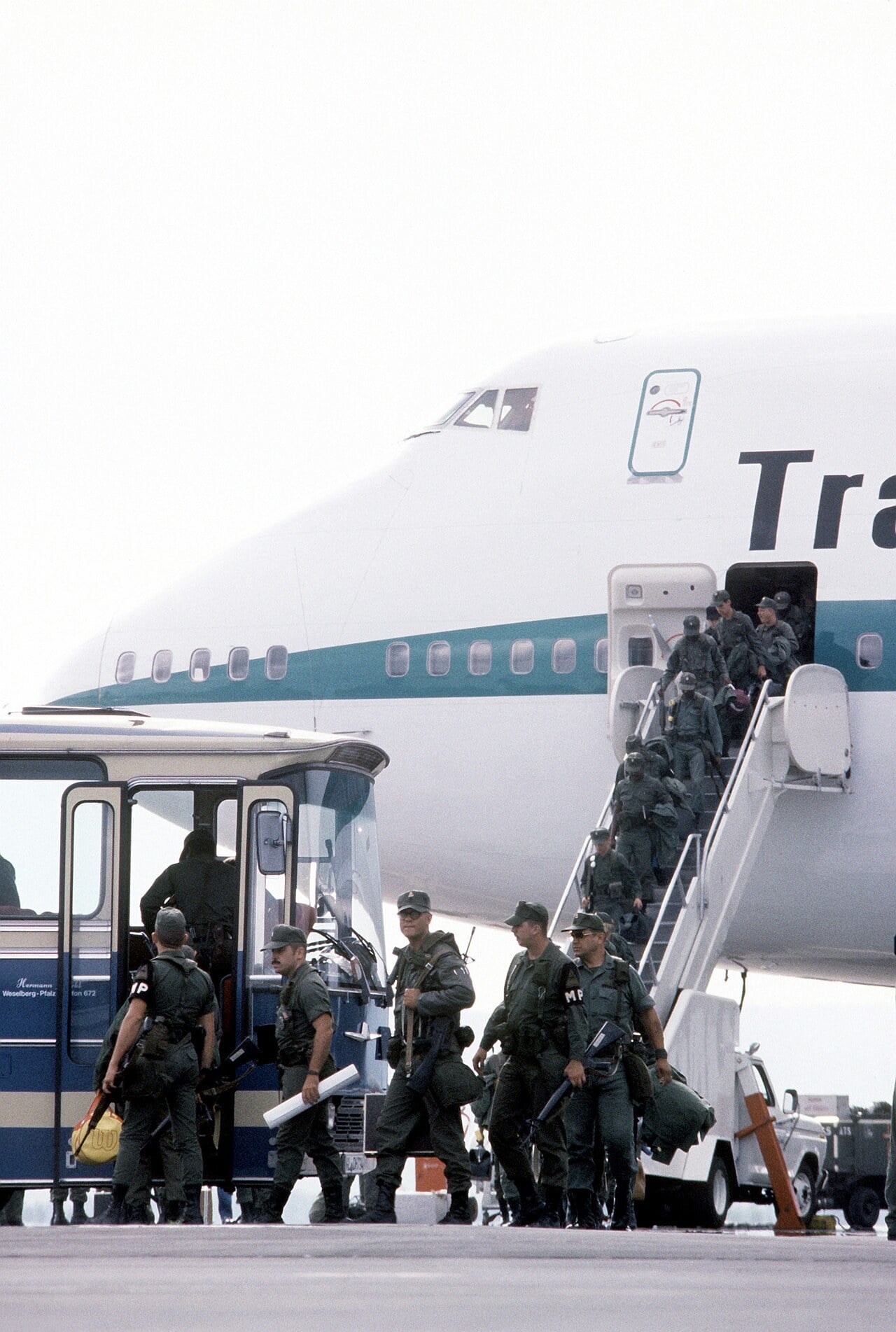
Even the US Air Force does not own enough aircraft for a big war. The gap is filled by the Civil Reserve Air Fleet, CRAF, created at the start of the 1950s as a direct result of the 1948-49 Berlin Airlift, when civilian aircraft had been pressed into service in an ad hoc way. Airlines volunteer aircraft by contract with US Transportation Command; in return they get preference for the military’s peacetime passenger and cargo business.
The terms are strict. For the international segments a carrier must commit at least 40 percent of its CRAF-capable fleet, the aircraft must be US-registered, and it must provide four complete crews for each one. In 2021 and 2022 the commitment stood at about 450 aircraft, a figure the Air Force says changes monthly. Activation comes in three stages, sized for a regional crisis, a major theatre war and national mobilisation, with carriers given 24, 48 or 72 hours to have aircraft ready depending on the stage.
Pilot and YouTuber Juan Browne (blancolirio) explains the Civil Reserve Air Fleet on the day of its 2021 activation.
Activation is rare. The first came for Desert Shield and Desert Storm in 1990 and 1991, the second for the Iraq war. The third was Kabul. On 22 August 2021, Defense Secretary Lloyd Austin activated Stage I, asking for 18 aircraft: three each from American Airlines, Atlas Air, Delta Air Lines and Omni Air, two from Hawaiian Airlines and four from United Airlines.
Those airliners never flew into Kabul. They moved evacuees onward from staging bases such as Ramstein Air Base in Germany and the bases in the Gulf, freeing military aircraft for the dangerous leg in and out of Afghanistan. Under CRAF the carriers keep their civil status under FAA rules while Air Mobility Command exercises mission control.
The Pentagon’s announcement of that activation put the dependency plainly.
Moving an army is a logistics problem
Strip away the drama and strategic airlift is arithmetic. Count the tonnes, divide by what each aircraft can lift over the distance, add the tankers and the stops, and you know how many sorties a deployment needs. The US Air Force runs that sum every day with C-17s, C-5s and tankers, and in a real crisis it calls in the airlines.
Even the routine legs had their stories. On 21 August 2021 a C-17 flying as Reach 828 landed at Ramstein with an Afghan woman in labour, and medics from the 86th Medical Group delivered her baby girl in the cargo bay, as Air Mobility Command shared.
Reach 871 was not planned. It happened because a crew looked at a loaded aircraft and a deteriorating airfield and decided the numbers worked. Everything that made the rest of the Kabul airlift possible, from the staging bases to the CRAF airliners carrying people onward, had been planned for decades.
Sources: Air & Space Forces Magazine, Air Force Times, The War Zone, Boeing (C-17 Globemaster III), US Department of Defense, Air Mobility Command
Header photo: U.S. Air Force photo by Airman 1st Class Zachary Hada / Wikimedia Commons, public domain
0 Comments