
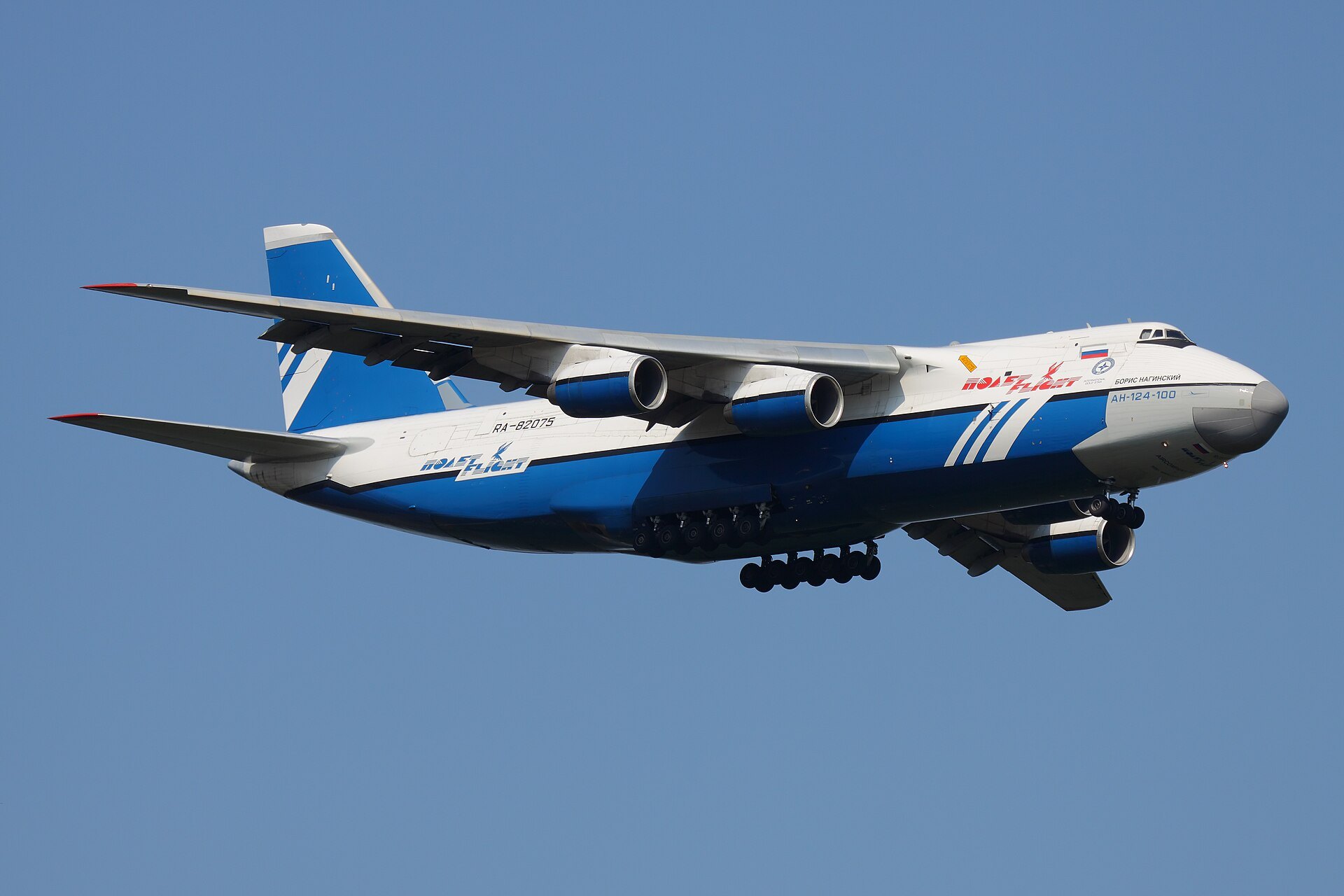
Antonov An-124 Ruslan
The Heavy-Lift Giant
The largest military transport ever built in series, the An-124 Ruslan carries 150 tonnes through doors at both ends, set world records in the 1980s and became the aircraft the world charters when nothing else is big enough.
The An-124: how Antonov built a giant for the Soviet missile age
At the 1985 Paris Air Show, Western visitors at Le Bourget walked into the hold of an aircraft larger than anything their own air forces flew. The Antonov An-124 Ruslan had a nose that swung upwards to reveal a cargo hold 36 m long, 6.4 m wide and 4.4 m high, landing gear that could kneel to bring the floor down to loading height, and room for 150 tonnes of cargo. Its existence had been an open secret since its first flight on 24 December 1982, but seeing it was another matter. The Soviet Union now had a strategic transport that outlifted the American C-5 Galaxy, and Antonov had produced it in Kyiv after more than a decade of work.
Design had begun in 1971 under the project number Izdeliye 400, with Viktor Tolmachev as chief designer. The requirement was to carry the heaviest loads of the Soviet armed forces, including missile systems, armoured vehicles and outsize equipment, over intercontinental distances. The answer was a high-wing aircraft powered by four Lotarev D-18T high-bypass turbofans, with doors at both ends, onboard cranes, a pressurised upper deck for crew and passengers and, unusually for its generation, a fly-by-wire control system. The name Ruslan comes from the hero of Pushkin’s poem Ruslan and Ludmila; NATO called it Condor. Entering service in 1986, it was produced in Kyiv and at Aviastar in Ulyanovsk until 2004, with 57 built.
The end of the Cold War gave the An-124 a second career. Certified for civil use in 1992, it became the workhorse of companies such as Antonov Airlines and Volga-Dnepr, carrying locomotives, satellites, power-station turbines, aircraft fuselages and relief supplies around the world. NATO nations chartered it through the SALIS programme to move equipment to Afghanistan, earthquake relief to Pakistan and peacekeepers to Darfur. War has since split the fleet: Russian aircraft are largely cut off from Western airspace, Ukrainian aircraft fly for NATO and commercial customers from Leipzig, and one was destroyed at Hostomel in February 2022, in the first hours of the battle for the airfield.
01The An-124’s records: 171 tonnes and 20,000 km
The An-124 announced itself to the world with records. In July 1985, Soviet crews lifted 171,219 kg of cargo to 2,000 m, and 170,000 kg to 10,750 m, setting a series of payload-to-altitude marks that beat those of the C-5 Galaxy. In May 1987, an An-124 flew a closed circuit of 20,151 km without refuelling in about 25.5 hours, setting a distance record for its class.
The records were partly propaganda, but they were also real demonstrations of the aircraft’s capability. They established the An-124 as the reference point for heavy airlift, a status it kept even after the six-engined An-225 Mriya, developed from it, flew in 1988 to carry the Buran space shuttle. Only one An-225 was completed, and it was destroyed at Hostomel in 2022, so the An-124 remained the largest production cargo aircraft in regular service, outranking the Boeing 747-8F and C-5M in payload and hold volume for outsize loads.
02The An-124 and war: Hostomel, Leipzig and Toronto
Russia’s full-scale invasion of Ukraine on 24 February 2022 divided the An-124 fleet. At Hostomel, Antonov’s home airfield near Kyiv, Russian airborne forces attacked the airport in the first hours of the war. An-124 UR-82009, at the airfield for maintenance, was destroyed by artillery fire during the fighting, alongside the An-225 Mriya. Five other Ukrainian An-124s were away from Ukraine and were diverted to Leipzig/Halle, which became the base of Antonov Airlines’ operations.
Russian-registered An-124s were caught by airspace closures. One, operated by Volga-Dnepr and registered RA-82078, had landed at Toronto Pearson on 27 February 2022 and was unable to leave after Canada closed its airspace to Russian aircraft. In June 2023, Canada seized the aircraft under its sanctions legislation, with the stated intention of forfeiting it to support Ukraine. Other Volga-Dnepr aircraft were stranded elsewhere, and the Russian fleet was largely restricted to Russian state and military flights and destinations that remained open to it.
What makes the An-124 special
The An-124’s doors at both ends
The An-124 can be loaded through the nose and the tail at the same time. The nose visor lifts upwards and a ramp unfolds, while the rear doors open and another ramp lowers. Vehicles can drive straight through, and outsize items such as turbines, locomotives or aircraft fuselages can be winched in from either end. Combined with a hold 36 m long, 6.4 m wide and 4.4 m high, the arrangement made the aircraft uniquely flexible for heavy and awkward loads that would not fit through a side door.
The An-124’s kneeling gear and cranes
The aircraft stands on 24 main wheels plus a twin-wheel nose gear, designed to spread the load on less-than-perfect runways. The nose gear can “kneel”, lowering the front of the aircraft to reduce the slope of the loading ramp. Inside the hold, overhead travelling cranes allow the crew to lift and position heavy items without ground equipment. These features made the An-124 self-sufficient at airports with little handling equipment, which was valuable in the Soviet north and in disaster zones.
The An-124’s fly-by-wire controls
The An-124 was among the first heavy transports with a fly-by-wire control system, a significant step for Soviet aviation in the 1970s and 1980s. Its four D-18T turbofans, developed by the Lotarev bureau in Zaporizhzhia, are high-bypass engines each producing about 230 kN (51,600 lbf). The engines gave the aircraft its range and payload, and the D-18T became the basis for engines of the An-225, the only six-engined aircraft built to carry the Buran shuttle.
03The An-124’s variants: from the Soviet Air Force to SALIS
- An-124: military transport of the Soviet, then Russian Air Force, entering service in 1986.
- An-124-100: civil version certified in December 1992, with a crew of six and a payload of up to 120 tonnes under civil rules.
- An-124-100M: modernised version with improved avionics and a reduced crew.
- An-124-100M-150: version with strengthened structure and higher maximum weights, allowing payloads of up to 150 tonnes.
- An-225 Mriya: six-engined derivative built to carry the Buran shuttle, flown in 1988; only one completed.
Plans in the 2000s for a joint Russian-Ukrainian restart of production with modernised An-124-300 versions were not carried out. The NATO SALIS programme, based on charters from Antonov and Volga-Dnepr in its early years, gave Western air forces access to the type’s capability. Under its current contract, NATO says the participating countries have one aircraft on 72 hours’ notice and further aircraft on six and nine days’ notice.
Antonov An-124-100 Ruslan specifications
Specifications
- Crew
- 6 (two pilots, two flight engineers, navigator, radio operator), plus loadmasters
- Capacity
- up to 150,000 kg (330,693 lb) of cargo; 88 passengers on the upper deck
- Cargo hold
- 36 m × 6.4 m × 4.4 m (118 ft × 21 ft × 14 ft 5 in)
- Length
- 69.10 m (226 ft 8 in)
- Wingspan
- 73.30 m (240 ft 6 in)
- Height
- 21.08 m (69 ft 2 in)
- Empty weight
- about 181,000 kg (399,037 lb)
- Max take-off weight
- 402,000 kg (886,258 lb) for the An-124-100M-150; 392,000 kg (864,212 lb) for earlier versions
- Powerplant
- 4 × Progress (Lotarev) D-18T turbofans, about 229.5 kN (51,600 lbf) each
- Cruise speed
- 800–865 km/h (497–537 mph)
- Range
- about 3,700 km (2,299 mi) with maximum payload; about 5,000 km (3,107 mi) with 120 t; about 14,000 km (8,700 mi) ferry
- Service ceiling
- 12,000 m (39,000 ft)
Costs & production
- Unit cost
- No reliable new-build price published; production ended in 2004
- Cost per flight hour
- No official figure. Charter prices are negotiated per mission; a hedged estimate of tens of thousands of US dollars per block hour reflects four large turbofans, a crew of six or more, and heavy maintenance demands
- Production
- 57 built, 1982–2004, at Kyiv and at Aviastar-SP, Ulyanovsk
- Mission example
- Italy paid about USD 7.7 million to return the Obelisk of Axum to Ethiopia by An-124 in 2005
04The An-124’s operating costs: the price of being the only option
The An-124 is expensive to operate. Four D-18T turbofans burn large quantities of fuel, the aircraft needs a large crew and the engines and airframe require extensive maintenance. Life-extension programmes for an aircraft whose production ended in 2004 add to the cost. Yet the type has long earned its keep because, for many loads, there is no alternative: few other aircraft can carry outsize items of 100 tonnes or more through a full-width nose door.
Charter operators price An-124 flights per mission rather than per hour, and the figures depend on route, load, fuel prices and positioning flights. Public examples include the 2005 return of the Obelisk of Axum, which cost Italy about USD 7.7 million for the whole operation. Since 2022, sanctions and the split between Russian and Ukrainian fleets have reduced availability and increased prices for Western customers. Any hourly figure given here is therefore an estimate rather than a published rate.
The An-124 from Izdeliye 400 to the war in Ukraine
Design begins
Antonov started work on Izdeliye 400, with Viktor Tolmachev as chief designer.
First flight
The prototype flew from Kyiv on 24 December 1982.
Paris and records
The An-124 appeared at the Paris Air Show and lifted 171,219 kg to 2,000 m in a series of records.
Into service
The type entered service with the Soviet Air Forces’ military transport aviation.
Distance record
An An-124 flew a 20,151 km closed circuit without refuelling in about 25.5 hours.
Civil certification
The An-124-100 received civil certification on 30 December 1992.
Irkutsk disaster
On 6 December 1997 an An-124 crashed into a residential area after take-off from Irkutsk, killing 68 people.
Production ends
The last of 57 An-124s was completed.
Obelisk of Axum
An-124 flights returned the Obelisk of Axum from Italy to Ethiopia in April 2005.
SALIS
NATO nations began chartering An-124s under the Strategic Airlift Interim Solution.
Hostomel
An-124 UR-82009 was destroyed at Hostomel on the first day of Russia’s full-scale invasion.
Toronto seizure
Canada seized the Volga-Dnepr An-124 stranded at Toronto Pearson since February 2022.
Stories & eyewitnesses: the An-124 and its heaviest loads
The An-124 at Irkutsk, 1997
Three engines surge seconds after take-off.
Read the full story
The An-124 and the Obelisk of Axum
Returning a looted monument to Ethiopia.
Read the full story
The An-124 and Fukushima
Concrete pumps flown to a nuclear disaster.
Read the full story
The An-124 and NATO’s SALIS
Western armies chartering a Soviet giant.
Read the full story
The An-124 and the Irish locomotive
A 100-tonne train flown across the Atlantic.
Read the full story
The An-124 at Hostomel, February 2022
A giant destroyed on the first day of the war.
Read the full story
The An-124 stranded at Toronto
A delivery of test kits that ended in seizure.
Read the full story
The An-124 nose door accident, 1992
A test flight that showed the risk of a hinged nose.
Read the full story
The An-124 and Deepwater Horizon
Skimmer boats to the Gulf of Mexico.
Read the full story
The An-124 in pictures
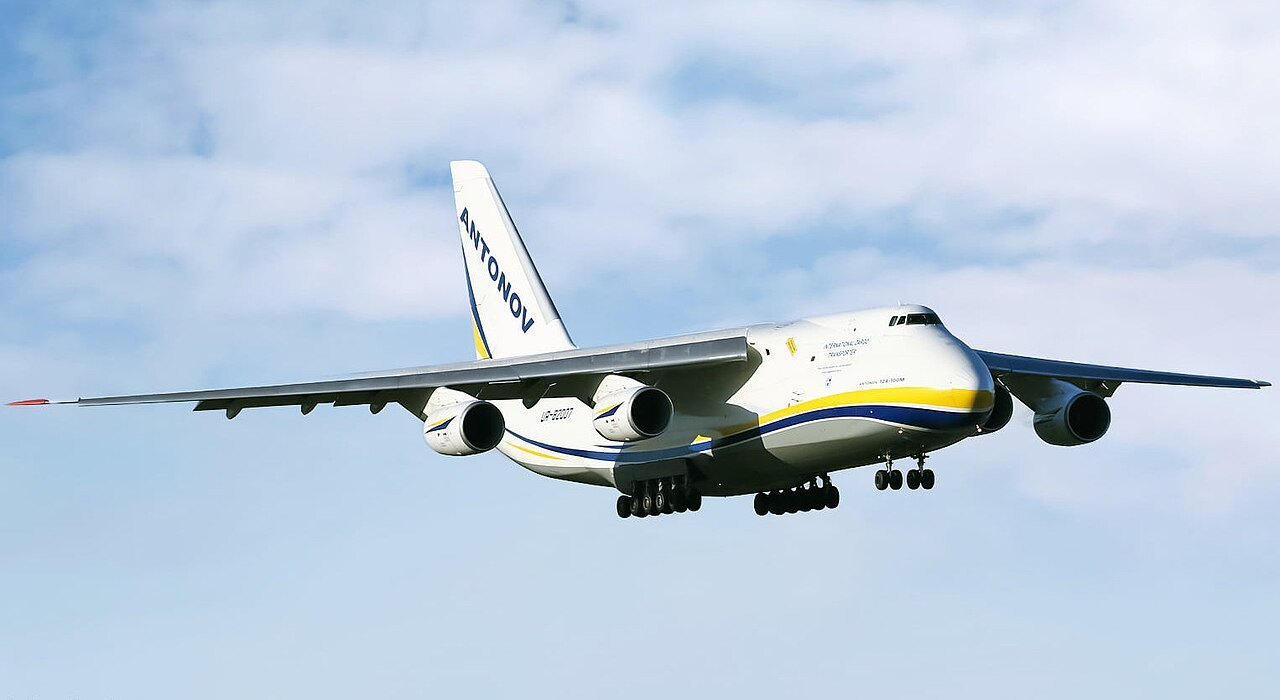
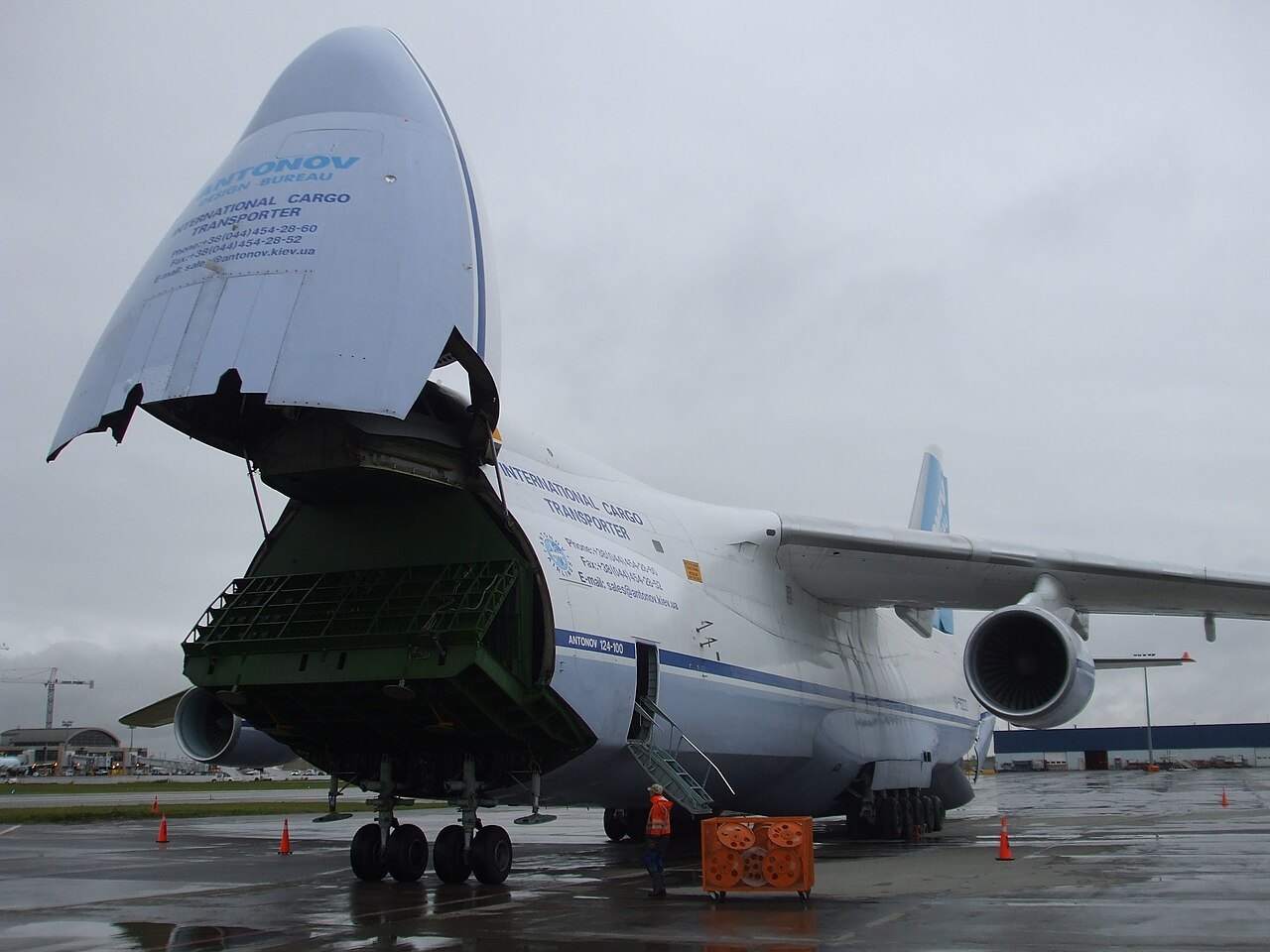
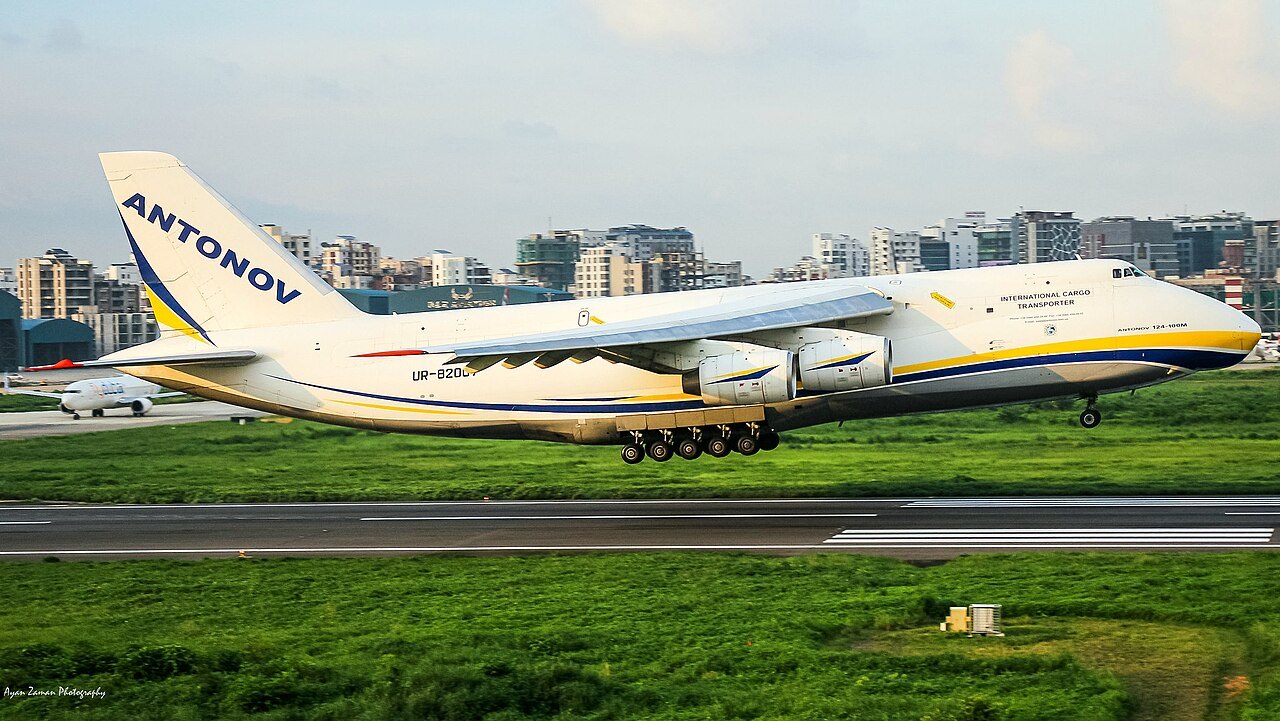
Where the An-124 flies and flew
The An-124’s record
The An-124 has no combat record of its own, but it has flown vast quantities of military and civil cargo: Soviet and Russian strategic airlift, NATO charters under SALIS, disaster relief and outsize commercial freight. Its record also includes five hull losses and the destruction of an aircraft at Hostomel in 2022.
See how training and combat types compare in the military aircraft statistics database. Figures are approximate.
Everything people ask about the An-124
Can I fly in an Antonov An-124 Ruslan?
What is the NATO reporting name of the An-124?
How much can an An-124 carry?
Is the An-124 bigger than the C-5 Galaxy?
How many An-124s were built?
What happened to the An-124s after the 2022 invasion?
What is the difference between the An-124 and the An-225?
You can’t fly the An-124.
These, you can.
Most of this museum you can only look at. These genuine military jets you can fly yourself with MiGFlug — with aerobatics and time on the controls.
 Fly the L-39 AlbatrosThe world’s most-flown jet trainer — aerobatics included
 Fly the F-104 Starfighter“The missile with a man in it”
 Fly the MiG-21The Cold War’s most-produced jet
 Fly the T-33 Shooting StarAmerica’s first jet trainer
 Fly the DH VampireA piece of early jet history
 Fly the S.211Agile Italian jet trainer
 Fly the MB-326The classic Aermacchi jet
 Fly the MiG-15The Soviet legend of the Korean War
Continue the tour
Every fact, checked
- Strategic airliftNATO: SALIS contract, An-124-100 availability and missions
- An-124 Ruslan (Condor) Large Cargo AircraftAirforce Technology: specifications, variants, operators
- An-124 CondorGlobalSecurity: development, service entry, capability
- Aviation Safety Network: An-124-100 RA-82005, 6 December 1997Irkutsk accident, engine surges and fatalities
- Antonov CompanyManufacturer and operator of Antonov Airlines
- Volga-Dnepr GroupRussian operator of the An-124-100
- Yefim Gordon and Dmitriy Komissarov, Antonov An-124 and An-225 (Midland)Book: development and operations; title and year to be confirmed