
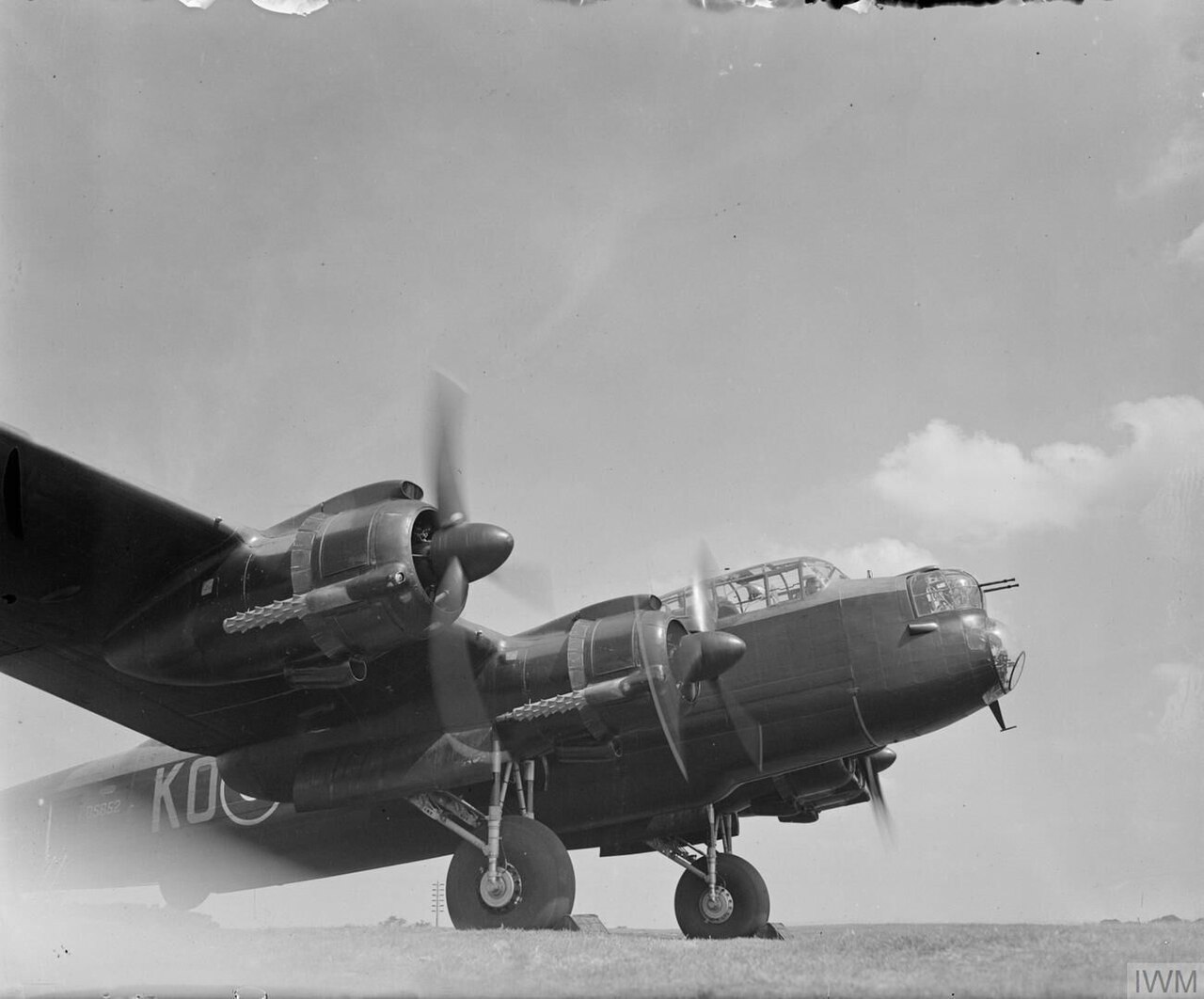
It is a few minutes before midnight on Friday the 24th of March, 1944, and Flight Sergeant Nicholas Alkemade is sitting in the loneliest seat in Bomber Command: the rear turret of an Avro Lancaster, somewhere over western Germany, about 18,000 feet up. Moments earlier a German night fighter came up beneath the bomber and raked it with cannon fire. Now the starboard wing and the fuselage are burning, and the Perspex of his turret has been blown out. The icy slipstream is pouring in.
Over the intercom the pilot orders the crew to bail out. Alkemade swings round to reach his parachute, which is stowed in the fuselage just behind the turret because there is no room to wear the pack in that cramped space. He opens the doors and sees it already alight, the silk dissolving in front of him. The flames are scorching his face and melting his rubber oxygen mask. Then the turret’s hydraulic fluid catches fire too.
He is 21 years old. He has two choices left, and both look like death. He chooses the quicker one. He rotates the turret, tumbles out backwards into the night, and falls roughly three and a half miles towards the snow-covered hills of the Sauerland. About three hours later he opens his eyes.
Quick Facts
- Name: Flight Sergeant Nicholas Stephen Alkemade, RAF (service no. 1431537)
- Born: 10 December 1922, North Walsham, Norfolk
- Unit: No. 115 Squadron, RAF Witchford, Cambridgeshire
- Aircraft: Avro Lancaster B Mk II DS664, coded A4-K, nicknamed “Werewolf”
- Raid: Berlin, night of 24/25 March 1944: 811 aircraft sent, 72 lost
- Shot down by: Oblt Heinz Rökker, Nachtjagdgeschwader 2, flying a Junkers Ju 88
- Height of jump: About 18,000 feet (roughly 5,500 metres)
- Injuries: Burns, cuts, bruising and a twisted knee; no broken bones
- Crew of seven: 4 killed, 3 taken prisoner
- Died: 22 June 1987, aged 64
A rear gunner on the Berlin run
Nicholas Alkemade was born in North Walsham, Norfolk, to an English mother and a Dutch father, and before the war worked as a market gardener in Loughborough. He trained as an air gunner and joined No. 115 Squadron, which flew the Lancaster Mk II from RAF Witchford, near Ely in Cambridgeshire. The Mk II was the less common variant of the Avro Lancaster, powered by Bristol Hercules radial engines instead of the usual Rolls-Royce Merlins. By March 1944 Alkemade was a veteran of more than a dozen operations.
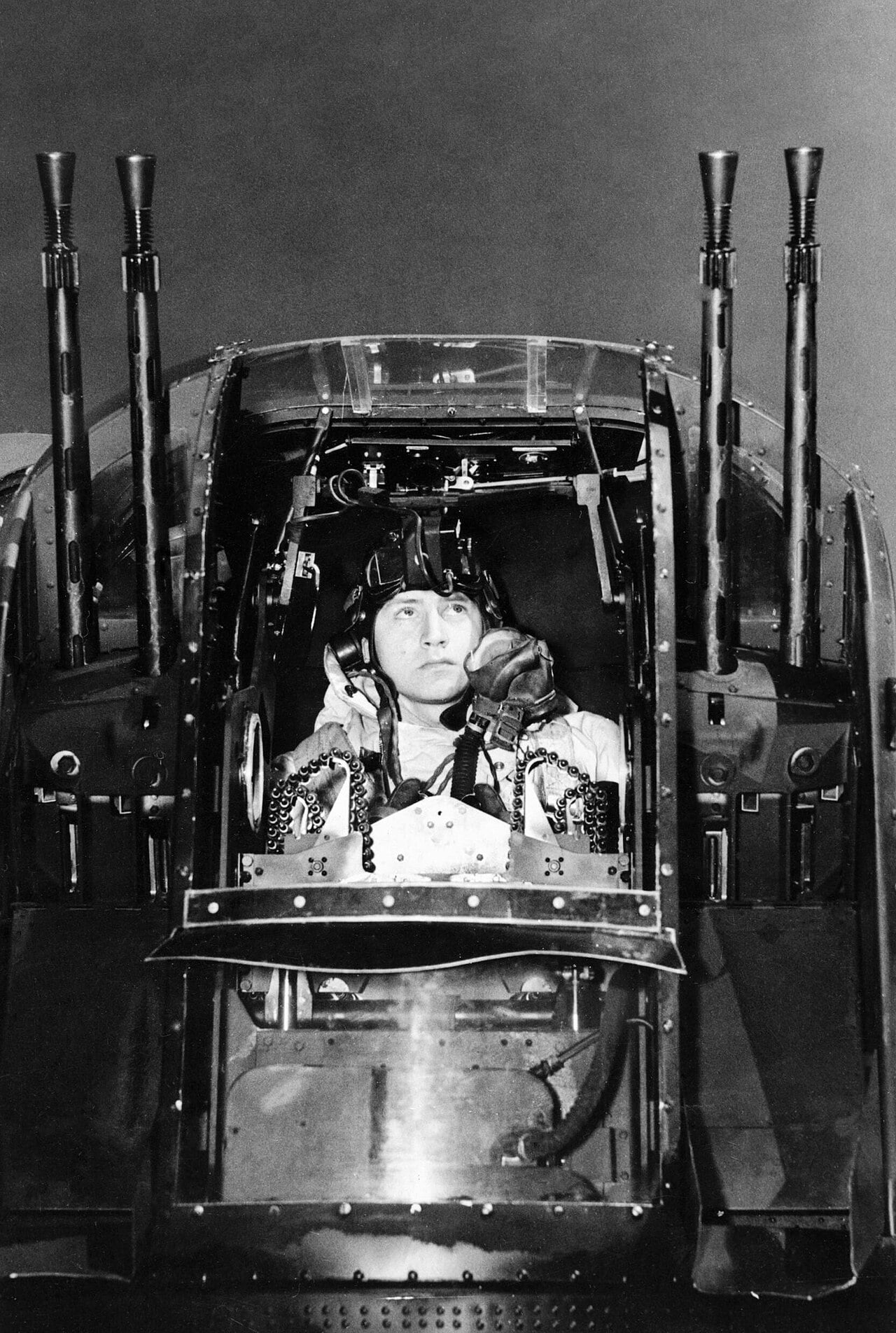
His post was the rear turret, the “tail-end Charlie” position. Isolated at the far end of the fuselage, the rear gunner sat for hours in freezing cold with four .303 Browning machine guns, watching the dark for the night fighter that would usually see him first. Like many rear gunners, Alkemade could not wear his parachute pack in the turret. It was stowed in the fuselage behind him, to be clipped on to his chest harness when needed.
That winter Bomber Command was fighting what became known as the Battle of Berlin, a long series of heavy raids on the German capital. The night of 24/25 March 1944 brought the last major raid of that campaign. Alkemade’s crew took off from Witchford at 18:48 in Lancaster DS664, coded A4-K and nicknamed “Werewolf”, with Flight Sergeant James Arthur “Jack” Newman at the controls.
The night of the strong winds
According to the RAF Museum, 811 aircraft set out for Berlin that night: 577 Lancasters, 216 Halifaxes and 18 Mosquitoes. The forecast badly underestimated the wind. An extremely powerful north wind pushed the bomber stream south at every stage of the flight, scattering both the bombers and the Pathfinders’ target markers. Bombs fell on 126 towns and villages outside Berlin.
On the way home, the same wind carried many crews off their planned route and over the heavily defended Ruhr. Bomber Command lost 72 aircraft, 44 Lancasters and 28 Halifaxes, which was close to nine per cent of the force. Crews remembered it as “the night of the strong winds”. Squadron historians believe flak caused most of the losses, but the German night fighters took their share.
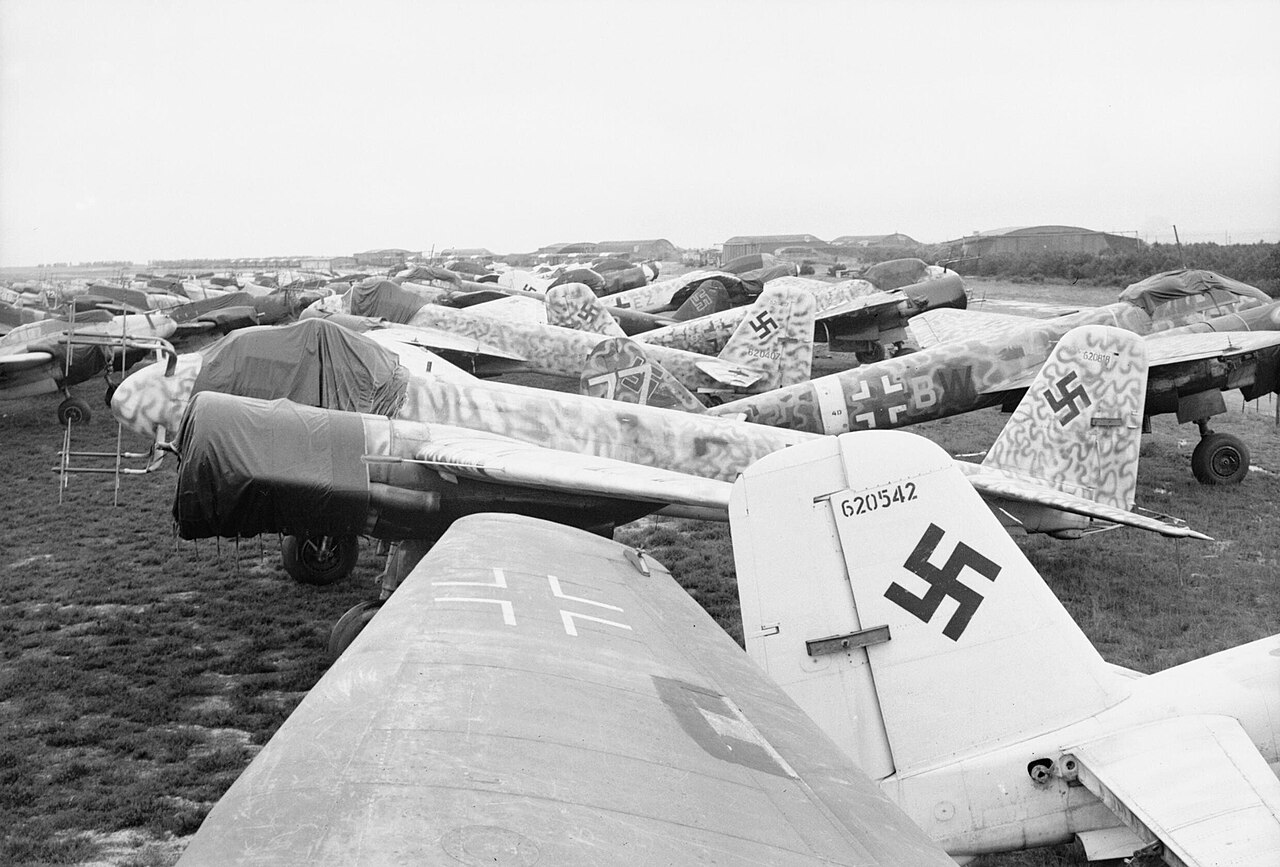
Shortly before midnight, east of Schmallenberg in the Sauerland, Oberleutnant Heinz Rökker of Nachtjagdgeschwader 2 found Werewolf. He was flying a Junkers Ju 88 night fighter and attacked from below, the blind spot of most British heavy bombers. The RAF Museum records Werewolf as the 20th of Rökker’s 64 victories. Alkemade fired back with all four guns, but the Lancaster was already burning.
Burn or jump
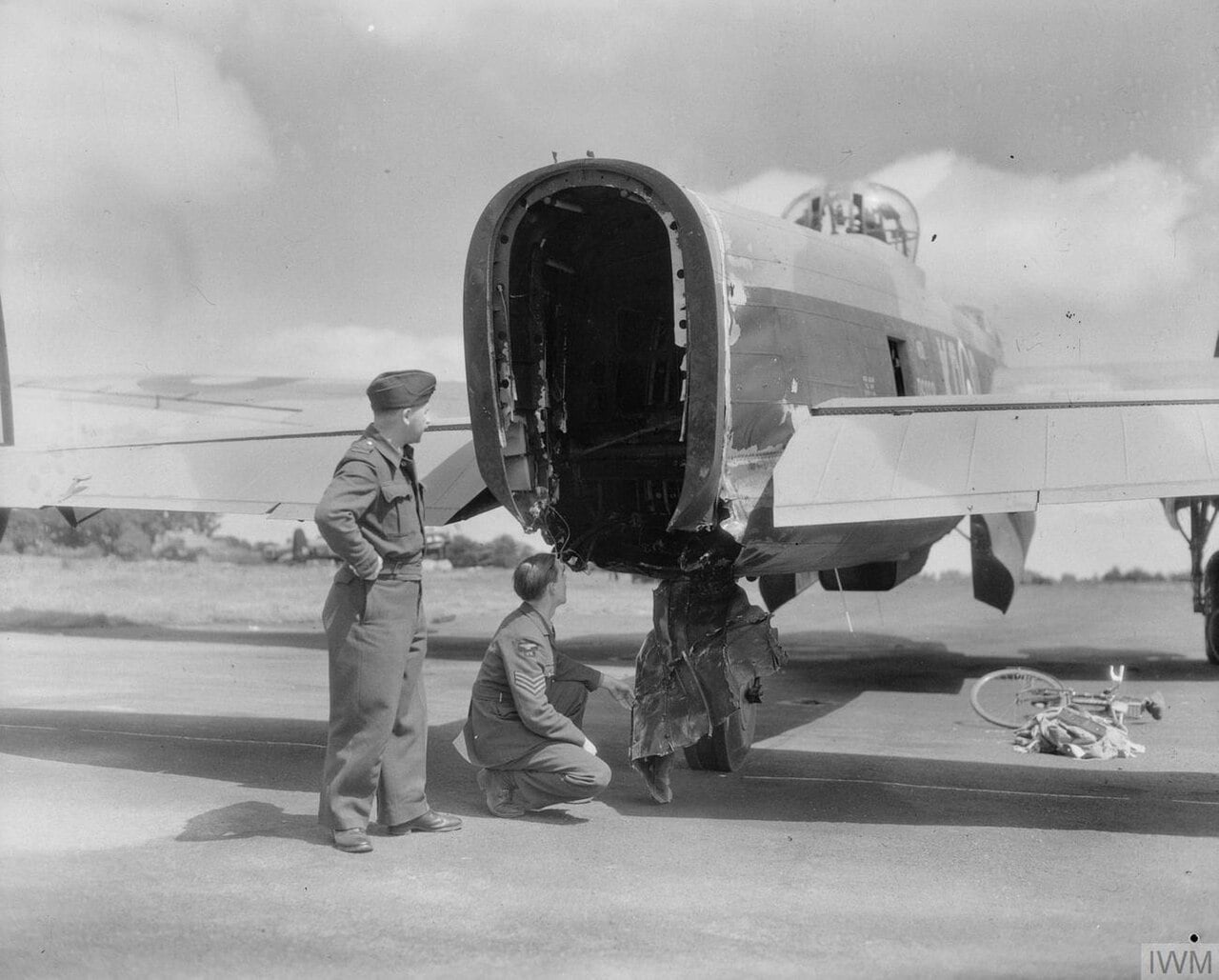
Newman gave the order to abandon the aircraft. When Alkemade turned to reach his parachute, it was engulfed in flames. Fire was already burning his face and wrists, and his oxygen mask was melting. Then the hydraulic fluid that powered his turret ignited. Staying meant burning to death. Jumping without a parachute from more than three miles up meant, as far as anyone knew, certain death of a faster kind.
He chose to jump. He rotated the turret to starboard and dropped out backwards into the dark. Werewolf exploded in the sky above him. As he fell, the panic left him. He later described a strange calm, with the noise of the bomber stream fading away above.
How long does it take to fall 18,000 feet?
Popular retellings sometimes say that Alkemade fell for close to three minutes. The physics does not support that. A human body falling in the open soon reaches a terminal velocity of very roughly 120 miles per hour, which is the speed Alkemade himself later estimated for his fall, according to the Bomber Command Museum of Canada. At 120 miles per hour, or about 176 feet per second, 18,000 feet takes a little over 100 seconds.
Thinner air at altitude would have made him fall slightly faster at first, and the ground of the Sauerland lies well above sea level, so the real figure was probably somewhere around a minute and a half, possibly a little less. Alkemade could not have timed it in any case. He lost consciousness during the fall, and the 18,000-foot figure is his own estimate of the bomber’s height, not a measured one. What is clear is that the drop was measured in miles, not feet, and should have killed him.
Pine branches and 18 inches of snow
Alkemade came round about three hours later, lying on his back in a small wood of young pine trees, looking up at the stars through the branches. He had come down through the trees and into snow about 18 inches deep. The branches had broken his speed and the snow had cushioned the impact. Twenty yards away, according to the RAF Museum, was bare ground.
He had not escaped unhurt, despite the legend. He had burns to his face and hands, cuts to his head and thigh, heavy bruising and a badly twisted knee, and he had lost both his flying boots. But not a single bone was broken. Unable to walk, he blew his whistle until German civilians found him. They carried him to a local infirmary, and from there he was taken to the hospital at Meschede, where doctors picked splinters of Perspex and wood out of his body.
Werewolf had come down about twenty miles away. Four of the seven men aboard were killed: the pilot Jack Newman, the flight engineer Sergeant Edgar Warren, the bomb aimer Sergeant Charles Hilder and the mid-upper gunner Sergeant John McDonough. They lie side by side in the Hannover War Cemetery. The navigator, Sergeant John Cleary, and the wireless operator, Sergeant Geoffrey Burwell, got out by parachute and became prisoners. Cleary spent six months in hospital at Meschede with frostbite and a collapsed lung and was repatriated in February 1945.
The Gestapo does not believe him
Alkemade’s German captors heard his story and assumed he was lying. A British airman found without a parachute, in their eyes, had either hidden it or was a spy. The Gestapo accused him of burying it. Alkemade asked them to look at the evidence: his parachute harness in the wood, and the remains of his parachute in the wreck of his aircraft.
That is what settled it. A search found the harness he had discarded in the wood. In the burnt-out wreckage of Werewolf, investigators found the parachute’s ripcord handle and cable still in their stowed position, proving the pack had never been opened. Faced with physical proof, the Germans accepted the story. After three weeks in hospital Alkemade was sent to Dulag Luft, the Luftwaffe’s interrogation centre for captured airmen.
There he received a certificate, dated 25 April 1944. Popular accounts often describe it as a note signed by German officers. In fact, according to the RAF Museum, it was signed by three British prisoners: the Senior British Officer, Flight Lieutenant H. J. Moore, and Flight Sergeants R. R. Lamb and T. A. Jones. What it recorded was that the German authorities had investigated and confirmed the claim. Its statement that he landed “without injuries” was generous, given the burns and the three weeks in hospital.
Stalag Luft III and the long march home
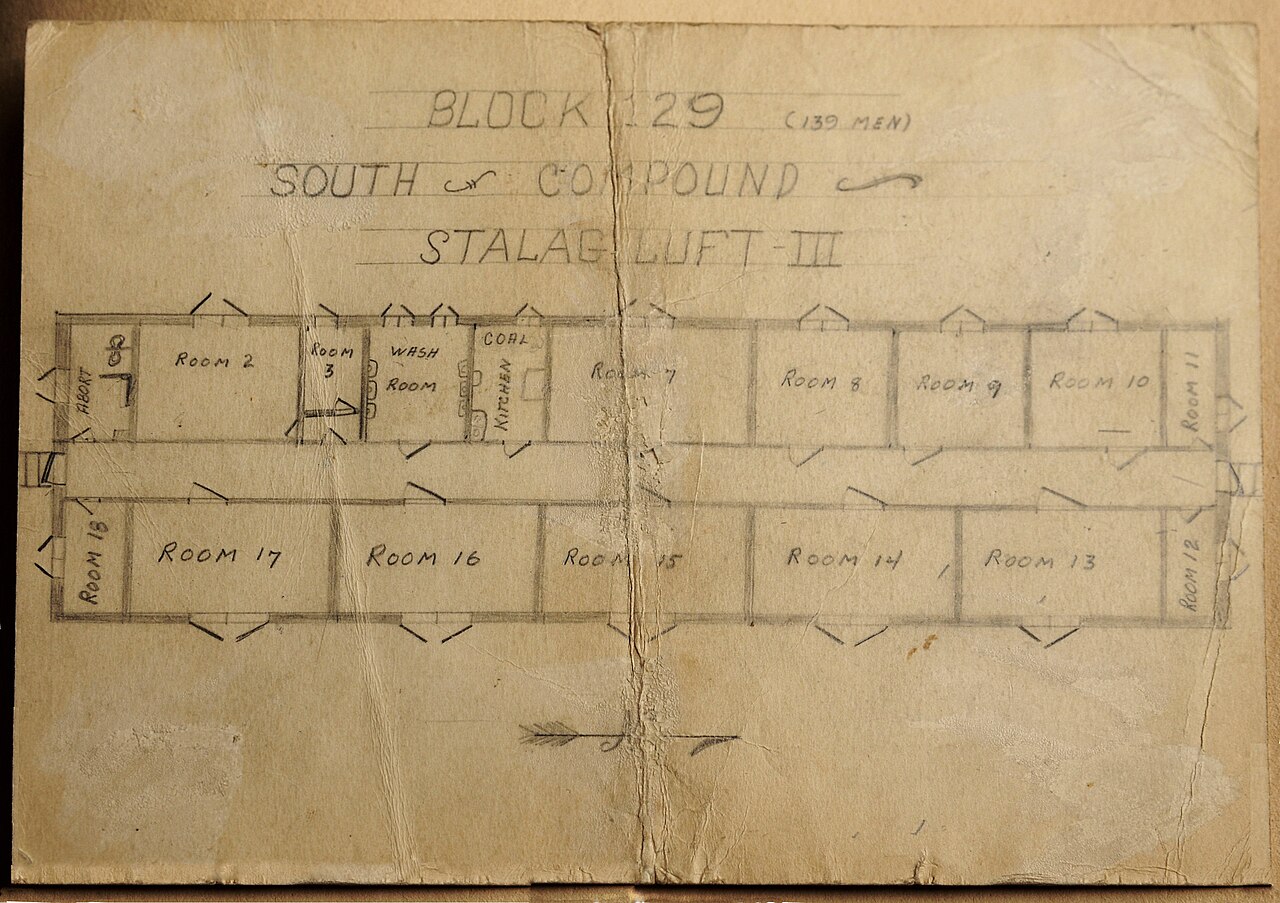
Alkemade spent the rest of the war in Stalag Luft III at Sagan, the camp made famous by the Great Escape, which had taken place on the very night he was shot down. Fellow prisoners treated his story with the scepticism it deserved until they saw the paperwork. He earned extra cigarettes by writing up other prisoners’ wartime logbooks, and the RAF officer and artist Bennett Ley Kenyon painted his portrait in the camp.
In January 1945, as the Red Army approached, the Germans marched the prisoners west through deep winter snow. Alkemade survived the Long March and was liberated. Former prisoners were flown home in Lancasters under Operation Exodus, and one veteran air gunner later recalled that Alkemade asked to ride home in the rear turret, so that his last memory as a gunner would be a successful landing.
A demonstration of a Lancaster rear turret rotating on its hydraulics, the same manoeuvre Alkemade used to tip himself out backwards into the night. Video: Bomber Command Museum of Canada.
The man who kept on surviving
Alkemade left the RAF in 1946 and went back to Loughborough, where he took a job at a chemical plant. His luck, it seemed, was still being tested. According to the RAF Museum, he survived three more serious accidents there. In one, an electric shock knocked off his gas mask and he was overcome by chlorine gas, lying for about fifteen minutes before he was rescued.
In another, sulphuric acid sprayed over his face and arms. He dived head first into a drum of limewash, which neutralised the acid, and escaped with first-degree burns. In the third, a nine-foot steel door runner fell on him and left him with only bruises. After that he became a furniture salesman in Loughborough. He died on 22 June 1987, aged 64. His whistle and story are remembered in the small museum on the old Witchford airfield.
How Alkemade compares with other freefall survivors
Alkemade was not the only airman to survive a fall from a bomber without a parachute. On 3 January 1943, Staff Sergeant Alan Magee, a ball turret gunner with the US 303rd Bomb Group, was thrown from his exploding B-17 “Snap! Crackle! Pop!” over the French Atlantic coast at over 20,000 feet, according to the American Air Museum in Britain. He crashed through the glass roof of the St Nazaire railway station and survived with terrible injuries, including an arm that was nearly torn off.
The highest fall recognised by Guinness World Records belongs to Vesna Vulović, a Yugoslav flight attendant who survived the bombing of JAT Flight 367 over Czechoslovakia on 26 January 1972, at a recorded 10,160 metres (33,333 feet). She was trapped inside the falling rear fuselage, which landed in snow on a wooded slope. The record has been disputed: some journalists have argued that the airliner was actually shot down at a much lower altitude. Guinness says there is not sufficient evidence to disqualify it.
What sets Alkemade apart is that he chose to jump, fell clear of all wreckage, and walked away, after a short stay in hospital, without a single broken bone. His fall is also unusually well documented, because the people who most wanted to disprove it were the ones who investigated it.
What it meant to sit for hours at the tail of a Lancaster over Germany, from the Nanton museum in Alberta that keeps a Lancaster in running condition. Video: Bomber Command Museum of Canada.
In the end the story of Nicholas Alkemade is less about a miracle than about a narrow set of circumstances lining up perfectly: a young pine wood, a deep layer of late-winter snow, a body falling limp and unconscious, and a wreck that held the proof. Of the 72 bomber crews lost that night, most had no such luck. He did, and then he kept on having it for another 43 years.
Sources: Paul Hudson-knight, The Indestructible Alkemade, RAF Museum blog (24 December 2014, updated 2023); RAF Museum, History of Aviation Timeline: British Military Aviation in 1944; Bomber Command Museum of Canada, Bomber Command Aircrew Chronicles: F/S Alkemade; International Bomber Command Centre Digital Archive, Alkemade, Nick collection, University of Lincoln (2019); David Fell, No. 576 Squadron history, Berlin 24/25 March 1944: The Night of the Strong Winds; Back to Normandy, Avro Lancaster II DS664 A4-K, 115 Squadron, loss record of 24/25 March 1944; Paul Brickhill, They Fell Without Parachutes and Lived! (1950), as cited by Air & Space/Smithsonian; Ian Mackersey, Into the Silk (1956); RAF Flying Review, Fell 3 Miles Without a ‘Chute (1954); Aviation Trails, Rear Gunner Flight Sergeant Nicholas S. Alkemade, 115 Squadron RAF (23 March 2020); American Air Museum in Britain (IWM), Alan Eugene Magee; 303rd Bomb Group Association, Alan Magee; Guinness World Records, How Vesna Vulović Survived the Highest Fall Ever with No Parachute (April 2022).
Frequently Asked Questions
Did Nicholas Alkemade really fall 18,000 feet without a parachute?
How did Nicholas Alkemade survive the fall?
How long did Alkemade fall for?
Who signed Alkemade’s famous certificate?
What happened to the rest of Alkemade’s Lancaster crew?
Was Alkemade’s the highest fall ever survived without a parachute?
What did Nicholas Alkemade do after the war?
Related Posts


0 Comments