
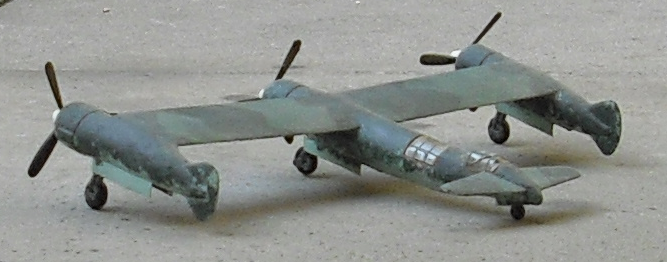
The comparison with a science-fiction racer is fair. The Blohm & Voss P 170 put one engine in the nose of a slim fuselage and two more far out on the wingtips, each in its own long nacelle with a tail fin of its own, and sat its two-man crew at the very back of the aircraft, just ahead of the tailplane. It carried no defensive guns at all. Its designer, Richard Vogt, proposed it in 1942. It was never built.
Quick Facts
- Type: Three-engined fast bomber (Schnellbomber) project
- Designer: Richard Vogt, Blohm & Voss, Hamburg
- Year: 1942
- Engines: Three BMW 801D radials: one in the nose, one at each wingtip
- Crew: Two, in a cockpit at the rear of the fuselage
- Defensive armament: None: speed was meant to be its protection
- Status: Paper project; only models were made
The Schnellbomber Dream
The idea behind the P 170 was older than the war. A Schnellbomber, or fast bomber, would fly so fast that enemy fighters could not catch it, so it would need no gunners, no turrets and no heavy armour, and every kilogram saved could go into speed and bombs. The Luftwaffe’s early bombers, such as the Dornier Do 17, were built around that hope, and by 1940 it was clear that modern fighters could catch them. The British would make the concept work with the de Havilland Mosquito, which flew most of its bombing missions without any defensive guns.
The aircraft that made the unarmed fast bomber work: the de Havilland Mosquito. Video: Imperial War Museums.
Three Engines, Two of Them on the Wingtips
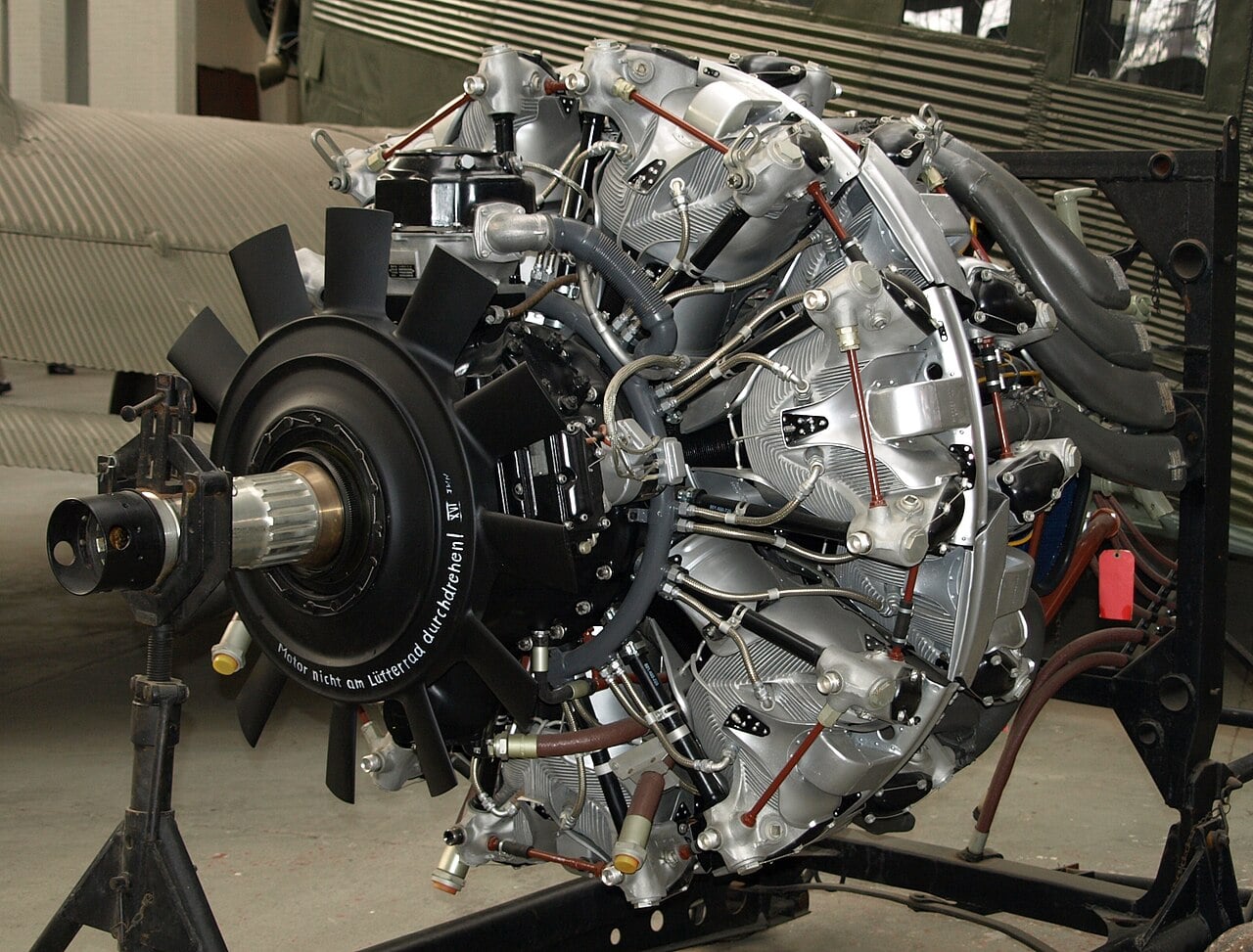
Vogt’s answer was to bolt three of the most powerful engines Germany had onto the smallest practical airframe. Each BMW 801D radial, the engine of the Focke-Wulf Fw 190, sat at the front of its own nacelle with its own fuel tank behind it. Putting the outer engines at the wingtips gave the propellers clearance, and post-war descriptions of the design say the two outer propellers turned in opposite directions to cancel out torque. The wingtip nacelles carried the vertical fins and the landing gear, giving the aircraft its unmistakable three-pronged look.
The crew sat at the very rear of the central fuselage. That kept them away from the nose engine, but it gave them a poor forward view, especially on the ground. The bombs were to be carried externally. Figures quoted for the design in later compilations include a span of about 16 metres, a bomb load of around 2,000 kg and an estimated top speed in the region of 820 km/h; these are projections for an aircraft that never flew, and the sources do not always agree.
A Designer Who Liked to Break the Rules
The P 170 was typical of Richard Vogt. Before the war he had spent about a decade working in Japan for Kawasaki. At Blohm & Voss he designed the BV 141, a reconnaissance aircraft with its crew nacelle on one side of the engine and the tail on the other, which looked impossible and flew perfectly well. After the war he went to the United States under Operation Paperclip and worked for the US Air Force at Wright-Patterson; in 1960 he joined Boeing, where he studied wingtip fins of the kind he had patented in 1951, an idea that fed into later work on winglets.
A short history of the P 170 and its unusual layout. Video: IHYLS.
What the Viral Post Gets Right
All of it. The P 170 was a Blohm & Voss project designed by Richard Vogt in 1942, it had three engines, and it was a Schnellbomber meant to outrun interceptors without defensive armament. Two nuances: it was a fast bomber or fighter-bomber rather than a dedicated ground-attack aircraft in most descriptions, and it never got beyond drawings and models, so all its performance figures are estimates.
Sources: Dan Sharp, Secret Projects of the Luftwaffe, Vol. 2: Bombers 1939–1945 (Mortons); HistoryNet, “Drafting Table Aces”; MilitaryFactory, Blohm & Voss P.170; Icarus aircraft archive, Bv P 170; Imperial War Museums.


0 Comments