
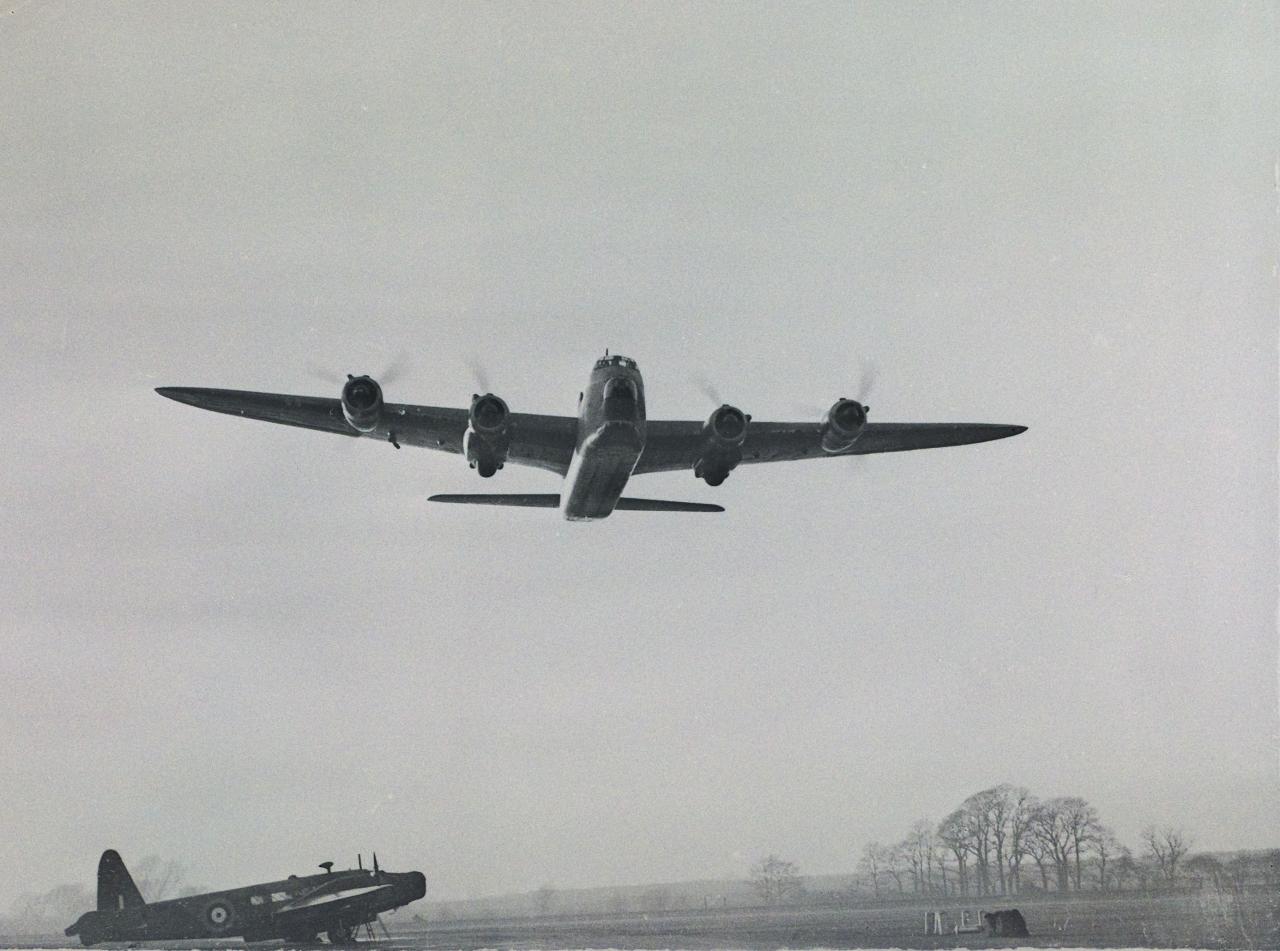
The Short Stirling was the first of the RAF's great four-engine heavy bombers — into service before the Halifax, before the Lancaster, the aircraft that opened Britain's strategic bombing war. It was huge, handsome and, in the end, hobbled by a single line in its design specification: a rule about hangar doors. The Stirling is the story of a fine aircraft crippled by a bad requirement.
Kurzinfo
- Typ: Short Stirling, four-engine heavy bomber
- Erste: the RAF's first four-engine heavy in service, from February 1941
- Spannweite: just under 100 ft, capped to fit existing hangars
- Servicehöhe: only about 16,500 ft — far below Halifax and Lancaster
- Bomb bay: divided into cells; could not carry bombs bigger than 2,000 lb
- Gebaut: about 2,383; 582 lost in action
The wing that was too short
The Stirling's tragedy was written before it flew. The Air Ministry specification that shaped it demanded a wingspan of no more than 100 feet — not for any aerodynamic reason, but so the finished bombers would fit through the doors of existing RAF hangars. For an aircraft this large, that was a straitjacket.
Short Brothers did what they could, giving the Stirling a span of only about 99 feet and propping it up on a tall, ungainly undercarriage to get the wing at the right angle for take-off. The aircraft that emerged was enormous, with a cavernous fuselage — but that short wing could not lift it high.
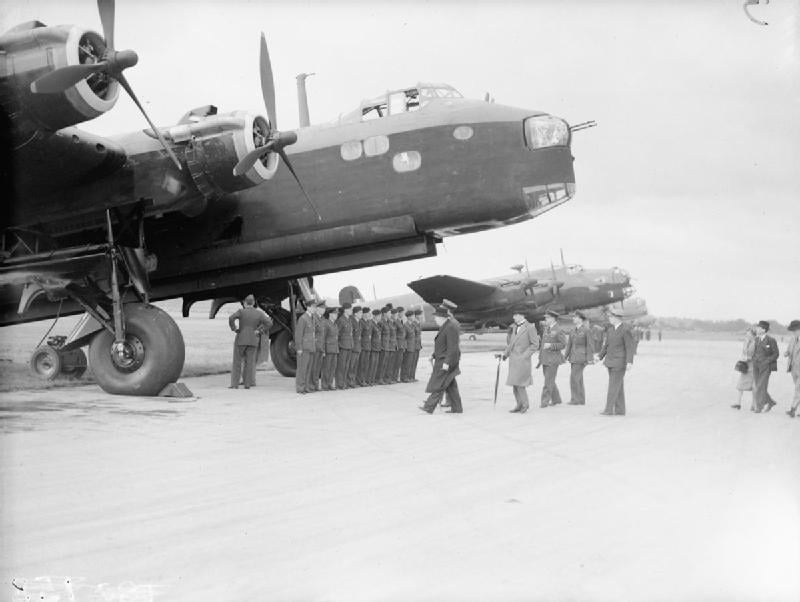
The giant that taught the Lancaster everything it knew.
Down in the flak
That low ceiling was deadly. Where later Lancasters and Halifaxes could cruise above 20,000 feet, the Stirling laboured along at around 16,500 — right in the thickest anti-aircraft fire and comfortably within reach of German night fighters. On mixed raids, the Stirlings flew lowest, and they paid for it.
The design had other quirks. The bomb bay was split into narrow cells running down the fuselage, perfect for lots of small bombs but physically unable to swallow the big blockbusters the war soon demanded. By 1943, as better bombers arrived, the Stirling was quietly pulled from the front line of the bombing campaign.
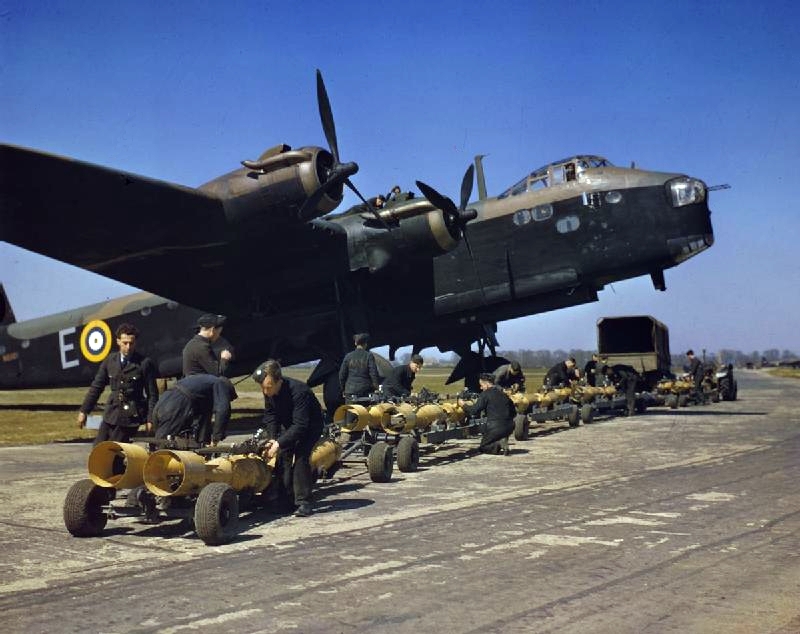
A second life on a tow rope
And here the Stirling's story turns. That huge, low-flying airframe was ill-suited to bombing Germany from on high — but it was superb at other things. Stirlings became the RAF's workhorse glider tugs and special-duties aircraft, hauling gliders full of airborne troops to Normandy on D-Day and to Arnhem, dropping paratroopers and agents, and laying mines. Freed from the requirement to fly high, the aircraft finally found work it could do brilliantly.
Around 2,383 Stirlings were built, and none survives intact today. It is the forgotten member of the RAF's heavy-bomber trio, overshadowed by the Lancaster it preceded. But it got there first, carried the war to Germany when nothing else could, and then reinvented itself as one of the most useful transport and glider-tug aircraft of the war. Not bad, for a bomber undone by a hangar door.
The unsung hero of the air war.
The Stirling as pathfinding giant.
Sources: Wikipedia (Short Stirling); MiGFlug Aircraft Encyclopedia; PlaneHistoria; War History Online.

0 Comments