
Ten days before the party, the aeroplane went flying anyway.
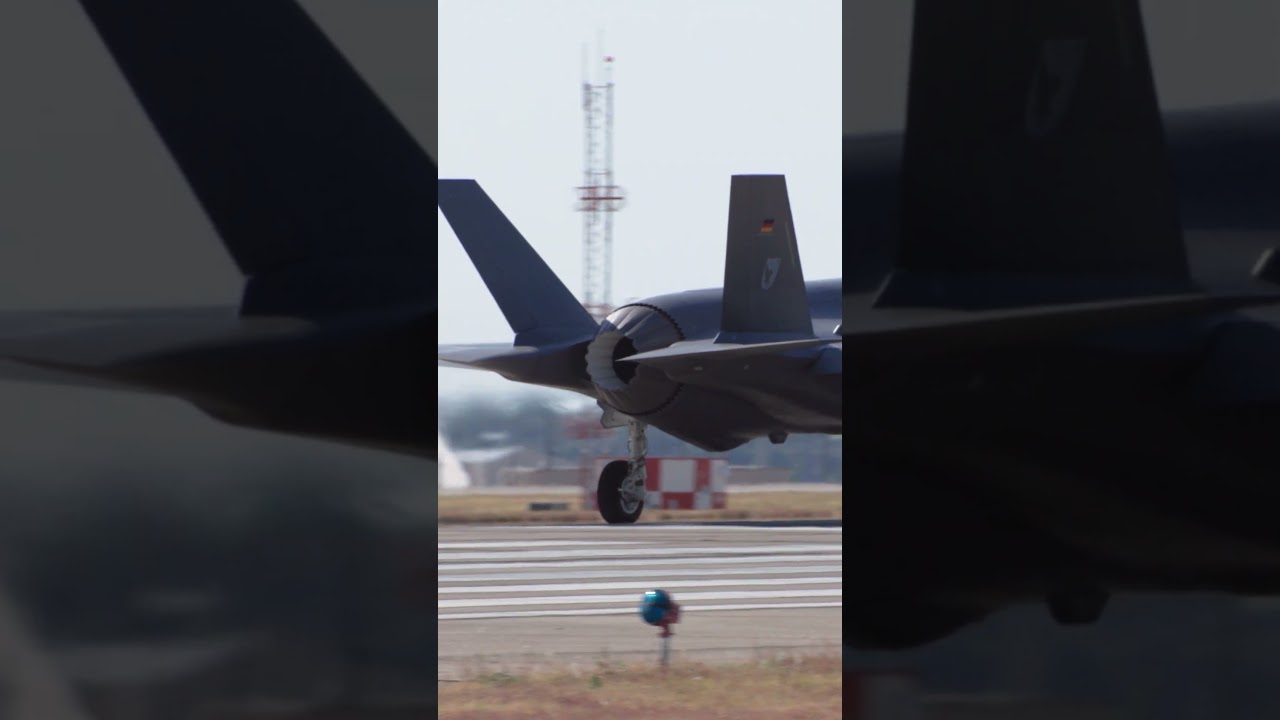
Germany's first F-35A Lightning II lifted off from Lockheed Martin's Fort Worth plant on 8 September 2026, wearing a full-colour German flag on the tail and the fuselage code 35+01. Lockheed knows it as MG-01. The official rollout ceremony, the one with the speeches and the ribbon, is scheduled for 18 September. The jet did not wait for it.
It is a quietly enormous moment for the Luftwaffe. This is the aircraft that inherits a job Germany has held since the Cold War and has never once been able to hand to anyone else: flying American nuclear weapons under NATO's nuclear sharing arrangement. The Panavia Tornado has done that since the 1980s. It cannot do it for very much longer.
Kurzinfo
| Flugzeug | Lockheed Martin F-35A Lightning II, German serial 35+01, production number MG-01 |
| Maiden flight | 8 September 2026, Fort Worth, Texas |
| Rollout ceremony | 18 September 2026 |
| Befehl | 35 aircraft, selected in 2022 |
| Ersetzt | Panavia Tornado, in German service since 1981 |
| First eight jets | Remain in the United States for Luftwaffe training at Ebbing Air National Guard Base, Arkansas |
| Tail markings | German Air Force Tactical Training Command USA |
| Home base from 2027 | Büchel Air Base, home of Taktisches Luftwaffengeschwader 33 |
| Nuclear role | B61-12 gravity bomb under NATO nuclear sharing |
What flew, and what it was wearing
MG-01 came out of final assembly in August and went straight into Aircraft Final Finishes, the stage where the jet receives its paint and its low-observable surface coatings. Lockheed Martin posted photographs of it going in and called them the “before” pictures. A few weeks later it was on a runway in Texas.
The tail carries the markings of the German Air Force Tactical Training Command USA, which tells you where this particular aeroplane is going and it is not Germany. The first eight German F-35As will stay in the United States, at Ebbing Air National Guard Base in Arkansas, where Luftwaffe pilots and maintainers will train alongside American personnel. Washington and Berlin agreed that arrangement in 2024.
The aircraft destined to actually operate from German soil are expected at Büchel Air Base in 2027. Büchel is home to Taktisches Luftwaffengeschwader 33, currently flying the Tornado IDS, and the base is being rebuilt around the new fighter: new facilities, new security infrastructure, all of it specified for F-35 operations and for the nuclear mission that comes with them.
Why Germany bought this aircraft at all
Germany did not choose the F-35 because it wanted a stealth fighter. Germany chose the F-35 because of a bomb.
Under NATO's nuclear sharing arrangement, a small number of European air forces are certified to deliver American B61 gravity bombs in wartime. Germany's certified platform is the Tornado, an aeroplane that entered Luftwaffe service in 1981 and is heading for retirement. Certifying a new type for that mission is a long, expensive, politically fraught process, and the only aircraft realistically available with a path to B61-12 certification was the F-35A. Berlin selected it in 2022 and signed the procurement agreement the following year.
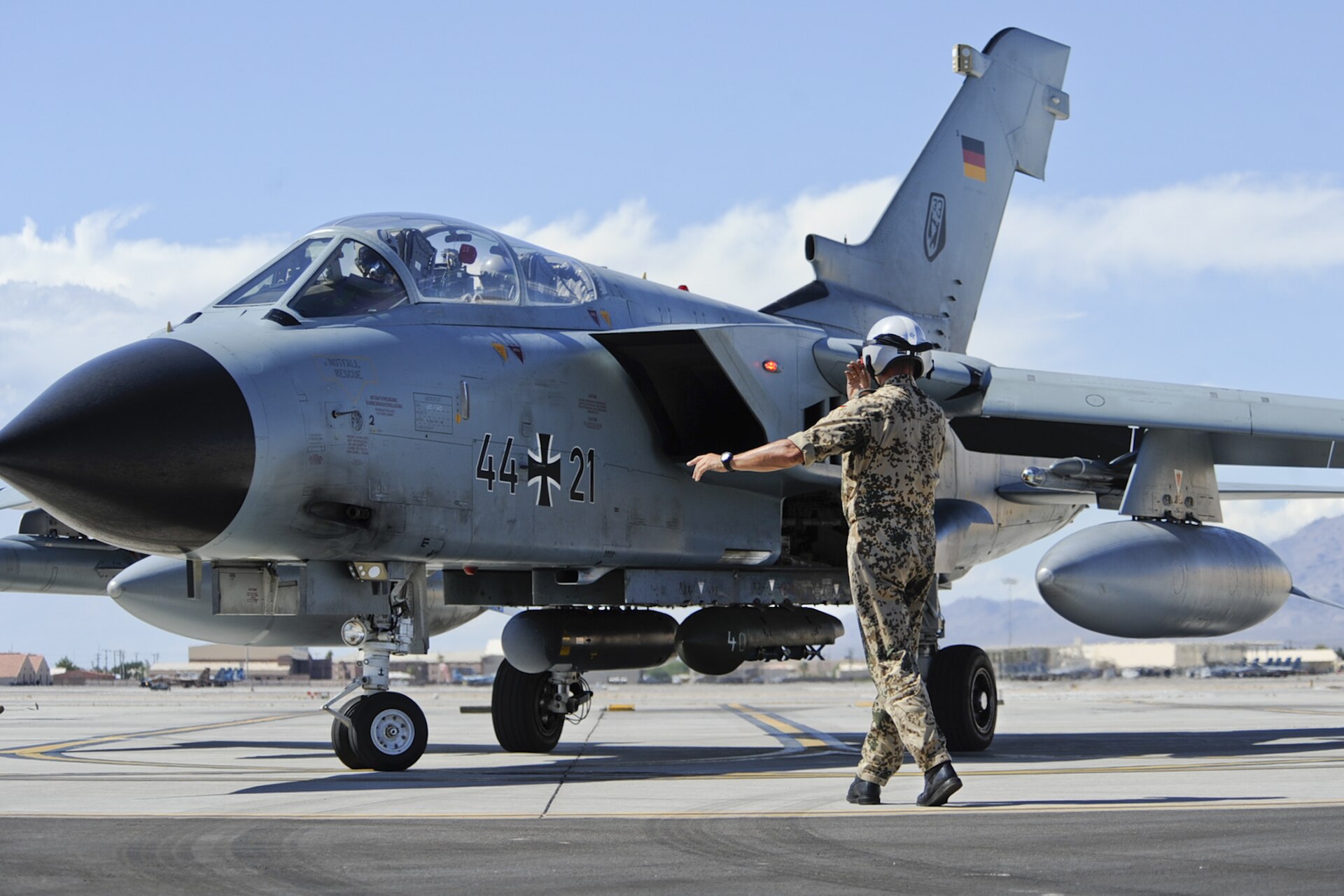
The rest of the Tornado's work is being split up. The strike, reconnaissance and electronic combat roles are going to an expanded Eurofighter fleet, including a dedicated electronic warfare variant. Only the nuclear mission needed a fifth-generation answer, and it is the reason the order exists.
Lockheed Martin, unsurprisingly, framed it in alliance terms rather than nuclear ones.
Thirty-five jets, and possibly more
Thirty-five aircraft is a modest fleet by F-35 standards, roughly one wing's worth, and it was sized for a single mission rather than for wholesale fleet renewal. Berlin has since signalled that it wants more. Reporting through late 2025 and 2026 has pointed to interest in an additional batch of 15, which would take the German total to around 50, with some speculation about a larger follow-on if the Franco-German-Spanish FCAS programme continues to struggle.
None of that is signed. What is signed is 35 aircraft, and the first of them is now flying.
Lockheed Martin's own footage of the first flight runs below. Watch the tail: the black, red and gold on a stealth fighter is a combination the Luftwaffe has waited a long time to see.
The ceremony is on 18 September. The aeroplane, characteristically, has already gone to work.
Häufig gestellte Fragen
When did Germany’s first F-35 fly?
How many F-35s has Germany ordered?
Why did Germany buy the F-35 instead of more Eurofighters?
Where will Germany’s F-35s be based?
What do the markings on 35+01 mean?
When does the German Tornado retire?
Sources: Lockheed Martin; Air Data News; defence-industry.eu; FlightGlobal.
0 Comments