
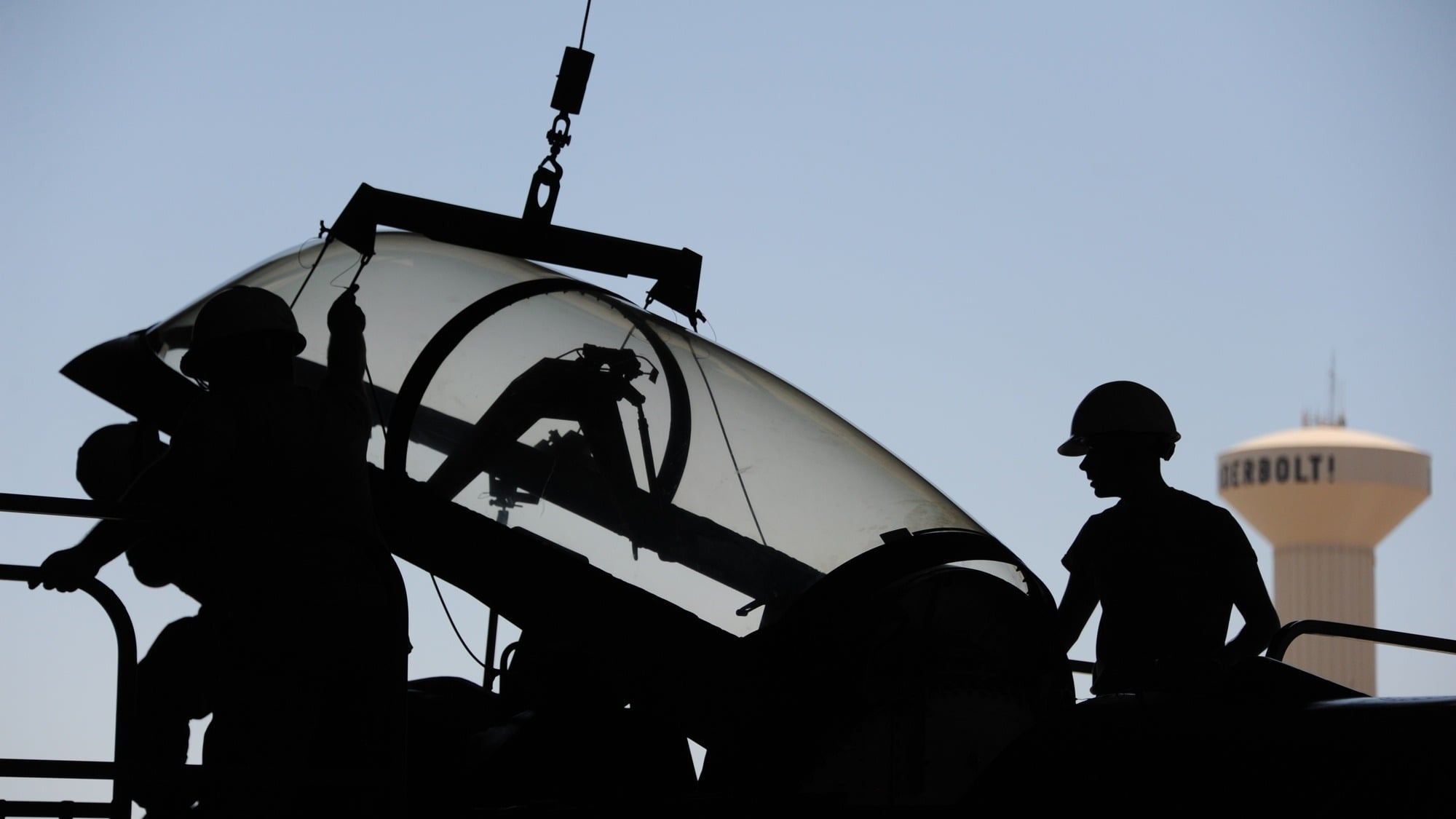
In August 2026 the US Air Force posted a contracting notice so dull that almost nobody read it. It concerned cartridge- and propellant-actuated devices for the F-117 Nighthawk — an aircraft officially retired in 2008. The internet noticed the obvious part, which is that the Air Force is still buying parts for a jet it supposedly got rid of eighteen years ago.
The less obvious part is more interesting. Those devices are not exotic black-programme hardware. They are the same class of component sitting in every combat aircraft, trainer and transport in the inventory, and almost all of them are on a countdown clock.
Fighter jets are full of small explosive charges. They fire ejection seats, shatter or jettison canopies, release emergency hatches, discharge fire bottles and, on the Nighthawk, blow a flush panel off the belly so a hidden tailhook can drop. Each of those charges has an expiry date. When the dates are wrong, aeroplanes stop flying — as several hundred did in the summer of 2022.
Kurzinfo
| What they are | Cartridge-actuated devices (CADs) and propellant-actuated devices (PADs): small pyrotechnic charges that do mechanical work |
| What they operate | Ejection seats, canopy jettison and severance, emergency hatches, fire-extinguisher bottles, parachute deployment, the F-117’s concealed tailhook |
| Why they expire | Propellants and initiators degrade with age; the US Army puts typical shelf life at five to fifteen years |
| Who manages them | A tri-service effort centred on Naval Surface Warfare Center Indian Head Division, which also validates replacement stock |
| When it goes wrong | July 2022: 279 USAF trainers grounded, plus Navy and Marine Corps fast jets and part of the F-35 fleet |
| Scale of that check | More than 9,000 cartridges examined across the services; four were found defective |
| The F-117 link | An August 2026 sole-source notice for CAD/PAD items including a tail hook panel pyrotechnic assembly and initiator |
What a CAD/PAD actually is
The names are unhelpfully bureaucratic. A cartridge-actuated device is a small explosive cartridge whose gas pressure drives something mechanical: a piston, a cutter, a release. A propellant-actuated device does the same job with a slower-burning charge where sustained push is wanted rather than a sharp shove. In practice the two are lumped together as CAD/PAD, and they are the reason so much of an aircraft’s emergency equipment works instantly and without electrical power or hydraulics.
That independence is the point. Emergency systems have to work on the worst day of a pilot’s life, often with the aircraft out of control, the engine gone and the electrics failing. A chain of small explosive charges does not care. It needs a firing signal and nothing else.
Where they hide on an aircraft
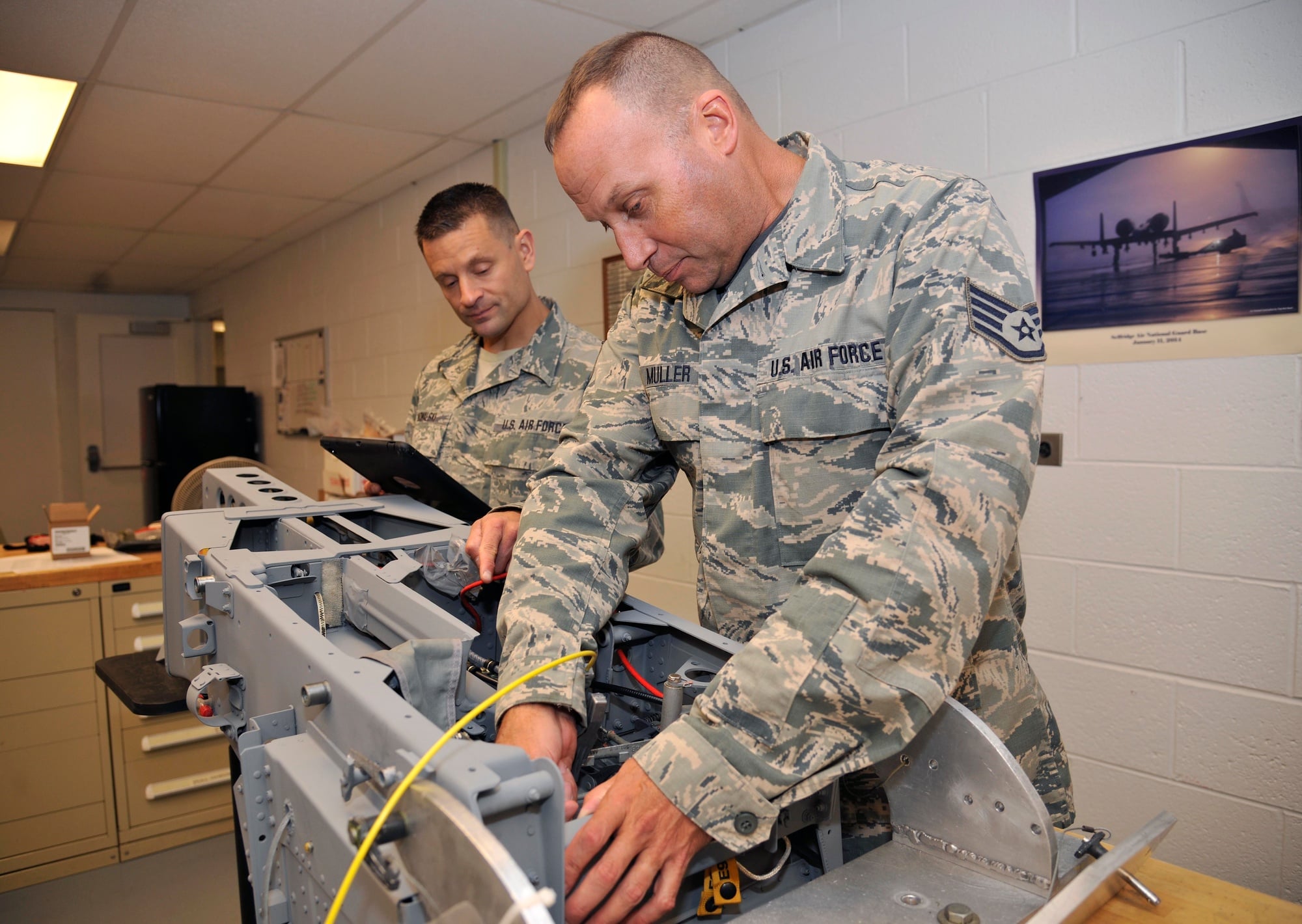
Pull the handle on an ejection seat and you set off a sequence, not a single bang. On a typical fast jet: charges shatter or jettison the canopy, an initiator fires the seat’s catapult, a rocket motor lifts it clear, a drogue gun fires a slug to drag out a stabilising parachute, a cutter severs the drogue line at the right moment, and a release lets the main canopy deploy and the seat fall away. Every one of those steps is a CAD or a PAD.
Away from the seat they are just as common. Fire-extinguisher bottles in engine bays are discharged by a cartridge. Emergency exits and cargo doors on transports use them. Canopy severance cord, the explosive ribbon moulded into the transparency to break it up before the seat passes through, belongs to the same family.
The F-117’s tailhook is the exotic case, and it exists because of stealth. An ordinary fighter bolts its emergency hook under the tail, where it does no harm. On the Nighthawk a hook hanging in the airflow would have wrecked the radar signature, so Lockheed buried it behind a flush panel. Deploying it means blowing that panel off with pyrotechnics. We covered the notice and the mechanism itself when the story broke.
Everything has a clock on it
Propellants and explosive initiators are chemistry, and chemistry ages. Binders harden, propellant grains can crack, sealed initiators can absorb moisture. A charge that has sat in a hot desert hangar for a decade may still fire perfectly, or may fire late, weakly, or not at all. An ejection sequence in which one step fires late is not a survivable ejection.
So every item carries a service life. Writing in the US Army’s Aviation Digest in early 2026, 1LT Letherio R. Jones Jr. of the 1st Armored Division Combat Aviation Brigade put the average shelf life at five to fifteen years, and described the machinery built to track it: a notification system that raises airframe-specific alerts for coming expirations so units can order replacements in advance, with expired items turned in to an ammunition supply point like any other ordnance. He also argued that the system does not work well enough.
That is the unglamorous reality behind the F-117 story. Somebody at Tonopah has a list of dates, and when a date approaches, somebody else has to find a supplier still willing to make a part for an aircraft that officially does not exist.
What happens when the paperwork is wrong
The summer of 2022 showed what is at stake. Martin-Baker told the US Navy it had found a potential manufacturing defect in cartridges fitted to its ejection seats. The cause was mundane. After new explosive-handling rules came in at the company’s facilities in 2018, cartridges that had gone into overnight storage part-way through the build could come back and continue down the line as though finished; some were recorded complete without being complete. Leak tests, X-rays and random lot acceptance firings had not caught it.
The response was not mundane at all. On 28 July 2022 Air Education and Training Command’s 19th Air Force grounded 279 trainers: 203 T-38 Talons, roughly 40 per cent of that fleet, and 76 T-6 Texan IIs. The Navy pulled affected F/A-18B/C/D Hornets, Super Hornets, EA-18G Growlers, T-45 Goshawks and F-5 Tiger IIs from the line. Part of the F-35 fleet went down for inspection as well.
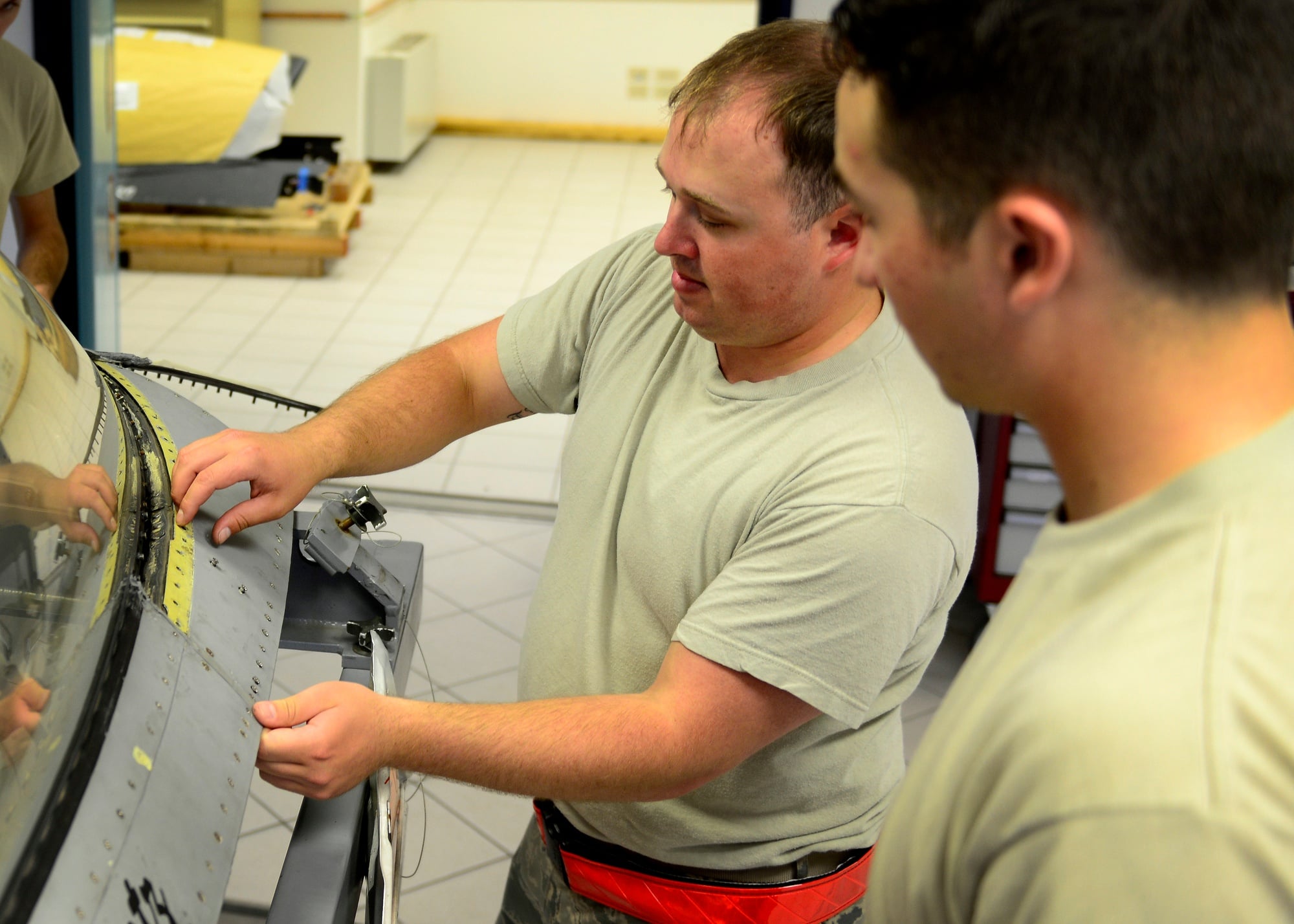
Technicians shook cartridges by hand to hear whether the powder was there, a literal rattle test, and X-rayed the ones that sounded wrong. For the T-38 and T-6 the job meant pulling the ejection seats, an eight-hour task per aircraft. Naval Surface Warfare Center Indian Head Division worked out radiographic procedures to clear replacement stock and, later, to inspect F-35 cartridges in place.
More than 9,000 cartridges were examined across the services. Four were defective.
That ratio is the whole argument. Four bad cartridges in nine thousand is a vanishingly small failure rate, and it was still worth grounding several hundred aircraft to find them, because the cost of the failure is a pilot who pulls the handle and nothing happens.
Why a retired jet still shows up in the ordnance budget
Put the two halves together and the F-117 notice stops being a curiosity. A small number of Nighthawks still fly from Tonopah Test Range in Nevada as red-air aggressors, as stand-ins for stealthy cruise missiles and as test platforms, and the Air Force intends to keep them going into the 2030s. Flying them means keeping their escape and emergency systems legal, and that means buying fresh cartridges on the same schedule as everybody else.
There is no way to quietly skip it. An aircraft with expired CAD/PADs is not airworthy, whatever else is right with it. The paperwork that outed the shadow fleet is the same paperwork that keeps a student pilot’s seat working in a T-6, and it applies to both for exactly the same reason.
Häufig gestellte Fragen
What does CAD/PAD stand for?
Why do CAD/PADs expire?
What happens if an aircraft’s CAD/PADs expire?
Why were hundreds of US military aircraft grounded in 2022?
What caused the 2022 ejection seat cartridge defect?
Does the F-117 Nighthawk really still fly?
Why does the F-117 need explosives for its tailhook?
Sources: The War Zone; US Navy (navy.mil); Air & Space Forces Magazine; Breaking Defense; US Army Aviation Digest; Naval Surface Warfare Center Indian Head Division; Afterburner reporting


0 Comments