
Three numbers changed on Monday morning, and one name.
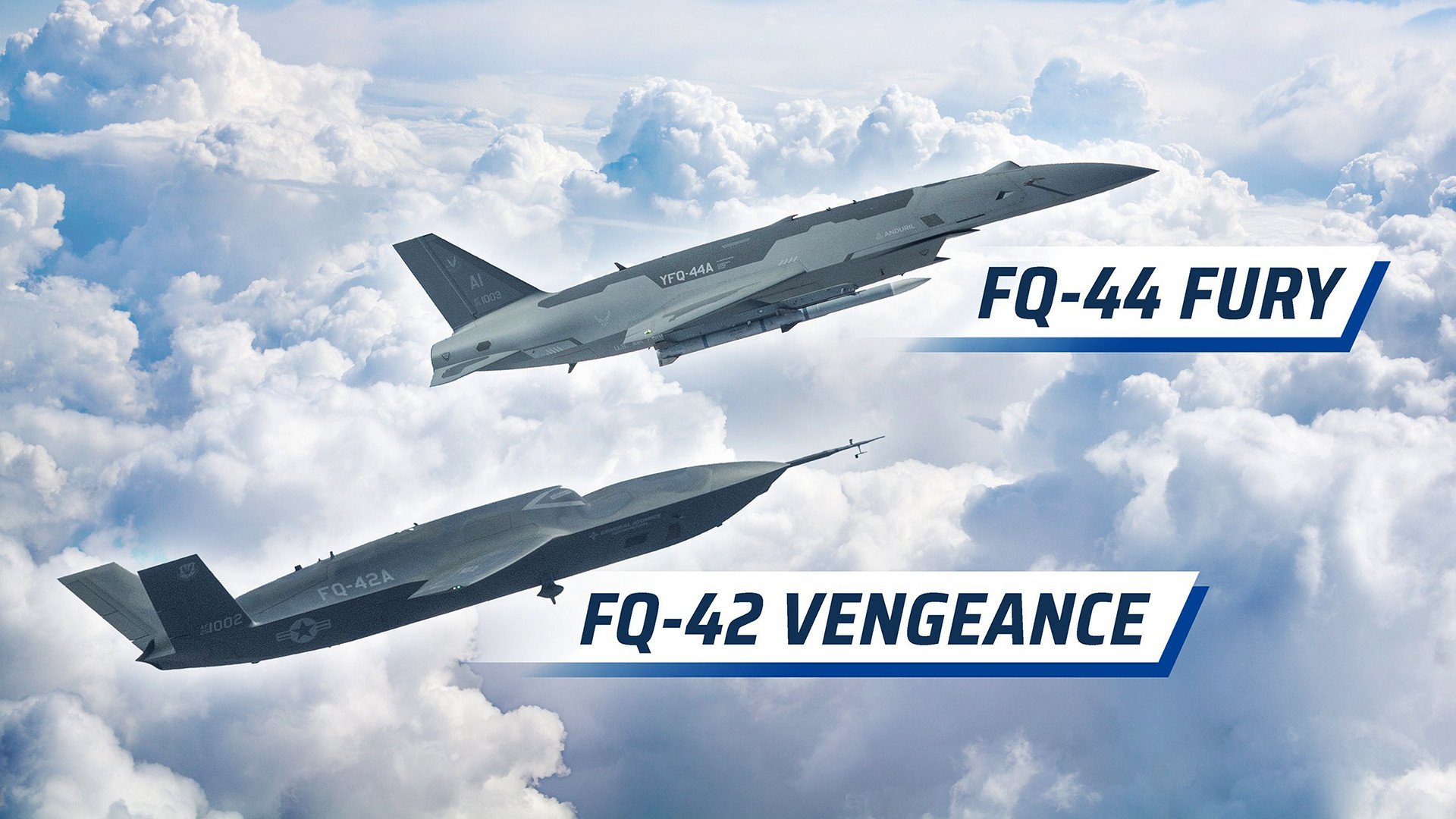
Speaking at the Air & Space Forces Association’s conference in National Harbor, Secretary of the Air Force Troy Meink said the service now intends to have at least 500 Collaborative Combat Aircraft in service by 2032. In June, the figure he gave publicly was “over 150” by the end of the decade. He added a second fleet of 500 cheaper drones on top of it. And he gave the two aircraft already in production their combat names: FQ-42 Vengeance and FQ-44 Wut.
Only one of those names is new. Anduril’s FQ-44 has been called Fury since the prototype was unveiled. General Atomics’ FQ-42 had a company name already, and it was not Vengeance.
Kurzinfo
| Angekündigt | 14 September 2026, keynote by SecAF Troy Meink, AFA Air, Space & Cyber Conference |
| CCA target | At least 500 in service by 2032 (previously “over 150” by 2029) |
| CCA types | FQ-42 Vengeance (General Atomics), FQ-44 Fury (Anduril), both Increment 1 |
| Name change | The FQ-42 was previously named Dark Merlin by General Atomics |
| CCA unit cost target | About $20 million at full-rate production |
| MMA target | 100 aircraft in 2029, 500 by 2032, at roughly $10 million each |
| MMA predecessor | MQ-9A Reaper; 135 remained in USAF inventory as of May 2026 |
| Test unit | Experimental Operations Unit, testing at Edwards AFB (April) and Creech AFB (July) |
From 150 to 500 in three months
The arithmetic is worth laying out, because the Air Force’s stated CCA fleet size has moved more than once.
In 2023, then-Secretary Frank Kendall talked about acquiring at least 1,000 CCAs across the life of the programme. That figure was subsequently walked back to a first tranche of between 100 and 150. In June 2026, announcing the production contracts for both types, Meink referred to “over 150 combat capable CCA by the end of the decade”. On Monday the same official put the 2032 number at 500.
Part of the jump is almost certainly accounting rather than ambition. The FQ-42 and FQ-44 belong to Increment 1. At least one further increment is planned, and Lockheed Martin’s Vectis and Northrop Grumman’s YFQ-48A are both circling it. The 500 figure very likely folds Increment 2 in. Meink did not say.
Dark Merlin is dead, long live Vengeance
Naming matters more than it looks. A company name is marketing; an official popular name is doctrine, and it is what ends up stencilled on the airframe and written into the tactics manuals.
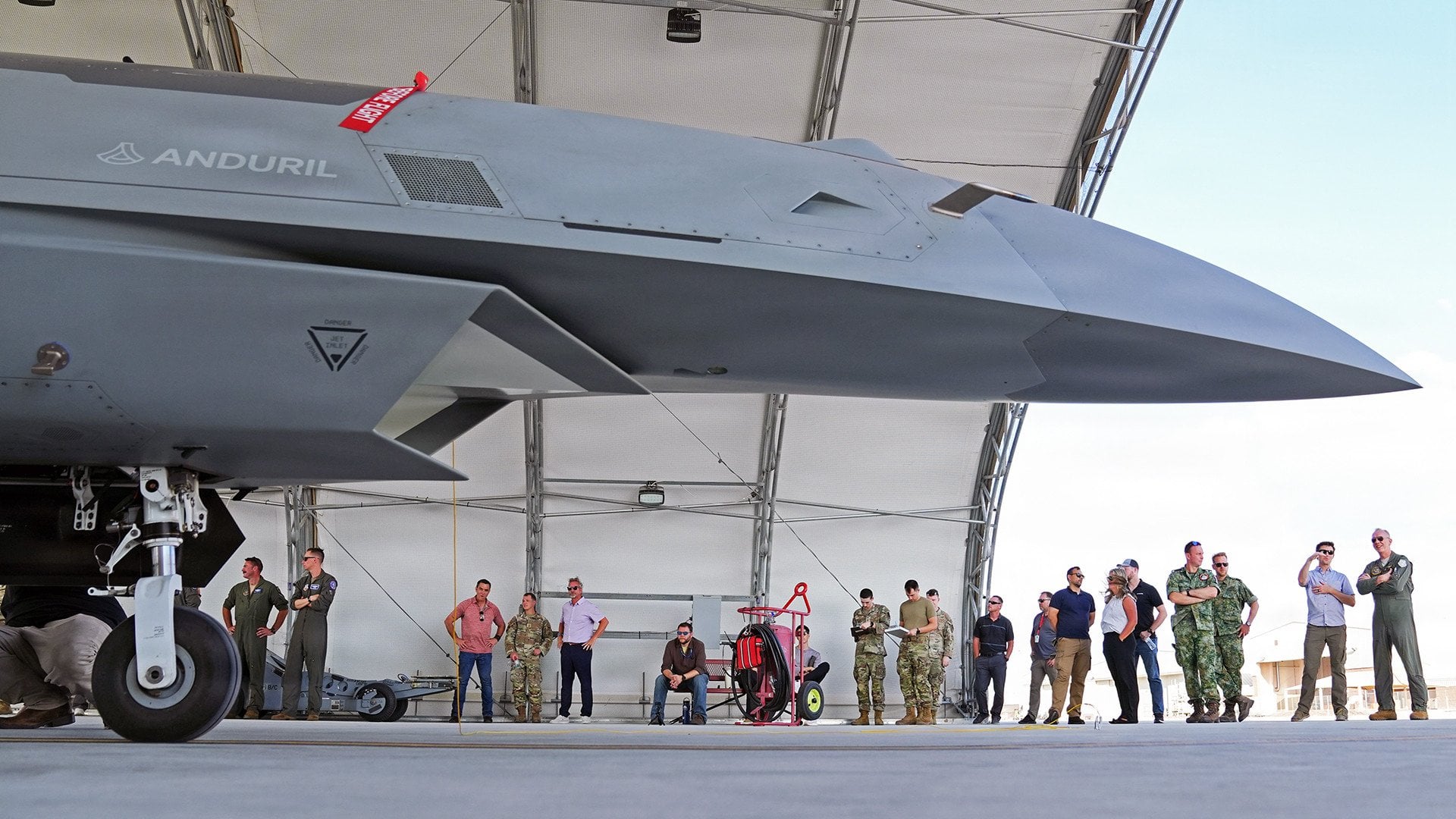
General Atomics had been calling its YFQ-42A Dunkler Merlin. The Air Force has now designated it Vengeance. Anduril’s Wut survives unchanged, which is a small victory for a company that was the outsider in this competition eighteen months ago and is now one of two production suppliers.
Both are Increment 1 aircraft, ordered into production in June. Meink said the first examples of each are already coming off the line, and described their intended job in unusually flat terms.
That is not a hedge. Anduril disclosed separately on Monday that a YFQ-44A has already flown in formation with F-35s during July testing at Creech Air Force Base, and fired an inert AIM-120 AMRAAM at a simulated target using a track handed to it over the horizon.
The quiet admission about money
The most revealing line of the day came in the question-and-answer session, not the speech. Asked about the 500 figure, Meink said the programme could go further, and then explained why that is not entirely good news.
That is the whole CCA thesis stated backwards. The programme was designed from the start around simple aircraft that could be built quickly and cheaply, at a target of roughly $20 million each once full-rate production begins. It has worked well enough that production capacity is no longer the binding constraint. The budget is.
The second fleet nobody was expecting
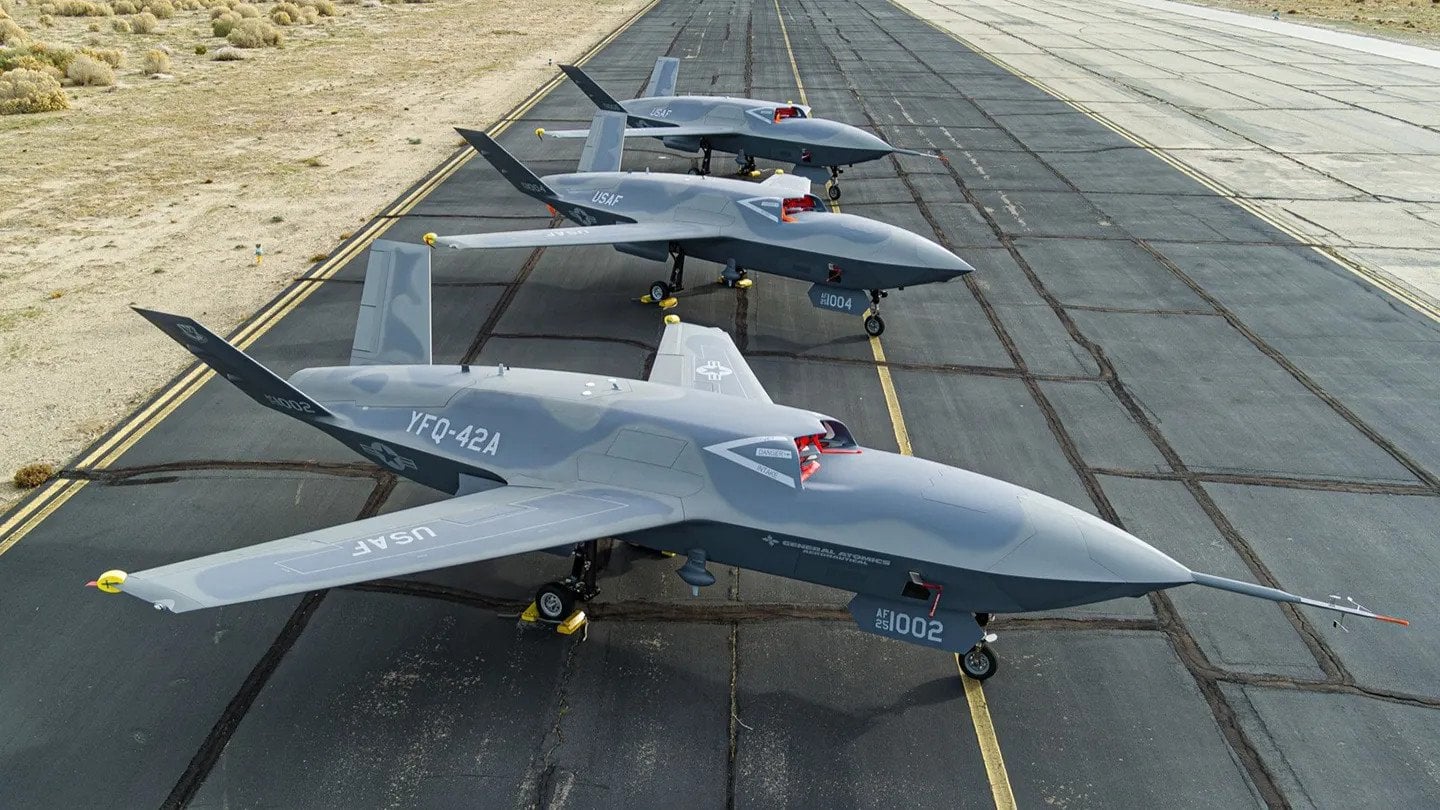
Running alongside the CCA programme is a separate and much cheaper effort: Massed Modular Aircraft, or MMA, which replaces the MQ-9A Reaper rather than flying alongside fighters. Meink committed to 100 of them in 2029 and 500 by 2032, at roughly $10 million apiece. The previously stated target was at least 180.
The reason for that increase is not subtle. The Air Force had 135 MQ-9s left in inventory as of May 2026, with further losses reported since, against heavy attrition during operations over Iran and Yemen. Meink named the campaign explicitly and said ISR and strike platforms had been essential to it.
Add the two programmes together and the Air Force is describing 1,000 combat drones in service within six years, of two entirely different philosophies, at a combined airframe cost in the region of $15 billion before sensors.
The part that is still unsolved
Fleet numbers are the easy part of an announcement. How these aircraft are launched, recovered, rearmed, maintained and actually commanded in a fight is not settled, which is why the Air Force stood up a dedicated Experimental Operations Unit and has been running it hard: contested-operations testing at Edwards in April, agile combat employment trials at Creech in July.
Meink put it less formally. Getting the aircraft into operational units early matters, he said, because familiarity breeds confidence.
That is the real test. A fleet of 500 autonomous fighters is a procurement target. A squadron that trusts them is an air force.
Häufig gestellte Fragen
What are the FQ-42 Vengeance and FQ-44 Fury?
Why was the FQ-42 renamed from Dark Merlin?
How many Collaborative Combat Aircraft does the US Air Force want?
Was kostet ein Collaborative Combat Aircraft?
What is the Massed Modular Aircraft programme?
Have the fighter drones flown with crewed aircraft yet?
Sources: TWZ, Air & Space Forces Magazine, Defense News, US Air Force.
0 Comments