

Somewhere over the New Mexico desert this afternoon, a heavily modified Second World War fighter will round a fifty-foot pylon at something north of 450 mph, about as close to the ground as a sensible person parks a car.
Today is the closing day of the National Championship Air Races at Roswell Air Center, and it is the first time since the sport left Reno that the full field has turned up. All seven classes are flying. The Unlimited class — the piston-engined warbirds that are the reason most people have ever heard of air racing — is back after sitting out the 2025 season, and racing at Roswell for the first time ever.
For a sport that spent sixty years in one place and then had to move house, this week is the proof that the move worked.
Kurzinfo
Ereignis: National Championship Air Races, 16 to 20 September 2026
Venue: Roswell Air Center (ROW), New Mexico — second year at the site
Classes: All seven — Jet, Formula 1, Biplane, T-6, Sport, Unlimited and STOL Drag
Rückkehr: Unlimited and Sport, both of which skipped 2025; the Unlimiteds have never raced at Roswell before
New this year: The 11.3-mile Jet Class “Mach Course”, built for speeds up to 600 mph
Unlimited entries: 15 aircraft, mostly P-51 Mustangs, plus two Hawker Sea Furies, a Bell P-63 and two Yak types
Airshow: USAF Thunderbirds, Friday to Sunday — their first appearance at the races since 2019
Organiser: Reno Air Racing Association, which moved the event after 60 years at Reno Stead Airport
Why the Unlimiteds Matter
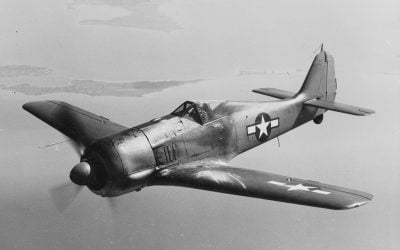
Every class at Roswell is a real motorsport, but the Unlimiteds are the one that makes non-aviation people stop and stare. The formula is simple and slightly deranged: take a P-51 Mustang or a Hawker Sea Fury, cut the wings down, rebuild the engine to produce power its designers never imagined, and fly it around a closed course at low level.
This year's field of fifteen is heavy on Mustangs, with names that have been painted on these airframes for decades. Brent Hisey, a neurosurgeon, brings Miss America. Steve Hinton flies Bardahl Special. Vicky Benzing races the purple Plum Crazy. Robbie Patterson has Wee Willy II, Ken Gottschall ManO'War.
The Mustangs will not have it entirely their own way. Dennis Sanders' Sea Fury 924 and Stephen Koewler's Argonaut bring big radial power to the fight, Tom Nightingale races a Bell P-63 Kingcobra called Pretty Polly, and Bernie Vasquez turns up in a Yak.

Speeds in the class routinely exceed 450 mph. The outright benchmark sits higher still: Voodoo, a Mustang flown by Steve Hinton, holds a piston-engined speed record of 531.64 mph, a figure painted on the aeroplane's own canopy rail.
The Mach Course
The other headline this year is a racecourse. The Jet class — L-39 Albatros and L-29 Delfín trainers, racing since 2002 — has a new 11.3-mile layout that the organisers have named the Mach Course, designed to let qualified pilots run at up to 600 mph.
The name oversells it slightly and everyone involved knows it: 600 mph is comfortably below the speed of sound. What it does capture is that this is the longest, fastest closed course the sport has built. A layout like this needs an enormous amount of flat, empty, cooperative airspace, which is precisely what the high desert around Roswell has and what Reno, hemmed in by development, had run out of.
Kerby races a black L-39C Albatros named Ivan, and finished third in the Jet gold race last year. He has been flying for more than fifty years. His description of race preparation is the least glamorous and most convincing thing in the sport: a safety meeting, a crew brief, and then sitting still with his eyes shut, hands moving in the air where the stick and throttle will be.
Sixty Years at Reno, and the Move That Followed
The National Championship Air Races were a Reno institution for six decades. What ended that was not a lack of interest — the final Reno meeting set an all-time attendance record with more than 150 pilots across seven classes — but geography. Housing and development had crept steadily closer to Reno Stead Airport, and a sport that flies modified fighters at low level next to a crowd line cannot afford to be squeezed.

Roswell won the replacement bid in 2024, beating 38 other cities. New Mexico and the city put roughly $28 million of infrastructure behind it. Five pylon courses were surveyed and built, a 7,500-seat grandstand went up, and new roads were cut across the 84-acre site. The former Walker Air Force Base, once the largest in Strategic Air Command, went back to work.
The first Roswell meeting in 2025 drew more than 56,000 spectators and, most importantly, ran without an accident. But two classes stayed away, and a full house was the thing the organisers still had to prove they could deliver.
Watching the Last Day
Sunday is when it counts. The gold and silver races decide the season, and the Thunderbirds close the show.
The organisers stream the racing on their own channel; the recording above is Saturday's programme from Roswell.
If you have never watched pylon racing, the thing that does not come across on video is the timing. A lap takes about a minute. The aircraft appear as a dot, become a shape, and arrive as a physical event that you feel through the grandstand before the sound catches up. Then they are gone, and sixty seconds later it happens again.
That is what was at risk when Reno closed, and what a desert airfield in New Mexico has now spent two years and $28 million proving it can keep alive.
Sources: National Championship Air Races official class rosters and course announcements; New Mexico Magazine, “Air Races Take Off in Roswell” by Julian Dossett; Reno Air Racing Association; AVweb.

0 Comments