
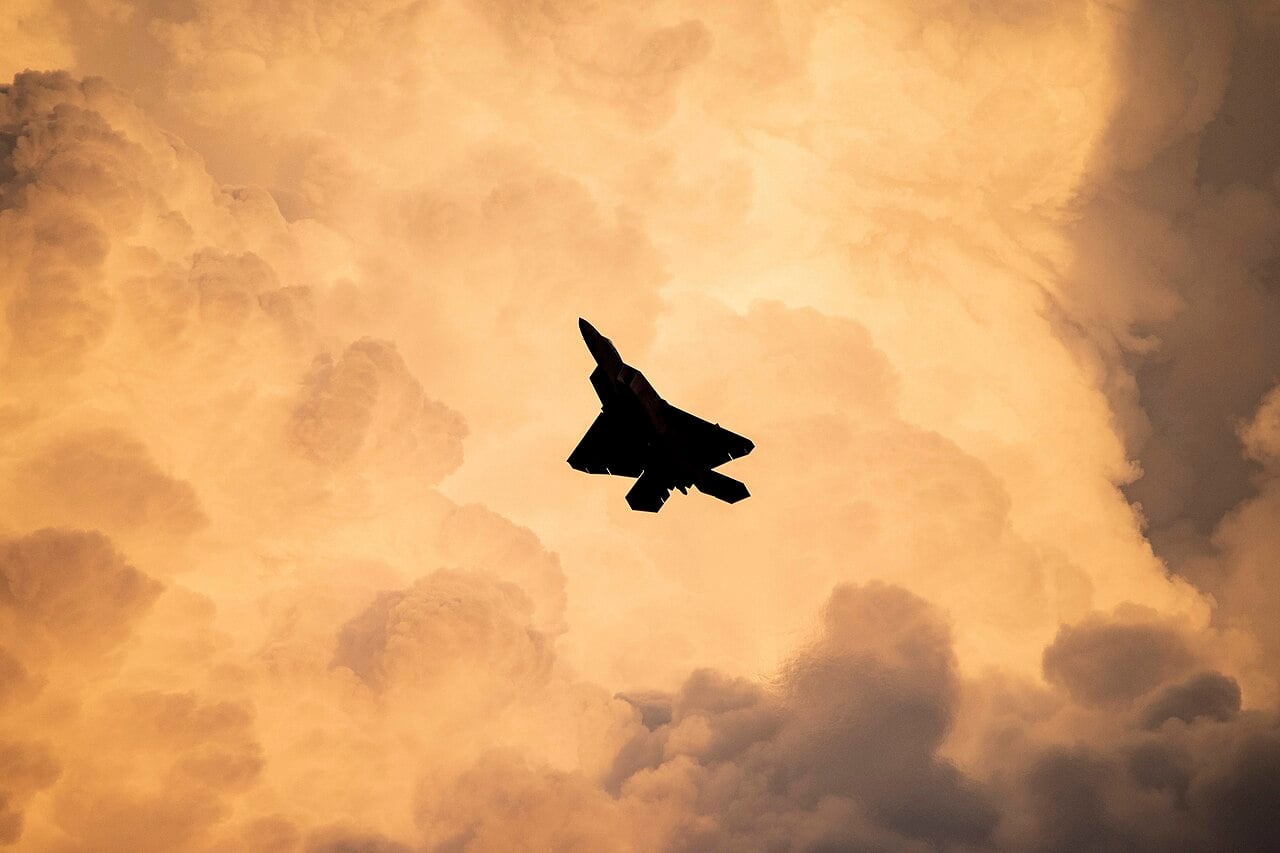
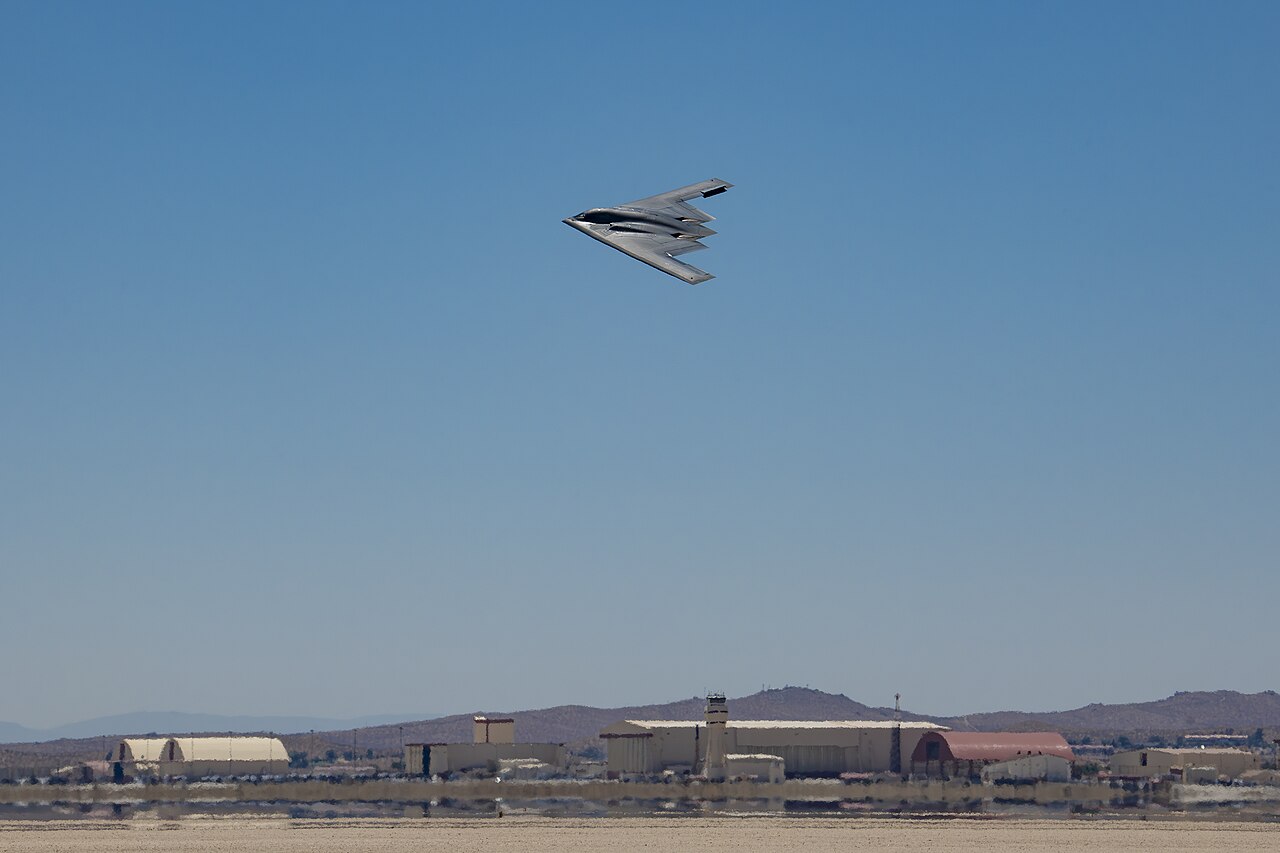
America has nineteen B-2 Spirits and fewer than 190 F-22 Raptors. Both are irreplaceable, both are out of production, and for several months this year the ability to keep them flying depended on one piece of welded steel in Utah that had caught fire.
The 75th Air Base Wing put out a release last week about how its people fixed it. It is a maintenance story, which means nobody will read it. It is also one of the better illustrations available of what sustaining a small fleet of exquisite aircraft actually involves.
Kurzinfo
| The unit | 530th Commodities Maintenance Squadron, Hill AFB, Utah |
| Its role | The Air Force depot-level repair facility for aircraft secondary power systems |
| The component | Aircraft Mounted Accessory Drive (AMAD) — the gearbox that drives starters, pumps and generators |
| Das Problem | The only test stand able to validate F-22 and B-2 AMADs failed; its manufacturer no longer exists |
| Motor fault | Overheating bearings caused repeated burnouts |
| Motor replacement | Installed, aligned, vibration-checked and calibrated in seven days instead of the standard fourteen |
| Tech data | 30 deficiencies found in outdated documentation |
| Vibration improvement | 37 percent reduction, via a redesigned spline adapter |
| Overtime logged | 563 hours to clear the backlog |
| Angekündigt | 75th Air Base Wing release, 18 September 2026 |
The gearbox on the side of the engine
An Aircraft Mounted Accessory Drive is not glamorous. It is a gearbox bolted to the outside of the engine casing, taking power off the engine and distributing it to everything that needs turning: the jet fuel starter, the air turbine starter, hydraulic pumps, fuel and oil pumps, the AC generators, the air compressors.
If it fails, the aircraft has no hydraulics and no electrical power. It does not fly. And after every repair, it has to be validated on a test stand before it goes back on an aircraft.
For the F-22 Raptor und die B-2 Spirit there was exactly one such stand, at the 530th Commodities Maintenance Squadron at Hill Air Force Base — the Air Force’s depot-level repair facility for aircraft secondary power systems.
The motor that caught fire
The stand’s primary motor kept burning out. Its bearings were overheating, repeatedly, and the failures escalated.
Then the second problem: the company that built the stand had gone out of business. No blueprints. No replacement units. The outage stretched across months while the F-22 and B-2 AMAD backlog grew.
The team accelerated a warranty repair and worked weekends to install, align, vibration-check and calibrate a new motor — seven days instead of the standard fourteen. Visiting the motor’s original manufacturer, they found the actual root cause: the oiler nozzles were not properly lubricating the bearings. Design changes followed, to hold temperatures below 130 degrees.
Thirty deficiencies in the paperwork
The part of this story that will be familiar to anyone who has worked on old equipment is what happened next. A full technical requirements analysis turned up thirty deficiencies in the tech data itself — documentation that had drifted out of step with the hardware it described.
A redesigned spline adapter cut vibration during AMAD testing by 37 percent. A new two-person operating concept was introduced, one person watching system levels while the other makes fine adjustments. Then 563 hours of overtime went into clearing the backlog and putting aircraft back on the ramp.
Whiteman Air Force Base’s own tour of the B-2, for a sense of the aircraft whose readiness was sitting behind this one test stand.
Two more saves
The same squadron caught a failed integrated drive generator gearbox on a B-2 before it caused a delay. There was no replacement available anywhere. Five mechanics and engineers took it apart and rebuilt it by hand, saving $39,000 and heading off an eight-month outage.
They also reconfigured two gearboxes and four hoses with new fittings so that B-2 and F-22 configurations could not be mistakenly interchanged — a change the Air Force values at eliminating a $7 million risk. That one is worth pausing on: until this year, it was apparently possible to fit the wrong configuration to a stealth aircraft.
The wider problem
None of this is unique. The Air Force has recently repaired damaged C-17 panels in house and rebuilt the lift-fan clutch and three-bearing swing module of an F-35B rather than wait for a supplier. The pattern is the same each time: the original manufacturer is gone or slow, the technical data is incomplete, and the people holding the wrench end up doing engineering.
The industrial base is reacting in its own way — GE Aerospace recently paid $11.75 billion for Consolidated Precision Products, largely to own its own supply of precision turbine castings rather than queue for them.
But that is a solution measured in years. The 530th’s answer was measured in weekends. A second motor is now on order, which is the whole lesson: a fleet of nineteen bombers should probably not depend on a single test stand, and now, slightly less, it does not.
Sources: 75th Air Base Wing release, 18 September 2026; Hill Air Force Base; The Aviationist; U.S. Air Force.

0 Comments