
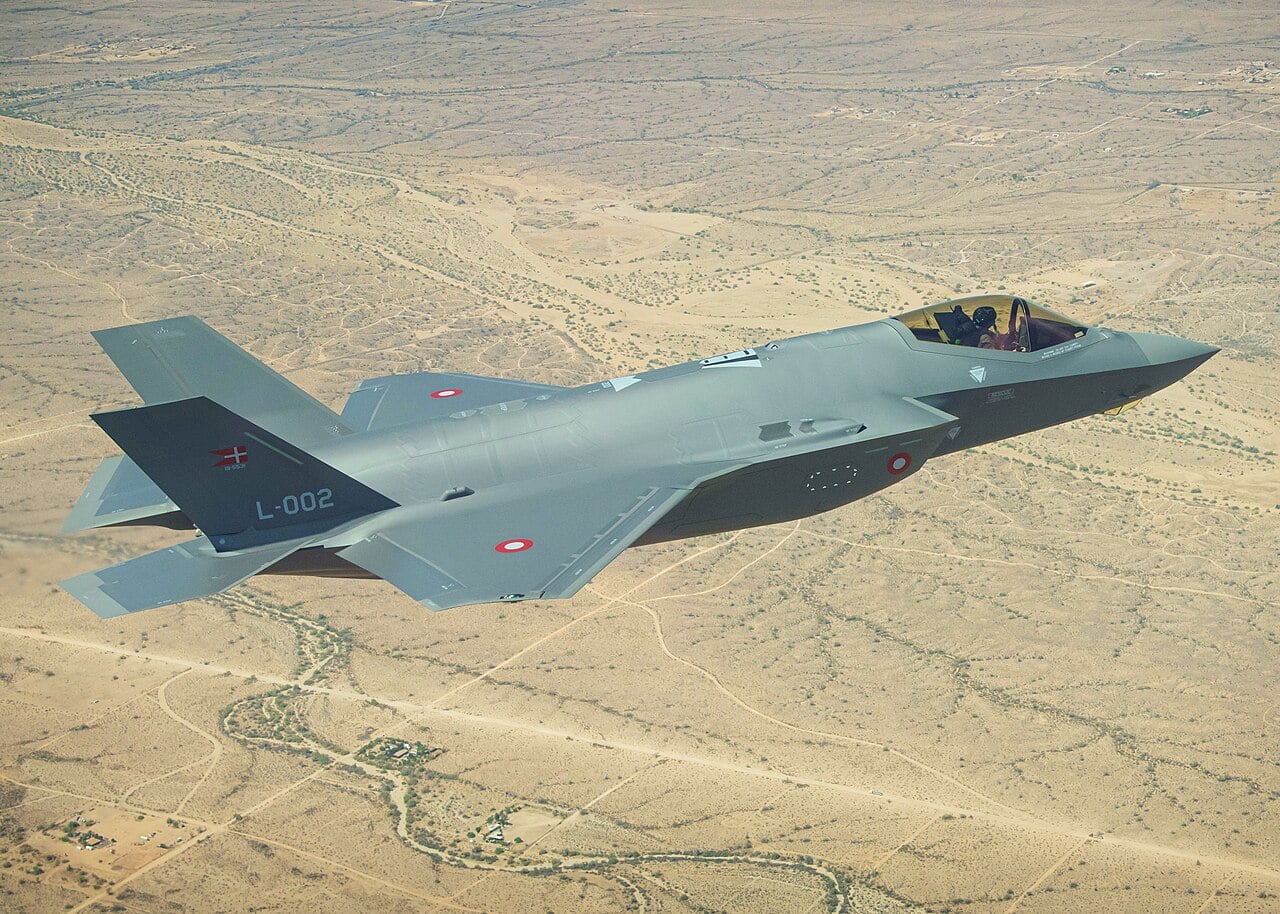
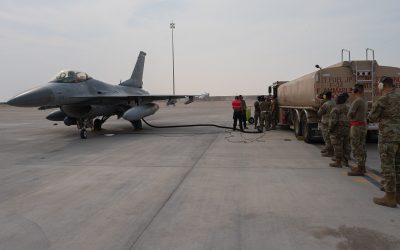
There is a photograph from Kangerlussuaq on 16 September that does more work than any communiqué. Two Danish F-35As, four American F-16s and two Canadian CF-18s, parked together on a single strip of asphalt at the head of a Greenland fjord.
The Royal Danish Air Force had flown over Greenland before. It had never landed a fifth-generation fighter there. On Wednesday it did, and it did so with the Americans and the Canadians on the same ramp, a French tanker overhead and a NATO AWACS running the picture.
Kurzinfo
| Was | Two Royal Danish Air Force F-35As landed in Greenland for the first time |
| Wo | Kangerlussuaq Airport, western Greenland |
| Wann | 16 September 2026 |
| Also present | Four USAF F-16s and two Royal Canadian Air Force CF-18s |
| Danish basing | The F-35As flew from Keflavik Air Base, Iceland |
| US and Canadian basing | Goose Bay, Canada |
| Support | French Air and Space Force A330 Phénix tanker, NATO E-3 AWACS, Danish CL-604 Challenger for search and rescue |
| Rahmen | NATO Arctic Sentry, launched February 2026; the US element is Operation Arctic Vanguard |
Three countries, three launch points
The Danish jets came from Keflavik in Iceland. The American and Canadian fighters came from Goose Bay in Labrador. Nobody operated from Greenland itself, because Greenland has very few places a fast jet can go.
That is the exercise, really. Holding a multinational package together across the North Atlantic, with a French Air and Space Force A330 Phénix providing the fuel, a NATO E-3 running airspace surveillance and coordination from Iceland, and a Danish CL-604 Challenger orbiting as search and rescue cover in case one of the pilots had a problem.
Kangerlussuaq
The airfield matters. Kangerlussuaq sits at the head of a long fjord in western Greenland, was built by the Americans during the Second World War, and has one runway. It is the practical gateway to the island for anything larger than a bush aircraft.
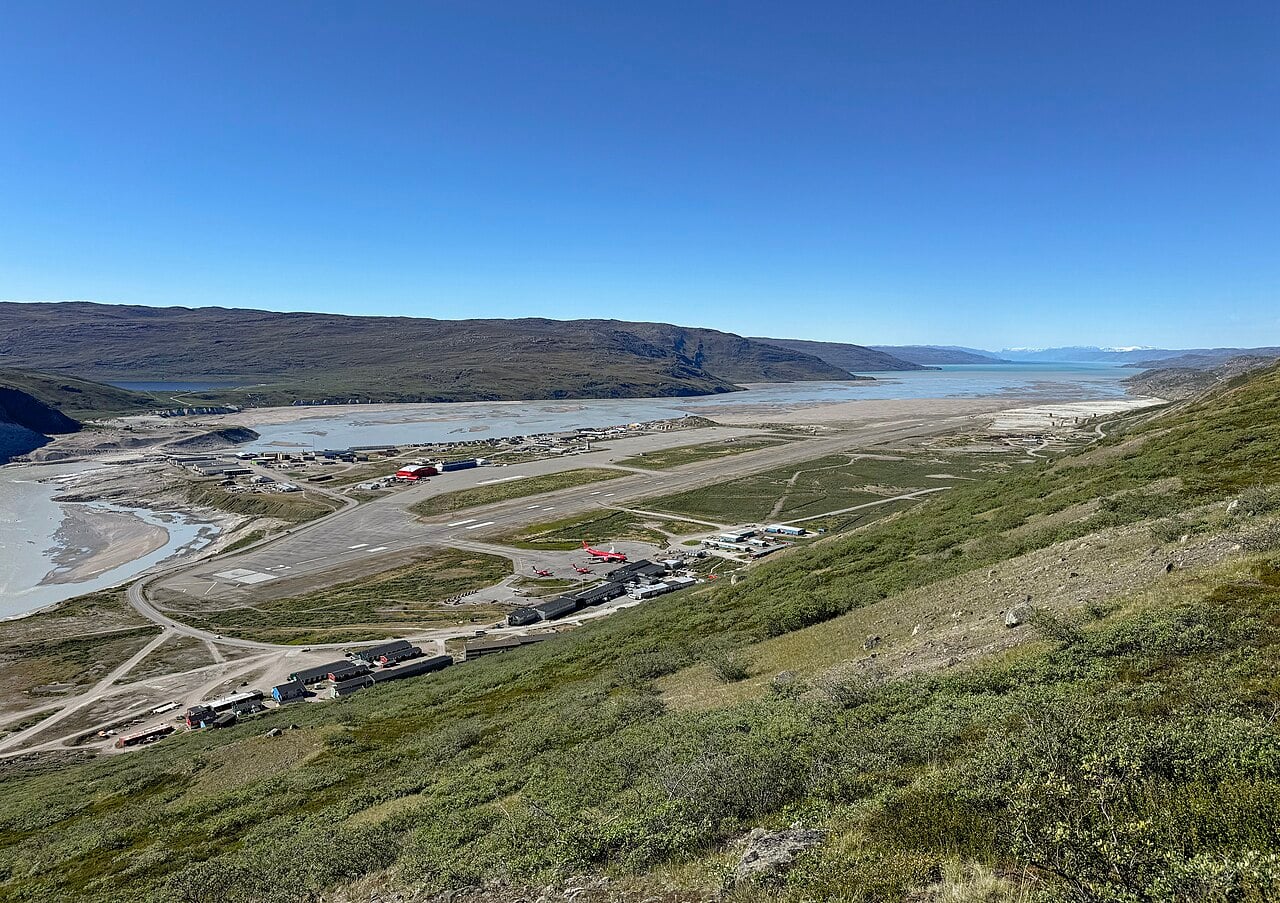
The Danish military was explicit about the difficulty: unpredictable weather, enormous distances, few suitable landing spots. Most of the work on a mission like this, the Forsvaret noted, is done before the aircraft take off.
Danish fighters had used Kangerlussuaq once before — two F-16s, since retired, on a two-hour hop to Pituffik in June 2025. The F-35 arriving is a different statement, because the F-35 is the aircraft Denmark will be defending Greenland with for the next thirty years.
How this became routine
The groundwork ran all year. In January, Danish F-35s flew directly from Skrydstrup to patrol the east coast near Kulusuk, refuelled by a French Phénix that came up from southern France and went home the same day. In February, Denmark supported NORAD during Operation Noble Defender with F-35s out of Keflavik and a Challenger at Kangerlussuaq covering American and Canadian operations from Pituffik.
Also in February, the Danish-led activity around Greenland — locally called Arctic Endurance — was folded into NATO’s Arctic Sentry and expanded to include more nations. That became Arctic Shield 2026.
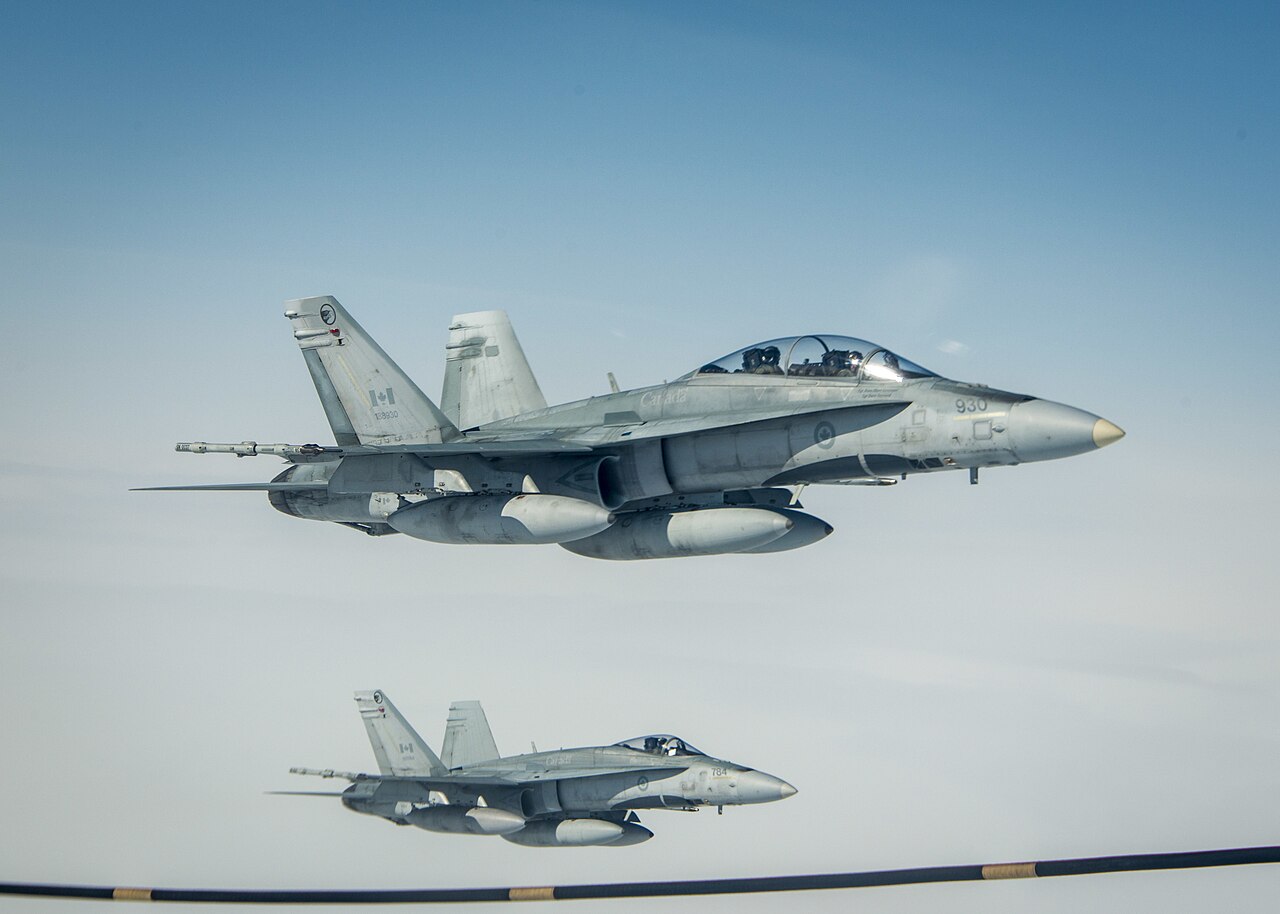
The American side runs under its own name. Operation Arctic Vanguard has taken F-16s and F-35As to Kangerlussuaq and to Pituffik Space Base — the installation formerly known as Thule — with the most recent F-35A deployment on 9 September involving the Wisconsin Air National Guard’s 115th Fighter Wing.
What it is actually for
Arctic Sentry began in February 2026, when European militaries deployed to Greenland as Copenhagen came under pressure from Washington over the island’s future. That context has not gone away, and it sits oddly alongside a photograph of Danish, American and Canadian fighters sharing a ramp.
The military logic is unaffected either way. Greenland sits across the northern approaches to North America and the North Atlantic, and the ability to put fighters there — not over it, on it — is the difference between a patrol and a presence.
Two aircraft is not a presence. It is a proof that the pipes work: the tanker, the AWACS, the SAR cover, the ramp space, the fuel, the weather calls. Everything after this is a matter of scale.
Sources: Forsvaret (Danish Defence Command); The Aviationist; NATO Allied Joint Force Command Norfolk; US Northern Command; NORAD; DVIDS.
0 Comments