
The sun was going down over the Danube Delta when the radar picture filled with targets. A group of aircraft was moving southwest across the Black Sea, about 120 kilometres east of Snake Island, on a course that pointed straight at the Romanian coast.
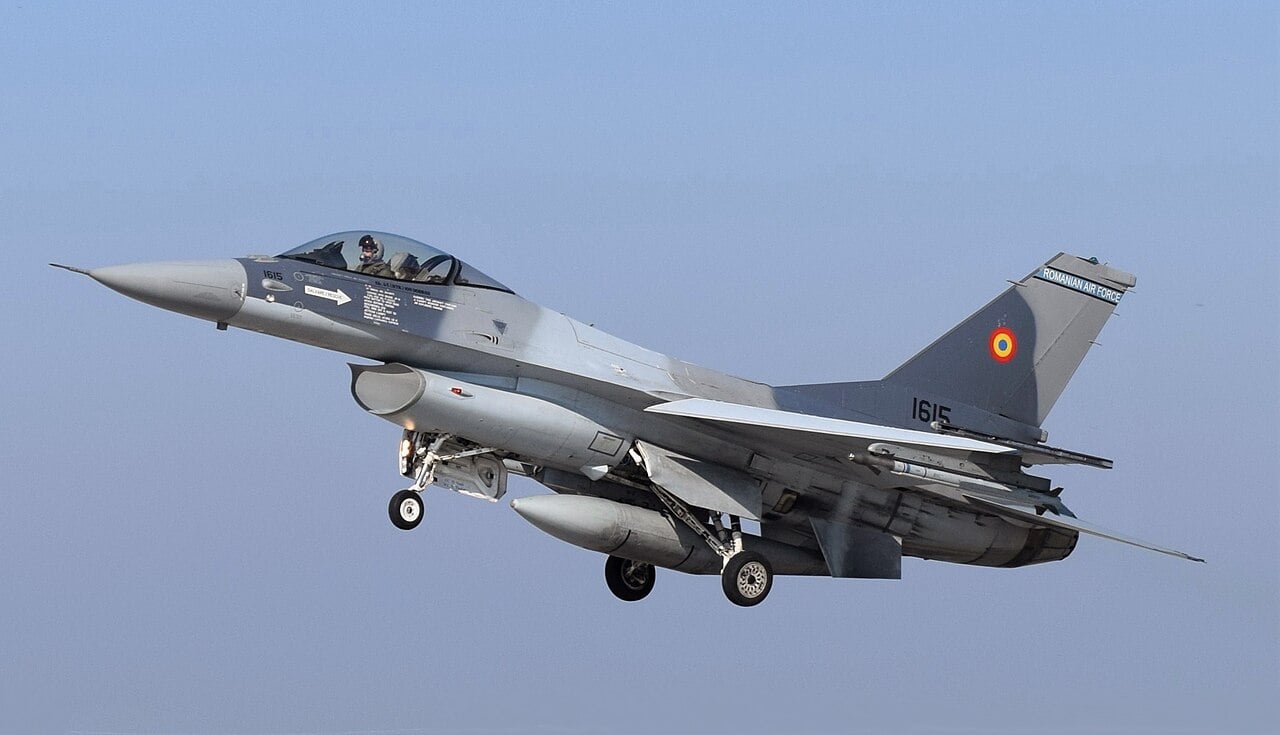
At 17:43 local time on Saturday 17 October 2026, two Romanian F-16s on air policing duty lifted off from 86th Air Base Borcea, near Fetești. Twenty-two minutes later, two drones had been destroyed over Romanian territorial waters off Sulina, and the Romanian Air Force had two more kills to its name.
Romania’s Ministry of National Defence (MApN) later identified both targets as jet-powered attack drones “from the Geran family”: Russia’s fast, turbojet-driven descendants of the Iranian Shahed. The ministry did not say where they had been launched, or what they were aiming at.
Kurzinfo
- Datum: Saturday 17 October 2026, early evening local time
- Interceptors: Two Romanian Air Force F-16s on air policing duty, 86th Air Base Borcea (Fetești)
- Take-off: 17:43 local time
- Ziele: Two jet-powered attack drones of the Geran family, according to the MApN
- First kill: Entered Romanian airspace at 17:59, shot down at 18:01 southeast of Sulina
- Second kill: Shot down at 18:05 east of Sulina, after about five minutes in Romanian airspace
- Standort: Romanian territorial waters, roughly 20 to 25 km off Sulina
- Waffe: Not named by the ministry; its cockpit photos show a missile shot
- Nächste: Special North Atlantic Council session on Black Sea security, Tuesday 20 October
Six Minutes Over Sulina
The ministry’s timeline is short and brutal. The first drone crossed into Romanian airspace at 17:59 and was shot down at 18:01, southeast of Sulina, after two minutes inside the border. The second was destroyed at 18:05, east of the town, after about five minutes in national airspace.
Acting Defence Minister Radu Miruță announced the result on Facebook within minutes. “The first drone entered national airspace at 17:59 (14:59 GMT) and was shot down within two minutes,” he wrote, in the translation carried by AFP. According to the Associated Press account published by Euronews, the first kill happened about 25 kilometres southeast of Sulina and the second about 20 kilometres east of it.
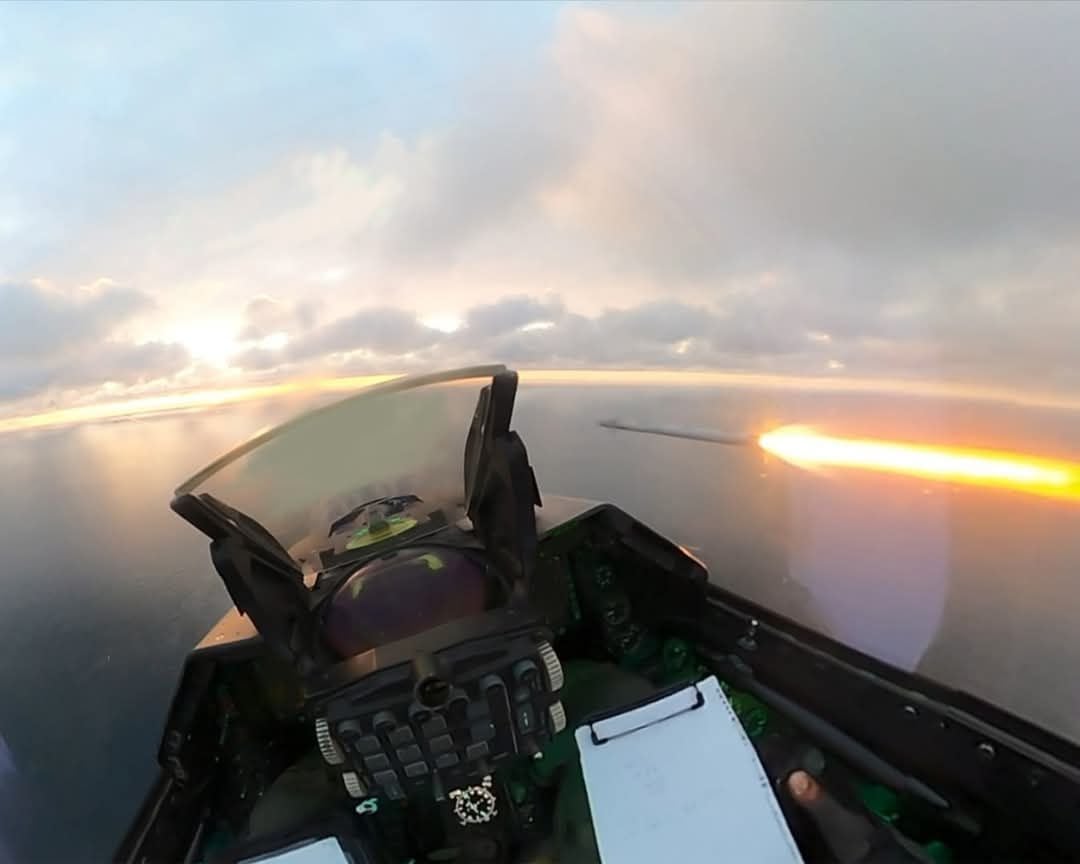
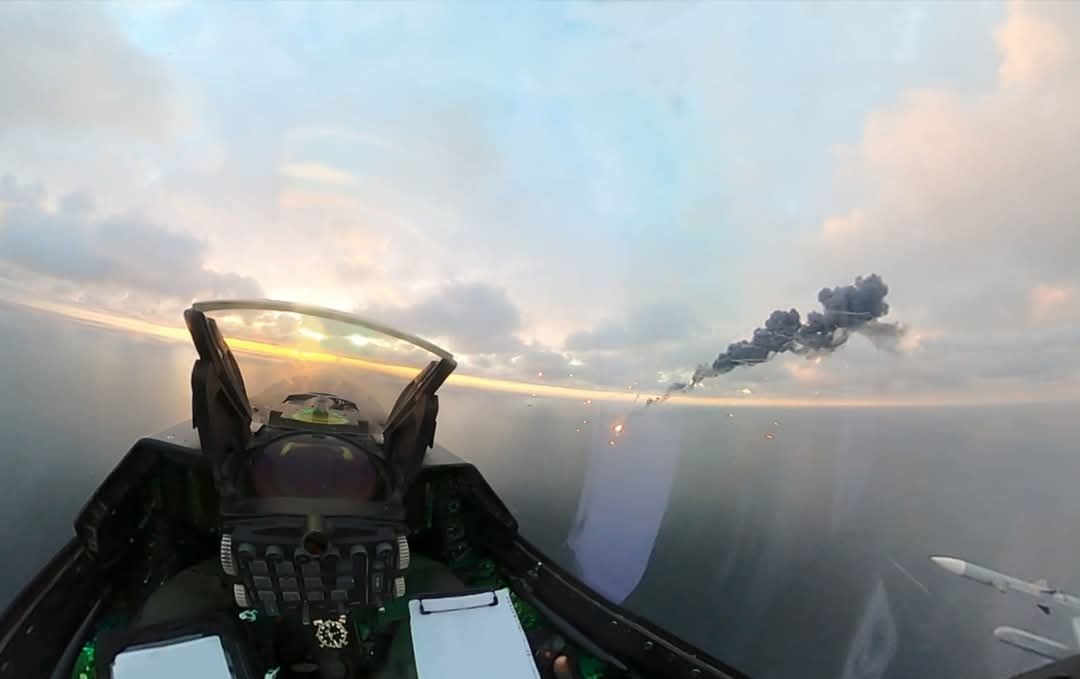
The ministry has not said which weapon the pilots used. On Sunday, though, it released photos taken inside one of the cockpits, and they leave little doubt about the method: a missile streaking away from the jet, then a burning fireball over the water.
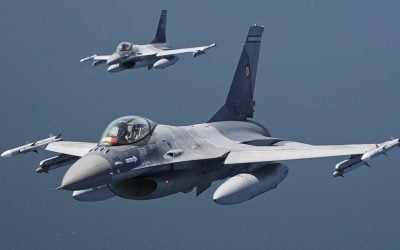
The F-16s involved are second-hand jets. Romania retired its last MiG-21 LanceRs in May 2023 and now flies F-16AM/BM fighters bought from Portugal and Norway, based at Borcea and Câmpia Turzii. Saturday showed what those jets sit on alert for.
The MApN posted its full timeline on X on Saturday night, including the detection point east of Snake Island and the take-off time from Borcea.
A Faster, Harder Target
A jet Geran is not the lawnmower-engined drone of 2022. The original Shahed 136, built in Russia as the Geran-2, cruises on a small piston engine. The jet-powered variants trade that for a turbojet and fly far faster, which shrinks the window a fighter pilot has to find, identify and engage the target.
Here, that window was measured in minutes. Both kills came within about five minutes of the drones crossing into Romanian airspace, and both went down over the sea rather than over the towns and wetlands of the Danube Delta.
Miruță added a line for the crews: “Congratulations, colleagues! None of the work done so far has been in vain!” The words carried weight. Romanian jets have scrambled after drone incursions many times this year without firing, including on 24 September, when a drone crashed in a forest near Solca before anyone could engage it.
A Week of Fire on the Black Sea
Saturday’s shootdowns did not come out of nowhere. In the week before, the ministry said, its radars tracked aerial targets in eight separate incidents in Ukrainian airspace close to the Romanian border, and in four of them drones briefly crossed into Romanian airspace.
At sea, it has been worse. A drone struck the tanker Yara J in Romanian waters on 14 October, and on 15 October a suspected drone attack set the Wine Trader on fire southeast of Sulina, leaving seven crew missing, according to AFP and other reports. Several more merchant ships have been hit off Bulgaria this month.
Foreign Minister Oana Țoiu framed the stakes on X. The Black Sea, she wrote, is a critical maritime route for grain, energy and industrial goods, and NATO would discuss its “defence and deterrence” at an upcoming meeting. Her closing line was blunt: “The Black Sea will be safe again.”
Max Afterburner breaks down the Romanian F-16 engagement against the two jet-powered Geran drones.
Was geschieht als Nächstes?
That meeting is a special session of the North Atlantic Council on Tuesday 20 October, called at Romania’s request. On the table: how NATO defends a sea where merchant ships are being set on fire and jet drones are now crossing into allied airspace.
Romania does not fly alone: allied fighter detachments rotate through the country, and a Spanish F-18 deployed to Romania already shot down a drone near Galați in August. But the threat is cheap and plentiful, and fighters are neither. President Nicușor Dan said this week that the country needs “equipment to deal with a new kind of challenge.”
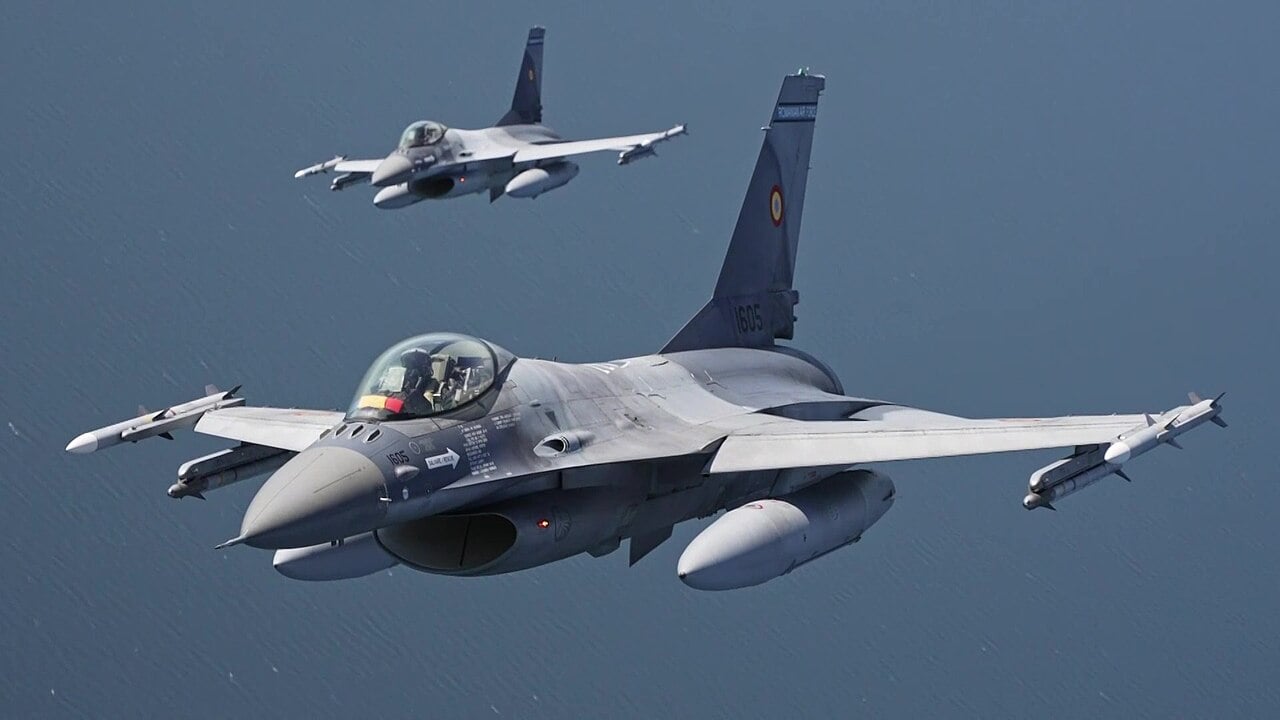
For now, the answer is two F-16s, a radar picture and a few minutes of decision time. On Saturday evening it was enough. The question NATO will be asking on Tuesday is how many more evenings like it the Black Sea has in store.
Sources: Romanian Ministry of National Defence (MApN), AGERPRES, Euronews/Associated Press, Arab News/AFP, UNITED24 Media, Euromaidan Press, Itamilradar

0 Comments