
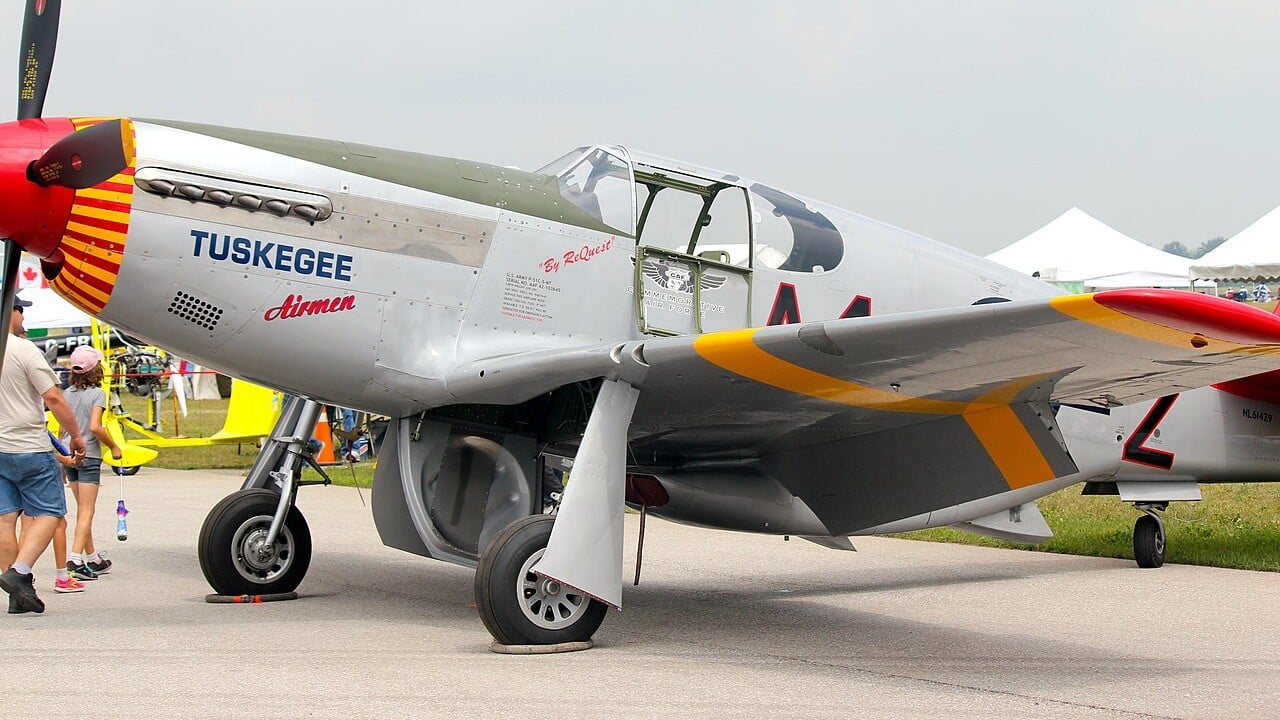
On 27 October 1954, a 41-year-old colonel working at Far East Air Forces headquarters in Tokyo was promoted to brigadier general. With that single star, Benjamin O. Davis Jr. became the first African-American general in the Luftwaffe der Vereinigten Staaten, 72 years ago today.
He had been here before, in a way. His father, Benjamin O. Davis Sr., had become the US Army’s first Black general in 1940. But the son’s path to that star ran through four years of silence at West Point, a fight in Washington to keep his pilots in combat, and the command of the most famous Black fighter unit in American history: the Tuskegee Airmen.
Kurzinfo
- Geboren: 18 December 1912, Washington, D.C.
- West Point: Class of 1936, 35th of 276, after four years of “silent treatment”
- WWII commands: 99th Fighter Squadron (1942–43), 332nd Fighter Group, the Red Tails (1943–45)
- Fighters flown: P-39, P-40, P-47 and P-51 in World War II; F-86 Sabre wing commander in Korea
- Erste: First African-American general in the US Air Force: brigadier general, 27 October 1954
- Im Ruhestand: 1970, as a lieutenant general
- Fourth star: 9 December 1998, pinned by President Bill Clinton
- Gestorben: 4 July 2002, buried at Arlington National Cemetery
Four years of silence
Davis entered the US Military Academy at West Point in July 1932. His white classmates decided to drive him out by refusing to speak to him outside the line of duty. He never had a roommate. He ate his meals alone, in silence. It went on for four years.
It did not work. Davis graduated in June 1936, 35th in a class of 276, only the fourth African American ever to graduate from West Point and the first in the 20th century. He asked to join the Army Air Corps and was turned down, because the Air Corps did not accept Black officers. The Army sent him to the all-Black 24th Infantry Regiment at Fort Benning, where he was barred from the officers’ club, and later to teach military science at the Tuskegee Institute in Alabama.
The first class at Tuskegee
In 1941, under political pressure, the War Department agreed to create a Black flying unit and train its pilots at Tuskegee. Captain Davis joined the very first class of aviation cadets in July 1941. On 6 March 1942 he received his wings with four classmates, and they became the first African-American combat fighter pilots in the US military.
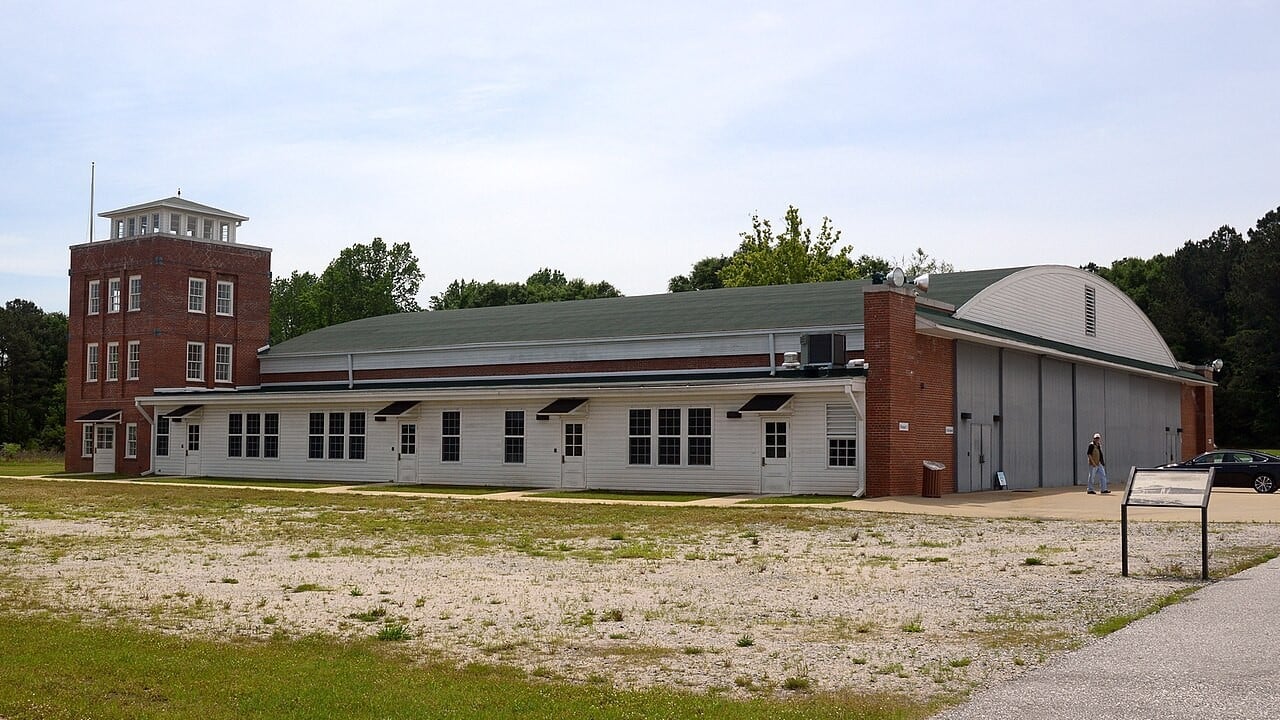
Promotion came fast. By May 1942 Davis was a lieutenant colonel, and in August he took command of the 99th Fighter Squadron, the first Black flying unit to go to war. Flying Curtiss P-40 Warhawks, the squadron reached North Africa in April 1943 and flew its first combat mission on 2 June 1943, dive-bombing the island of Pantelleria. It went on to support the invasion of Sicily.
West Point’s own film on Davis, “Destined to Lead,” published on 18 August 2017, the day the academy dedicated Davis Barracks.
A second fight, in Washington
In autumn 1943 Davis returned home to take command of the 332nd Fighter Group, a larger all-Black unit then forming at Selfridge Field, Michigan. Almost immediately he faced a different kind of battle. A report from the 99th’s white group commander claimed the squadron had performed poorly, and senior officers recommended pulling it out of combat. Davis had never been told of any problems.
He held a press conference at the Pentagon and testified before a War Department committee studying the use of Black servicemen. The Army ordered an inquiry and kept the 99th flying in the meantime. The study found its performance comparable to other P-40 units, and over the Anzio beachhead in January 1944 its pilots shot down a string of German aircraft in just two days.
The Red Tails over Europe
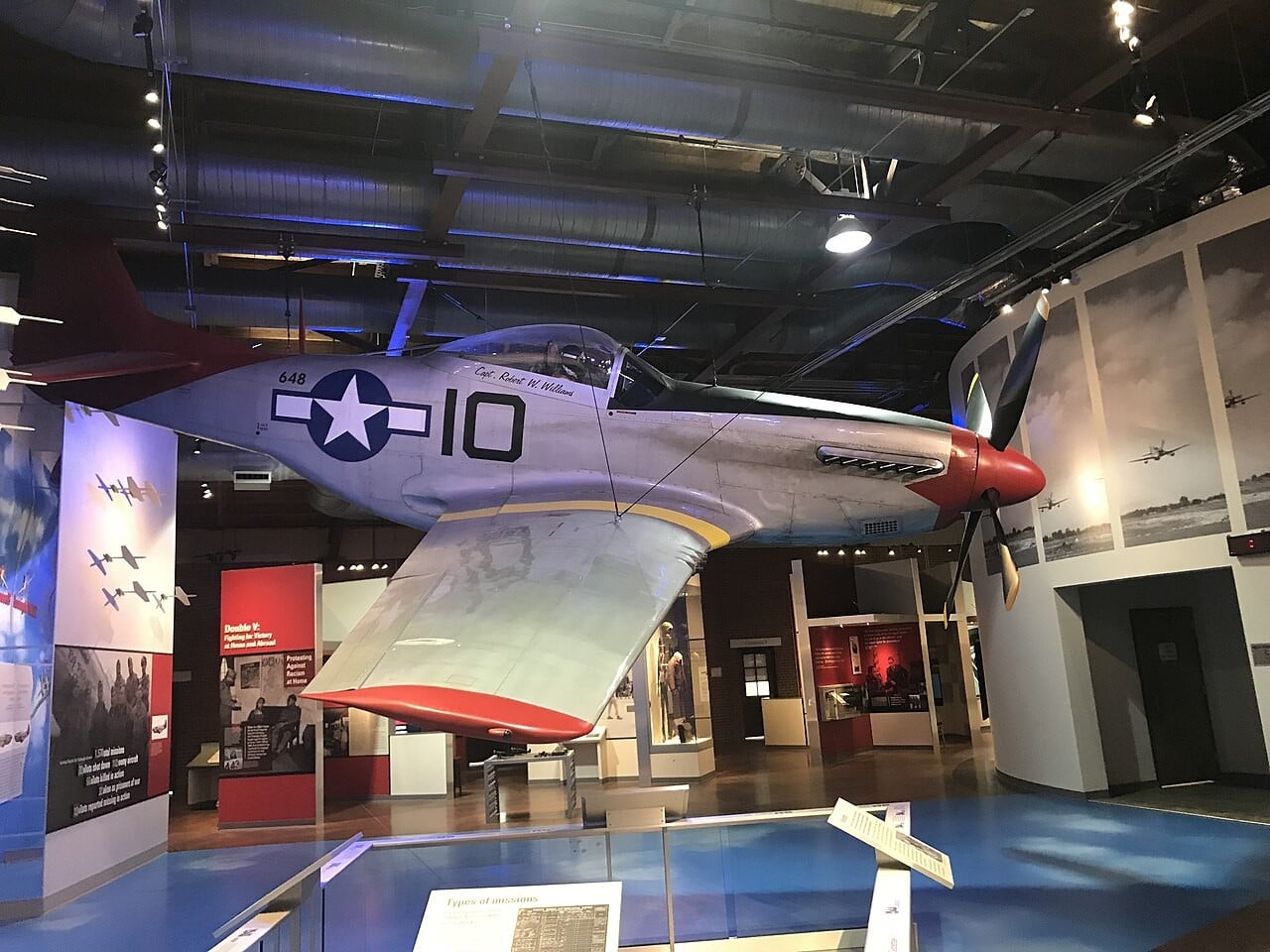
Davis took the 332nd to Italy in early 1944. Flying from Ramitelli Airfield on the Adriatic coast, its pilots painted the tails of their fighters red and became famous as the Red Tails. The group moved from P-39 Airacobras Zu P-47 Thunderbolts and then to P-51 Mustangs, escorting American heavy bombers on long missions deep into German-held territory.
Davis led from the cockpit. He earned the Silver Star and the Distinguished Flying Cross, and the 332nd received a Distinguished Unit Citation for protecting bombers on the long mission to Berlin on 24 March 1945. Over the course of the war, the airmen under his command flew more than 15,000 sorties.
Integrating the Air Force
In June 1945 Davis took over the all-Black 477th Composite Group at Godman Field, Kentucky, and after the war he commanded Lockbourne Army Air Base in Ohio. Then, in July 1948, President Harry S. Truman signed Executive Order 9981, ordering the armed forces to end racial segregation.
Davis helped draft the Air Force’s plan to carry out the order and advised the Assistant Secretary of the Air Force on integration. His own all-Black wing at Lockbourne was deactivated in 1949 as its people were spread across newly integrated units. In effect, he helped dissolve the segregated command he had spent the war defending, because that was the point.
He went on to the Air War College and the Air Staff in Washington, where, according to the Air Force, he gained approval to create the Thunderbirds demonstration team.
White House footage from the Clinton Presidential Library of the 9 December 1998 ceremony at which Davis received his fourth star.
Sabres, stars and a fourth one
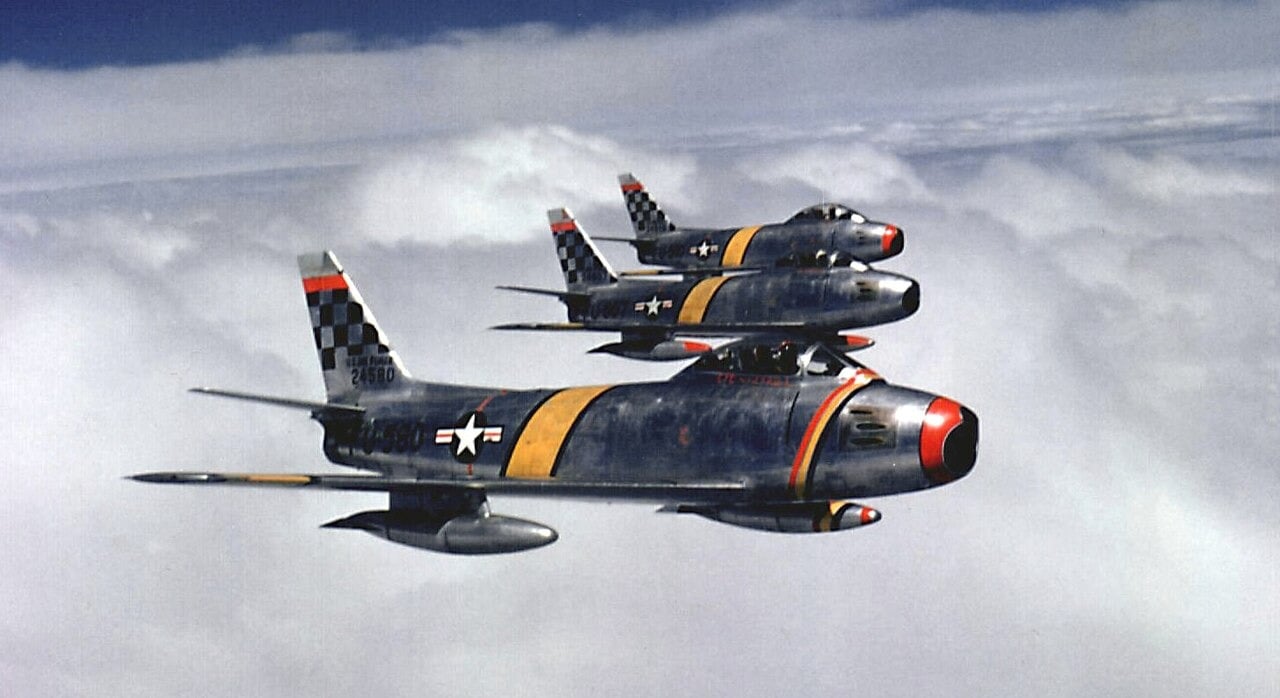
In November 1953, a few months after the Korean War armistice, Davis took command of the 51st Fighter-Interceptor Wing at Suwon, South Korea, a frontline F-86 Sabre wing. From there he moved to Far East Air Forces headquarters in Tokyo as director of operations and training, and it was in that post that the star arrived on 27 October 1954. The promotion was temporary at first and was made permanent in 1960.
The career that followed was a tour of the Cold War Air Force. He was vice commander of Thirteenth Air Force and commander of Air Task Force 13 on Taiwan, then served in Europe from 1957, first at Ramstein Air Base as chief of staff of Twelfth Air Force and then at headquarters US Air Forces in Europe. In April 1965 he became a lieutenant general and chief of staff of the United Nations Command and US Forces in Korea, later commanding Thirteenth Air Force in the Philippines and serving as deputy commander in chief of US Strike Command.
Davis retired in 1970 as a lieutenant general and went on to senior posts at the US Department of Transportation. Decades later, the surviving Tuskegee Airmen asked Senator John McCain to act, and Congress authorised a further promotion. On 9 December 1998, President Bill Clinton and Davis’s sister, Elnora Davis McLendon, pinned on his fourth star.
Benjamin O. Davis Jr. died on 4 July 2002, aged 89, and was buried at Arlington National Cemetery. West Point, the academy where nobody would speak to him, later named a new cadet barracks after him.
The silent treatment was supposed to break a cadet. Instead it produced a fighter group commander, the architect of an integrated Air Force, and its first Black general. On 27 October 1954, the man nobody would talk to got the last word.
Sources: US Air Force biography (af.mil), Smithsonian National Air and Space Museum Archives (Benjamin O. Davis Jr. Collection), US National Park Service, Public Papers of the Presidents (Clinton, 9 December 1998), Tinker Air Force Base history office, Wikipedia (Benjamin O. Davis Jr.; 99th Flying Training Squadron)
0 Comments