
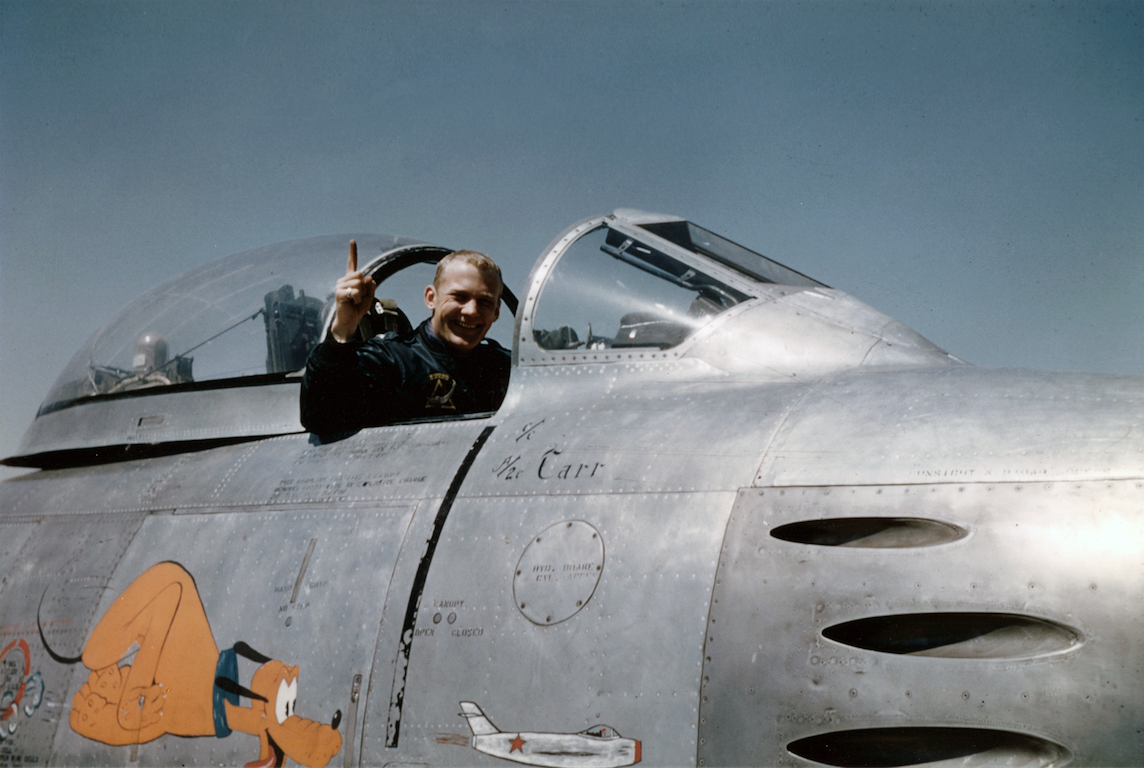
Buzz Aldrin is remembered as the second man on the Moon. Sixteen years earlier, he was a 23-year-old US Air Force lieutenant flying the F-86 Sabre over the north-western corner of North Korea, near the Chinese border, where the MiG-15 came across the Yalu River to meet the Americans. Pilots called it MiG Alley.
Kurzinfo
- Geboren: 20 January 1930, Glen Ridge, New Jersey
- West Point: Class of 1951
- Korea: 51st Fighter Interceptor Wing, 66 combat missions in the F-86 Sabre
- MiG-15s shot down: Two: 14 May 1953 and 7 June 1953
- MIT: Doctor of Science, thesis on manned orbital rendezvous
- NASA: Selected 1963
- Gemini 12: November 1966, about five and a half hours of EVA
- Apollo 11: Second person on the Moon, 20 July 1969
- Heute: Aged 96, the oldest of four living moonwalkers
14 May 1953
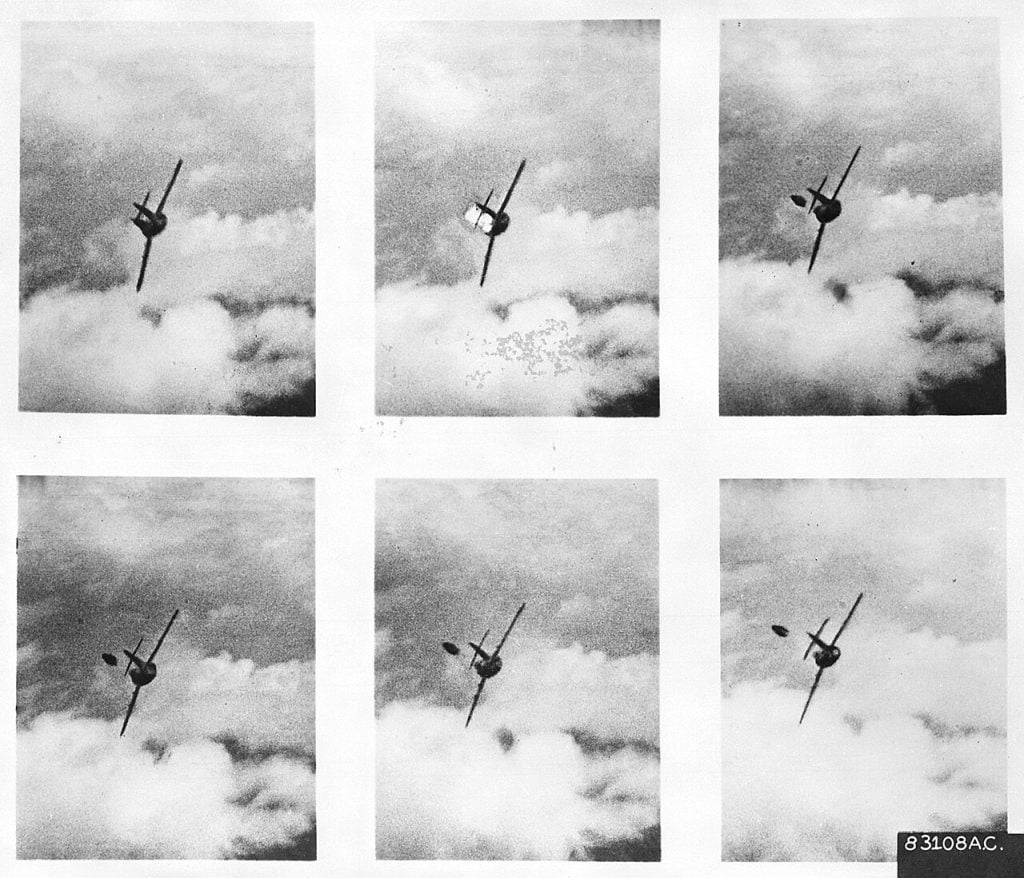
Aldrin, a 1951 graduate of West Point who had chosen the Air Force, arrived in Korea with the 51st Fighter Interceptor Wing. On 14 May 1953, flying an F-86E, he came up behind a MiG-15 near the Yalu and fired a burst from the Sabre’s six .50-calibre machine guns. He later described it as a strangely undramatic experience, with no dogfight and no manoeuvring.
His gun camera recorded the result: the MiG, then a bright flash as the pilot left the cockpit on his ejection seat. On 8 June 1953, Life magazine ran a full-page spread of the frames. The US Air Force released the sequence with a caption describing it as an unusual set of photos showing a MiG-15 pilot abandoning his aircraft.
The Second MiG
On 7 June 1953 Aldrin downed a second MiG-15, whose pilot also ejected. That fight was nothing like the first, and he later called it the hairiest experience he had ever had flying in this planet’s atmosphere. He finished his tour with 66 combat missions.
Dr. Rendezvous
After Korea, Aldrin went to the Massachusetts Institute of Technology and earned a Doctor of Science degree in astronautics with a thesis on manned orbital rendezvous: how two spacecraft could find each other and join up in orbit. It was exactly the problem NASA had to solve for Gemini and Apollo, and colleagues nicknamed him “Dr. Rendezvous”. NASA selected him in its third astronaut group in 1963.
Gemini 12
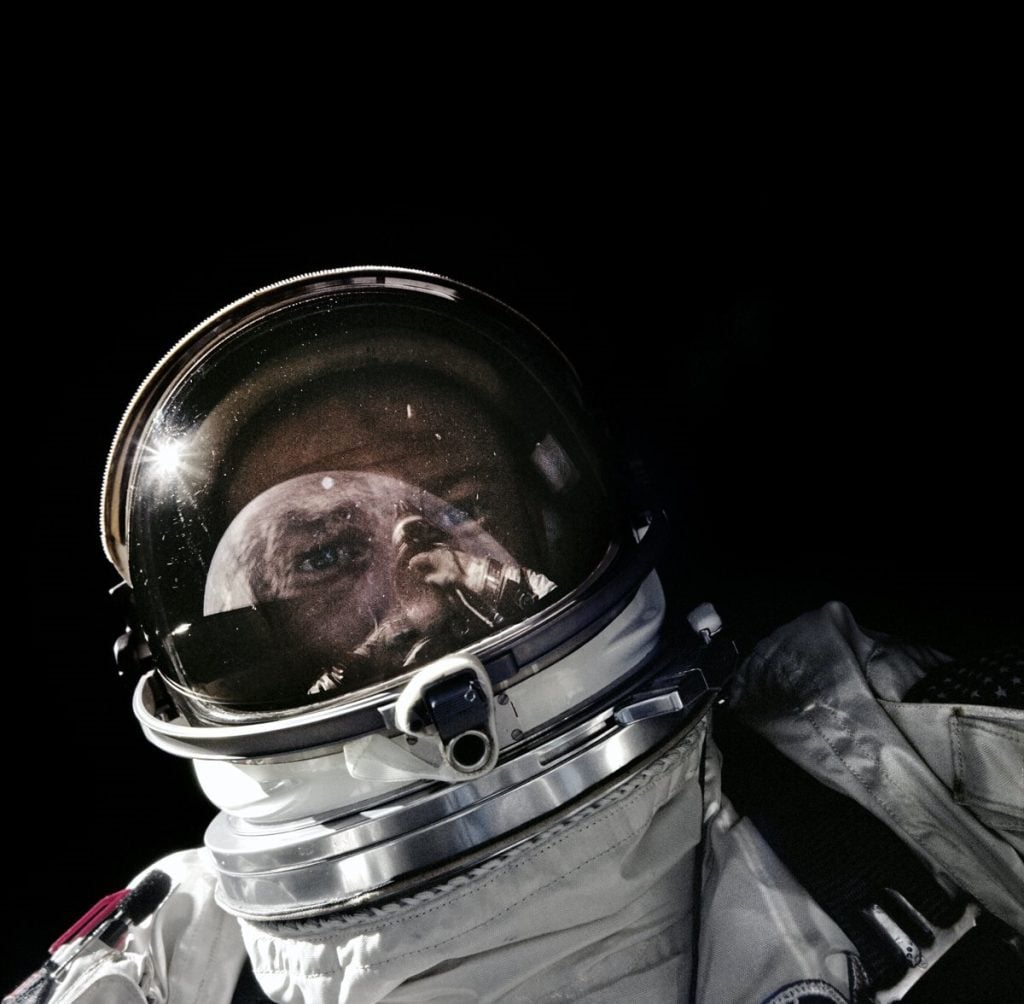
Spacewalking had nearly defeated earlier Gemini crews, who overheated and exhausted themselves. For Gemini 12 in November 1966, Aldrin rehearsed his tasks dozens of times in a buoyancy pool, using handholds and foot restraints, and then performed them in orbit without trouble. Across two stand-up EVAs and one tethered spacewalk he logged about five and a half hours outside or exposed to space, a record at the time. Underwater training became standard for astronauts.
The Moon
On 20 July 1969, sixteen years after his first MiG, Aldrin followed Neil Armstrong down the ladder of the lunar module Eagle to become the second person to walk on the Moon. Armstrong had his own Korean War story, which we tell in Neil Armstrong’s Four Close Calls. Aldrin turned 96 in January 2026 and is the oldest of the four moonwalkers still alive, alongside David Scott, Charlie Duke and Harrison Schmitt.
What the Popular Version Gets Right
The story as it is usually told is accurate: the West Point graduation, the F-86 in MiG Alley, the 14 May 1953 kill and the gun camera frames of the pilot ejecting, the Life spread, the 66 missions and second MiG, the MIT rendezvous doctorate and nickname, the 1963 selection, Gemini 12 and the underwater training, Apollo 11, and his status today. Two refinements. The often-repeated claim that this was the first time a pilot’s ejection in air combat had been caught on camera is hard to verify; the Air Force at the time called the sequence unusual, not unique. And his Gemini 12 EVA time is usually given as about five and a half hours; figures differ slightly depending on how the stand-up EVAs are counted.
Sources: HistoryNet, “Buzz Aldrin in Korea”; US National Archives, Air Force photo 542261, “Ejection of a MiG pilot”; American Veterans Center, Col. Buzz Aldrin profile; AmericaSpace, “Chimpanzee Work: 50 Years Since NASA Closed Out Project Gemini” (2016); Orlando Sentinel via The Daily News, “Buzz Aldrin turns 96” (20 January 2026).



0 Comments