
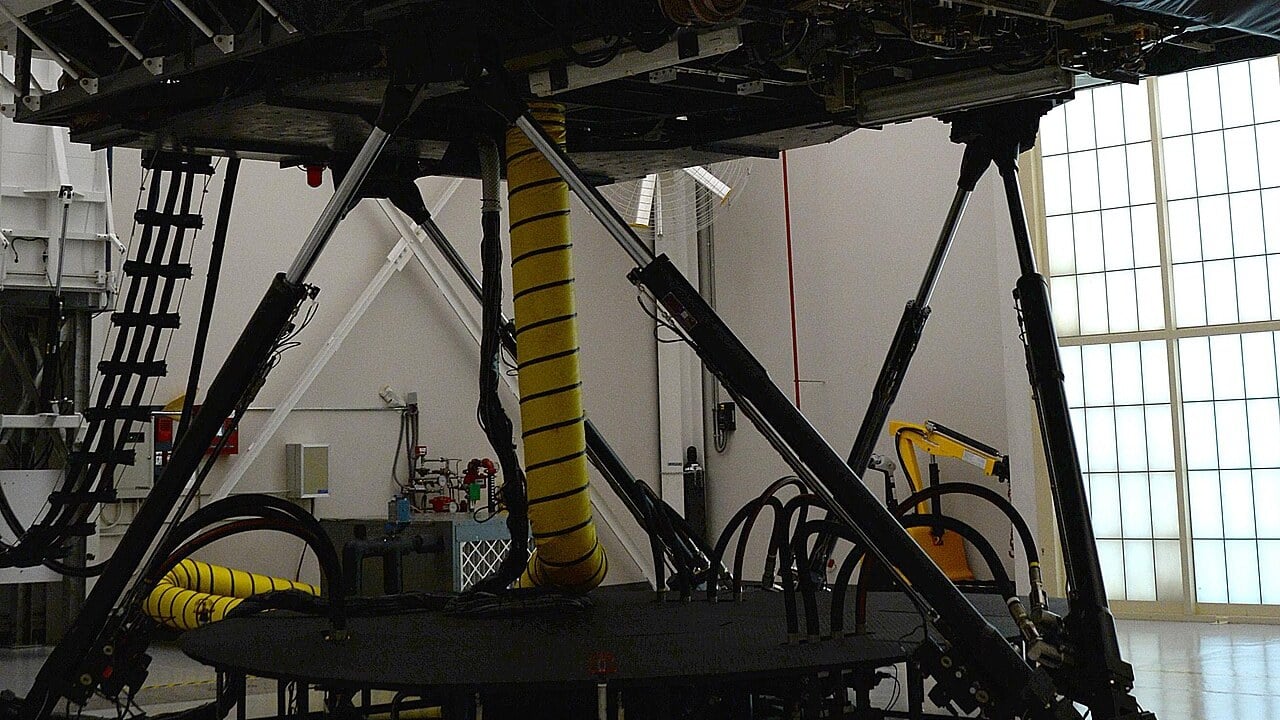
Here is a fact that surprises most passengers. The pilot landing your airliner may be making their very first landing in that type of aircraft, with you on board. They will have flown it for many hours, crashed it on purpose, set its engines on fire and landed it in a gale. All of that happened inside a white box standing on six legs.
That box is a full flight simulator, and at the top of the scale it is certified as Level D. Combined with the right training course, it lets an experienced airline pilot earn a type rating with zero time in the real aircraft. Here is how the levels work, what they demand, and how the rules decide when a pilot’s first real landing in a new type can happen.
Kurzinfo
- US rules: 14 CFR Part 60: full flight simulator Levels A to D
- Level C and D motion: Cues at least equivalent to a six-degrees-of-freedom platform
- Level C and D visual: Continuous collimated 180 x 40 degree field of view, daylight scenes
- Level A limit: Cannot be credited for the landing manoeuvre
- US simulator-only checkride: 14 CFR 61.64: whole turbojet type rating test in Level C or higher, if experience tests are met
- EASA ZFTT (FCL.730.A): Level C: 1,500 h or 250 sectors; Level D: 500 h or 100 sectors
- US line experience (121.434): Jet initial training: at least 25 h and 4 operating cycles under a check pilot
Four levels of make-believe
In the United States, simulators used for pilot certification are qualified under 14 CFR Part 60. Full flight simulators come in four levels, A to D, below which sit fixed-base flight training devices. In Europe the equivalent rules are EASA’s CS-FSTD(A), and internationally ICAO Document 9625 tries to keep everyone talking the same language.
The levels are not marketing labels. Each comes with long tables of objective tests, comparing the simulator against real flight-test data from the aircraft manufacturer, and subjective checks flown by FAA evaluation pilots. The lowest full flight simulator level, Level A, cannot even be credited for the landing manoeuvre.
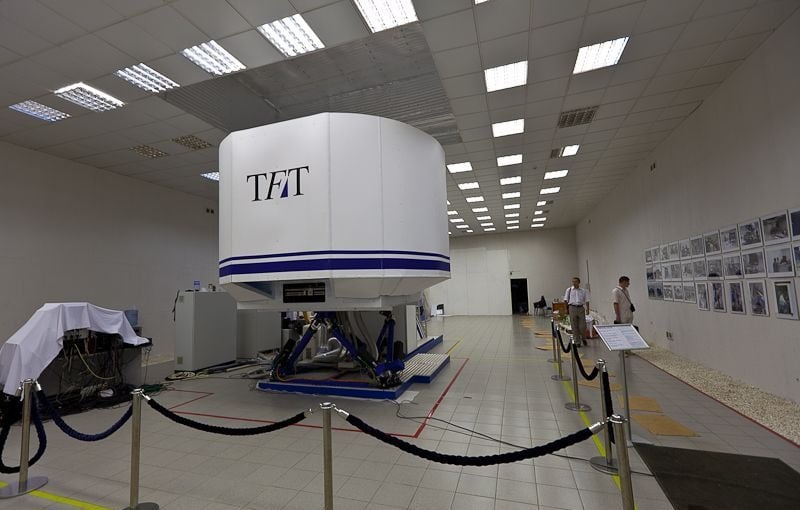
The big jump comes at Level C. Part 60 requires Level C and D simulators to have a motion system that produces cues at least equivalent to a six-degrees-of-freedom platform: pitch, roll, yaw, heave, sway and surge. Lower levels may make do with three degrees of freedom. The outside view grows too, from a minimum of 45 by 30 degrees per pilot seat to a continuous, collimated 180 by 40 degrees, and Level C and D must show daylight scenes detailed enough for a pilot to fly a visual landing.
What makes it Level D
Level D adds a final layer of fidelity on top of Level C, and the examiners take it seriously. Part 60 gives a telling example: if a sponsor asks for a Level D evaluation and the simulator fails the sound test tolerances, it may be qualified at Level C instead. In a Level D box, even the noise of the flight deck is measured and compared with data from the real aircraft.
The standards keep moving. A major FAA rule published in March 2016 added new evaluation standards for manoeuvres that older simulators handled poorly, partly in response to NTSB safety recommendations. Since 12 March 2019, simulators used for those specific training tasks in an FAA-approved programme have needed the additional qualification.
Internationally, the ICAO working group behind Document 9625 rationalised 27 earlier categories of training devices into seven, with the top one, Type 7, described as the old Level D with enhancements.
FlyByMax explains how full flight simulators actually work, from the motion platform to the visual system.
The checkride without the aircraft
In the US, the rule that makes simulator-only ratings possible is 14 CFR 61.64. If an applicant for a turbojet type rating does not use an aircraft for the practical test, apart from the preflight inspection, the entire test must be flown in a Level C or higher simulator, and the applicant must meet one of several experience tests.
Those include already holding a turbojet type rating in the same class without a supervised-experience limitation, 1,000 hours in two different turbojets, 500 hours in the type being sought, or 2,000 hours including 500 in turbine aeroplanes of the same class. Pilots who meet none of them must fly the takeoff, ILS approach, missed approach and landing in the real aircraft, or accept a limitation on acting as pilot in command until they log 25 hours under supervision.
Zero flight time in Europe
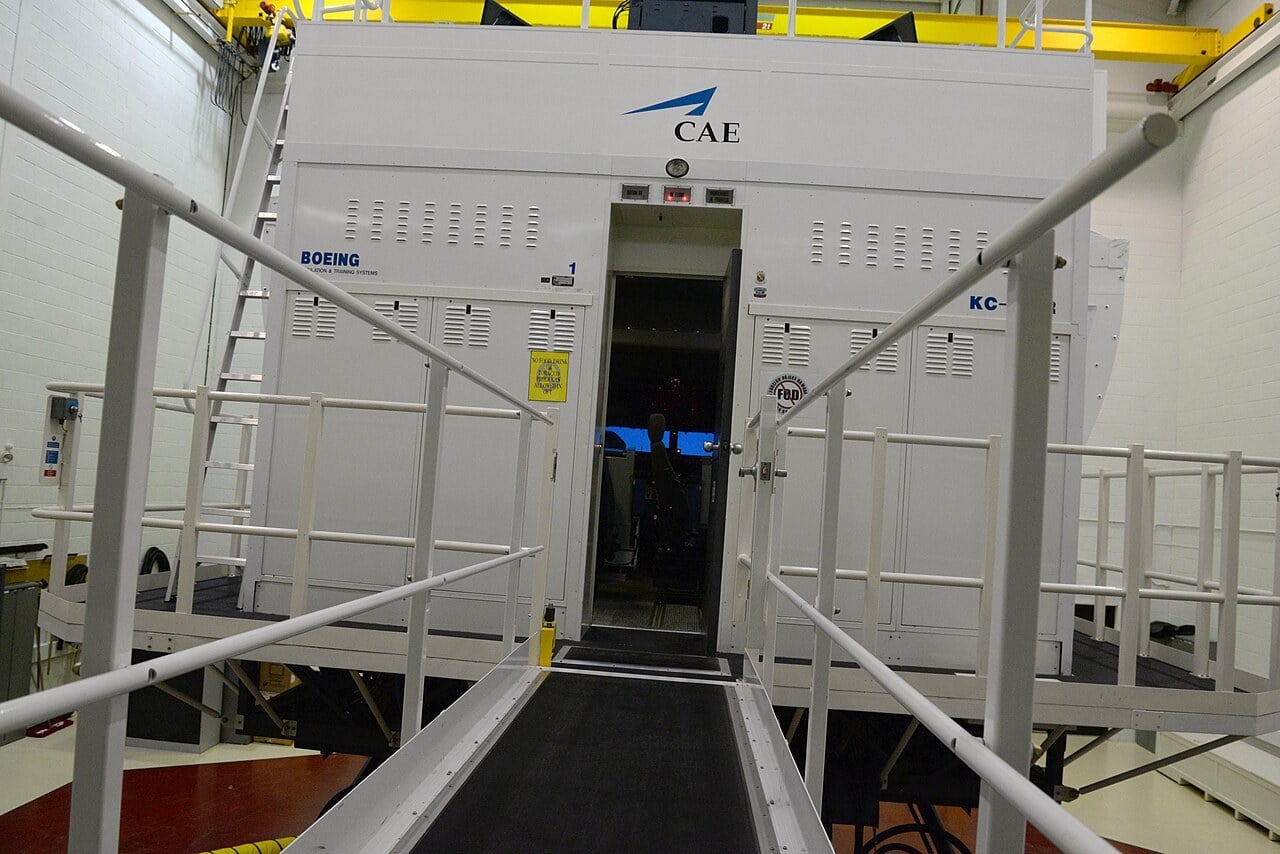
Europe calls it the zero flight time type rating, or ZFTT. Under Part-FCL rule FCL.730.A, a pilot on a ZFTT course must already have experience on a multi-pilot turbojet certified to CS-25, or on a large multi-pilot turboprop. With a Level C simulator, that means at least 1,500 hours or 250 route sectors. With a Level D, the bar drops to 500 hours or 100 route sectors. Switching between turboprops and jets demands extra simulator training.
The difference is that better simulators earn more trust. A normal European type rating ends with base training: a handful of circuits in the real aircraft, flown without passengers. In a ZFTT course, that session moves into the simulator. One European training organisation, BAA Training, describes a session of at least two hours per pilot with six takeoffs and landings, flown after the type rating skill test and supervised by a type rating instructor.
So when is the first real landing?
After the simulator comes line training, and here the regulations are frank about where it happens. Under the US airline rules in 14 CFR 121.434, the operating experience a new captain or first officer must log has to be acquired in flight during airline operations, under the supervision of a check pilot. For a jet, a pilot in initial training needs at least 25 hours of it, including at least four operating cycles, two of them as the pilot flying.
A pilot’s first session in a Level D full flight simulator, filmed from inside the cockpit.
A new captain is not left alone. A check pilot serving as pilot in command must occupy a pilot seat, and for a captain transitioning from another type, the check pilot can only move to the observer’s seat after the trainee has made at least two takeoffs and landings in the type. Then comes consolidation: at least 100 hours of line flying within 120 days.
Put together, it means a pilot with a simulator-only type rating can make their first real takeoff and landing in a new jet on a scheduled flight, with a check pilot alongside. That is not a loophole. It is a deliberate judgement by regulators: for an experienced crew, a Level D simulator is a better place to learn an aircraft’s worst days than the aircraft itself.
Landing an Airbus A320 in a 43-knot crosswind in a Level D simulator, the kind of practice that would be unsafe in the real aircraft.
The military is heading the same way, blending simulators and real jets in live, virtual and constructive training, as we explained in our look at F-35 simulators flying with real F/A-18s. For the rules on when a pilot needs a type rating at all, see Type Rating Explained.
Sources: 14 CFR Part 60 (eCFR), FAA final rule on flight simulation training devices (Federal Register, 30 March 2016), 14 CFR 61.64 and 121.434 (eCFR), EASA Part-FCL FCL.730.A, BAA Training, Wikipedia (Full flight simulator)
Header photo: US Air Force / Wikimedia Commons, public domain
0 Comments