
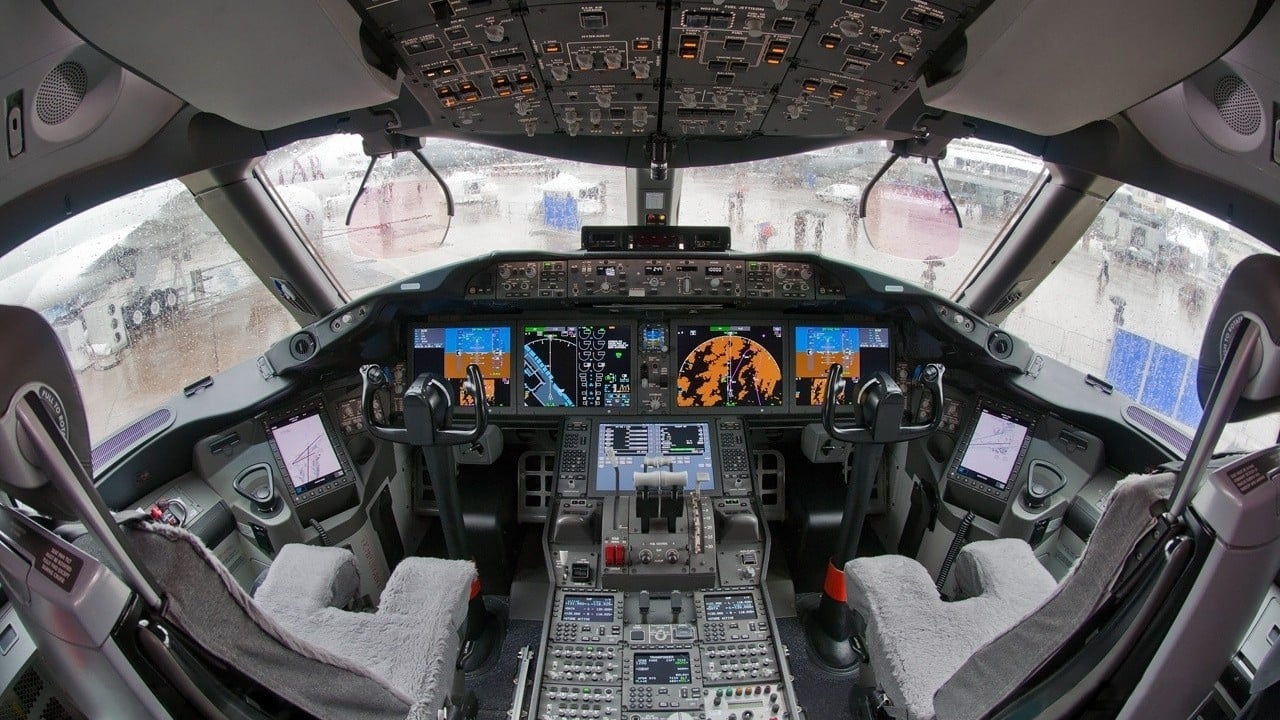
Somewhere over the Pacific, five hours into a fourteen-hour night, the captain of your flight is not in the cockpit. She is lying flat in a windowless bunk a few metres behind it, curtain drawn, earplugs in, trying to sleep. Up front, two other pilots are flying the aeroplane. Nobody in the cabin has the faintest idea.
Ask most passengers how many pilots are on board and they will say two. On a short hop they are right. On a long-haul sector there are routinely three, and on the longest flights four, and one or two of them will spend a large part of the trip asleep in a compartment most travellers never see. The industry calls them relief pilots, the crew an augmented crew, and the room they sleep in a crew rest facility.
Here is how it works: why the third pilot is there, what the rules demand, who is allowed to sit in the captain’s seat while the captain sleeps, and what the “bunk behind the cockpit” actually looks like.
Kurzinfo
- Relief pilot: A qualified pilot carried in addition to the minimum crew so others can rest in flight
- Augmented crew: More pilots than the type certificate requires: usually three or four on long-haul
- US flight-time cap: 8 to 9 hours with 2 pilots, 13 hours with 3, 17 hours with 4 (14 CFR 117.11)
- US max duty period: Up to 19 hours with 4 pilots and a Class 1 bunk (Part 117, Table C)
- Landing pilot rest: 2 consecutive hours in the second half of the duty period; 90 minutes for the monitoring pilot
- Rest classes: Class 1 flat bunk in a separate compartment; Class 2 flat or near-flat cabin seat; Class 3 recliner
- Europe: Up to 17 hours with two extra pilots and Class 1 rest (CS FTL.1.205), plus 1 hour in some cases
- Cruise relief co-pilot: EASA role: relieves the co-pilot at the controls in cruise above FL 200
What is a relief pilot?
A relief pilot is a qualified pilot carried in addition to the minimum crew so that the others can leave the flight deck for proper rest. US regulations put it precisely. An augmented flightcrew is one that has more than the minimum number of flightcrew members required by the aeroplane’s type certificate, so that a crew member can be replaced by another qualified crew member for in-flight rest.
Every modern airliner, from an A320 to an A350, is certified for two pilots. The third and fourth are not there because the aeroplane needs more hands. They are there because people need sleep. A two-pilot crew can legally fly only so many hours before the duty clock runs out, and a fresh pair of hands lets the airline stretch the day without stretching the pilots.
This is not the same thing as a reserve pilot. A reserve crew member sits at home or in a hotel on standby, waiting for the phone to ring. A relief pilot is on the flight, in uniform, scheduled for it from the start. Nor is it a deadhead: a pilot positioning as a passenger is on duty, but is not part of the operating crew of that flight.
The numbers: why two pilots stop at around nine hours
In the United States, the limits sit in 14 CFR Part 117, the flight and duty rules the FAA adopted for airline pilots in 2012. For an unaugmented crew of two, Table A caps actual flight time at nine hours for a report between 05:00 and 19:59, and eight hours for a night report. Table B limits the whole flight duty period, from report until the aircraft parks after the last flight, to between nine and fourteen hours depending on start time and the number of sectors.
Add a third pilot and the flight-time cap rises to thirteen hours. Add a fourth and it goes to seventeen. The duty period stretches too, under Table C, which is where the bunk comes in. The maximum depends on the number of pilots, the time of day and, crucially, the quality of the rest facility on board.
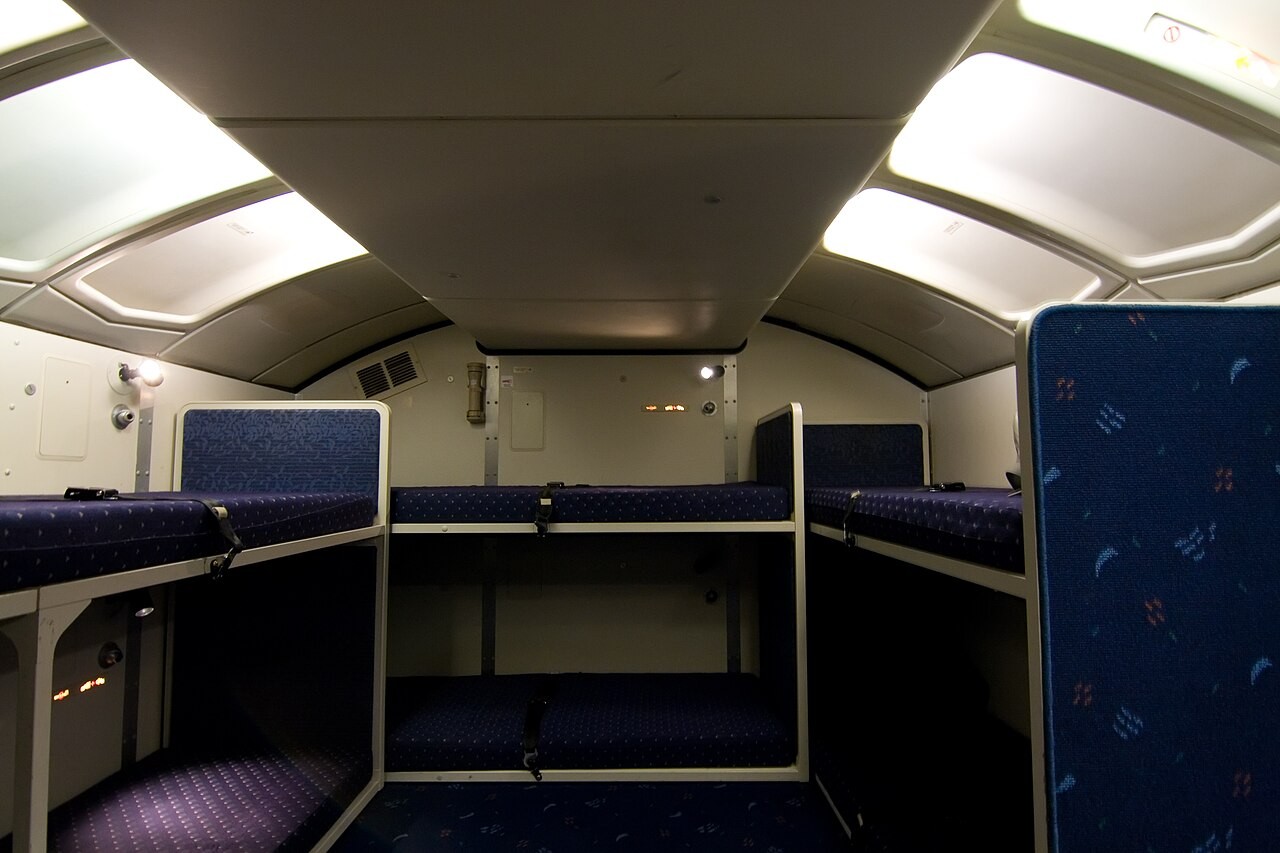
With a Class 1 bunk, a three-pilot crew starting between 07:00 and 12:59 can be scheduled for a seventeen-hour duty period and a four-pilot crew for nineteen. Swap the bunk for a Class 3 reclining seat and those figures fall to fifteen and fifteen and a half. A good bed is literally worth hours of legal flying.
Part 117 adds two conditions that shape every long-haul roster. The pilot who will fly the landing must get two consecutive hours of in-flight rest in the second half of the duty period, and the pilot monitoring the landing must get ninety consecutive minutes. And an augmented duty period may contain no more than three flight segments.
Class 1, 2 and 3: what counts as a bed
The rules grade crew rest into three classes, and the definitions are surprisingly specific. A Class 2 facility is a seat in the cabin that allows a flat or near-flat sleeping position, separated from passengers by at least a curtain. A Class 3 facility is a seat in the cabin or flight deck that reclines at least 40 degrees and supports the legs and feet. Then there is the gold standard.
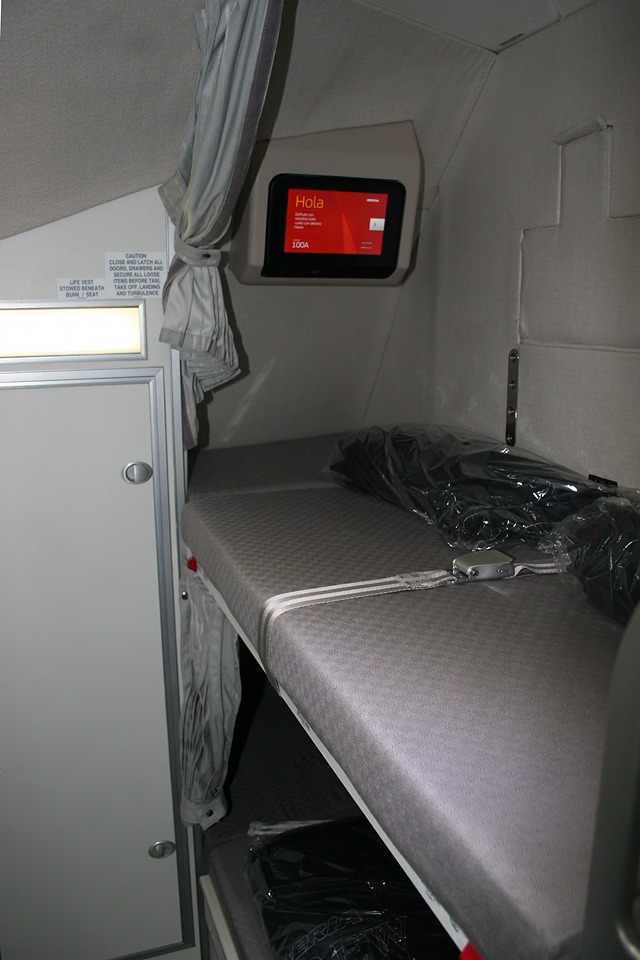
On modern widebodies that usually means a small compartment above the cabin. According to CNN’s 2024 look inside these spaces, on the Boeing 787 and Airbus A350 the crew rests sit in the upper fuselage, with one for the pilots, usually above or just behind the cockpit and often containing two bunks and a seat, and a larger one for the cabin crew, typically above the rear galley. On older types such as the A330 the cabin crew rest can be down in the cargo hold, reached by a staircase.
Access is deliberately inconspicuous. Behind a plain door there is usually a small landing and a ladder. United flight attendant and union spokesperson Susannah Carr told CNN the door can confuse passengers.
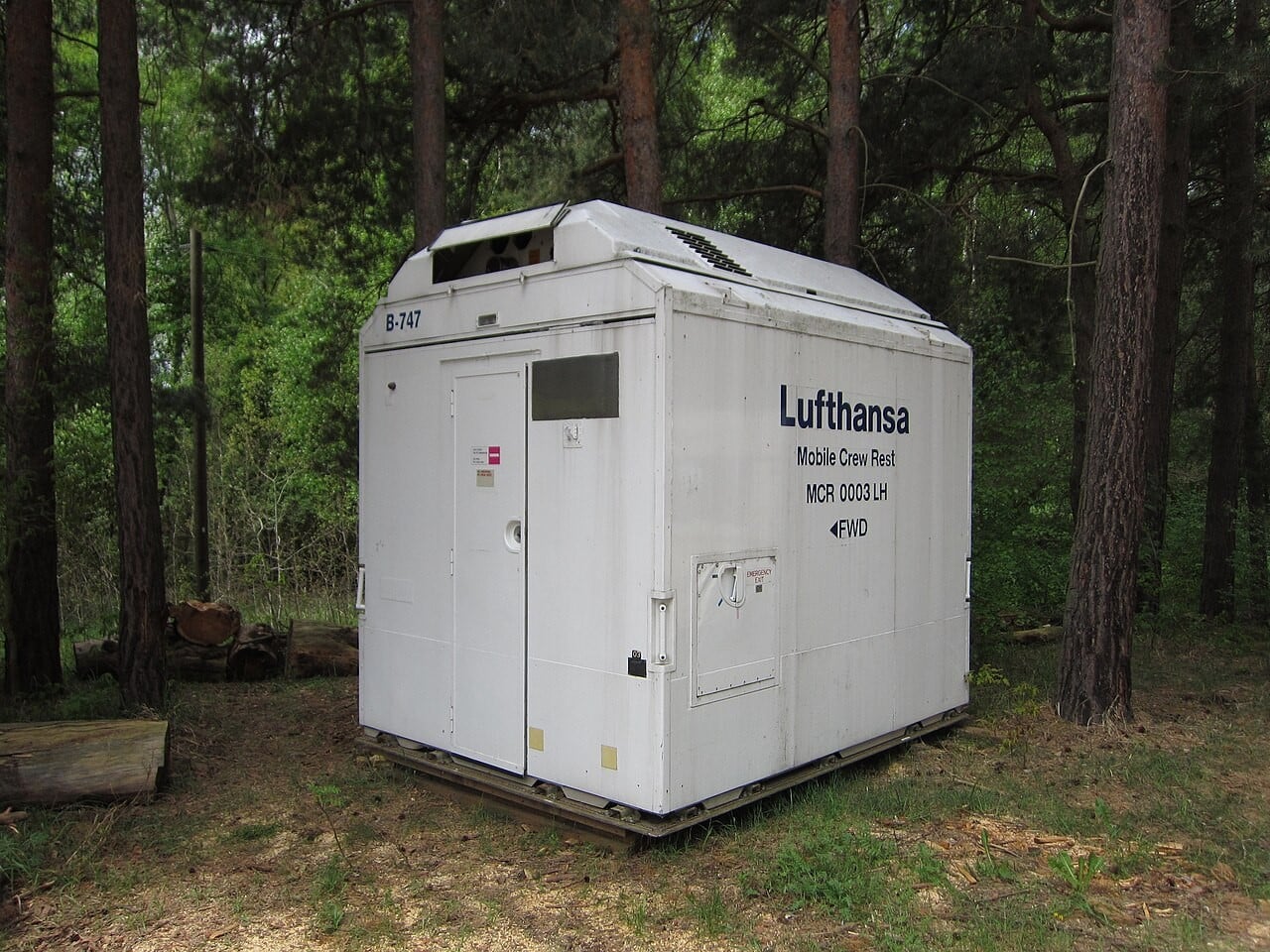
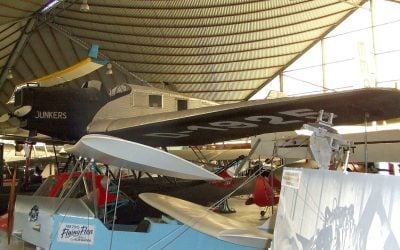
Some solutions were more improvised. Lufthansa once used a Mobile Crew Rest, a self-contained sleeping container built for its Boeing 747s. One of them, MCR 0003 LH, is now an exhibit at Finow in Germany, still marked “B-747” and “FWD” on its side.
Europe does it slightly differently
European rules use the same three classes but define them in their own way. Under EASA’s flight time limitation specifications (CS FTL.1.205, also applied in the UK), a Class 1 rest facility is a bunk or other surface allowing a flat or near-flat position, reclining to at least 80 degrees from the vertical, separate from both the flight deck and the cabin. A Class 2 seat must recline at least 45 degrees with a pitch of at least 55 inches.
The European extension is a little more conservative. With one extra pilot, the maximum daily flight duty period can grow to 14 hours with Class 3 rest, 15 with Class 2 and 16 with Class 1. With two extra pilots the figures are 15, 16 and 17 hours. The limits can rise by another hour if the duty includes a single sector of more than nine hours of continuous flight time and no more than two sectors.
A pilot’s tour of the flight crew rest compartment on an Airbus A350.
Europe also writes in the same minimum rest as the US for the landing crew, two consecutive hours, and ninety minutes for everyone else. All time spent in the bunk still counts as duty. Sleeping on board is work, not time off.
Who flies while the captain sleeps?
This is the question passengers actually care about, and the answer has a twist. In the US, when the captain leaves for a rest period during the cruise, the pilot who takes over must hold an airline transport pilot certificate and a type rating, and be qualified to act as pilot in command during the en-route cruise portion of the flight. That relief pilot can be a first officer qualified to act as pilot in command en route, who does not need the captain’s recent take-off and landing experience.
Europe goes further and recognises a specific role in its pilot licensing rules: the cruise relief co-pilot. EASA’s Part-FCL defines this as a pilot who relieves the co-pilot of his or her duties at the controls during the cruise phase of a flight in multi-pilot operations above FL 200, roughly 20,000 feet. In plain terms, a pilot who sits at the controls in the cruise and, as pilot unions pointed out, was not required by the 2014 rules to be trained for take-offs and landings on that type.
Pilot unions have never loved the concept. In April 2014, as EASA was reviewing the rules, the European Cockpit Association argued that the cruise phase is not as simple as it looks and that every pilot on the flight deck must be able to handle an emergency both above and below FL 200. Its argument opened with a pointed analogy.
The ECA cited the loss of Air France Flight 447 in 2009. That A330 carried three pilots precisely because its duty time exceeded the airline’s two-pilot limit, and the captain had gone to the rest compartment behind the cockpit shortly before the aircraft ran into trouble, leaving the two first officers at the controls. Later that year EASA published a proposal, NPA 2014-25, aimed at making sure cruise relief pilots are properly trained and that handovers of command are clearly defined.
How a relief crew actually works on the day
The airline’s operations manual sets the details, but a common pattern looks like this. The full crew briefs together. The primary captain and first officer fly the take-off and climb, with the relief pilot or pilots on the flight deck jump seats. Once the aircraft is established in the cruise, the crew splits into rest periods worked out in advance, so that whoever will land gets the long, late rest that the rules require.
Each handover is a mini-briefing: position, fuel, weather ahead, any defects, who has command. Some airlines want the whole crew back up front for the descent and landing. Then the primary pair, fresh from their bunk time, bring the aeroplane down. Look through the cockpit door on a long-haul arrival and you may well see three or four people in there.
If a pilot falls ill, the relief pilots are also a safety margin. Long-haul flights almost always have someone rested and qualified a few metres away, which is one reason rules on keeping two people in the cockpit are easier to meet on a widebody than on a narrowbody.
From flight engineers to four-pilot crews
The extra pilot is partly the ghost of crews past. Early long-range airliners carried navigators, radio operators and flight engineers, and we have told how cockpits went from five people to two. As those seats disappeared, the people who filled the jump seat on long sectors became pilots rather than engineers, and the rest compartment replaced the curtained row at the back of first class.
Today it is the ultra-long-haul flights that push the system hardest. As we explained in our look at ultra-long-haul economics, sectors approaching or beyond sixteen hours generally need four pilots and certified rest facilities that take up space which could otherwise be sold. That is one reason the record-breaking A350-1000ULR flew its 24-hour test flight with five pilots sharing the controls.
So the next time you board a night flight across an ocean, count the stripes coming down the jet bridge. If there are more than two sets of captain’s or first officer’s epaulettes, you are on an augmented crew. And at some point tonight, one of them will be asleep in a bunk you will never see.
Sources: US eCFR (14 CFR 117.3, 117.11, 117.17, Tables A, B and C to Part 117, 121.543), UK CAA regulatory library (CS FTL.1.205), EASA Part-FCL (FCL.010 via legislation.gov.uk), IFALPA position paper 14POS11, European Cockpit Association, AIN (NPA 2014-25), CNN, Wikipedia (In-flight crew relief; Crew rest compartment; Air France Flight 447)
Header photo: Alex Beltyukov / Wikimedia Commons, CC BY-SA 3.0
0 Comments