
In the 1991 Gulf War, American pilots could hit almost any fixed target in Iraq with a laser-guided bomb. What they could not reliably do was kill a Scud launcher. The trucks would drive out, fire and disappear again, and by the time a strike could be organised, the target was gone.
That failure shaped the next 30 years of air warfare. The problem was not the bomb, it was everything that had to happen before the bomb: finding the target, pinning down where it was, keeping eyes on it, getting permission, matching a weapon to it and then checking whether it worked. The US Air Force gave that sequence a name, F2T2EA, and a nickname that stuck: the kill chain.
This is how a precision air strike actually works, step by step, at the level described in published NATO and US doctrine, with the real aircraft, pods and weapons that do the work.
Kurzinfo
- Kill chain: F2T2EA: Find, Fix, Track, Target, Engage, Assess (US Air Force)
- NATO version: F2T2E2A, adding Exploit (AJP-3.9, 2021)
- Herkunft: Gen. Ronald Fogleman’s 1996 “find, fix or track, and target” statement, later extended with engage and assess
- Used for: Dynamic targeting of targets that appear during current operations
- Targeting cycle: Six phases in NATO doctrine, from commander’s guidance to assessment
- Collateral damage: NATO uses the US CDE methodology, CJCSI 3160.01
- Wichtigste Waffen: Laser-guided bombs such as the GBU-12 and GPS-guided JDAMs such as the GBU-31 and GBU-38
Where the kill chain came from
In October 1996, Air Force Chief of Staff Gen. Ronald Fogleman told an Air Force Association symposium that it would soon be possible to find, fix or track, and target anything that moves on the surface of the Earth. According to Air & Space Forces Magazine, the line became something of an unofficial Air Force slogan, later extended with “engage” and “assess”.
The result was the six-stage cycle the Air Force calls F2T2EA: Find, Fix, Track, Target, Engage, Assess. Gen. John Jumper, then head of Air Combat Command, said F2T2EA should be “our bumper sticker” for the new century. NATO’s version, in its joint targeting doctrine AJP-3.9, adds a seventh step, Exploit, and calls it F2T2E2A.
The names matter less than the idea behind them. Every step is a link, and the enemy only needs to break one. A target that is found but not fixed escapes. A target that is fixed but not tracked can move. A strike that is never assessed may have to be flown again.
Step 1 and 2: find and fix
Find means detecting something that might be a target. NATO doctrine says this step draws on current combat information, the intelligence picture of the battlespace and analysis of the enemy’s target systems. The sensors can be anything: a satellite, a radar aircraft, a drone such as the MQ-9 Reaper, a fighter’s targeting pod or a soldier on the ground.
Fix is where “something over there” becomes a precise location. NATO’s AJP-3.9 describes focused sensors being used to identify and geolocate the target, often by cross-cueing several sources, and certified staff conducting target coordinate mensuration for coordinate-seeking weapons. That last part is the hidden key to GPS-guided bombs. A JDAM flies to a set of coordinates, so it is only as accurate as the coordinates it is given.
NATO Allied Air Command’s Deep Dive on the first four links of the chain: find, fix, track and target.
The fix step also starts a clock. Doctrine says this is when the time available to engage the target is determined. A bridge will wait. A mobile missile launcher may give you minutes.
Step 3 and 4: track and target
Track is continuous. Sensors stay on the target until it has been engaged and assessed. NATO doctrine lists three things tracking must protect: positive identification of the target, the pattern of life of any civilians nearby, and the pattern of activity of the enemy, all to ensure the strike stays within the laws of armed conflict and the rules of engagement.
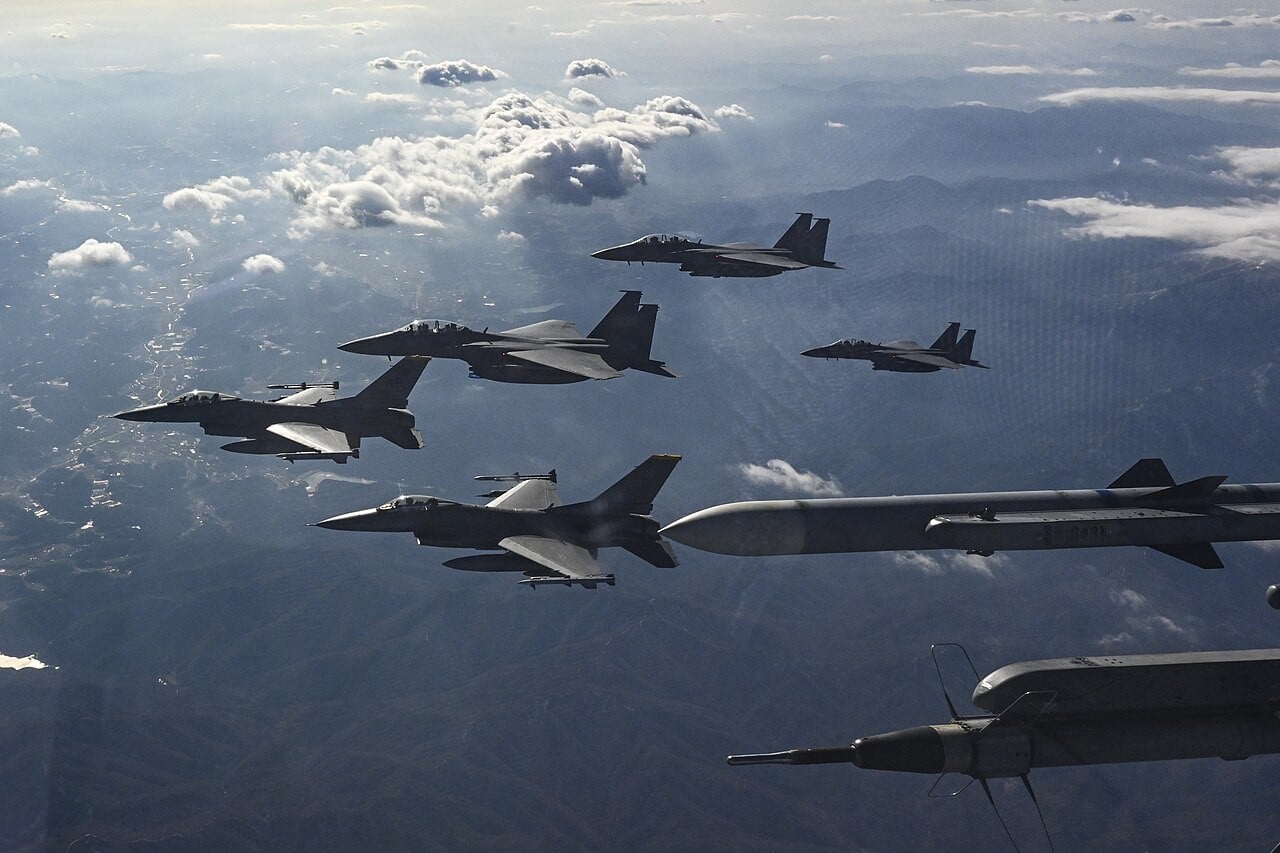
Ziel is the decision step. According to AJP-3.9, this is where restrictions are satisfied, including collateral damage estimation limits, rules of engagement and deconfliction with friendly forces. The weapon is matched to the desired effect, the risk assessment is completed, the final force package is chosen, and the engagement receives final approval.
This is often the slowest link, and deliberately so. In the early 2000s, Air & Space Forces Magazine reported that during NATO’s 1999 Allied Force campaign over Serbia, with more than a dozen nations voting on possible targets, it took an average of 14 days to approve each target. Speed, it turned out, was a policy problem as much as a technical one.
Step 5: engage
Engage is the part everyone pictures: the jet, the bomb, the explosion. Here the choice of weapon depends on everything that came before it. A laser-guided bomb such as the GBU-12 Paveway II steers toward reflected laser energy, so someone has to illuminate the target, either the aircraft’s own pod, another aircraft, or a Joint Terminal Attack Controller on the ground. Afterburner explains the mechanism in detail in How Does a Laser-Guided Bomb Work?
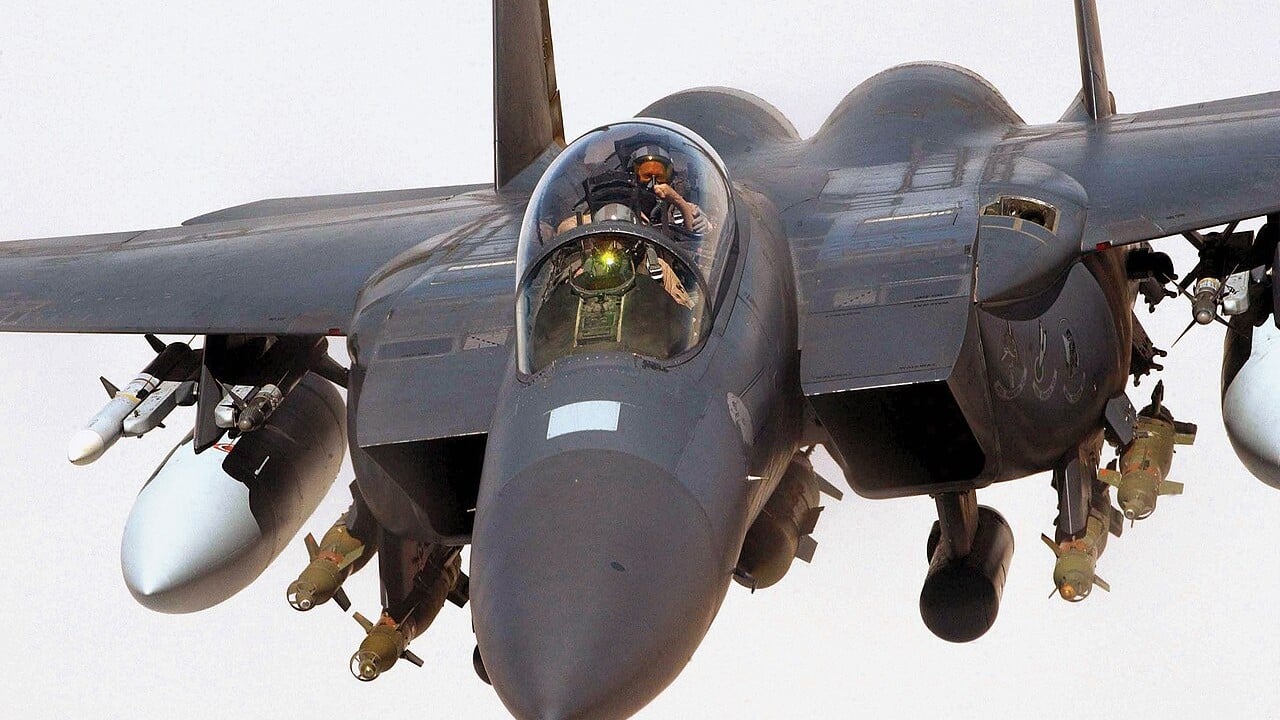
A GPS-guided JDAM needs no laser and works through cloud, smoke and darkness, but it depends on accurate coordinates from the fix step. Many strike jets carry both. The F-15E Strike Eagle in the photo at the top of this page was photographed over Iraq in April 2004 with four GBU-12 laser-guided bombs and a single GBU-31 JDAM.
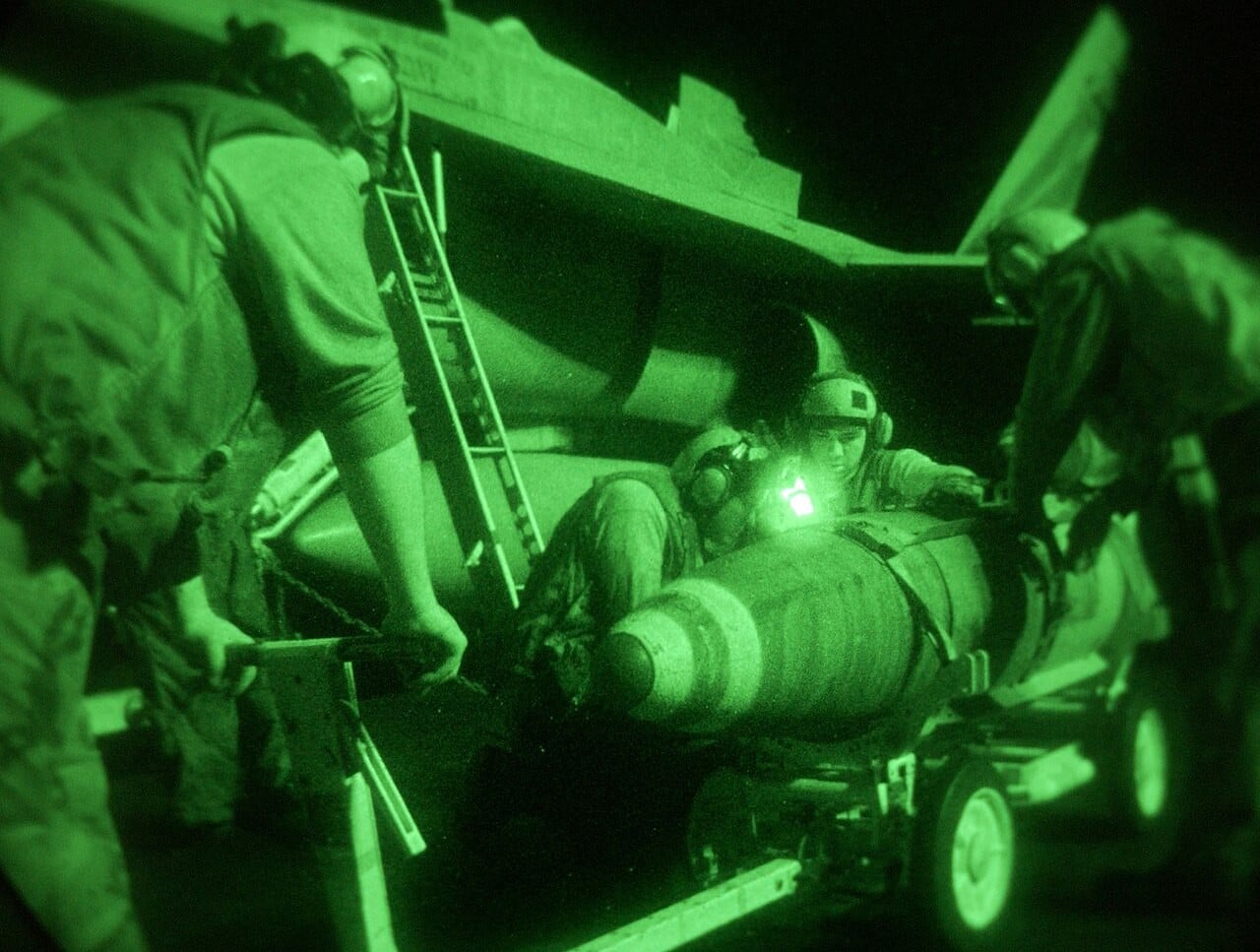
Close to friendly troops, the JTAC becomes the most important person in the chain. They control the final attack, confirm the target and clear the aircraft “hot”. Our explainer on close air support, the 9-line and danger close covers how that conversation works.
Doctrine also says the engagement itself must be watched, to make sure it succeeds and to spot any chance for rapid exploitation. Cockpit and pod video is one of the inputs NATO doctrine lists for judging how effective a weapon was.
Lockheed Martin’s overview of the Sniper Advanced Targeting Pod, one of the sensors that finds, tracks and designates targets for precision weapons.
Step 6: assess, and why it never ends
Assess asks whether the strike created the intended effect. NATO doctrine says the output is an assessment of mission success to support a possible re-engagement decision, which could involve a completely different capability. Assessment includes battle damage assessment, and NATO’s targeting doctrine says assessment should include a mechanism for tracking civilian casualties.
The first answer is often wrong, which is why Afterburner has a whole explainer on battle damage assessment. A building can look intact from above with its interior destroyed, or look flattened while the critical equipment inside survived.
In NATO’s version, Exploit sits between engage and assess. Any strike can open an immediate or longer-term opportunity, and planners are expected to prepare branch plans to seize it if the right conditions arise.
Behind the kill chain: the targeting cycle
F2T2EA describes how a single target is prosecuted, but most targets are not found by chance. Doctrine distinguishes deliberate targeting, against targets known in advance and scheduled or held on call, from dynamic targeting, against targets that appear or change during the current operation, typically within the current 24-hour period. NATO says F2T2E2A is the process used for dynamic targeting.
Above both sits the joint targeting cycle, with six phases in NATO’s doctrine: the commander’s objectives and guidance, target development, capabilities analysis, the commander’s decision and force assignment, mission planning and execution, and assessment. Target development is where a site becomes a target. NATO’s basic target development standards are identification, location, function, significance and description, and every target is checked against the law before it is validated.

That process produces lists. Validated targets go on a joint target list or a restricted target list. Objects protected from military operations by international law or for policy reasons go on a no-strike list. The air tasking order that sends jets out each day is the end product of this machinery, run from air operations centres like the Combined Air and Space Operations Center at Al Udeid in Qatar.
Collateral damage estimation
Before approval, planners estimate what else the strike might hit. NATO defines collateral damage estimation as an approximation of the potential inadvertent casualties, damage or destruction resulting from a military operation. Interestingly, NATO has no CDE method of its own: AJP-3.9 states that it uses the current US methodology, set out in the Chairman of the Joint Chiefs of Staff Instruction CJCSI 3160.01, or as directed by the operation’s targeting directive.
In practice that means checking the target area for civilians and protected sites, and looking for weapons and methods that limit unintended effects. When collateral damage cannot be mitigated, NATO doctrine says the options are briefed to the commander, who can approve or cancel the engagement. Retired Lt. Gen. David Deptula, who led air operations early in the Afghanistan campaign, has said that at first no bomb could be dropped anywhere in Afghanistan without the four-star general in charge of US Central Command approving each one.
That approval can take a long time. Deptula told Air & Space Forces Magazine in 2025 that planners at the Combined Air Operations Center had told him that, during operations against ISIS in Syria in 2015, it could take more than 45 days to get a target approved. Today, companies are pitching software to speed up collateral checks, with the stated aim of informing human targeteers rather than replacing them.
Shrinking the chain
Since the Scud hunts of 1991, the goal has been to compress the chain. As head of Air Combat Command around 2000, Jumper challenged the Air Force to strike emerging targets in single-digit minutes. Armed drones such as the MQ-1 Predator let the same aircraft find, track and engage. Data links cut the talking: Maj. Gen. Daniel Leaf described a training scenario in which RAF Harrier pilots needed about 10 minutes of voice directions to acquire an emerging target, while F-16 pilots with an early data link had eyes on target in less than a minute.
Airmen of the 116th Air Support Operations Squadron practise dynamic targeting during Exercise Sentry North 2025, in a video from the 194th Wing.
Each improvement moved the bottleneck rather than removing it. Sensors got faster, so coordinates became the constraint. Coordinates got faster, so approval became the constraint. That is why the modern argument about artificial intelligence in targeting is really an argument about the slowest, most human link in the chain.
The bomb has been precise for decades. The kill chain is what decides whether precision arrives in time, and on the right target.
Sources: NATO AJP-3.9 Allied Joint Doctrine for Joint Targeting (Edition B, 2021, via GOV.UK), Air & Space Forces Magazine (“Find, Fix, Track, Target, Engage, Assess”; “Compressing the Kill Chain”; “Can AI Help Targeteers Curb Civilian Casualties?”), U.S. Air Force, U.S. Navy
Header photo: Staff Sgt. Aaron Allmon II, U.S. Air Force / Wikimedia Commons, public domain



0 Comments