
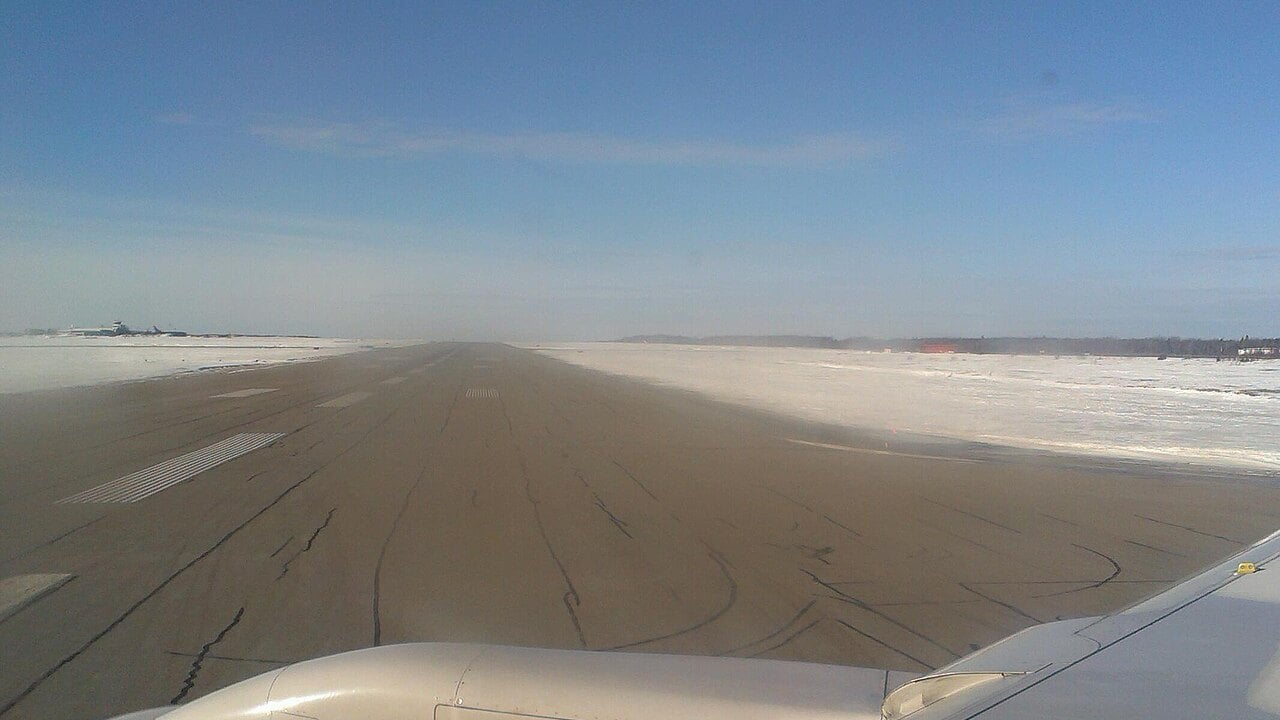
Four hours out of Washington, over the dark North Atlantic, the crew of United flight UA946 got a warning about one of their Boeing 767’s two engines. They declared an emergency, turned around and headed west to St. John’s, Newfoundland. As we reported at the time, the UA946 diversion ended safely, and for the passengers it ended somewhere none of them had booked.
Diversions are a routine part of airline life. Most are invisible to everyone but the people on board. Yet each one involves a chain of decisions that began before the aircraft ever left the gate: where it could go if things went wrong, who has the authority to send it there, and who will pick up the bill.
Kurzinfo
- Umleitung: Landing at an airport other than the planned destination
- Final authority: The pilot in command (14 CFR 91.3)
- Shared responsibility: Captain and dispatcher jointly, for US domestic and flag operations (14 CFR 121.533)
- Planned in advance: Alternate airport named in the dispatch release; can be amended en route within fuel range
- US tarmac rule: Chance to deplane before 3 hours (domestic) or 4 hours (international)
- EU rule (CJEU, 2021): Diversion to an airport serving the same area is not a cancellation; airline must offer to pay the transfer
- Compensation: EU261 flat-rate payment possible if arrival is 3+ hours late, unless extraordinary circumstances
- Largest example: 224 flights with more than 33,000 passengers diverted to Canada on 11 September 2001
Diversion, return, or carry on
A diversion is a landing at an airport other than the planned destination. If the aircraft goes back to the airport it left from, airlines usually call it a return or turnback. The difference sounds academic, but it matters to passengers: under EU law, as the Court of Justice has made clear, where a flight lands can change what the airline owes you.
The third option is to keep going, and the rules are written to make that the hard choice when safety is in doubt. US airline regulations say a captain may not continue towards the destination if the flight cannot be completed safely, unless there is no safer procedure.
Pilots divert for a familiar list of reasons. Weather is the classic one: fog, storms or crosswinds at the destination. Then come technical problems, from an engine shutdown like UA946 to the burning smell that sent Lufthansa’s LH470 into Manchester. Medical emergencies on board, security alerts such as the squawk that took Air India AI2030 to Jaipur, and closed destinations, from drones over Jersey Airport to an earthquake at Panama’s Tocumen, complete the list.
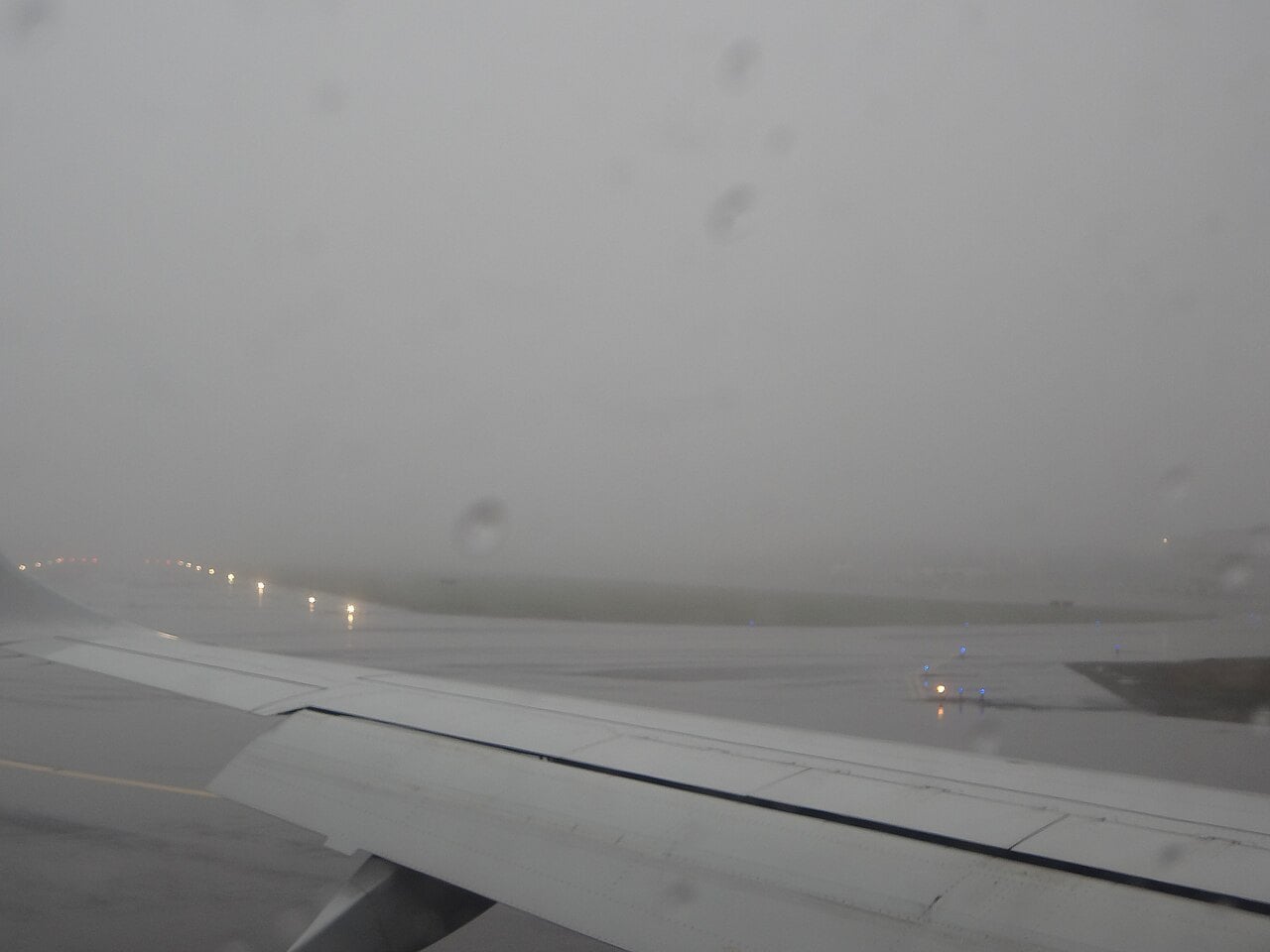
The alternate was chosen before take-off
No airliner sets off without somewhere else to go. Before an instrument flight, the dispatch release names one or more alternate airports, chosen against weather forecasts and fuel. In the US, that planning is governed by rules such as the 1-2-3 rule, and the aircraft carries enough fuel to fly to the destination, then on to the alternate, plus a reserve.
The plan can change in the air. Federal rules allow the release to be amended en route to include any alternate airport within the aircraft’s fuel range. Over oceans, twin-engine airliners flying under ETOPS rules have a chain of designated en-route alternates, and the crew is kept informed of changing conditions at each of them. That is why so many North Atlantic diversions end in Newfoundland, Iceland or Ireland.
Canadian Geographic on Operation Yellow Ribbon, when Canada took in the flights diverted on 11 September 2001.
Picking the airport is more than finding the nearest runway. The crew and the airline’s operations centre look for a runway long enough, weather they can land in, fire and rescue cover, and, ideally, an airport where the airline has engineers, a handling agent and a way to move passengers on. A medical emergency or a fire pushes the crew to the nearest suitable field; a slow technical issue may let them choose a hub with spare aircraft.
Who actually makes the call
Legally, the answer is simple. Under US rules, the pilot in command is directly responsible for, and the final authority as to, the operation of the aircraft. In an emergency the captain can deviate from any rule to the extent needed to meet it.
In practice, at an airline the decision is shared. For US domestic and flag operations, the captain and the aircraft dispatcher are jointly responsible for planning, delaying and releasing a flight. The dispatcher monitors it en route and must cancel or redispatch it if, in the dispatcher’s opinion or the captain’s, it cannot continue safely as planned.
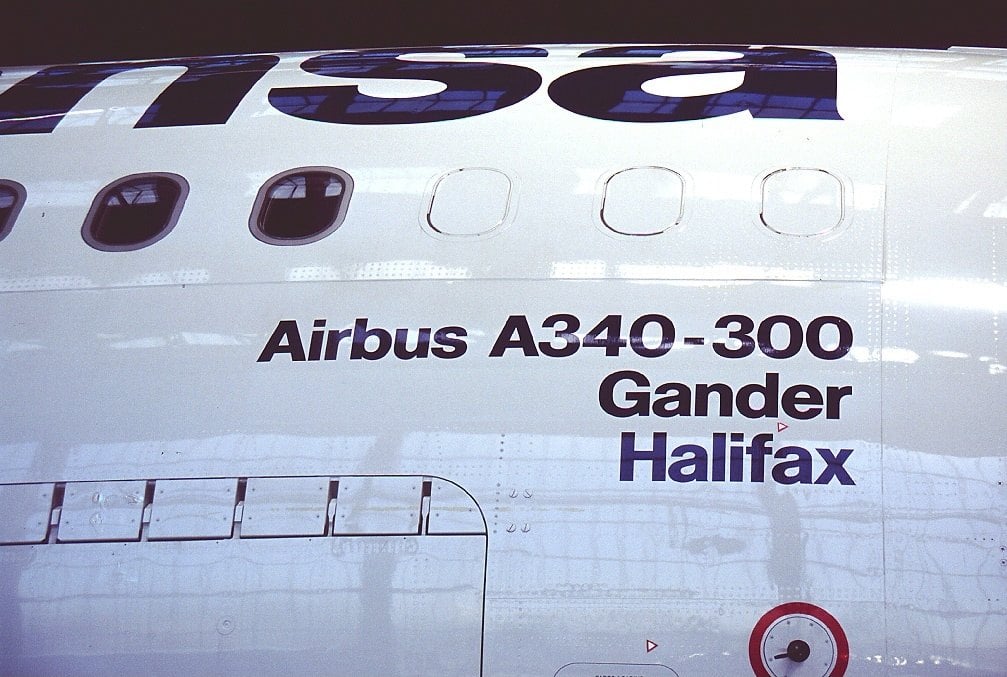
Sometimes the decision is made for everyone. On 11 September 2001, Canada closed its airspace and NAV CANADA sent hundreds of flights to Canadian airports, in what Transport Canada called the most extensive grounding of aircraft in the country’s history. It is remembered as Operation Yellow Ribbon.
CBC News revisits Gander, where some 7,000 “plane people” landed after US airspace closed in 2001.
On the ground: the waiting game
Landing is only the start. A diverted aircraft often parks at an airport that has no gate for it, no customs officers on duty or no staff from the airline. Passengers may be kept on board while the crew works out whether the problem can be fixed, the weather will clear, or the flight is over.
In the United States, the clock that matters is the tarmac delay rule. Airlines must give passengers the chance to leave the aircraft before a tarmac delay reaches three hours on a domestic flight or four hours on an international one. A diverted flight counts as an arriving flight until passengers have been given that chance to deplane.
Then there is the crew. Pilots and cabin crew work under strict flight and duty time limits, and a long diversion can push them past what they are allowed to fly. When that happens, the airline needs a fresh crew, a hotel, or both. Sometimes the simplest fix is a second aircraft: after LH470 landed in Manchester, Lufthansa flew in another jumbo to carry the passengers on.
Who pays
The airline pays for the diversion itself: extra fuel, landing and handling fees at an airport it may never normally use, engineers, hotels and onward transport. What it owes passengers on top of that depends on where in the world they are.
In Europe, the Court of Justice of the EU ruled in April 2021 on a case involving an Austrian Airlines flight from Vienna that was meant to land at Berlin Tegel but landed at Berlin Schönefeld instead. A diversion to an airport serving the same town, city or region does not, on its own, count as a cancellation. But the airline must, on its own initiative, offer to pay for the transfer to the original airport or another nearby destination agreed with the passenger.
If the passenger reaches the final destination three or more hours late, flat-rate compensation can still be due under EU261. And a diversion to an airport that does not serve the same area is, as a rule, treated as a cancellation. In both cases the airline can escape paying if the cause was an extraordinary circumstance, the same defence explained in our EU261 compensation guide. Weather that makes flying unsafe and security risks are typical examples; a routine technical fault usually is not.
So the next time the captain comes on the PA to announce an unscheduled landing, remember that the decision was not made in a moment of panic. The alternate was chosen before you boarded, the rules about who decides were written decades ago, and the money question was settled in a courtroom in Luxembourg.
Sources: US Code of Federal Regulations (14 CFR 91.3, 121.533, 121.627, 121.631, 259.4), Court of Justice of the European Union (Case C-826/19), Transport Canada (“Four Days in September”), Canadian Geographic, CBC News
0 Comments