
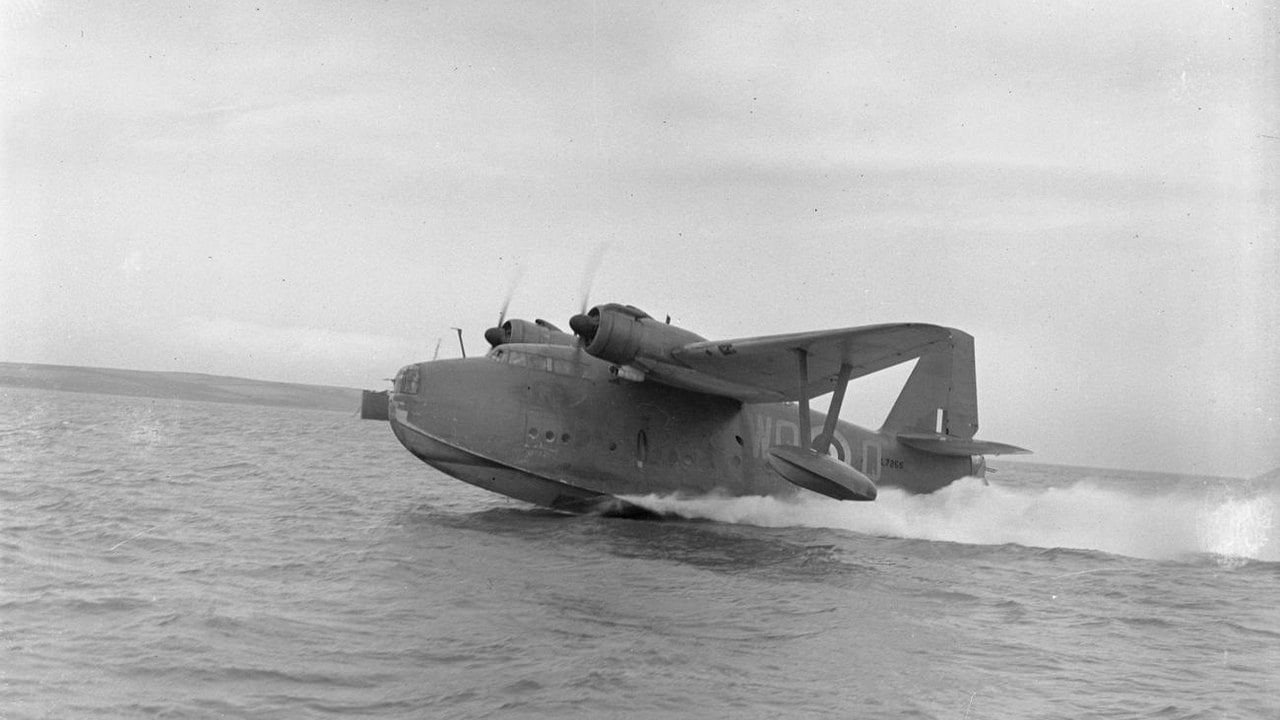
On 1 September 1939, the day Germany invaded Poland, a brand-new Royal Air Force flying boat sank in the harbour at Felixstowe. It had not been shot at. It had not even taken off. According to Suffolk’s Historic Environment Record, someone had left a camera hatch open while it was being launched, and the sea simply walked in.
It was a fitting start for the Saunders-Roe Lerwick. Over the next three years the twin-engined Lerwick earned a reputation as one of the worst aircraft the Royal Air Force flew in the Second World War: unstable in the air, unstable on the water, and prone to losing its wing floats. Only 21 were built.
Yet the RAF kept flying it, because in 1940 it had nothing else. The Lerwick is the story of what happens when an air force orders an aircraft straight off the drawing board and then discovers, too late, that the drawing was wrong.
Kurzinfo
- Flugzeug: Saunders-Roe (Saro) S.36 Lerwick, twin-engined general-purpose flying boat
- Spezifikation: Air Ministry R.1/36: 230 mph cruise, about 1,500-mile range, 2,000 lb of bombs
- Erster Flug: October 1938, ordered without a prototype
- Motoren: Two Bristol Hercules radials
- Rüstung: Three powered turrets with seven .303 in guns; 2,000 lb of bombs or depth charges
- Gebaut: 21
- Main user: No. 209 Squadron RAF, Oban, Pembroke Dock and Stranraer, 1939–1941
- Im Ruhestand: Declared obsolete by the end of 1942 after a last stint with No. 422 Squadron RCAF
A flying boat for Coastal Command
In 1936 the Air Ministry issued Specification R.1/36 for a new twin-engined, general-purpose flying boat for Coastal Command. The targets were ambitious for the day: a cruising speed of 230 mph (370 km/h), a range of around 1,500 miles and a 2,000 lb load of bombs or depth charges.
Several firms tendered. Supermarine’s design was favoured, but Supermarine was busy with the Spitfire. Blackburn won a contract for a single prototype of its radical B-20, whose hull lowered hydraulically for take-off and landing. The production order went to Saunders-Roe on the Isle of Wight.
Saro had already reworked its S.36 design, swapping a shallow hull and gull wing for a deep hull and a high, straight wing. Crucially, the Air Ministry ordered it without first building and flying a prototype. If the design had a flaw, the RAF would find out with production aircraft.
Handsome, compact and deeply unstable
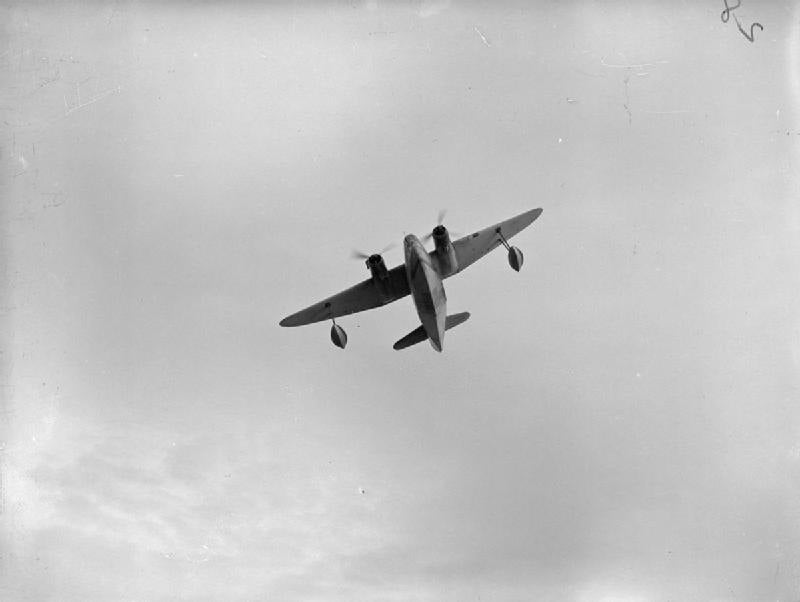
On paper the Lerwick looked excellent. It was a compact all-metal monoplane with two Bristol Hercules radial engines, a conventional planing hull and stabilising floats on struts under each wing. The bombs or depth charges sat in streamlined bays in the rear of the engine nacelles.
It was also heavily armed for its size, with three powered turrets: a single Vickers K gun in the nose, two Brownings in a retractable dorsal turret and four Brownings in the tail. During design the crew grew from six to nine, and the aircraft grew heavier than the specification allowed.
The Antique Airshow asks whether the Saunders-Roe Lerwick was the worst aircraft to fly, and explains its stability problems.
The first Lerwick flew in October 1938, and the problems showed at once. The aircraft was unstable in every axis, so it could not be trimmed to fly “hands off”. For a boat meant to fly long, tiring patrols over the Atlantic, that was close to disqualifying. On the water it was no better, and it needed far too much space to get airborne.
Saunders-Roe tried auxiliary fins and a wider rudder, then a much bigger single fin and rudder. Each fix helped a little. None cured it.
Cancelled, then needed
In the summer of 1939, No. 240 Squadron received four Lerwicks to replace its elderly Saro London biplanes. By October the squadron had given up and gone back to the Londons. On 24 October 1939 the whole Lerwick programme was suspended.
Eight days later it was back. War had broken out and Coastal Command was desperately short of flying boats. Historian J. Rickard notes that production of the four-engined Short Sunderland had been scaled down in expectation of the new type, so there was no quick alternative. The programme was restarted on 1 November 1939, and in December No. 209 Squadron at Oban on the west coast of Scotland began to re-equip with Lerwicks.
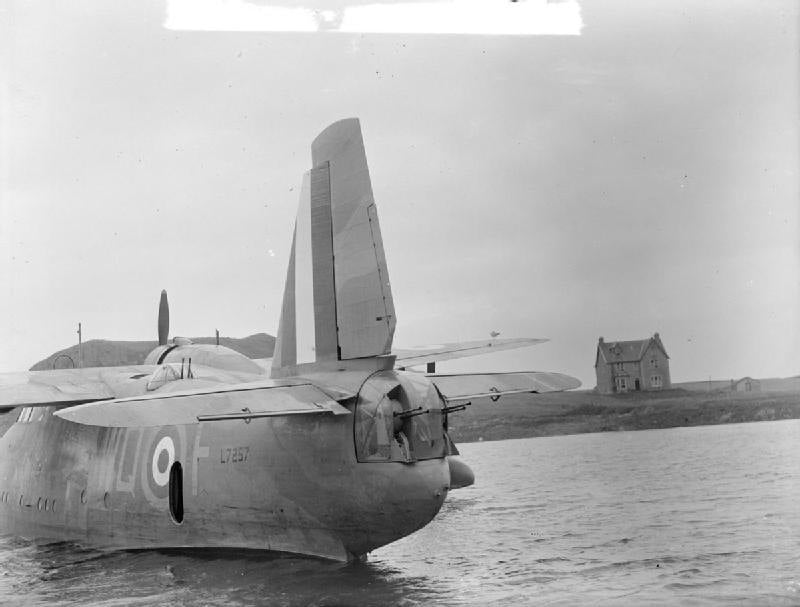
The losses began almost at once. On 20 February 1940 a 209 Squadron Lerwick was lost after a wing float collapsed on landing; a second was lost the same way in June. The floats, it seemed, were a structural weak point on an aircraft that already flew badly.
Grounded, again and again
In the summer of 1940, 209 Squadron moved to Pembroke Dock in Wales, hoping to join the Battle of the Atlantic. Instead the Lerwicks were grounded for more modifications. The squadron went back to Scotland in November, flying from Loch Ryan near Stranraer.
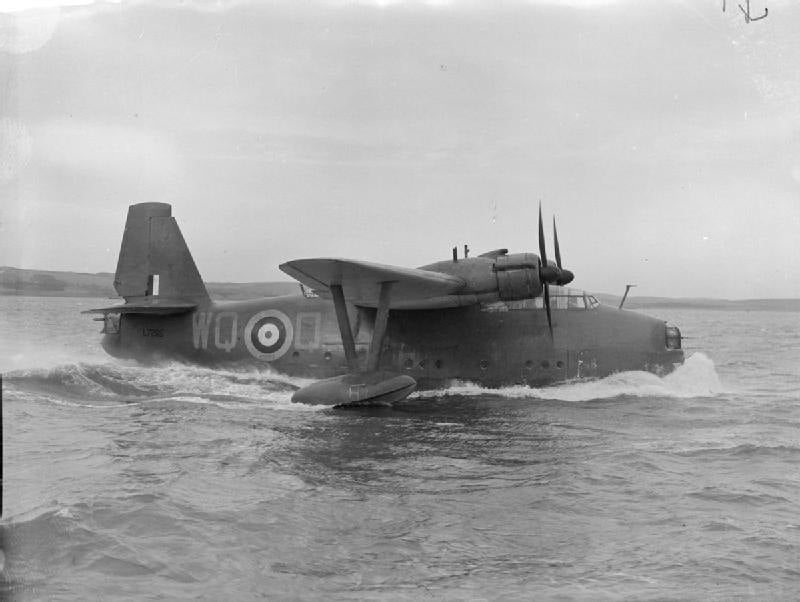
The winter was brutal. Two Lerwicks sank at their moorings before the end of 1940. Another was lost trying to take off on 7 January 1941, and a fourth vanished without trace on 22 February 1941. For the crews, every patrol in an aircraft that fought its own pilots was a gamble.
Rescue came from America. In April 1941, 209 Squadron began receiving the Consolidated Catalina, a steady, long-ranged boat that crews could trust. The Lerwick was withdrawn from front-line service, and the last of the 21 arrived in mid-1941 just as the type was being retired from operations.
Archive film of a Saro S.36 Lerwick on test with Saunders-Roe in 1940.
Der lange Abschied
The survivors went to a training unit, where accidents continued. In 1942 a few briefly returned to service for operational training with No. 422 Squadron of the Royal Canadian Air Force. By the end of 1942 the type was declared obsolete, and the remaining airframes were scrapped.
Of the 21 Lerwicks built, roughly half were lost or written off in accidents in three years, without the type ever making a mark on the U-boat war.
The Lerwick’s real legacy is a lesson. The Air Ministry had skipped the prototype stage to save time, and lost far more time than it saved. Saunders-Roe went on to build some of the most daring flying boats ever designed, including the jet-powered SR.A/1. But the boat that should have joined the Sunderland on the front line in 1940 is remembered mainly as the one that would not fly straight.
Sources: Peter London (Saunders and Saro Aircraft since 1917, Putnam, 1988), J. Rickard (History of War, Saro Lerwick, 2008), Suffolk Historic Environment Record, Imperial War Museums photo archive
0 Comments