
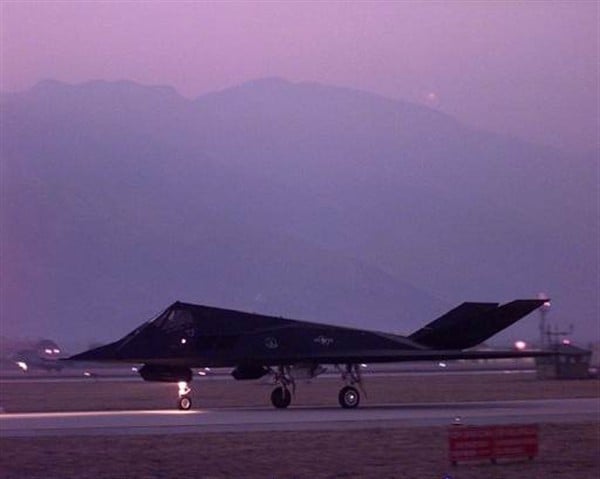
Most bombs work by blowing things up. The so-called blackout bomb does the opposite: it leaves the target standing and lets the target’s own electricity do the damage. On the night of 2 May 1999, during NATO’s Operation Allied Force, F-117 stealth fighters used one to switch off about 70 percent of Serbia. The weapon was so secret the Pentagon refused to discuss it.
Kurzinfo
- Waffe: BLU-114/B submunition, dropped in a cluster dispenser (often called CBU-94)
- So funktioniert es: Spools of chemically treated carbon-fibre thread short-circuit high-voltage equipment
- Blast: None worth speaking of: it disables rather than destroys
- First combat use (reported): 1991, carbon-fibre warheads on Navy Tomahawks against Iraq
- Serbia: 2 May 1999: five substations hit by F-117s; about 70% of the country without power for some seven hours
- Second strike: 7 May 1999
- Heute: South Korea has developed its own; China has shown one
How a Bomb Turns the Lights Off
The BLU-114/B is a small submunition, carried in numbers inside a cluster-bomb dispenser. Over the target the dispenser opens, the bomblets spread out, and each one releases spools of extremely fine, chemically treated carbon-fibre thread. As William Arkin described it in the Washington Post days after the attack, the threads unwind into a web that blankets conductors, insulators and shield wires at a transformer yard or substation.
Carbon fibre conducts electricity. Where it bridges two high-voltage conductors, or a conductor and the ground, it causes a short circuit and an arc that trips the station’s protection and can damage the equipment. Enough substations trip, and the grid collapses. Nothing has been blown up, so there is no rubble to rebuild: once the fibres are cleaned off, the power can come back. That is the point. It cuts power for as long as an attacker needs it cut, without destroying power plants a country will need after the war.
Iraq, 1991
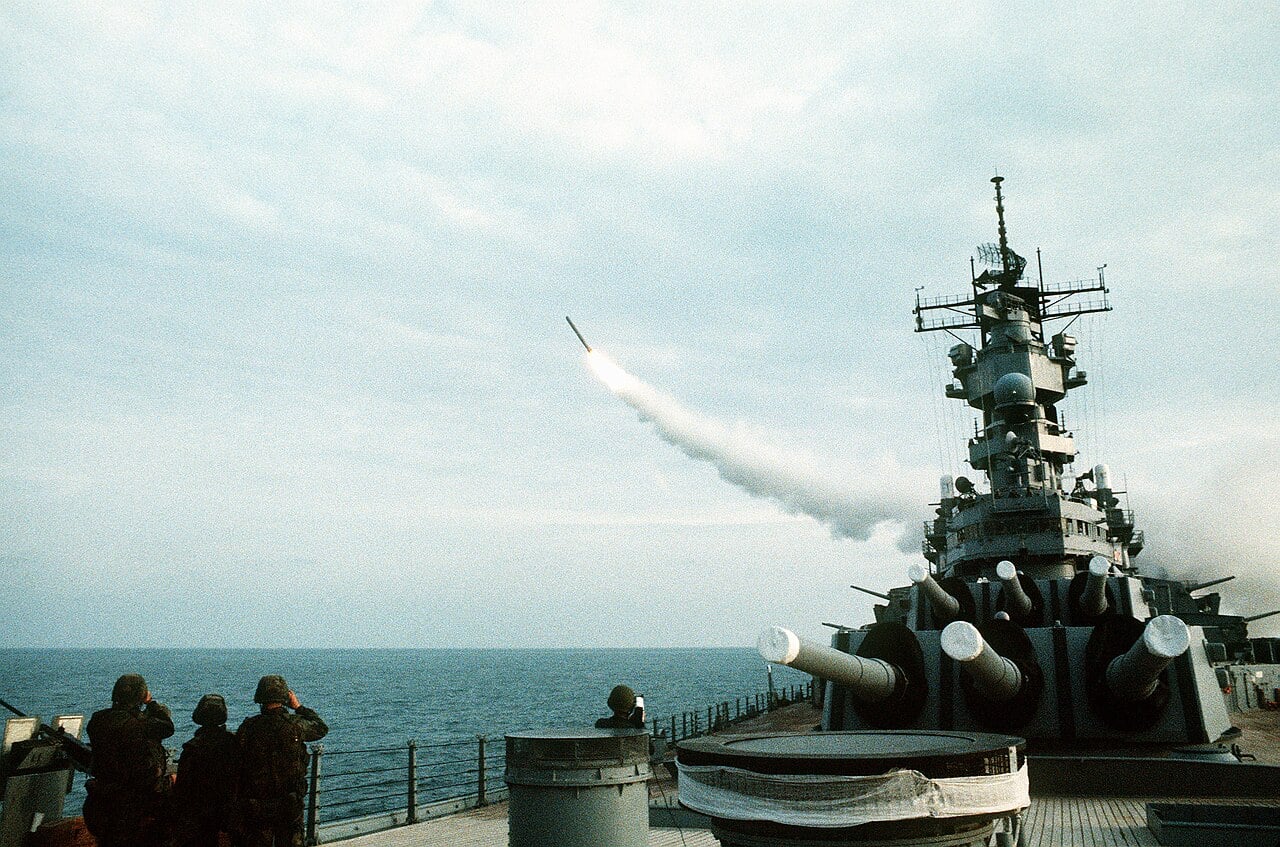
The idea was first used, by most accounts, in the opening night of Desert Storm in January 1991, when US Navy Tomahawk cruise missiles carrying carbon-fibre spools were fired at Iraqi power stations. The Tomahawk’s submunition-dispensing versions are confirmed by the US General Accounting Office, now the Government Accountability Office; the carbon-fibre payload comes from later press reporting. Combined with conventional strikes, the effect on Iraq was drastic. According to the GAO, Iraq’s generating capacity fell from about 9,500 megawatts to about 2,500 by 20 January, and later to about 15 percent of its pre-war level.
2 May 1999: The Night Serbia Went Dark
Eight years later the weapon came out of the shadows. At 9:45 pm on Sunday, 2 May 1999, Yugoslavia’s high-voltage grid collapsed. According to Arkin, F-117 stealth fighters had dropped BLU-114/B bombs on five outdoor substations. About 70 percent of the country lost power for some seven hours. NATO spokesman Jamie Shea was triumphant the next day.
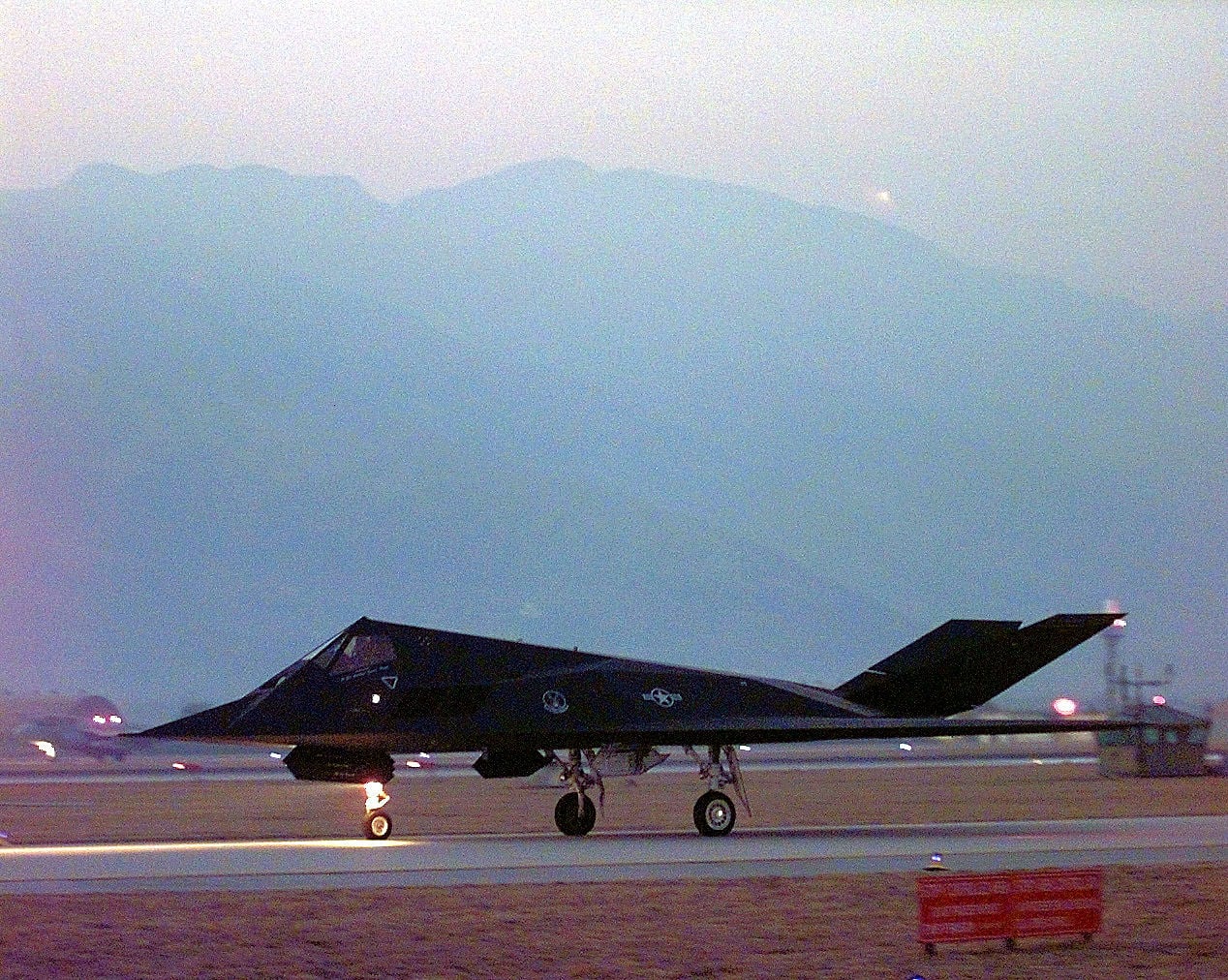
The Pentagon, asked about the weapon, would not even confirm what it was. Defense Department spokesman Kenneth Bacon said only that it was highly classified and not a weapon the US chose to discuss publicly. NATO struck the transformer yards again on 7 May. The blackouts had a price beyond the Yugoslav military: water purification, sewage treatment, heating and refrigeration all depend on electricity.
Belgrade under NATO air attack in 1999. Video: AP Archive.
Who Has One Now
The idea has spread. South Korea’s Agency for Defense Development has developed its own gliding graphite “blackout bomb” to switch off North Korean power, with Poongsan, LIG Nex1 and Hanwha selected as contractors in 2020. In January 2026 the Seoul Economic Daily reported that a flight test had been completed and that the weapon should reach the Air Force by 2028 at the latest. In June 2025 Chinese state television showed a Chinese version.
China’s blackout bomb as shown on state television in 2025. Video: South China Morning Post.
Claims that a graphite weapon helped darken Caracas during the US operation in Venezuela in January 2026 remain unconfirmed. US officials quoted by the New York Times credited cyber attacks, and no official source has said a blackout bomb was used.
What the Viral Clip Gets Right
The idea is real and it works: a carbon-fibre bomb can shut down a power grid without blowing it up, and it did so to about 70 percent of Serbia in 1999. Two nuances: the effect is temporary by design, as Serbia’s first blackout lasted around seven hours, and the weapon depends on hitting the right substations. It switches off a grid, not a whole city by itself.
Sources: William M. Arkin, “Yugoslavia Unplugged”, Washington Post (10 May 1999); Air Force Magazine, “Verbatim Special: The Balkan War” (June 1999); US Information Agency, Kenneth Bacon remarks (3 May 1999); US General Accounting Office, “Operation Desert Storm: Evaluation of the Air Campaign”, NSIAD-97-134 (1997); Slate (3 May 1999); Janes (18 August 2020); Seoul Economic Daily (6 January 2026); South China Morning Post (June 2025); SecurityWeek (19 January 2026).

0 Comments