
In a dry dock at Dalian, the same one that built China’s first two aircraft carriers, a hull is growing that may end up as long as America’s newest supercarriers. Satellite images taken on 4 September 2026 show the bulbous bow taking shape. Once it is finished, Janes estimates, the ship will be 336 to 339 metres long, marginally longer than USS Gerald R. Ford. Beijing has not given the carrier a name, released a single figure or even confirmed what it is.
Analysts call it the Type 004. It will be China’s fourth carrier, and the first that looks built to match America’s supercarriers rather than chase them.
Kurzinfo
- Schiff: Type 004, China’s fourth aircraft carrier (analysts’ designation; no official name)
- Wo: Dalian Shipyard, in the dry dock that built Liaoning and Shandong
- Länge: About 322 m measured in October 2026 (CSIS); 336–339 m projected when complete (Janes)
- Beam: About 46 m at hull level, against 40 m for Fujian at a similar stage (CSIS)
- Antrieb: Likely nuclear, according to CSIS; not confirmed
- Catapults: Almost certainly electromagnetic; four rated “plausible” by CSIS
- Start: Possibly 2027; commissioning several years later
- China’s carriers today: Liaoning, Shandong and Fujian
What the Satellites Show
The work has been visible from orbit since early 2025, when prefabricated modules appeared at Dalian. Keel blocks followed in mid-2025, and by May 2026 imagery showed something no Chinese carrier had had before: two internal compartments, each about 15 by 15 metres, the size and layout analysts would expect for a pair of reactors. The Center for Strategic and International Studies, which has tracked the hull month by month, measured it at about 322 metres from the unfinished bow to the stern in October, with a beam of about 46 metres.
Nuclear power would give the PLA Navy a carrier that can stay at sea for long periods without refuelling and generate the electricity needed for electromagnetic catapults. CSIS rates nuclear propulsion as likely, but it has never been confirmed, and the only other evidence is a land-based prototype naval reactor in Sichuan reported by the Associated Press in 2024.
From Ski-Jump to Catapult
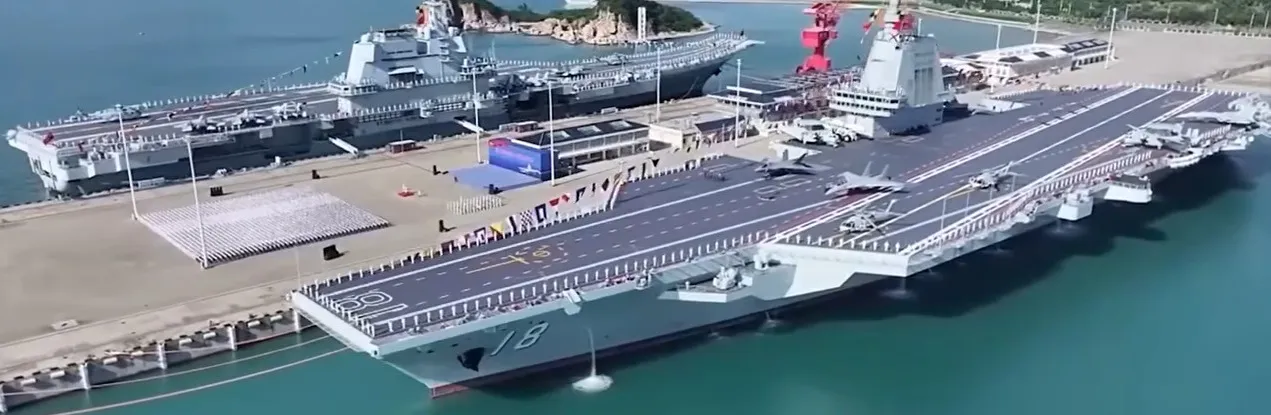
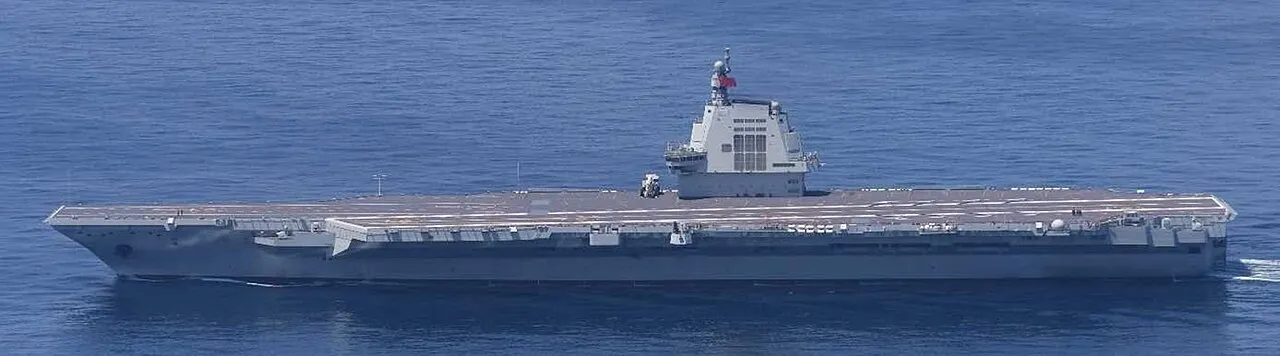
China’s first two carriers, Liaoning and Shandong, launch their J-15 fighters off a ski-jump bow, which limits how heavy the aircraft can be. Fujian, commissioned at Sanya on 5 November 2025 with Xi Jinping in attendance, was the leap: about 80,000 tonnes, conventionally powered, with three electromagnetic catapults, the technology the US Navy introduced with the Ford in 2017. Her air wing includes the catapult-launched J-15T, the stealthy J-35 and the KJ-600 early-warning aircraft.
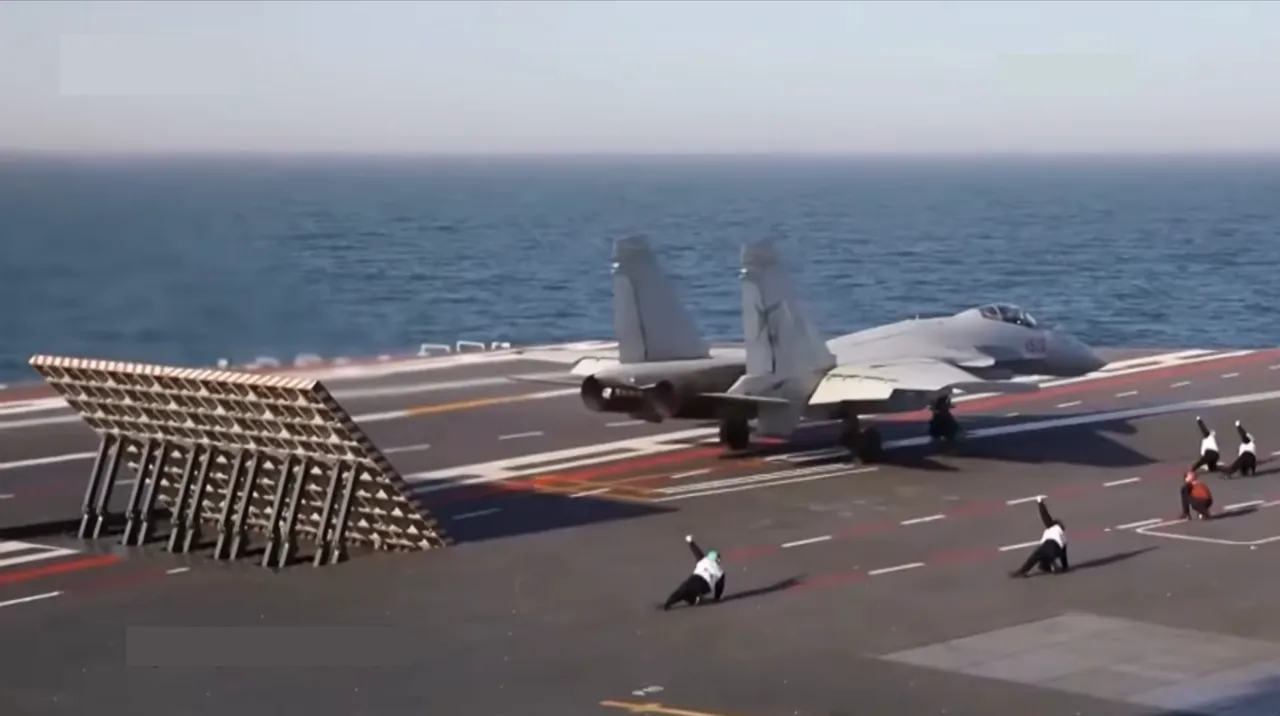
Fujian one year after commissioning. Video: CCTV Video News Agency.
The Type 004 is expected to go further. Analysts expect electromagnetic catapults again, possibly four, and a bigger air wing; Lyle Goldstein of Defense Priorities has estimated 75 to 90 aircraft, against roughly 50 to 60 on Fujian. China is also experimenting with drones at sea: in November 2026 the new amphibious assault ship Sichuan launched and recovered a GJ-21 stealth drone with its own electromagnetic catapult.
Eleven Against Three, for Now
The United States still operates 11 nuclear-powered carriers, and the second Ford-class ship, John F. Kennedy, reached preliminary acceptance in September 2026, with full delivery due in March 2027. Its first F-35C landing came on 13 October. But the Pentagon’s latest report on China’s military expects the gap in numbers to keep narrowing.
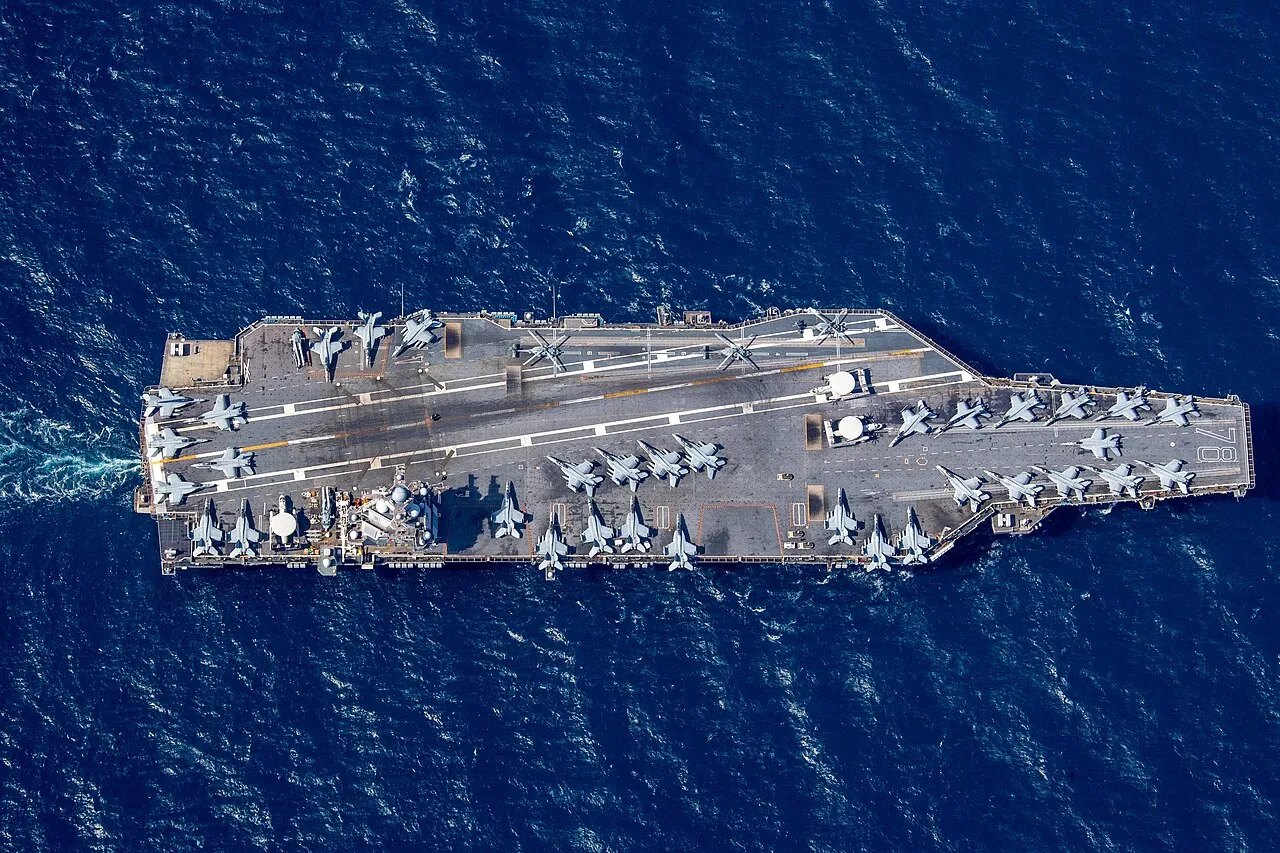
In Washington, meanwhile, the argument is about going backwards. An August White House memo ordered a plan to fit the future USS Doris Miller with steam catapults instead of electromagnetic ones. On 17 November 2026, Senator Roger Wicker, chairman of the Senate Armed Services Committee, told the Navy’s leadership in a hearing that “returning to steam is a non-starter, and everybody needs to understand that.”
Flight operations aboard USS Gerald R. Ford. Video: US Navy.
What Is Still Unknown
Almost everything about the Type 004 is still an estimate: its final length, its displacement, its power plant and the number of catapults. China has confirmed none of it. If it follows Fujian’s pattern, the hull could float out of the dock in 2027, and the carrier could join the fleet some years after that. What the satellites already make clear is the ambition: a Chinese carrier built in the same weight class as the American ones.
Sources: Janes, Ridzwan Rahmat, “Satellite imagery suggests China’s fourth carrier could rival Ford class in size” (2026); CSIS ChinaPower / Hidden Reach, “A New Supercarrier Emerges” (May 2026, updated October 2026); The War Zone (22 August 2026); South China Morning Post (2026); People’s Daily (7 November 2025); USNI News (November 2025, December 2025, October and November 2026); Naval News (November 2025); US Department of Defense, China Military Power Report (December 2025); US Navy, USS Gerald R. Ford command history; Associated Press (2024).



0 Comments