
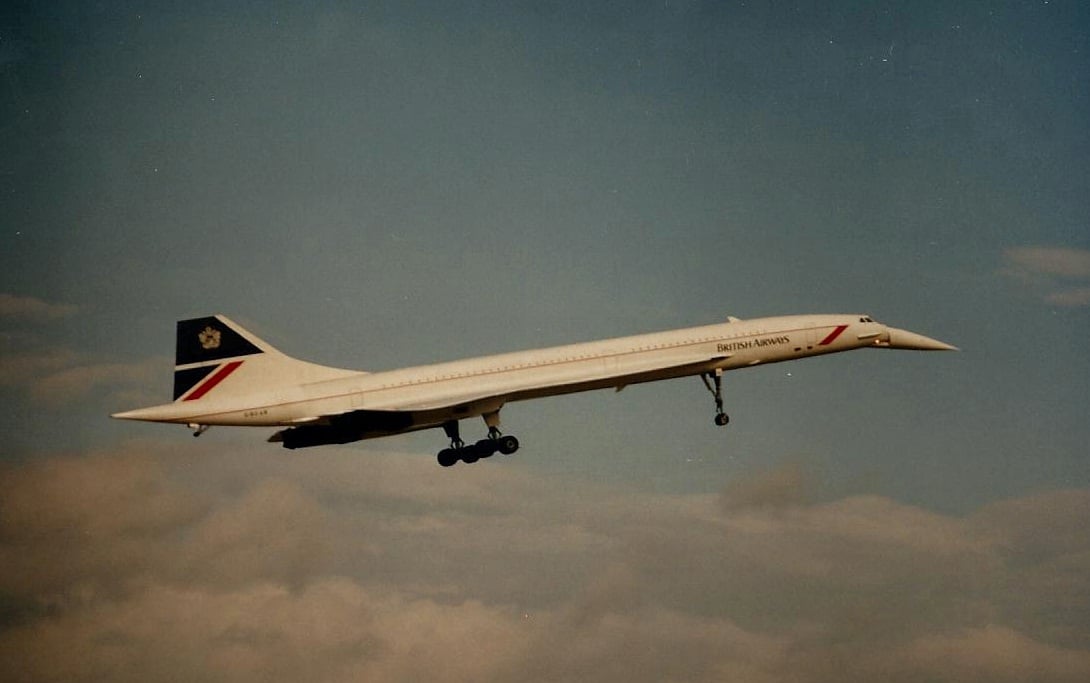
Few things in aviation look as dramatic as a Concorde going around: the needle nose drooped, the delta wing pitched up, four Olympus engines spooling up, and the whole aircraft climbing away from the runway it was about to land on. A clip of exactly that, filmed at London Heathrow, is circulating on Instagram again.
The caption says the Concorde had to abandon its landing because an Airbus A340 was still on the runway. That is entirely plausible, but it is worth separating what the clip shows from what can be checked, and explaining why a go-around, even in Concorde, is a normal part of flying.
Kurzinfo
- Flugzeug: British Airways Concorde (the type retired from BA service on 24 October 2003)
- Manoeuvre: Go-around, also called a missed approach or overshoot
- Typical trigger: Runway not clear in time, unstable approach, wind shear or no landing clearance
- Concorde on approach: Nose drooped to 12.5 degrees for visibility; no flaps; high nose-up attitude using delta-wing vortex lift
- Concorde engines: Four Rolls-Royce/Snecma Olympus 593 turbojets
- The viral clip: Undated; the other aircraft is not independently identified
What the Clip Shows
The footage shows a British Airways Concorde on short final at Heathrow that discontinues its approach, adds power and climbs away. The Instagram post credits it to a private filmer and says an Airbus A340 was still on the runway. We could not find the original recording date, the Concorde’s registration or the identity of the other aircraft, so the A340 detail cannot be confirmed. What the clip certainly does show is a textbook go-around.
Go-Arounds Are Routine
A go-around is not an emergency. Every approach is flown on the understanding that it may be abandoned. If the aircraft ahead has not vacated the runway, if the tower has not given landing clearance, if the approach becomes unstable or the wind shifts, the pilots apply power, raise the nose, retract the landing gear once climbing, and fly a published missed-approach procedure before being vectored round for another try. At a runway as busy as Heathrow’s, with arrivals spaced only a few miles apart, an aircraft slow to turn off the runway is a common reason.
Concorde was no exception. A Heathrow controller, writing on the NATS blog, recalled watching one go around from runway 09R because another aircraft was ahead of it on the runway, its delta shape silhouetted against the sunset.
How Concorde Did It Differently
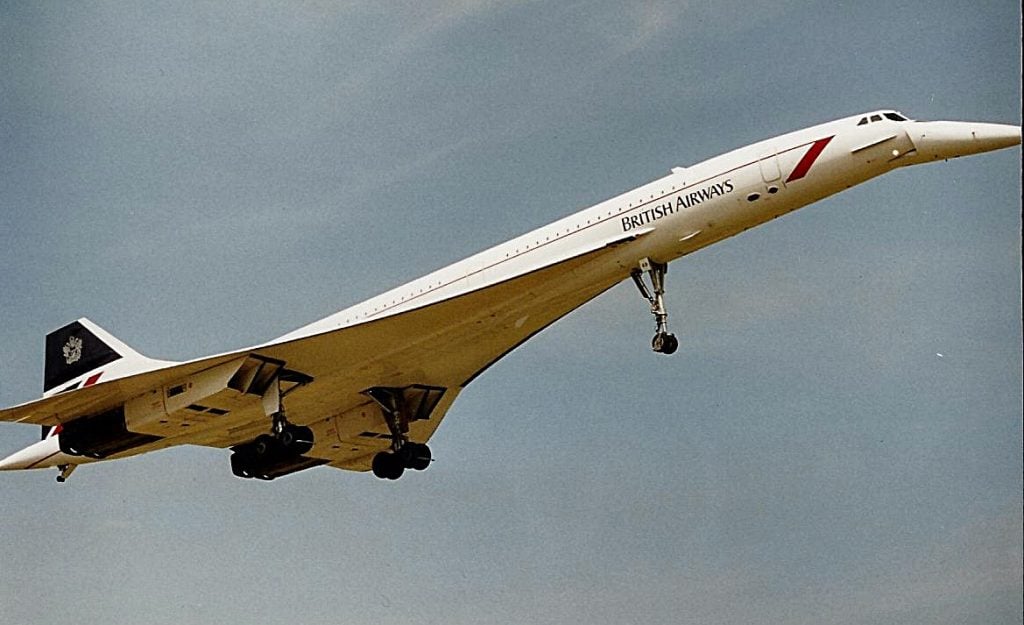
Concorde’s delta wing had no flaps. To fly slowly enough to land, it approached at a high nose-up angle, relying on strong vortices over the wing to generate lift. That high attitude is why the nose was drooped, to 12.5 degrees for landing, so the pilots could see the runway. It also meant Concorde approached faster than most airliners and needed plenty of thrust just to hold its speed on final.
That made the go-around itself simple. In the account of former British Airways Concorde training captain Mike Riley, cancelling the autothrottle with a press of the thumb and pushing the throttles forward was enough: the extra thrust from the Olympus engines produced a climb. The engines also had reheat, but that was for take-off and for accelerating through the speed of sound.
A Concorde Go-Around That Made the Papers
Riley described one Heathrow go-around that ended up in the newspapers in May 1988. At about 100 feet on a night approach, a British Airways 747 was still turning off the runway. The controller cleared the Concorde to land, but the co-pilot judged that the jumbo had not cleared and called “Go-around”. Because it happened below decision height an incident report was required, and the press turned it into a near miss.
What the Viral Post Gets Right
The caption’s main point is right: if the runway is not clear, you go around, whatever you are flying. It is also fair to say the crew handled it smoothly, since a go-around is a trained, routine manoeuvre. What cannot be verified from the clip alone is the date and the type of aircraft on the runway. We tell the wider Concorde story in Concorde: Zu schnell für ihre eigene Zeit and the loss of Air France 4590 in The Ninety Seconds That Ended Concorde.
Diesen Beitrag auf Instagram ansehen
Sources: Mike Riley, former BA Concorde training captain, via Fear of Landing (Sylvia Wrigley); NATS blog, “What was it like controlling Concorde?” (November 2013); Wikipedia, Concorde.
0 Comments