
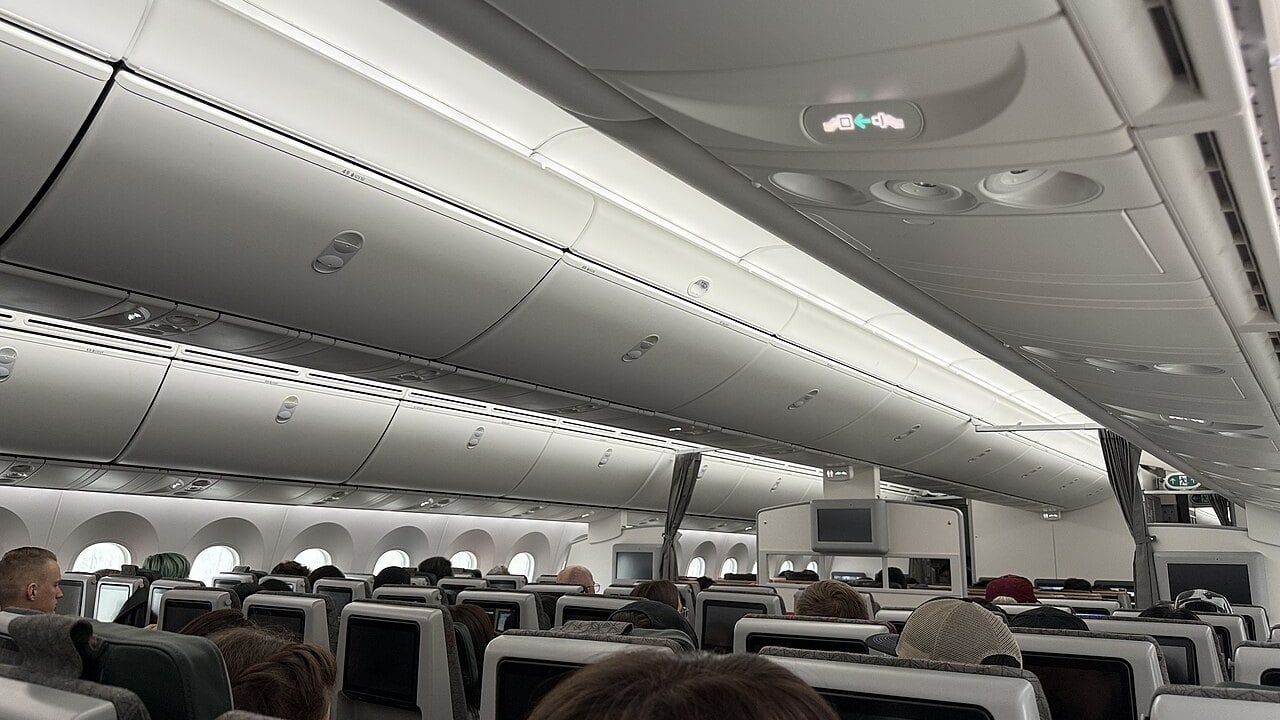
Two hours into a long-haul flight, your eyes start to sting, your lips crack and the skin on your hands feels like paper. You are not imagining it. When researchers from Uppsala University measured the air on 26 intercontinental Boeing 767-300 flights, the mean relative humidity in the cabin was just 6 percent, with readings ranging from 1 to 27 percent.
For comparison, most of us feel comfortable at home somewhere well above that. So why do airliners, machines engineered down to the last gram, fly their passengers through what is effectively an indoor desert? The answer lies in the sky outside, in physics, and in a very old enemy of aluminium aircraft: water.
Kurzinfo
- Typical cabin humidity: Measured mean of 6% (range 1 to 27%) on 26 intercontinental 767-300 flights
- Why so dry: Outside air at cruise is very cold and holds almost no water; heated to cabin temperature, its relative humidity collapses
- Moisture source: Mainly the breath of the people on board; almost none comes in from outside
- Why not humidify: Weight of water, condensation in the fuselage, corrosion of aluminium structure
- Humidifier trial: Raised humidity by about 10 points at the front of a 767 cabin, 3 points at the back
- 787 difference: Composite airframe that resists corrosion; Boeing says it maintains higher humidity
- Main effects: Dry eyes, nose, throat and skin; skin hydration down by up to 37% in one study
Where cabin air comes from
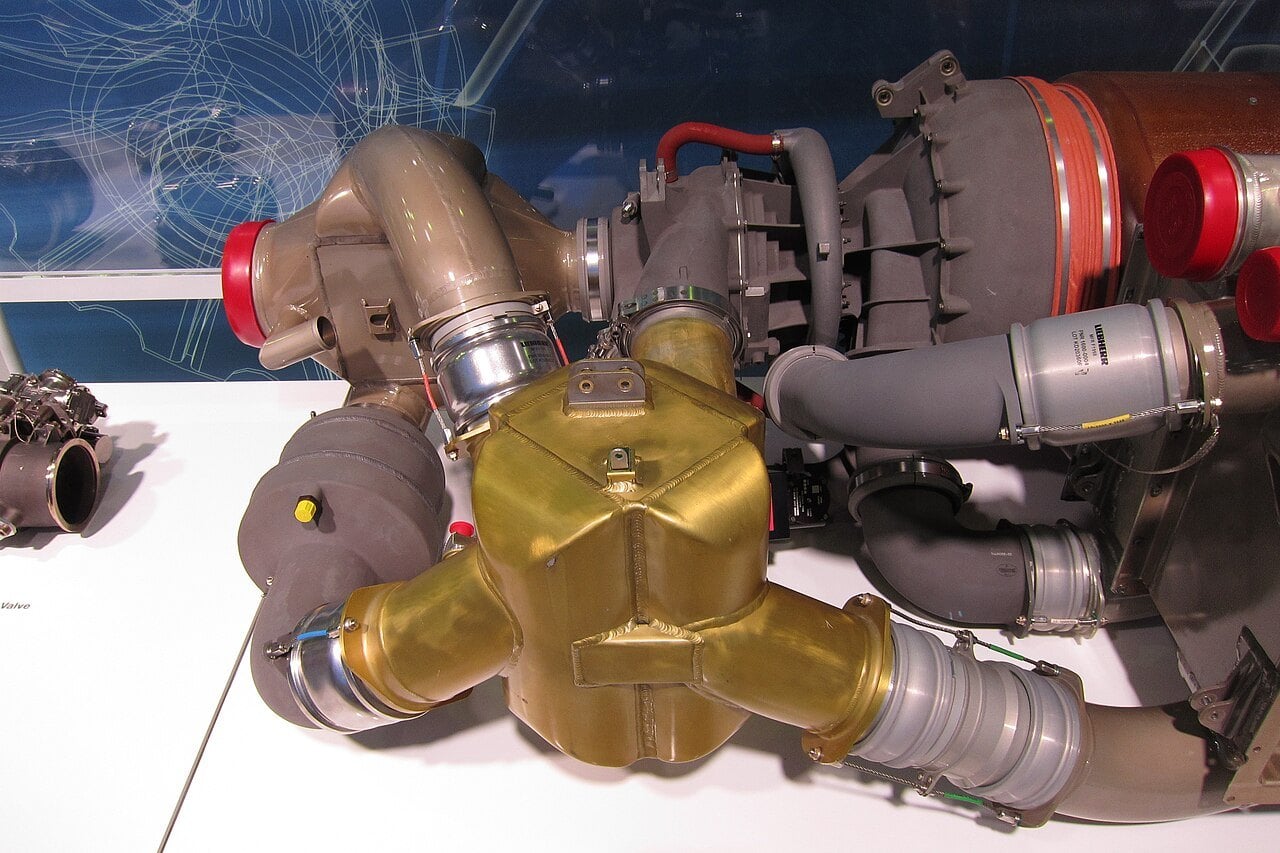
Every airliner needs a constant supply of fresh air to keep the cabin pressurised, ventilated and at a comfortable temperature. On most jets that air is taken from the engines’ compressors as so-called bleed air, then cooled and conditioned by air conditioning packs in the belly of the aircraft before it is mixed with filtered, recirculated cabin air.
The key point is where the air starts its journey: outside the aircraft, at cruising altitude. Up there the air is bitterly cold, and cold air can hold only a tiny amount of water vapour. When that air is compressed and warmed to cabin temperature, the amount of water in it stays the same, but its capacity to hold water rises enormously. The result is air with a relative humidity close to zero.
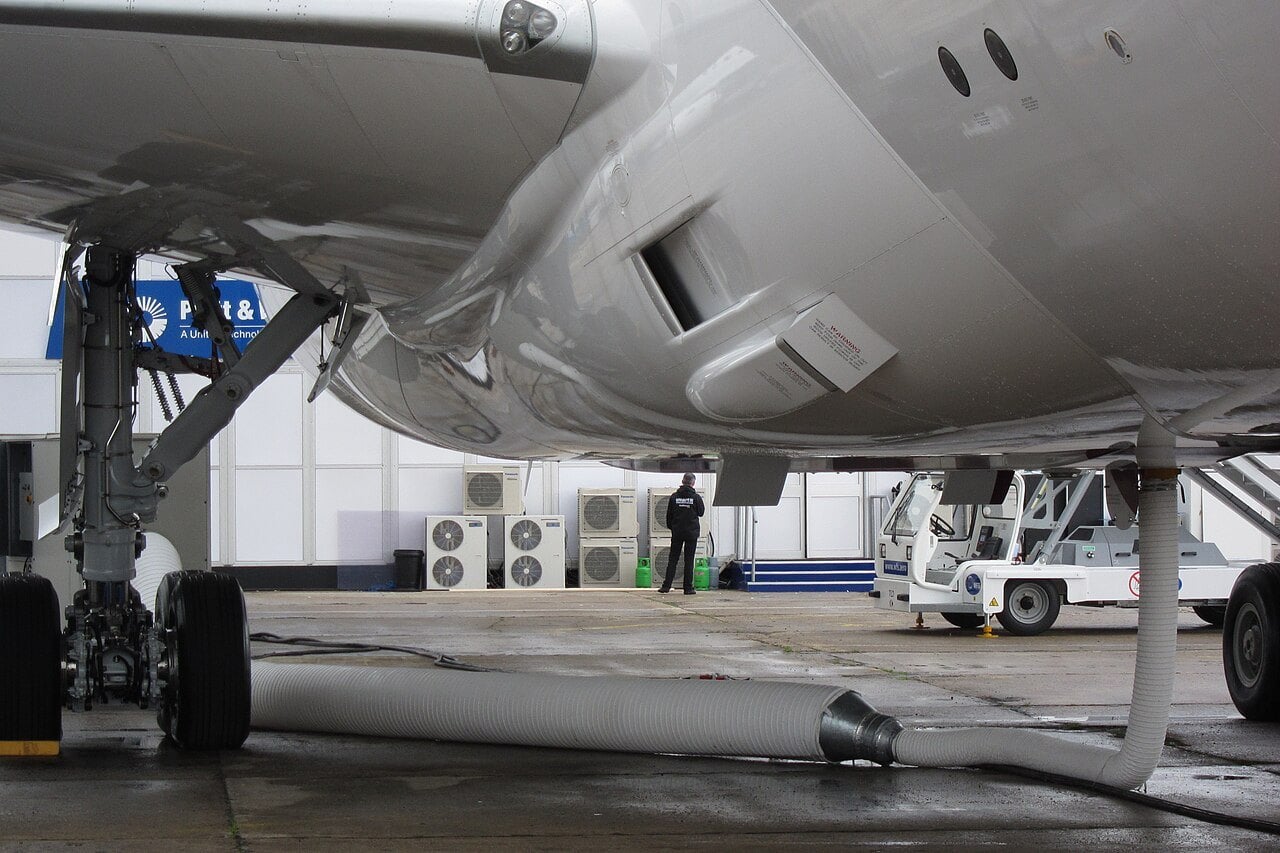
This is not a quirk of bleed air. The Boeing 787 uses electric compressors instead of engine bleed air to pressurise its cabin, but it still breathes the same thin, frozen air from outside. Whatever moisture the cabin does gain comes from inside it, as every person on board adds a little water vapour with each breath. The flight deck, with just two or three people, fares worst: humidifier maker CTT Systems calls it the most dehydrating place in an airplane.
Humidifier maker CTT Systems on how dry cabin air affects fatigue and sleep. Note that CTT sells cabin humidification systems.
What the measurements show
The Uppsala team spent years measuring cabin air. On flights between Scandinavia and Japan, Gunilla Wieslander and colleagues recorded relative humidity of just 2 to 10 percent. A study of skin hydration by the French research centre CE.R.I.E.S. found that cabin humidity fell below 10 percent within two hours of take-off and stayed there for the rest of the flight.
The crews notice. In a survey of more than 1,500 Scandinavian airline crew, dry air was the single most common complaint about cabin air quality, mentioned by 53 percent. Crew also reported eye irritation, nasal symptoms and dry skin on the face and hands.
That conclusion came from a double-blind experiment on a Boeing 767 fitted with an evaporation humidifier at the front of the cabin, flying between Stockholm and Chicago. Switching the humidifier on raised relative humidity by about 10 percentage points in the first row of business class, but by only 3 points in row 39 and in the cockpit. Even that modest change improved tear-film stability and nasal patency, and reduced eye, nose and skin symptoms and headaches.
Why airlines do not just add water
If a humidifier helps, why is it not standard on every airliner? The first reason is weight. Water is heavy, and every kilogram carried costs fuel. Chinese researchers who designed a humidified cabin airflow system estimated that it would need about 0.05 kg of water per passenger per hour to lift cabin humidity from around 10 to 20 percent. On a 300-seat aircraft on a 12-hour flight, that adds up to roughly 180 kg of water.
The second reason is more insidious: condensation. At cruise, the outer skin of the fuselage is extremely cold. When moist cabin air reaches it, the water condenses on the inside of the skin and soaks into the insulation blankets, like water forming on a cold glass. The Uppsala humidifier trial paired its humidifier with a dehumidifying unit to reduce the build-up of condensed water in the cabin wall.
That hidden water causes real problems. Swedish supplier CTT Systems, which sells anti-condensation systems, says airlines in its trials recorded weight reductions of 200 to 300 kg on narrowbody aircraft once their fuselages were kept dry, along with fewer moisture-related electrical faults. And for a fuselage built of aluminium alloy, trapped water also means one thing every maintenance engineer dreads: corrosion.
Carbon fibre changes the rules
This is where the newest widebodies are different. The Boeing 787 has an airframe made of about 50 percent composites by weight, and Boeing says composites resist corrosion better than aluminium and do not fatigue. Freed from the worst of the corrosion worry, Boeing designed the 787 to run with higher cabin humidity than conventional jets.
Airbus’s A350 is likewise built around an advanced composite fuselage, with more than 70 percent of its airframe made from advanced materials such as composites. CTT Systems says its humidifiers are available for line-fit in the crew rest compartments of the A380, 787, A350 and 777X, and that on the 787 its flight deck humidifier is chosen by close to 90 percent of customers.
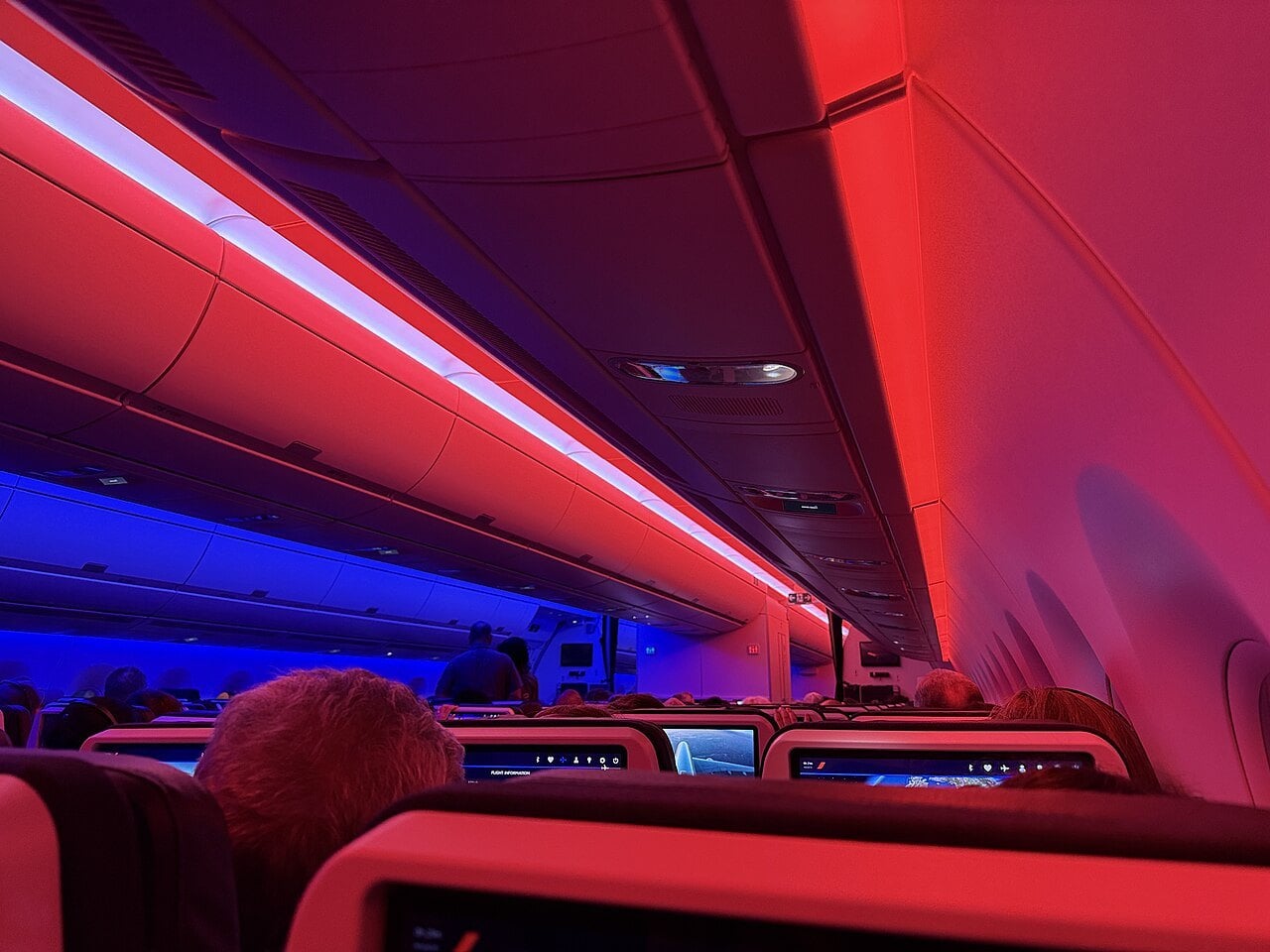
Higher does not mean humid, though. Even on the newest jets, cabin air stays far drier than a typical home, because the fundamental problem has not changed: the air outside is frozen and dry, and carrying enough water to match ground conditions would be heavy and risky for the airframe.
Simple Flying on the Boeing 787’s no-bleed architecture, which pressurises the cabin with electric compressors instead of engine bleed air.
What dry air does to you, and what helps
The clearest effects are on the body’s surfaces. In the CE.R.I.E.S. study, skin hydration on the cheeks fell by up to 37 percent during long-distance flights. Low humidity dries the tear film of the eyes, which is why contact lens wearers often suffer most, and the lining of the nose and throat.
Does the dry air also dehydrate your whole body? A Kyushu University chamber study kept 14 young men seated for six hours at either 10 or 60 percent humidity, at sea-level pressure or at a pressure equivalent to 2,000 metres. The combination of low humidity and low pressure increased the water lost invisibly through skin and breath, and the low pressure increased blood viscosity. Drinking enough water on long flights is therefore sensible, but it will not moisten your eyes or skin from the outside.
The practical fixes are simple: drink water regularly, use moisturiser and lip balm, carry eye drops, and swap contact lenses for glasses on long flights. For the rest, blame physics. At 35,000 feet, the air outside your window is some of the driest on Earth, and the cabin is only as moist as the people inside it make it.
Dry air is also not the same as bad air. If you notice an unusual smell in the cabin, that is a different issue altogether, explained in our guide to fume events and cabin smells.
Sources: Lindgren & Norbäck (Indoor Air, 2002 and 2005), Wieslander et al. (Scandinavian Journal of Work, Environment & Health, 2000), Norbäck et al. (Scandinavian Journal of Work, Environment & Health, 2006), Lindgren et al. (Indoor Air, 2007), Guéhenneux et al. (Skin Research and Technology, 2012), Hashiguchi et al. (Indoor Air, 2013), Zhang et al. (Building and Environment, 2010), Boeing, Airbus, CTT Systems

0 Comments