
A year before Explorer II, the same men had nearly died. On 28 July 1934, Captains Albert Stevens and Orvil Anderson and Major William Kepner were dropping through 20,000 feet over Nebraska when the entire bottom of their balloon fell away. What had been a stratosphere balloon became a giant, shredded parachute full of hydrogen and air, and their sealed gondola was going down fast.
Barely half a mile above the ground they climbed out to jump. Anderson’s parachute pack snagged on the rigging and spilled its canopy, and he ended up with both feet jammed in the open hatch while Stevens waited behind him.
Just as Anderson cleared the hatch, the hydrogen left in the balloon exploded. Stevens needed three tries and a push from Kepner’s boot to get out against the windblast. Kepner jumped last, and his parachute opened only seconds before the gondola smashed into a cornfield near Holdrege, Nebraska. All three walked away.
Fifteen months later, Stevens and Anderson went back up. This time, on 11 November 1935, they reached 72,395 feet (22,066 m), higher than any human being had ever been.
Kurzinfo
- Balloon: Explorer II, National Geographic Society and US Army Air Corps
- Crew: Capt. Albert W. Stevens and Capt. Orvil A. Anderson
- Eingeführt: 11 November 1935, Stratobowl near Rapid City, South Dakota
- Aufzeichnen: 72,395 ft (22,066 m), a balloon record until 1956
- Balloon: Helium, 3.7 million cu ft, 192 ft across when fully inflated
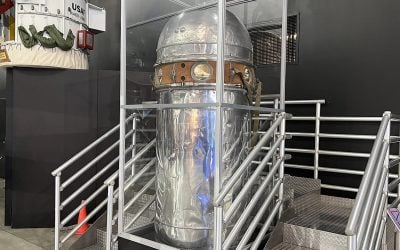
- Gondola: Dowmetal sphere, 9 ft across, 640 lb
- Flug: 8 hours 13 minutes, landed near White Lake, South Dakota
- Before: Explorer I (28 July 1934) ruptured; its three-man crew parachuted to safety
Explorer I: the near-disaster
The idea was Stevens’ own. He ran the Army Air Corps photographic laboratory at Wright Field in Ohio, and in 1933 he began pushing for a manned stratosphere flight. The Army offered people and facilities but no money, so he turned to the National Geographic Society, whose president Gilbert Grosvenor agreed to fund the expedition.
The launch site was a natural bowl in the Black Hills about 12 miles southwest of Rapid City, South Dakota, a grassy meadow walled in by cliffs several hundred feet high. It sheltered a balloon from surface winds during inflation, and it came to be known as the Stratobowl.
Explorer I lifted off from there with three million cubic feet of hydrogen capacity and a crew of three. It reached 60,613 feet before the crew spotted a large rip in the base of the balloon and began to descend. An investigation by the National Bureau of Standards later found that the fabric had not opened evenly during the climb, and the uneven stress tore it apart.
The National Geographic Society’s own film on the 1935 Explorer flight, the stratosphere expedition it ran with the US Army Air Corps.
Helium, a bigger bag and a bigger sphere
The second attempt was redesigned around the lesson of the first. Hydrogen was out; Explorer II would be filled with helium, which cannot burn. Helium lifts less, so Goodyear-Zeppelin built the biggest balloon yet made, with a volume of 3.7 million cubic feet and a diameter of 192 feet when fully inflated.
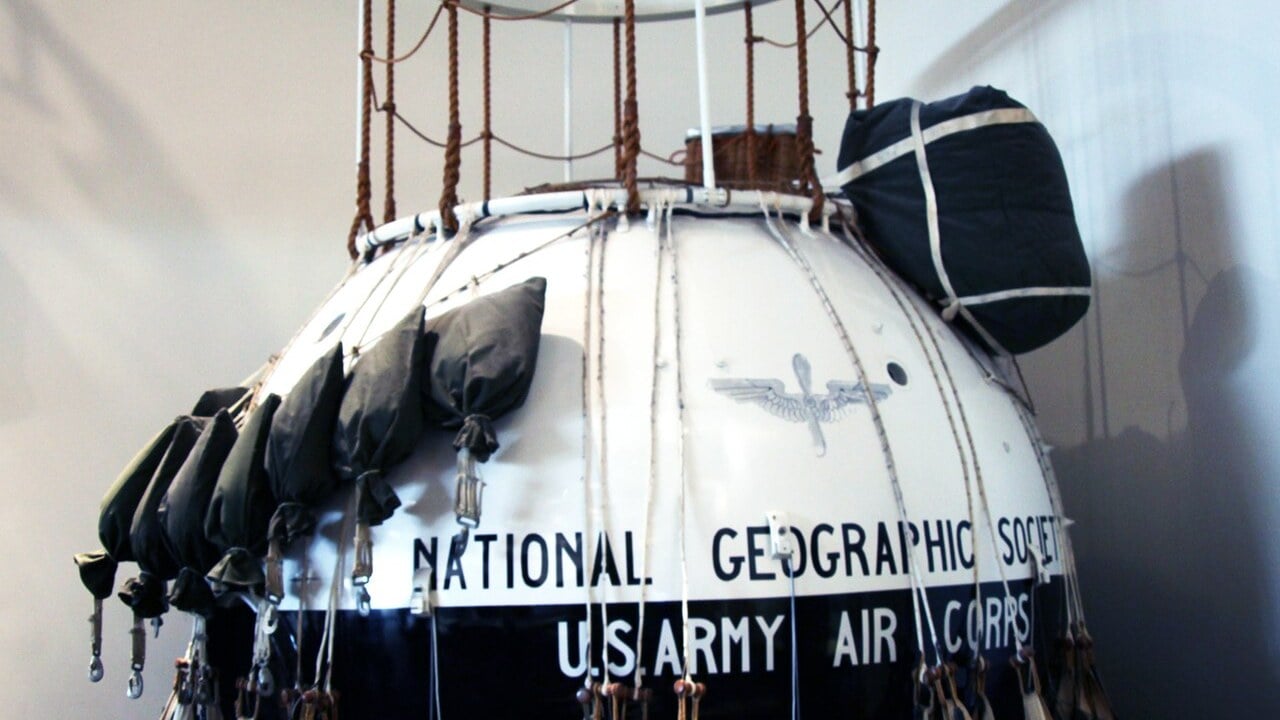
Dow Chemical built a new gondola from Dowmetal, a magnesium alloy: a sphere nine feet across that weighed just 640 pounds and could carry about 1,500 pounds of payload. Its portholes were widened to make escape easier, and the crew was cut from three to two, Stevens and Anderson, with a smaller load of scientific instruments.
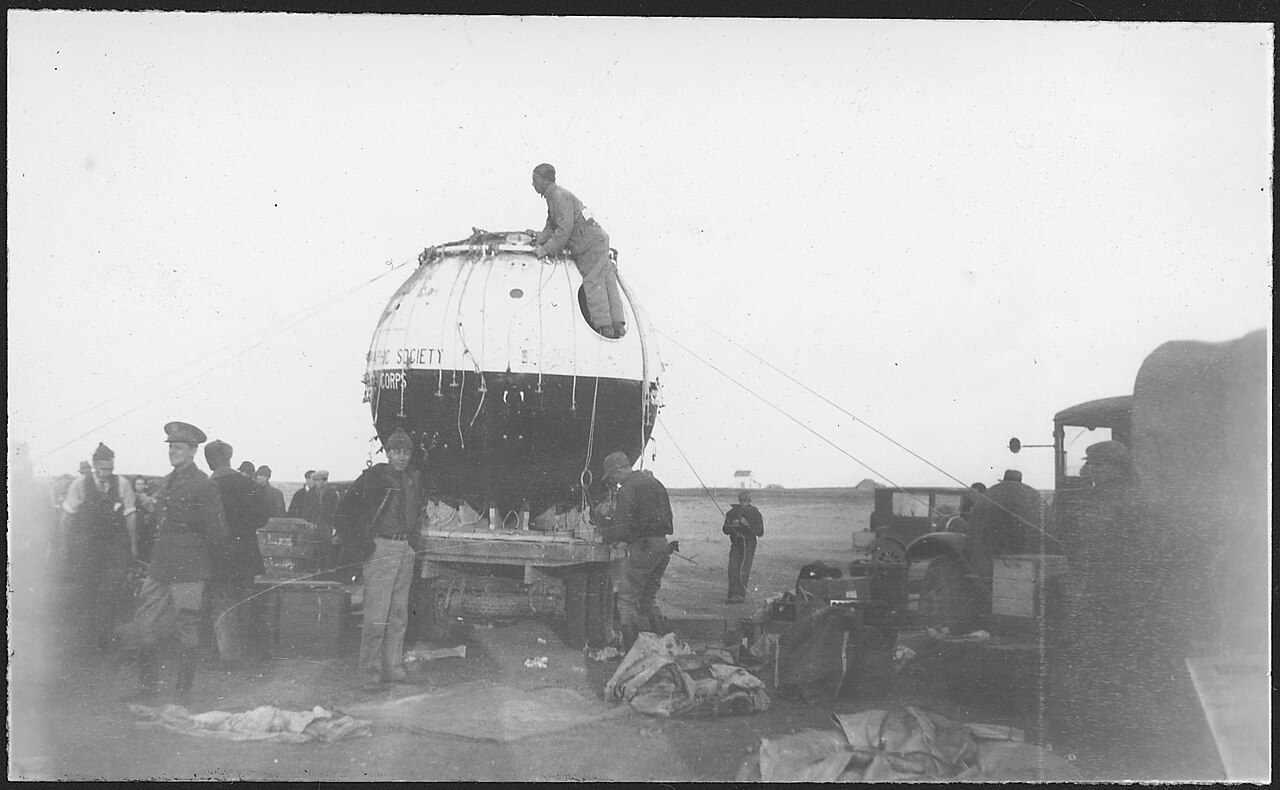
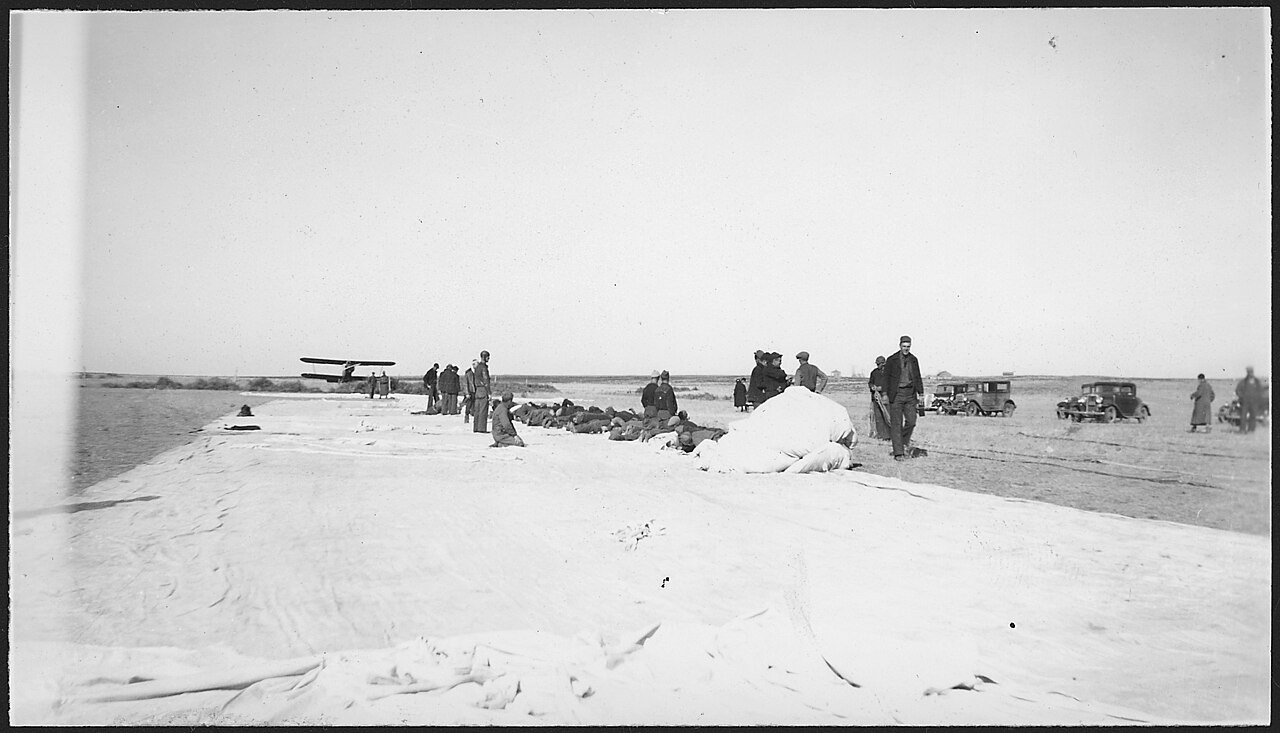
The new balloon failed before it ever flew. During launch preparations in July 1935 it tore near the top and collapsed in seconds, trapping ground crew under acres of fabric, though nobody was hurt. Goodyear repaired it and fitted a stronger system for ripping the bag open after landing.
A cold night in the Stratobowl
Meteorologists set up a weather station at the Stratobowl in September and waited for a long spell of clear skies and light winds. With a cold front coming, the team began inflating the balloon on the night of 10 November, working by floodlight with 1,685 cylinders of helium in bitter cold.
Near midnight the fabric tore again, a rip 17 feet long. Rather than give up, the crew glued a patch over it and kept going. By morning the inflated balloon stood about 316 feet tall, with more than 100 soldiers holding the gondola down on cables.
Explorer II rose out of the bowl on the morning of 11 November 1935 in front of an estimated 20,000 spectators. It had barely cleared the walls when it began to sink; Anderson called out that he believed the balloon was leaking, and the crew dumped 750 pounds of lead shot. Then it climbed normally.
British Pathé newsreel “Stratosphere Record” (1935) on the Explorer II flight.
72,395 feet
By late morning Explorer II had settled at 72,395 feet, the balloon swollen to its full size. Stevens and Anderson were above about 96 percent of the atmosphere. They calculated they could drop another ton of ballast and gain perhaps 2,000 feet more, but chose to keep it in case they needed it for a safe landing.
Stevens, a pioneer of long-range aerial photography, took the pictures that made the flight famous: the first photographs showing the dividing line between the troposphere and the stratosphere, and the curvature of the Earth from record altitude. On the ground, he reported, only railways and the rectangles of larger farms stood out.
The science went well beyond pictures. Instruments measured cosmic rays, the ozone layer, the electrical conductivity of the air and the brightness of the Sun, and a spore collector dropped on its own parachute brought back spores, bacteria and fungi, the first living spores found above 36,000 feet. The data showed that ozone high in the atmosphere blocks most of the Sun’s ultraviolet radiation.
An NBC radio link carried the flight live across the United States and to Europe. In the afternoon the crew even talked with Pan American’s China Clipper flying over the Pacific, then with an announcer in London.
A soft landing and a long shadow
The descent was uneventful. At low altitude the crew dropped instruments on their own parachutes to protect the data, put on leather football helmets lent by the Rapid City High School team, and ripped the balloon open as the gondola touched down in a field near White Lake, South Dakota, about 225 miles east of the Stratobowl. They had been aloft for 8 hours and 13 minutes.
South Dakota Public Broadcasting’s Dakota Life on balloon launches from the Stratobowl in the Black Hills.
Stevens and Anderson became national heroes. They met President Franklin D. Roosevelt, received the National Geographic Society’s Hubbard Medal from General John J. Pershing, and won the Mackay Trophy for the most meritorious flight of the year. The balloon was reportedly cut into strips and handed out as bookmarks to the Society members who had paid for it.
Their balloon altitude record stood for two decades. It was finally beaten on 8 November 1956, when the US Navy’s Strato-Lab I climbed to 76,000 feet, launched from the same Stratobowl. A year later, Air Force aeronauts in sealed gondolas pushed past 100,000 feet in Project Manhigh.
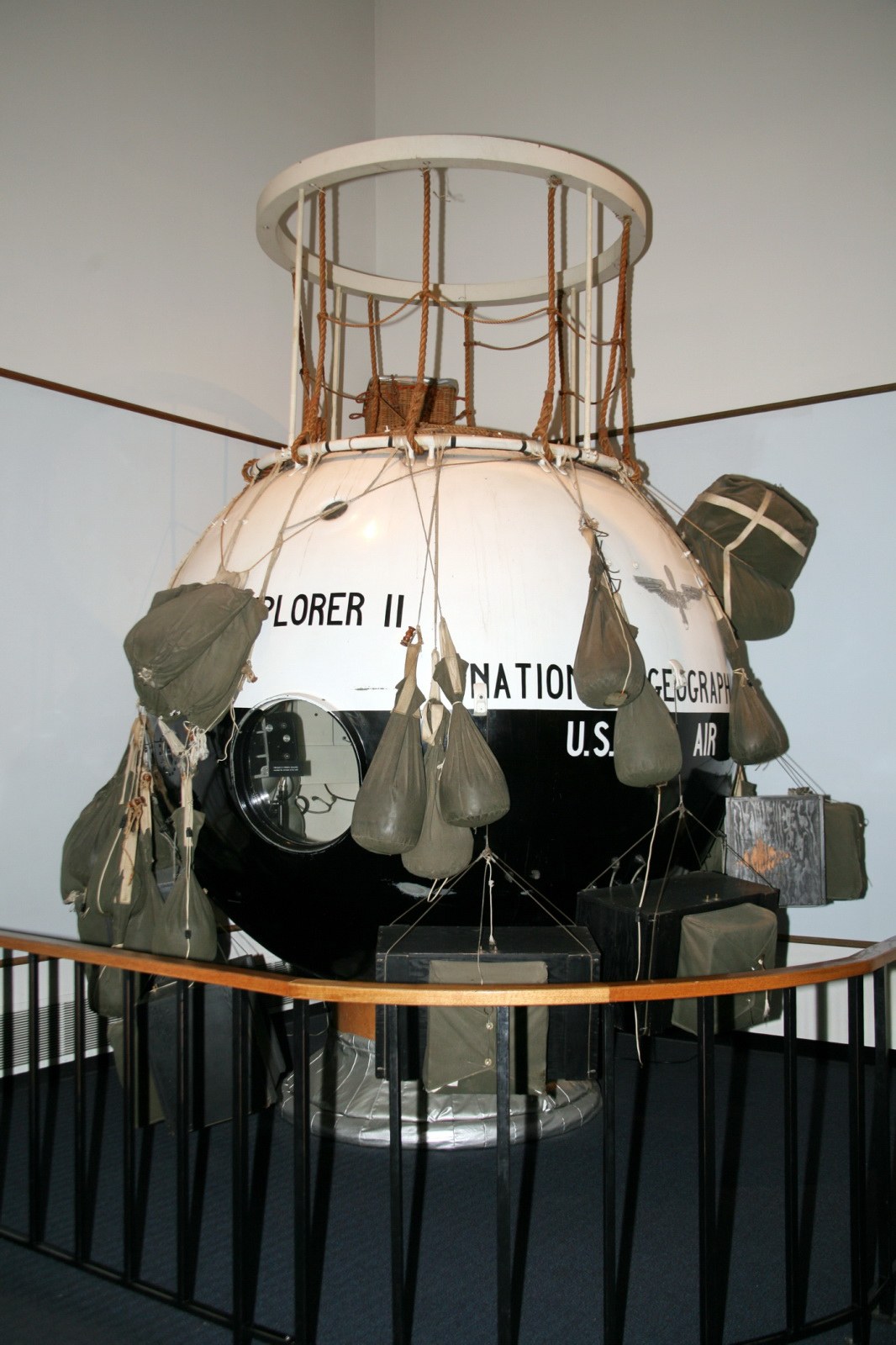
Anderson went on to plan the bombing of Germany as a general in the Second World War, including Big Week in February 1944. The Explorer II gondola, still painted with “National Geographic Society” and “U.S. Army Air Corps”, is preserved today by the Smithsonian’s National Air and Space Museum. It is a black-and-white ball just nine feet across, and in 1935 it was the highest place a human being had ever been.
Sources: Wikipedia (Explorer II; Stratobowl; Albert William Stevens; Orvil A. Anderson), Smithsonian National Air and Space Museum catalogue record for the Explorer II gondola (via DPLA/Wikimedia Commons), Gregory P. Kennedy, “The two Explorer balloon missions” (StratoCat), US National Archives
0 Comments