
Somewhere over northern Lithuania, early on Sunday morning, something exploded. A driver on the road from Biržai toward Pasvalys heard the bang, and debris struck the door of a moving car. Nobody was hurt, but air raid alerts had sent people across northern Lithuania into shelters.
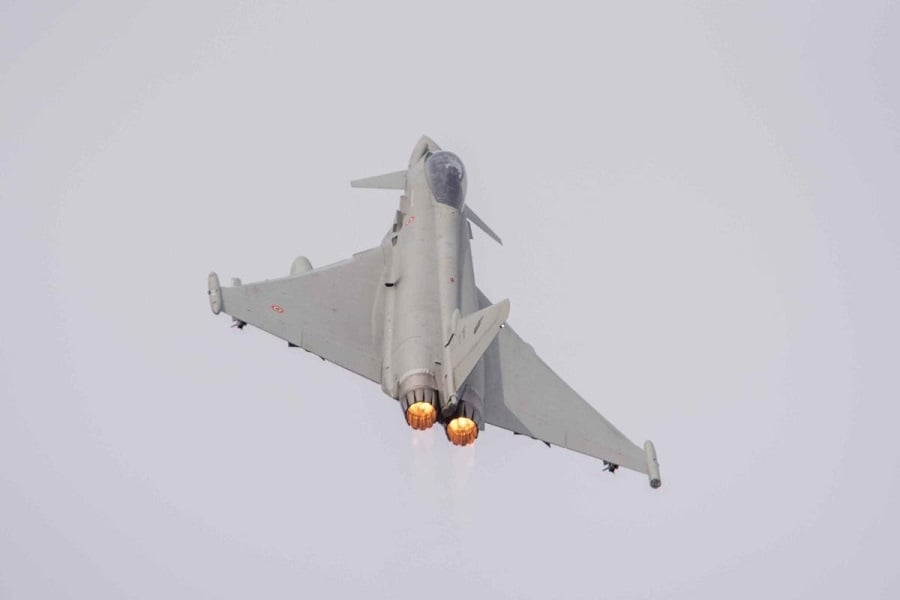
Early on 18 October 2026, an unidentified object, most likely a drone, entered Lithuanian airspace. NATO fighters on quick reaction alert at Šiauliai Air Base were scrambled to find it. They never fired. According to a NATO official quoted by Reuters and AP, the jets were two Italian Eurofighter Typhoons, and thick cloud meant their pilots could not even see the target.
The object vanished from radar, possibly after blowing itself up. What it was, who launched it and where exactly it came from are still under investigation. This is a developing story, and much of what follows is what officials have said so far, not what has been proven.
Kurzinfo
- Datum: Sunday 18 October 2026, early morning
- Detection: Between 06:00 and 08:00, according to Latvia’s National Armed Forces (NBS)
- Where it ended: Pasvalys district, northern Lithuania, near the Latvian border
- NATO response: Two Italian Eurofighter Typhoons scrambled from Šiauliai, per a NATO official
- Shot down?: No. Cloud prevented visual identification and the jets did not fire
- Schaden: Debris struck a moving civilian car; no injuries reported
- Latvia: NBS alert for Bauska, Aizkraukle and Ogre municipalities, 07:40 to 08:12
- Herkunft: Not established. Lithuania says it likely came from Poland; Poland says its radar did not confirm it
- Ukraine: Foreign Ministry expressed regret and blamed possible Russian jamming
An Hour in the Shelters
The alert hit northern and central Lithuania first. Militarnyi reports that the authorities declared a red air alert in the Šiauliai and Panevėžys counties and a yellow warning in Kaunas County, and Reuters says residents spent about an hour in shelter. Reuters reports that Kaunas airport was briefly closed during the alert.
Across the border, Latvia’s National Armed Forces issued their own warning at 07:40 for the Bauska, Aizkraukle and Ogre municipalities, and withdrew it at 08:12. Their statement, carried by public broadcaster LSM, was careful about what the jets had and had not done.
President Gitanas Nausėda went further on X, saying the scramble had come from Šiauliai “once again” and that what appeared to be a drone had exploded over the north of the country.
Why Nobody Fired
Baltic Air Policing exists because Lithuania, Latvia and Estonia have no fighter jets of their own. Allies take turns standing alert at Šiauliai, and since 31 July 2026 the duty has belonged to the Italian Air Force, which arrived with four Typhoons. Last month, Italian jets from the same detachment shot down a drone over central Lithuania.
This time the weather got in the way. Defence Minister Robertas Kaunas said the pilots could not make visual contact with the object, and Reuters reported that the jets did not try to shoot it down. A small drone hidden in cloud above farmland and villages is a hard target to identify, let alone engage safely.
Kaunas did not hide his irritation with how the alert itself was handled. He called the situation “strange and unacceptable” and told reporters: “If the object had already been detected in one part of Lithuania, everyone should have been informed in time.” The military has been ordered to produce a detailed report.
Poland, Ukraine and the Jamming Question
Kaunas said the object most likely flew in from Poland, and he has asked his Polish counterpart for a joint investigation. Poland’s defence ministry said its radar did not confirm anything crossing into Lithuania. Polish authorities separately sent a search team near Lublin to look for the possible crash site of an unidentified object.
The most striking reaction came from Kyiv. Ukrainian Foreign Ministry spokesman Heorhii Tykhyi wrote on X: “We regret the incident that occurred this morning in Lithuanian airspace”, adding that it may have been caused by Russian electronic warfare diverting drones during an operation against Russian military targets. Vilmantas Vitkauskas, head of Lithuania’s National Crisis Management Centre, said the object was most likely a Ukrainian drone.
That fits a pattern the Baltic states know well. Since March 2026, stray drones have crashed in Lithuania, Latvia, Estonia and Finland during Ukraine’s long-range strikes on Russia’s Baltic oil ports, and several governments have blamed Russian jamming for pushing them off course. Officials have not confirmed whether Sunday’s drone carried an explosive warhead.
Lithuanian news site 15min filmed the scene in Pasvalys district where the drone came down on 18 October 2026.
What We Still Do Not Know
The list is long. In the Lithuania drone incident, investigators have not said what type of drone it was, whether it was armed, or exactly where it crossed into Lithuania. Ukraine’s statement points toward one of its own drones, but no government has formally confirmed the drone’s identity. Police have cordoned off the debris site in Pasvalys district.
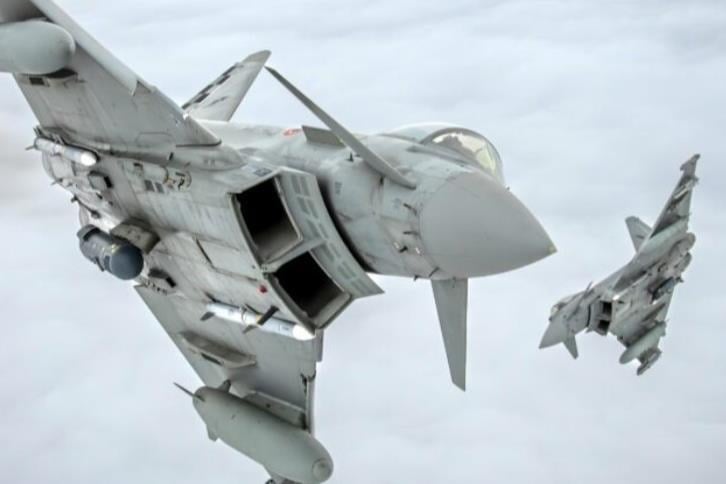
What is clear is the shape of the problem. Two NATO fighters were scrambled, and a small drone still crossed a member state, exploded over a road and sent people across northern Lithuania into shelters. On Sunday morning in northern Lithuania, the jets were there. The cloud was in charge.
Sources: LSM (Latvian Public Broadcasting), LRT, Reuters via ThePrint, AP via Canberra Times, Kyiv Independent, Militarnyi, NV, South China Morning Post


0 Comments