
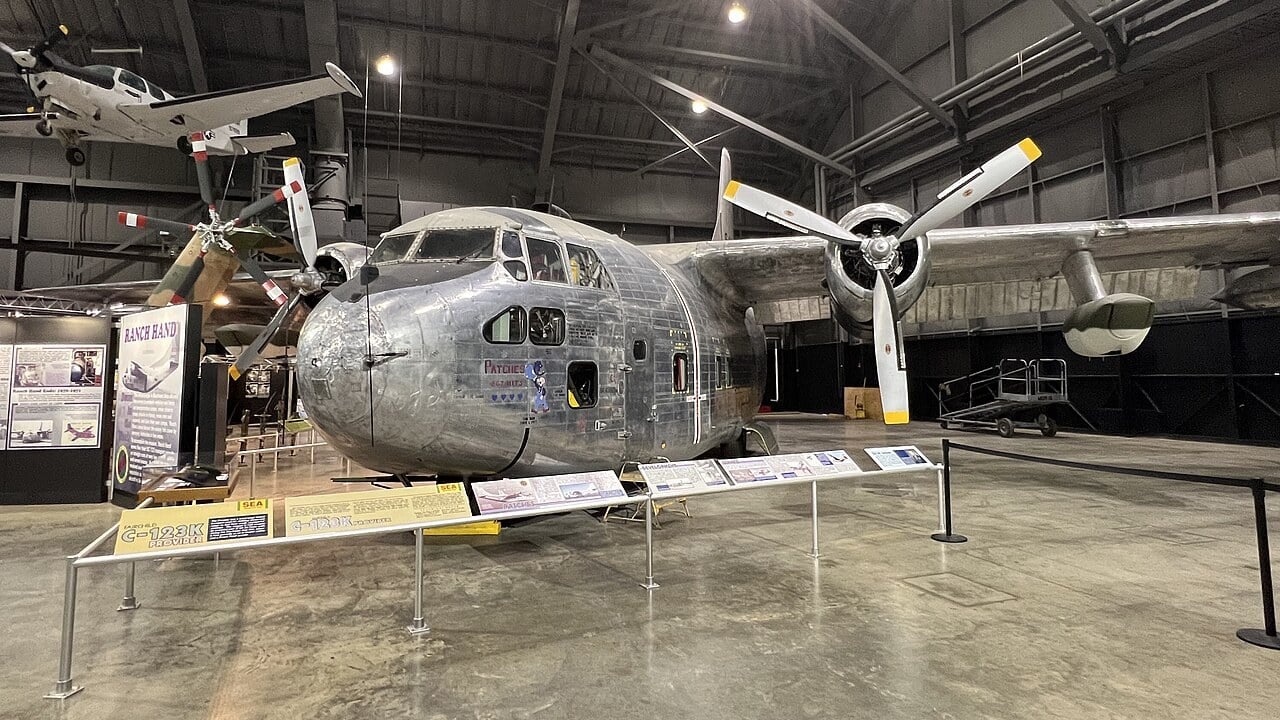
Most visitors to the National Museum of the United States Air Force in Dayton, Ohio, only ever see its aircraft from behind a rope. On Saturday 14 November 2026, three of them opened their doors. Between 10 a.m. and 3 p.m., the museum brought back its Open Aircraft Days program, letting the public walk through a battle-scarred C-123K Provider and climb aboard a CH-3 helicopter and an EC-121D radar plane.
All three flew in the war in Southeast Asia. And some of the people waiting inside to talk about them had flown or fixed the real thing.
Kurzinfo
- Ereignis: Open Aircraft Days at the National Museum of the US Air Force
- Wann: Saturday 14 November 2026, 10 a.m. to 3 p.m.
- Wo: Wright-Patterson Air Force Base, Dayton, Ohio
- Aircraft opened: C-123K Provider Patches, CH-3 helicopter, EC-121D Warning Star
- Patches: Almost 600 combat hits; seven crew awarded the Purple Heart (museum)
- EC-121D 53-555: Crew credited with the first radar-guided intercept, 24 October 1967 (museum)
- Nächste: Four more Open Aircraft Days planned for 2027; aircraft may change
Inside “Patches”
The star of the day was the C-123K nicknamed Patches, serial 56-4362. According to the museum’s own description of the aircraft, it took almost 600 hits in combat and got its name from the repairs that covered its skin. Seven of its crew received the Purple Heart.
Museum volunteer Jerry Mongelli explained the nickname to WKEF, the Dayton television station that covered the event, in the plainest possible terms.
Patches was accepted by the US Air Force as a C-123B in 1957 and went to Vietnam in 1961 to fly low-level defoliant spraying missions with Operation Ranch Hand. It later became a dedicated insecticide sprayer against malaria-carrying mosquitoes, and Fairchild converted it to a UC-123K in 1968.
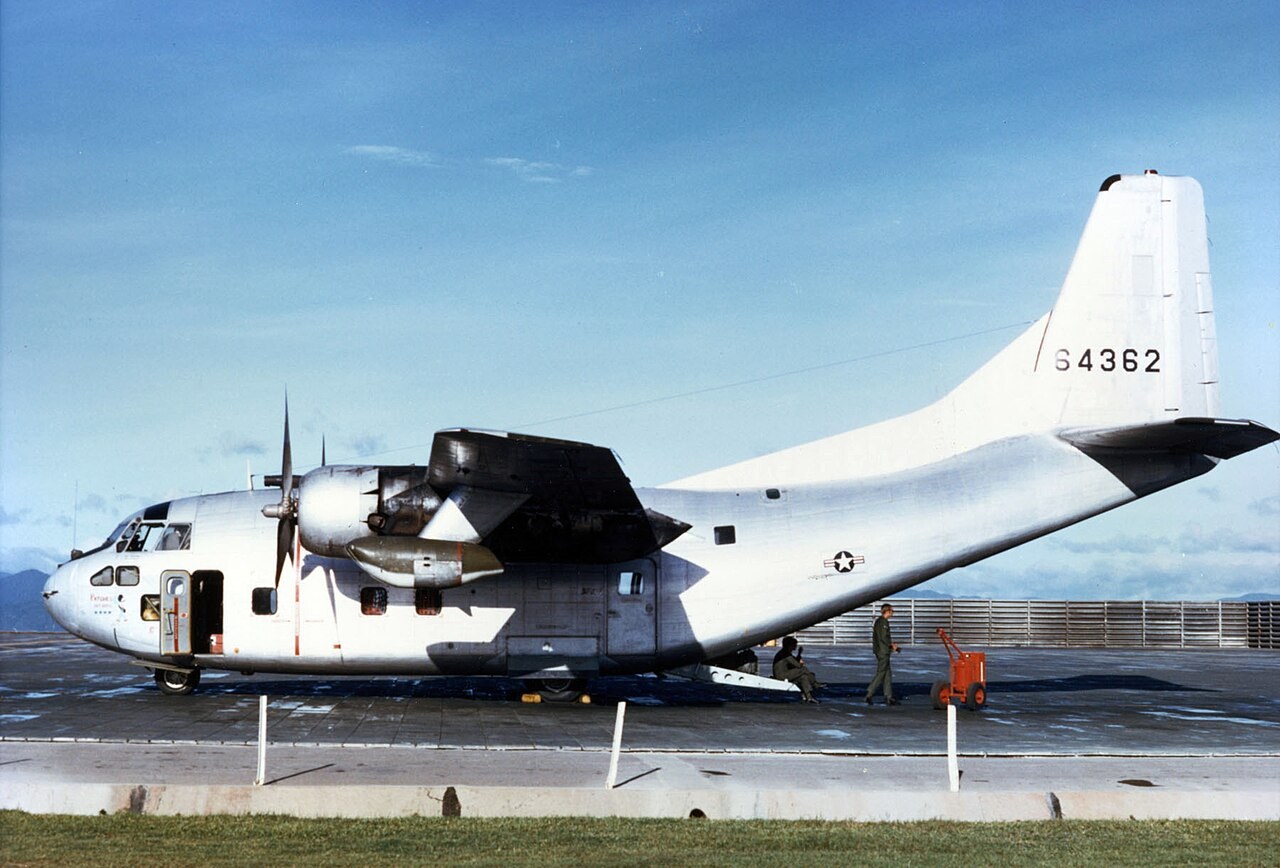
It came home in 1972, flew with the Air Force Reserve as a C-123K and was retired to the museum in 1980. On Saturday visitors could walk through its cargo hold, according to the museum’s announcement of the event.
A helicopter pilot and a flying radar station
The second aircraft was a CH-3 helicopter. The museum’s announcement named it as the CH-3E Black Mariah, while WKEF described a CH-3C used for special operations. Air Force veteran Steve Wing told the station he had flown the type on missions that included rescues and carrying refugees.
“We did air rescue if we were in the area,” Wing said. “We did it several times; an aircraft member would bail out. We hauled refugees. I’ve got pictures here of hundreds and maybe thousands of refugees we’d move.”
An earlier Open Aircraft Day video from the National Museum of the US Air Force, featuring a P-47D and a Bf 109G-10, shows what the program offers visitors.
The third was the Lockheed EC-121D Warning Star 53-555, a Super Constellation airliner turned into an airborne radar station. During the war, EC-121s flew orbits off North Vietnam to watch for enemy fighters and warn American strike packages. According to the museum, this particular aircraft’s crew made the first radar-guided intercept on 24 October 1967, directing two F-4C Phantom IIs to shoot down a North Vietnamese MiG over the Gulf of Tonkin.
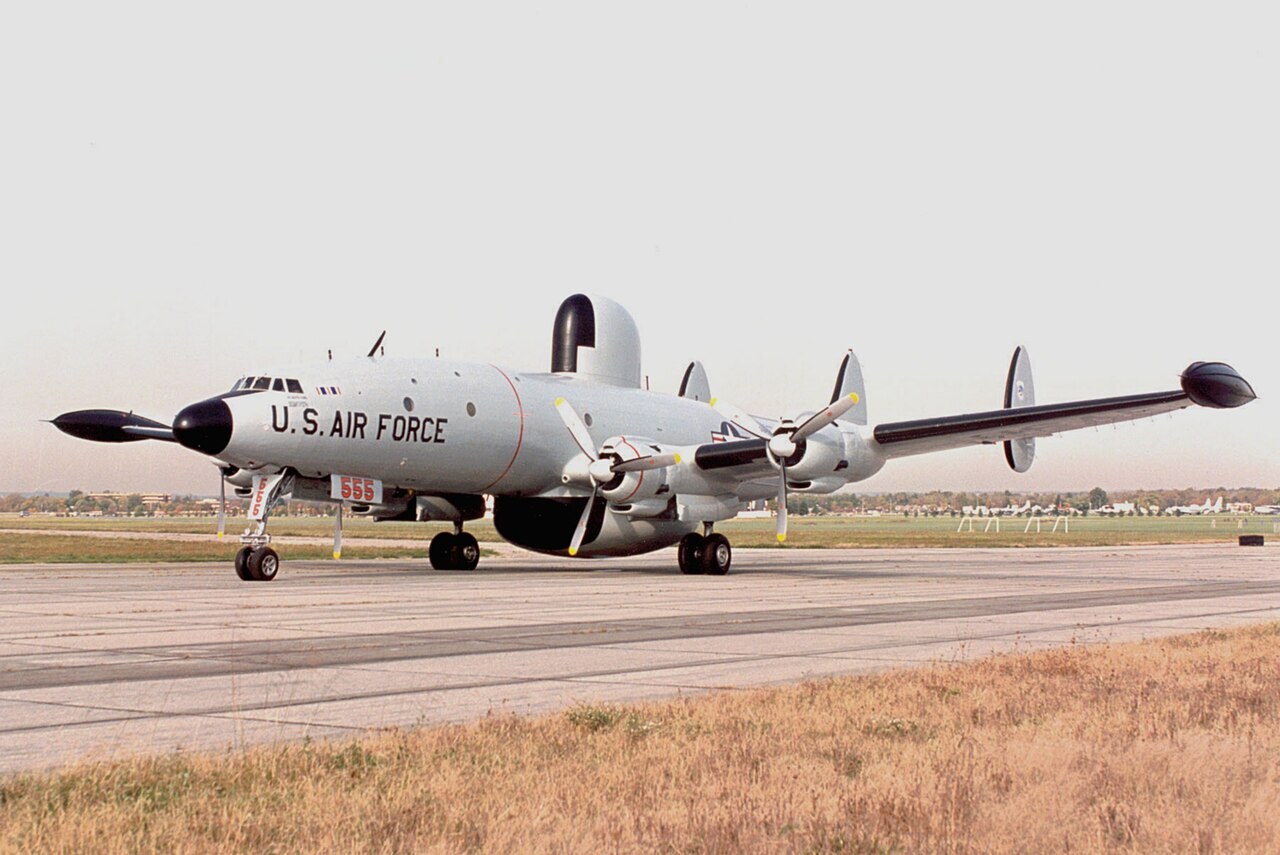
Visitors could sit inside both the helicopter and the Constellation, the museum said. For some it was a first. “You only see these things in games and movies, but actually being there is a whole other thing,” visitor R.J. Maka told WKEF.
Veterans telling the story
For the veterans on hand, the day was as much about memory as hardware. Chief Master Sergeant Arthur Martinelli told WKEF that every veteran’s story matters because it is tied to the freedom and responsibility of all Americans. Wing pointed out how different things were when he came home.
The open day was part of a month of Veterans Day programming at the museum, linked to the America 250-Ohio Commission’s November theme, “Ohio Serves”, according to Vintage Aviation News. The museum also held a Plane Talks day on 7 November with veterans stationed in the galleries.
More dates are coming. The museum has planned four more Open Aircraft Days for 2027, Vintage Aviation News reported, although the aircraft taking part may change for operational and preservation reasons. For anyone who has ever wanted to stand where the crews stood, it is worth watching the calendar.
Sources: WKEF / Dayton 24/7 Now, Vintage Aviation News, National Museum of the US Air Force aircraft descriptions (via Wikimedia Commons)
Header photo: ZLEA / Wikimedia Commons, CC BY-SA 4.0

0 Comments