
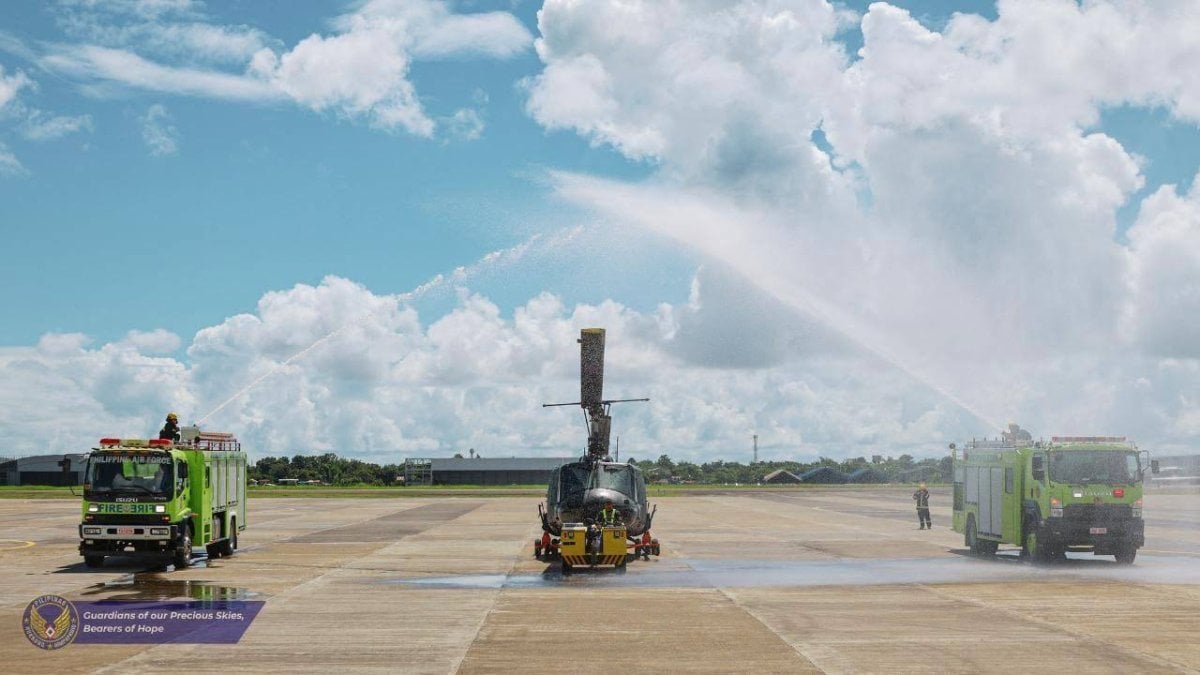
Two crash tenders roll into position on the ramp, and their water cannon arc over a small, olive-drab helicopter sitting between them. It is the traditional salute for an aircraft on its last day of work. This time the aircraft was not a single airframe but a whole type, and the water was falling on the last Hueys the Philippines will ever fly.
On Thursday, 5 November 2026, the Philippinische Luftwaffe decommissioned its six remaining Bell UH-1H Huey utility helicopters at Brig. Gen. Benito N. Ebuen Air Base in Lapu-Lapu City, Cebu. The ceremony, led by PAF Commanding General Lt. Gen. Arthur Cordura, retired the type from Philippine service after 57 years.
Kurzinfo
- Flugzeug: Bell UH-1H Iroquois "Huey" utility helicopter
- Operator: Philippinische Luftwaffe
- Im Ruhestand: 5 November 2026
- Ceremony: Brig. Gen. Benito N. Ebuen Air Base, Lapu-Lapu City, Cebu
- Led by: Lt. Gen. Arthur Cordura, PAF Commanding General
- Last airframes: Six UH-1Hs
- First arrivals: Four UH-1Hs at Villamor Air Base, 29 March 1969
- Ersatz: Sikorsky S-70i Black Hawk
- What happens next: Storage under the Air Logistics and Support Command
Fifty-Seven Years in One Ceremony
The Philippine Huey story has a precise starting point. According to PAF spokesperson Col. Alvin Jay Capinguian, the first four UH-1H helicopters arrived at Villamor Air Base on 29 March 1969. The ceremony in Cebu closed that legacy with the retirement of the type, he said in a statement released on Thursday night.
The size of the fleet in between is harder to pin down. The state-run Philippine News Agency reported that the PAF operated around 40 to 60 of the helicopters in various models and configurations over the years. No exact total was given, which says something about how long and how varied the Huey's Philippine career was.
Reports also round the service life differently. The Philippine News Agency described it as more than 60 years, while The Manila Times said almost 60. Counting from the March 1969 arrival date the PAF itself gave, the figure is 57 years.
The Helicopter That Did Everything
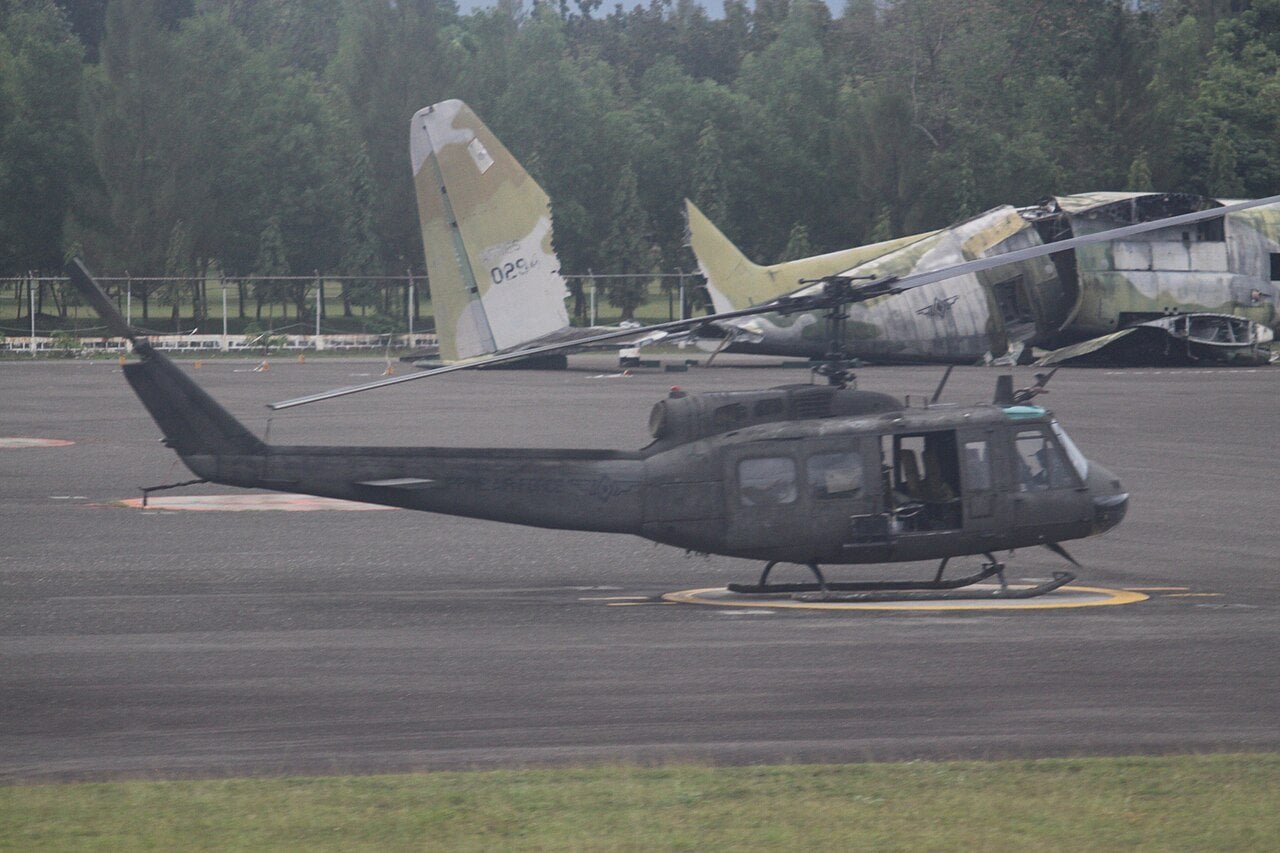
The UH-1 earned its iconic status in the Vietnam War, where the type was first used in combat, as the Philippine News Agency noted. In the Philippines it became something closer to a flying utility truck. Capinguian told reporters it had been used in practically every major combat or humanitarian mission the PAF flew over six decades.
That range is the point. A Huey could lift a squad into a jungle landing zone in the morning and carry rice to a flooded town in the afternoon. In an archipelago of thousands of islands, where typhoons cut roads every year and insurgencies have run for decades, a simple, rugged helicopter with a big sliding door was worth more than its age suggested.
Capinguian also credited the people behind it. Over the years, he said, the helicopters supported military operations and humanitarian efforts across the country, reflecting the dedication of generations of pilots, aircrew and maintenance personnel who kept them flying. Keeping helicopters of that vintage airworthy for more than half a century, in a tropical, salt-laden climate, is no small achievement.
Why the Huey Had to Go
Nostalgia does not keep an air force current. Capinguian said the PAF is shifting to platforms better suited to the requirements of a modern armed force, and that the Huey cannot keep up with those needs. One concrete problem was communications: the Huey's analogue radios sometimes struggled to talk to aircraft fitted with digital systems, according to The Manila Times.
The replacement is already on the flight line. The Sikorsky S-70i Black Hawk, built by PZL Mielec in Poland, is bigger and more powerful, Capinguian said, and comes with a digital communications system. The Philippine News Agency says the brand-new Black Hawks were delivered between 2020 and 2026, giving the PAF a fleet of more than 40 of them.
The Manila Times' video report on the PAF's farewell to the UH-1H fleet.
The handover has been gradual rather than abrupt. By the time of the ceremony, only six Hueys were left on the books, and the Black Hawks had long since taken on the front-line utility work. Afterburner covered the Black Hawk side of the story in August, when the PAF became the world's largest S-70i operator.
Into Storage, Not Yet the Scrapyard
The last six Hueys are not being cut up just yet. The Manila Times reports that they have been handed over from the 205th Tactical Helicopter Wing to the Air Logistics and Support Command, and will go into storage until the PAF decides how to dispose of them.
That leaves the door open for at least one to end up on a plinth or in a museum, which is where a machine with this history belongs. The PAF framed the occasion in exactly those terms. In Capinguian's words, the UH-1H's legacy of service and the dedication of the people behind it will remain part of the institution's enduring heritage.
Around the world, Hueys are getting rarer in uniform. Only days earlier, an HH-60W touched down at Joint Base Andrews to start taking over from the Huey there. In Cebu on 5 November, the Philippines turned the page as well, with a water salute for a helicopter that had served the country since 1969.
Sources: Philippine Air Force (statement by Col. Alvin Jay Capinguian), Philippine News Agency via SunStar, The Manila Times, Inquirer, Manila Bulletin, ABS-CBN News
0 Comments