
The US Air Force will not say why.
On Monday afternoon a US official confirmed to Das Kriegsgebiet that enhanced force protection measures were in effect across RAF Lakenheath and RAF Mildenhall, the two US Air Force bases in Suffolk. The same official declined to describe a single one of those measures.
By then the flight trackers had already noticed something else. Through the late afternoon and evening of 9 November, aircraft began leaving Mildenhall in quick succession, and they did not come back. Six weeks earlier every B-1B Lancer at RAF Fairford had done much the same thing. Nobody explained that one either, until afterwards.
Kurzinfo
- Confirmed: enhanced force protection measures in effect at RAF Lakenheath and RAF Mildenhall, stated by a US official on 9 November 2026
- Aircraft moved: nine KC-135R Stratotankers and three CV-22B Ospreys left Mildenhall on 9 November, per public flight-tracking data reported by ADS Advance
- Reported destinations: Ramstein, Morón and Glasgow Prestwick (ADS Advance); Spangdahlem and Prestwick (The War Zone, citing the tracker DefenceGeek)
- Host units: 100th Air Refueling Wing and 352nd Special Operations Wing at Mildenhall; the 48th Fighter Wing, the Liberty Wing, at Lakenheath
- Flottengröße: the 100th ARW calls itself the sole US tanker wing in USAFE-AFAFRICA and works 17 assigned KC-135s
- Not confirmed: the intelligence behind the moves. The Wall Street Journal reported a rise to FPCON Charlie at both bases; neither the USAF nor the UK Ministry of Defence has confirmed it
- Hintergrund: all 12 B-1B Lancers left RAF Fairford on 4 October after the September security incident there
What the Air Force actually confirmed
Very little, and deliberately so. A US official told Das Kriegsgebiet on 9 November that enhanced force protection was in effect at both installations, and then closed the door on the detail. For operational security reasons, the official said, the Air Force does not discuss specific force protection measures.
US Air Forces in Europe was no more forthcoming about the aircraft. Assets rotate between installations for a variety of reasons, the command said, and it would not provide further information on their movement. Das Kriegsgebiet noted plainly that it was unclear what had prompted the measures, how long they had been in place, or whether they connected to the Fairford investigation at all.
That is the whole of the on-the-record account. Everything else known about 9 November comes from people watching transponders.
Twelve aircraft, one evening
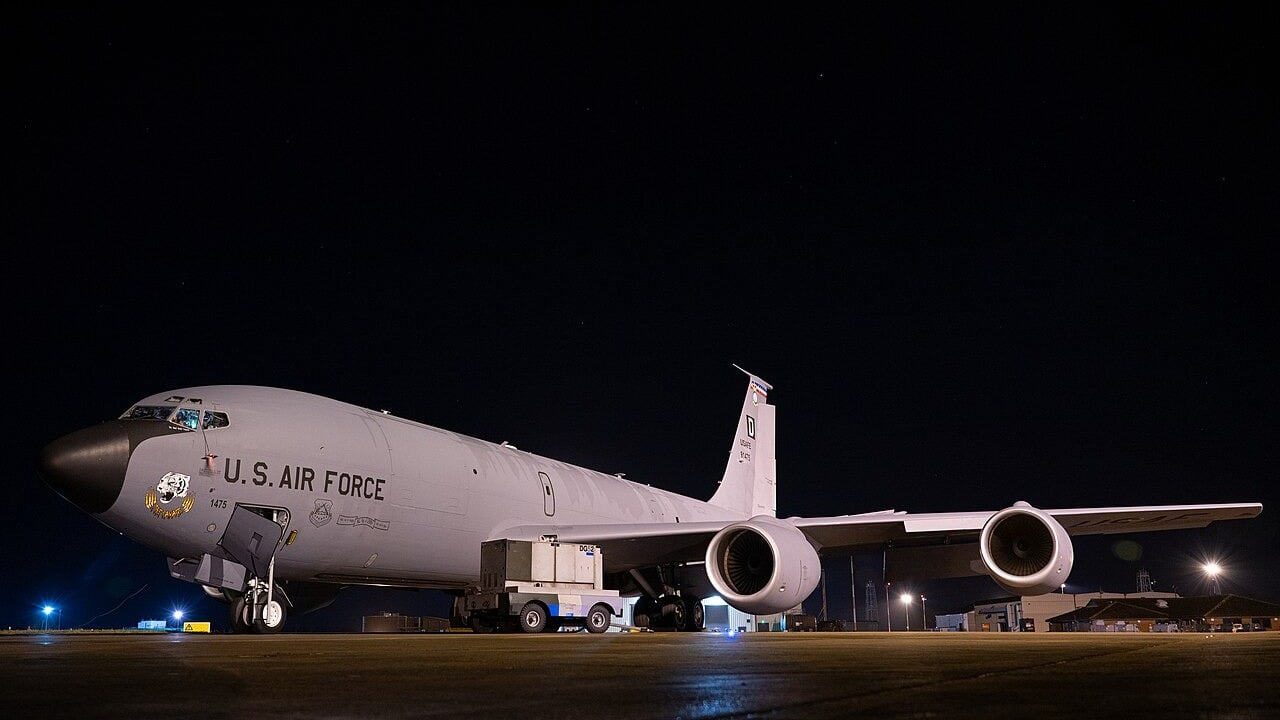
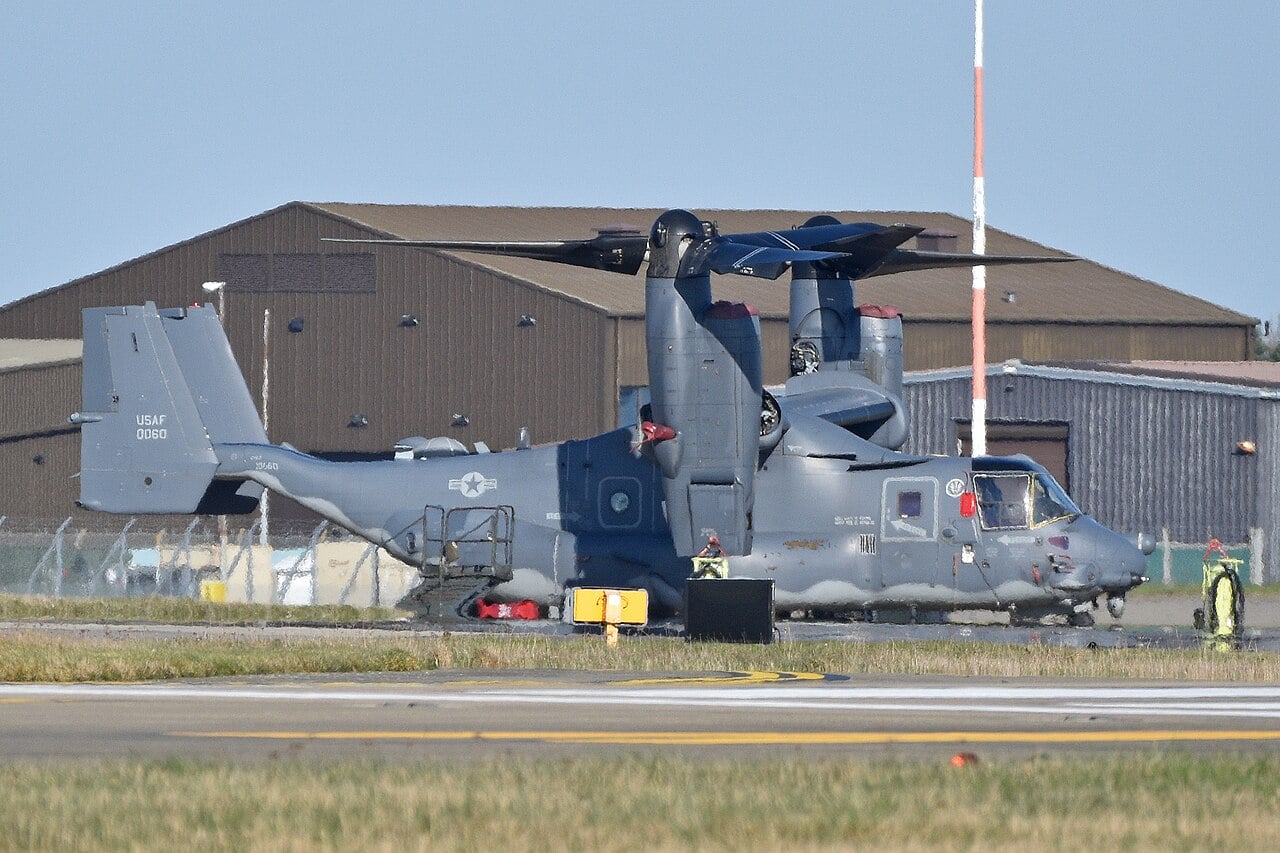
Publicly available flight-tracking data, as reported by ADS Advance, showed nine KC-135R Stratotankers of the 100th Air Refueling Wing and three CV-22B Ospreys of the 352nd Special Operations Wing’s 7th Special Operations Squadron leaving Mildenhall across the late afternoon and evening of 9 November.
Nine tankers is not a footnote. The 100th Air Refueling Wing describes itself as the sole US tanker wing in USAFE-AFAFRICA and says it employs 17 assigned KC-135s. More than half the wing moved in a single evening, from the base that keeps American combat aircraft airborne across Europe.
Where they went is where the accounts diverge. ADS Advance has most of the KC-135Rs going to Ramstein in Germany or Morón in southern Spain, with one turning north for Glasgow Prestwick. Das Kriegsgebiet, citing the open-source tracking account DefenceGeek, has tankers moving to Spangdahlem or Prestwick. Both agree on the Ospreys, which made the short hop west to Lakenheath. The MC-130J Commando IIs of the 67th Special Operations Squadron and the RC-135 Rivet Joint detachment of the 95th Reconnaissance Squadron reportedly stayed where they were.
DefenceGeek’s own post that evening was careful about what it did and did not know. The movements did not appear to be an exercise, the account said; the reason was not currently known; and aircraft were moving to multiple other sites around Europe. That is a tracker describing what a transponder shows, which is not the same thing as an explanation.
Fairford is why nobody read it as routine
Six weeks ago an evening of tanker movements would have been unremarkable. It is not unremarkable now, because of what happened at the bomber base in Gloucestershire.
On 27 September five British nationals were arrested after suspicious activity involving three white vans near the perimeter at RAF Fairford. A UK-Iranian national was arrested separately in connection with suspected preparations for terrorist acts. Several of those detained were later released on bail, and two men were subsequently charged in connection with the wider investigation. On 4 October all 12 B-1B Lancers forward-deployed at Fairford flew home to the United States.
British Prime Minister Andy Burnham later said there were strong indications that Iran had played a part in the Fairford incident. Tehran has denied any involvement. Since February 2026, B-1Bs and B-52H Stratofortresses have launched strikes against Iran from Fairford in support of Operation Epic Fury, which is precisely why the base, and the tanker fleet that feeds it, are worth protecting.
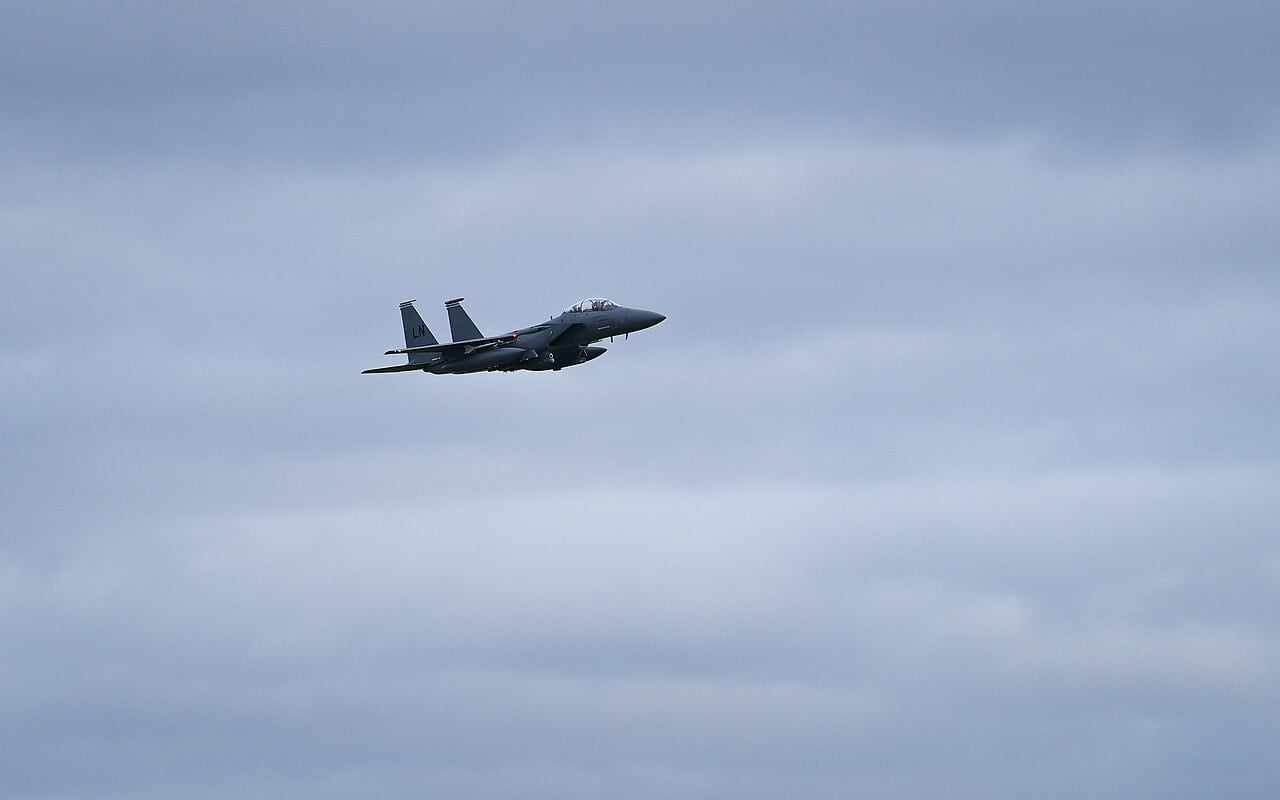
Lakenheath is the other half of the picture. The 48th Fighter Wing, known as the Liberty Wing, operates F-15E Strike Eagles and F-35A Lightning IIs from it, and unlike a tanker fleet those aircraft cannot simply be parked somewhere quieter for a week without visibly degrading what the wing can do.
What is reported, and what is actually confirmed
The gap between those two things is wide enough to be worth setting out plainly.
Confirmed on the record: that force protection has been raised at both bases. Nothing else. Reported by The Wall Street Journal and repeated widely: that the aircraft began leaving after intelligence indicated a potential Iranian threat to Mildenhall, and that both bases went to FPCON Charlie, the second-highest level in the US force protection system, used when intelligence indicates terrorist action is likely. The Journal also reported that US officials were still arguing over whether the intelligence pointed to a general threat or a specific attack. Neither the USAF nor the UK Ministry of Defence has confirmed any of it.
Some claims circulating are thinner still. One Indian outlet reported a Mildenhall KC-135R continuing to Tel Aviv; no other report reviewed for this piece mentions that leg. DefenceGeek also posted a correction of sorts, noting that the Mildenhall NOTAMs being passed around as evidence were routine notices for Veterans Day and Thanksgiving and had nothing to do with the dispersal. Open-source reporting is fast and often right. It is also where a bad inference travels furthest before anyone checks it.
What is not in dispute is the logic. A parked tanker is a large, soft, expensive target, and the lesson of the past two years is that it does not take a cruise missile to wreck one. Dispersal costs sorties and crew rest and spare parts; it does not cost airframes. Air forces have been relearning that trade since the first cheap drone got through a fence.
A KC-135R of the 100th Air Refueling Wing departing Mildenhall in a crosswind, filmed from the fence line. The tanker wing works through this cycle every day; what was unusual on 9 November was the number that went at once, and that most of them did not come home.
Six days before the dispersal, spotters at the same fence recorded a pair of RC-135 Rivet Joints leaving Mildenhall alongside the C-17s, Ospreys and Hercules traffic that make the base one of the busiest American ramps in Europe. Those aircraft reportedly stayed put on 9 November, which is itself a small piece of evidence about what the Air Force was and was not worried about.
For now the position is simple to state and impossible to interpret. Security is up at both bases, the Air Force will not say why, more than half a tanker wing has gone somewhere else, and the only official explanation on offer is that aircraft move around. Readers who remember 4 October will have their own view on how long that holds.
Sources: The War Zone, ADS Advance, Sky News, The Wall Street Journal (as reported by ADS Advance), lakenheath.af.mil, mildenhall.af.mil, The Week.

0 Comments