
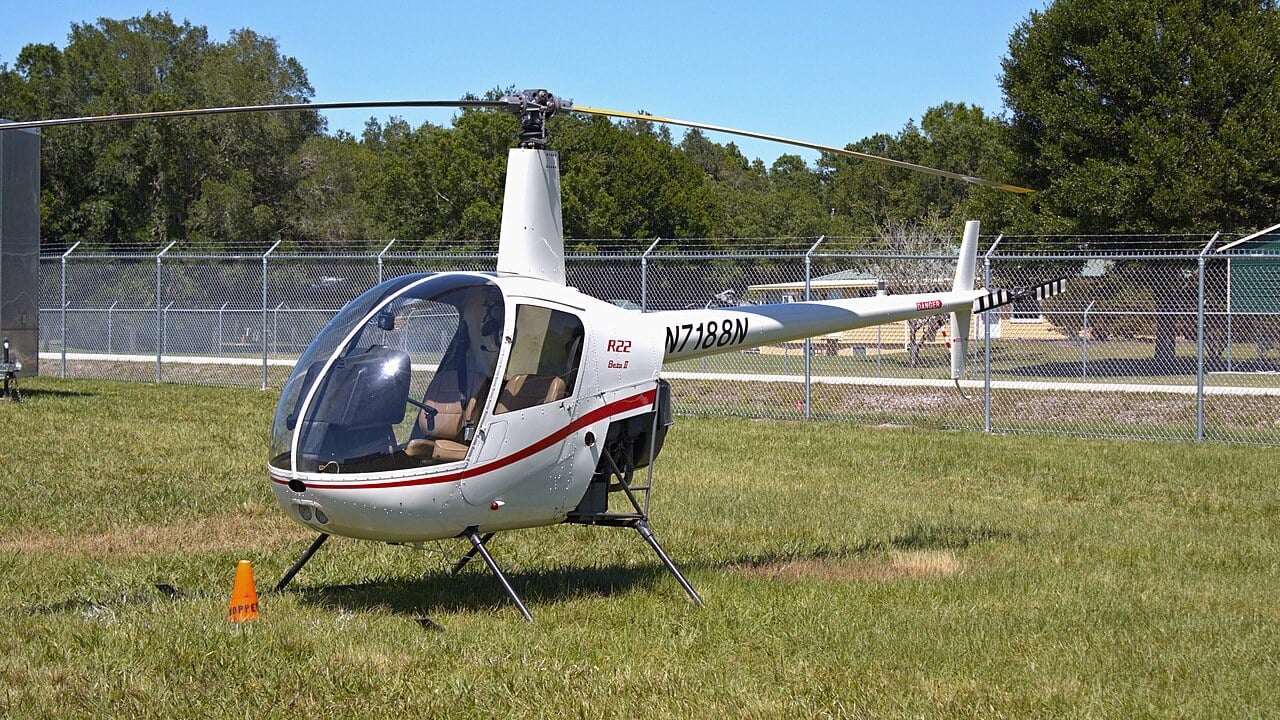
Walk onto almost any helicopter flight school ramp in the world and you will find them: small, bubble-canopied machines with a single slender tail boom and two long, thin rotor blades. They are Robinsons, and for decades they have been where most helicopter pilots learned to hover.
The two-seat Robinson R22 and the four-seat R44 made helicopter flying affordable in a way nothing before them had. They also came with a special federal regulation, SFAR 73, written specifically for them.
Why would the FAA single out one manufacturer’s helicopters for extra training rules? The answer says a lot about how these machines fly, and about what every new Robinson pilot has to learn first.
Kurzinfo
- R22: Two-seat, single piston engine, two-bladed teetering rotor; designed from 1973, FAA certified 1979
- R44: Four-seat development; first flight 31 March 1990, certified December 1992
- Controls: R22: unboosted push-rod controls and a T-bar cyclic; R44 Raven and later: hydraulically assisted
- SFAR 73: Special FAA training rule for the R22 and R44, first issued in 1995
- Ground training: Energy management, mast bumping, low rotor rpm and rotor stall, low G, rotor rpm decay
- Solo (no helicopter rating): At least 20 hours of dual in the model; endorsement valid 90 days
- Pilot in command: 200 helicopter hours incl. 50 in type, or 10 hours of specific training plus endorsement
- Expiry: SFAR 73 expires 22 August 2029 unless revised
Frank Robinson’s cheap helicopter
Frank Robinson, who had worked at Bell Helicopter and Hughes Helicopters, founded the Robinson Helicopter Company in 1973 and began designing the R22 the same year. It was a deliberately simple machine: a two-seat cabin, a Lycoming piston engine, a two-bladed semi-rigid “teetering” main rotor and a two-bladed tail rotor. The FAA certified it in 1979, and deliveries began that year.
Simplicity meant low cost, and low cost changed the industry. The Smithsonian, which holds an early R22 flown during its certification trials at the Steven F. Udvar-Hazy Center, sums it up neatly.
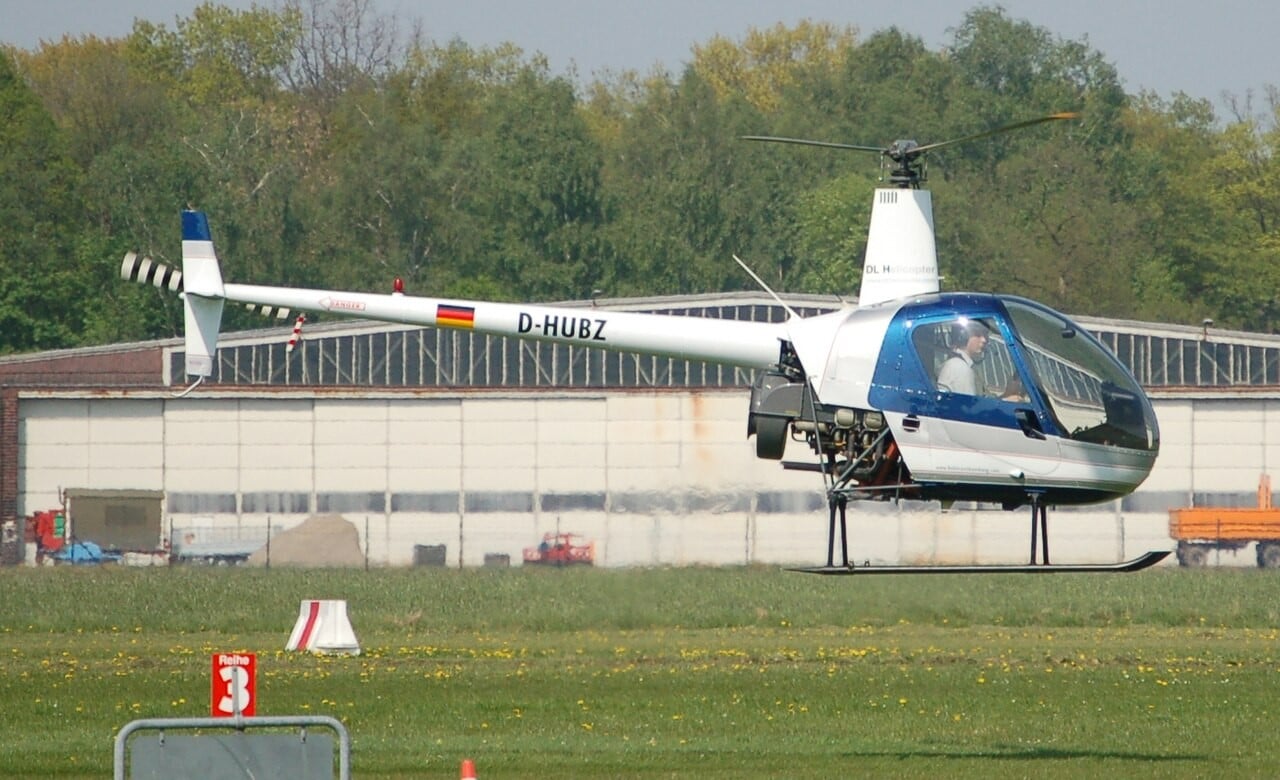
The R22 became a primary trainer around the world, as well as an entry-level private helicopter and a working tool for mustering cattle on big ranches and stations. Thousands have been built: the Smithsonian counted more than 3,700 by the end of 2004.
The R44 and the four-seat market
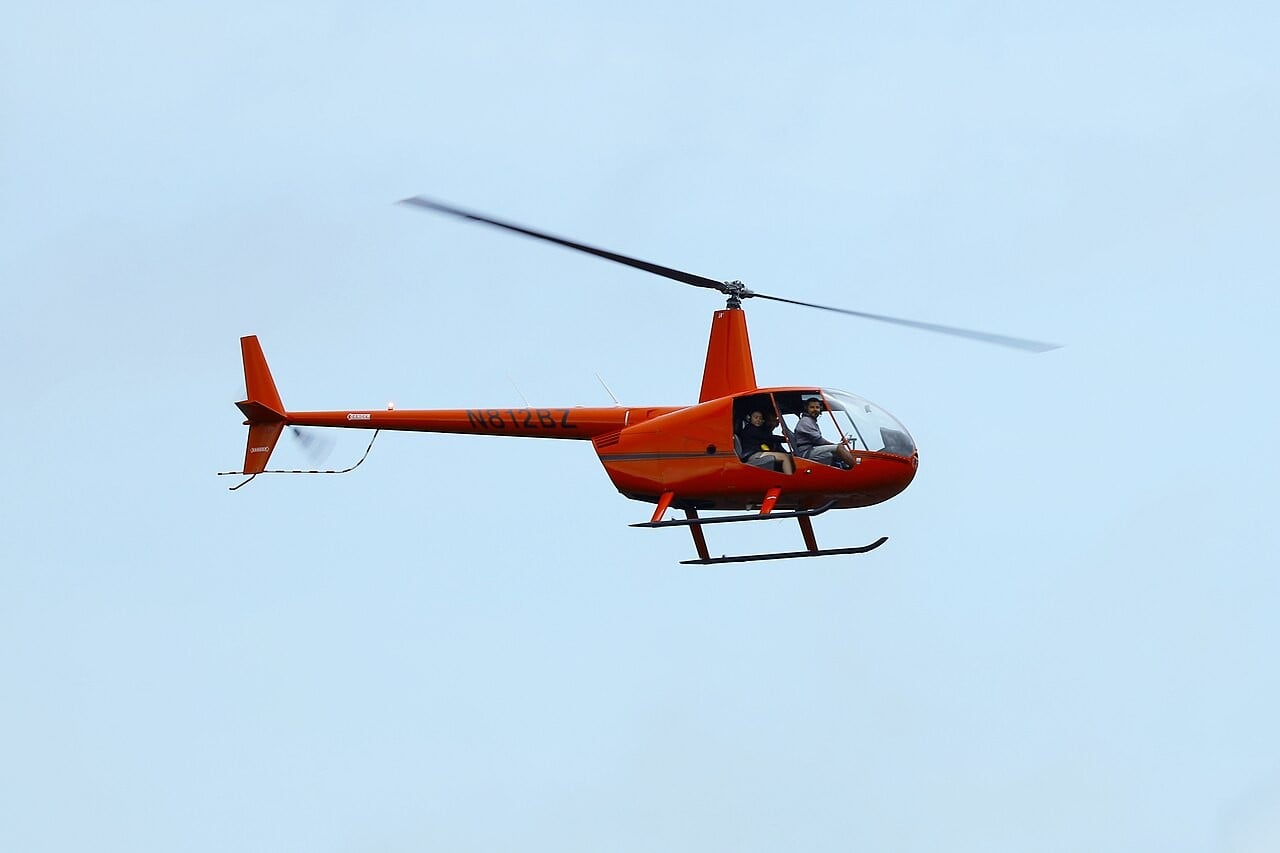
The R44 followed. It first flew on 31 March 1990 and was certified in December 1992, scaling up the R22 concept to four seats with a larger engine. The Raven, introduced in 2000, added hydraulically assisted controls, and the Raven II of 2002 brought a more powerful fuel-injected engine.
The R44 made its own headlines. In 1997, Jennifer Murray flew R44 G-MURY around the world with instructor Quentin Smith, becoming the first woman to fly a helicopter around the globe. In 2000 she did it again, solo. That helicopter is now at the Smithsonian too.
Light controls, low inertia
Robinsons have a reputation for being sensitive, and it is earned. The R22’s flight controls are connected by push rods with no hydraulic boost, and its rotor has very low inertia. The controls reward a light touch and punish overcorrection, which is one reason pilots who master an R22 tend to transition easily to bigger helicopters.
Low rotor inertia also means rotor rpm can decay quickly if the engine fails or the pilot mishandles the collective. Let it decay far enough and the blades stall, which is why low rotor rpm, rotor stall and prompt autorotation are such central parts of Robinson training.
A full-down autorotation in a Robinson R22, filmed by Flying Farmer 44: the manoeuvre at the heart of SFAR 73 flight training.
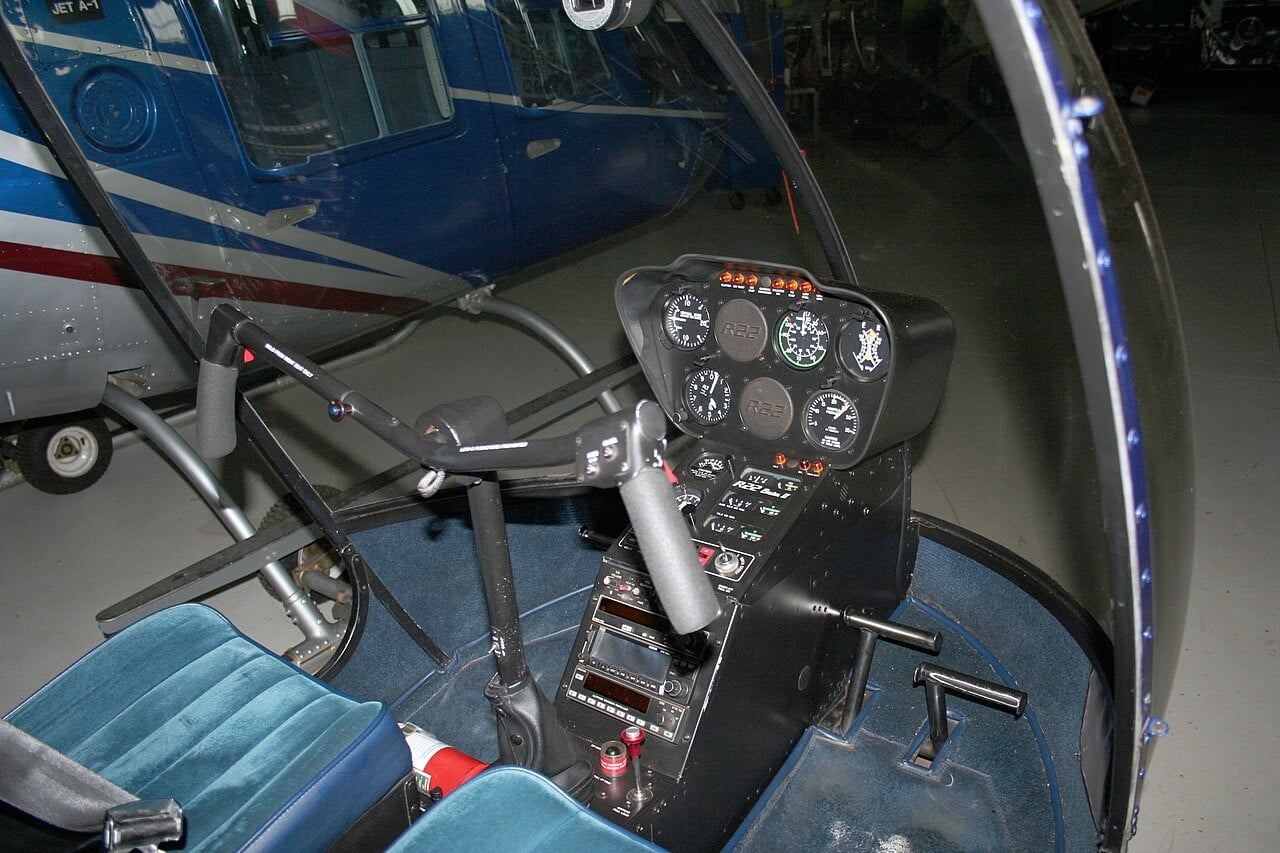
Then there is the cockpit itself. Instead of a cyclic stick between each pilot’s knees, the R22 has a single teetering T-bar that comes up from the console between the seats, with a grip hanging down on each side. When one pilot flies, the other grip rises about a foot above the other seat, so R22 instructors learn to fly with a hand in the air.
Mast bumping and the road to SFAR 73
The teetering rotor brings a specific hazard: mast bumping. If the rotor is suddenly unloaded, for example by pushing the cyclic forward after a climb or by mishandling turbulence, the helicopter can start to roll. Large control inputs in that low-G state can make the rotor hub strike the mast, and in severe cases the rotor separates or the blades hit the fuselage.
According to the FAA, the R22 had a high number of fatal accidents involving main rotor and airframe contact compared with other piston helicopters, and many were linked to pilot performance or inexperience, with low rotor rpm or low-G conditions leading to mast bumping. In 1995 it issued Special Federal Aviation Regulation No. 73, and it applied the rule to the newly certified R44 too because of its similar design. The NTSB followed with a special investigation report in April 1996.
What SFAR 73 actually requires
SFAR 73 applies to anyone who wants to manipulate the controls, act as pilot in command, give training or conduct a flight review in an R22 or R44. Before touching the controls, a pilot needs ground training from a specially authorised instructor, endorsed in their logbook, covering energy management, mast bumping, low rotor rpm and rotor stall, low-G conditions and recovery, and rotor rpm decay.
To act as pilot in command of an R22, a pilot needs either 200 hours in helicopters with 50 in the R22, or 10 hours of R22 flight training covering autorotations, energy management, rpm control without the governor and low rotor rpm recovery, plus an instructor endorsement. The R44 rules are similar, and up to 25 hours of R22 time can count toward the 50 hours in type.
Helicopter Training Videos explains the 2024 changes to SFAR 73 for R22 and R44 pilots and instructors.
Students without a helicopter rating need at least 20 hours of dual instruction in the specific model before going solo, and their solo endorsement is valid for 90 days. Instructors need 200 helicopter hours, 50 of them in the type, specific emergency training, and an endorsement from an FAA inspector or designated examiner. Flight reviews and passenger-carrying currency must be done in the model being flown.
In July 2024, the FAA revised the rule. Because Airworthiness Directives issued in 1995 prohibit intentionally inducing low-G flight in the R22 and R44, it removed the requirement to demonstrate low-G manoeuvres in flight training; low-G hazards are now covered in ground training. It also gave the SFAR an expiration date of 22 August 2029, giving the FAA time to decide what should become permanent.
Robinson’s own safety notices say the same thing more bluntly. Safety Notice SN-11, first issued in 1982 and revised in July 2025, is headed “Low-G pushovers – extremely dangerous”, and explains that the rotor must be reloaded with gentle aft cyclic before lateral cyclic can stop a roll.
A training film on mast bumping: what causes it and how pilots prevent it.
Warum es immer noch wichtig ist
More than four decades after the first R22 was delivered, the FAA still describes it as frequently used in initial student pilot training, because Robinsons are affordable to buy and to run. SFAR 73 is the price of that bargain: a reminder that a light, simple, low-inertia helicopter demands respect and specific training.
For a new helicopter pilot, that is not a bad way to start. Learn energy management, rotor rpm and low-G hazards in the most demanding small helicopter on the ramp, and every bigger, heavier machine afterwards feels a little more forgiving.
Sources: 14 CFR Part 61 SFAR No. 73 (eCFR), Federal Register 89 FR 59602 (23 July 2024), Robinson Helicopter Company Safety Notice SN-11, Smithsonian National Air and Space Museum, Wikipedia (Robinson R22; Robinson R44; Robinson Helicopter Company)
0 Comments