
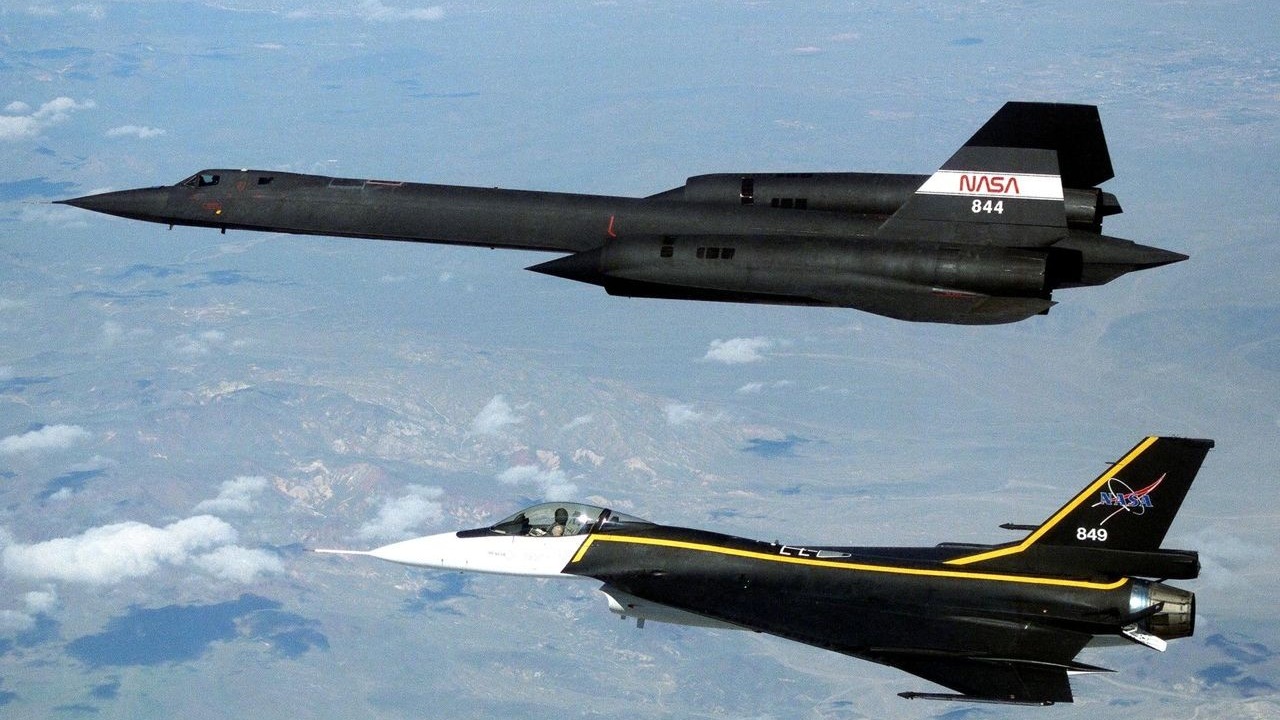
Twenty-seven years ago today, on 9 October 1999, a black aeroplane with NASA 844 on its fin took off from Edwards Air Force Base for an open-house display and landed again. Nobody knew it was the last flight any SR-71 Blackbird would ever make. The aircraft went onto a display pad, and the fastest air-breathing crewed jet in history became a monument.
This autumn the monument is gone from its pad, NASA is sounding out old Blackbird hands, and on 7 October The War Zone asked the question every enthusiast has argued about in a bar: could the SR-71 be modified to fly at Mach 4? The man they asked had actually studied it. Tim Conners was NASA Dryden’s lead SR-71 propulsion engineer in the 1990s, and in the early part of that decade he ran the numbers on pushing the aircraft beyond its record.
His answer, and the answer of the pilots who flew it, is more interesting than yes or no. The Blackbird was never short of thrust. It was short of cool air. Understanding why tells you almost everything about how the SR-71 worked, and what an SR-71 Mach 4 testbed would really have to be.
Kurzinfo
Aircraft in question: NASA 844, Lockheed SR-71A serial 61-7980, last flown 9 October 1999 at Edwards AFB
Absolute speed record: 2,193.2 mph, about Mach 3.3, set by SR-71A 61-7958 on 28 July 1976
Design point: Mach 3.2 cruise on a standard day; the flight manual limit was Mach 3.3
The real limit: Compressor inlet temperature of 427 °C (800 °F) at the face of the J58 engine
Thrust above Mach 3: Inlet 54 per cent, ejector nozzle 28.4 per cent, the engine itself only 17.6 per cent
Air temperature at Mach 4: About 637 °C at the engine face in a standard stratosphere, roughly 210 °C over the J58 limit (Afterburner calculation)
Kraftstoff: JP-7, so stable it needed triethylborane (TEB) to light, and the aircraft’s only heat sink
Mach 3.3 was a temperature, not a speed
The official record belongs to SR-71A 61-7958, flown by Capt. Eldon Joersz and Maj. George Morgan on 28 July 1976: 2,193.2 mph over a straight course, roughly Mach 3.3. That number has stood for half a century, and it is easy to assume it marks where the Blackbird ran out of puff.
It does not. The aircraft was designed around a cruise of Mach 3.2 on a standard day, and the flight manual capped it at Mach 3.3. The thing doing the capping was a thermometer. A probe in front of each engine measured compressor inlet temperature, or CIT, and above 427 °C, about 800 °F, the J58’s front end was in trouble. Blackbird historian Paul Crickmore made the same point to TWZ this week: CIT was the primary critical limitation.
The physics is pleasingly simple. Slow air down from flight speed to the near-standstill an engine can swallow and its kinetic energy reappears as heat. In the stratosphere, where the standard temperature is minus 56.5 °C, the stagnation temperature at Mach 3.2 is about 387 °C. At Mach 3.3 it is about 415 °C. The 427 °C line arrives at almost exactly Mach 3.34, which is why the record sits where it does. At Mach 4 the same sum gives about 637 °C, some 210 degrees past the limit.
Because the limit was a temperature, the top speed moved with the weather. Thomas said the SR-71 was not power-limited at all; flying faster would simply exceed the inlet temperature limit, along with other heat and structural limits. The late SR-71 pilot David Peters, quoted this week by the Habubrats SR-71 account on X, described being held below Mach 3 on unusually warm days and seeing Mach 3.49 on a cold one without getting near 427 °C.
Brian Shul has written that he exceeded Mach 3.5 over Libya in April 1986 while evading a missile. So the aircraft could go past its record, briefly, when the air was cold enough. Mach 4 is a different proposition.
The engine that turned itself into a ramjet
To see why the limit sits at the front of the engine, you have to understand that the Pratt & Whitney J58 was not really the Blackbird’s engine at all. It was one part of a propulsion system with three: the inlet, the J58 inside its nacelle, and an ejector nozzle that formed part of the airframe.
Above Mach 3 in maximum afterburner, the inlet produced 54 per cent of the thrust, the ejector 28.4 per cent and the engine just 17.6 per cent. NASA puts it more bluntly in its own caption material: less than 20 per cent of the thrust used to fly at Mach 3 came from the basic engine.
The trick that made this possible was Pratt & Whitney engineer Robert Abernethy’s bleed bypass. Six prominent tubes on the outside of each J58 took 20 per cent of the compressor air after the fourth stage and dumped it straight into the afterburner. At high Mach the engine effectively stopped behaving like a turbojet and started behaving like a ramjet with a turbojet in the middle, with an 80 per cent pressure loss from compressor to exhaust, typical of a ramjet. Up front, a conical spike began creeping aft at Mach 1.6 and kept retracting as speed built, holding the shock waves where the inlet could use them.
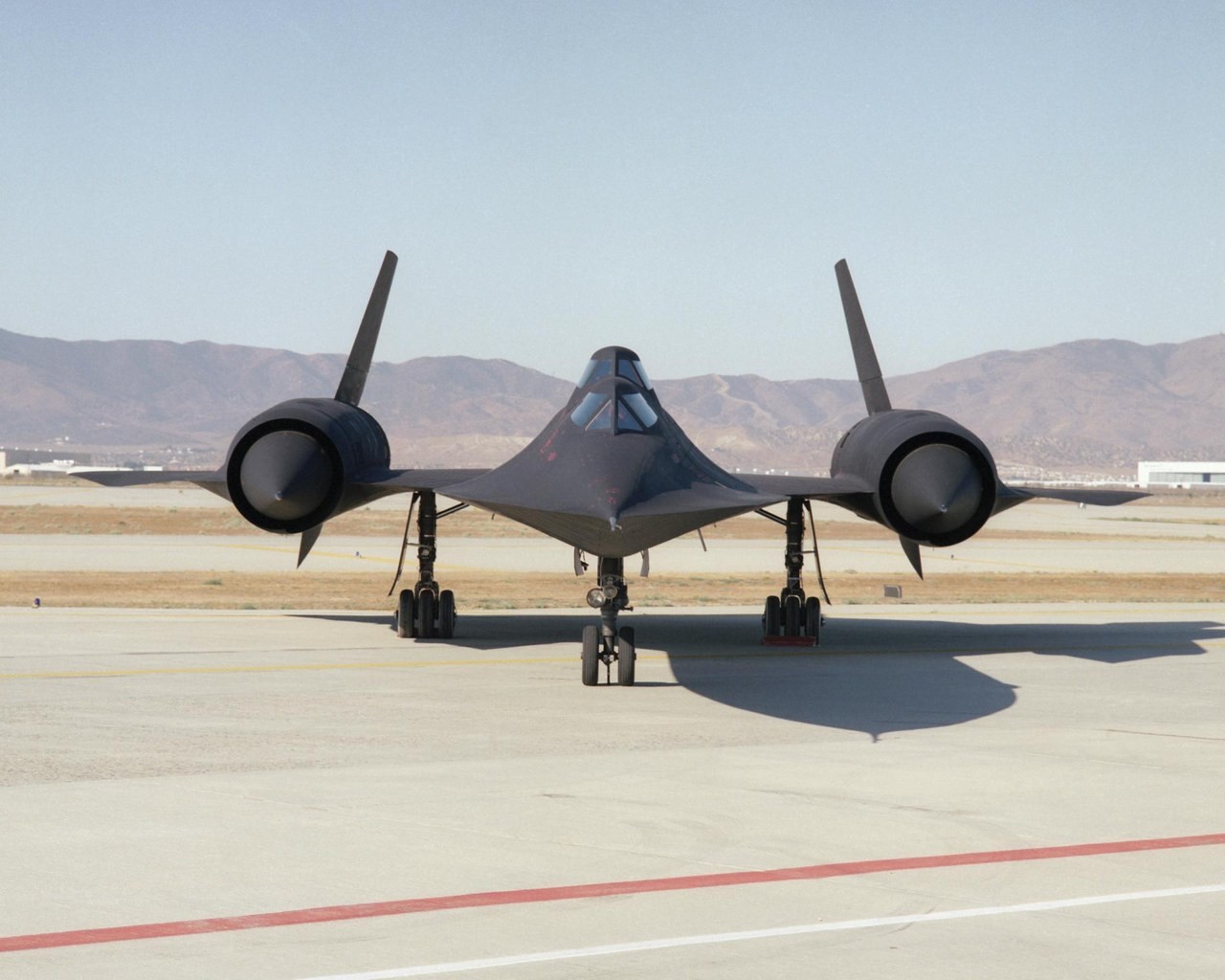
That design is why the Blackbird was most efficient at the top of its envelope, and why it hit a wall there. The J58 still had to pass air through its compressor, and that compressor was made of metal that had a temperature it could not exceed. Conners told TWZ the speed limitation was driven primarily by the material strength of the engine front frame.
The Air Zoo on the Pratt & Whitney J58, the engine that behaved like a turbojet on take-off and increasingly like a ramjet at cruise.
The second wall: shock waves
Suppose you solved the temperature problem. The next wall is aerodynamic, and it is built into the inlet geometry.
In the account quoted by TWZ, Peters put the as-built limiting speed at around Mach 3.55. That is where the spike, already fully retracted, loses the intercept on the shock wave and can no longer position it correctly in the inlet. At the same time, he said, the shock starts spilling over the wing and interfering with the flight controls.
Anyone who has read about inlet unstarts knows why that matters. When the shock system was mispositioned, it could pop forward out of the inlet in an instant, killing the afterburner on one side and slewing the aircraft so violently that crews’ helmets struck the canopy. An inlet that cannot hold its shock at Mach 3.6 is not a minor inconvenience.
Conners is more optimistic on this point. Shock effects at the inlet, he told TWZ, can be accommodated by rescheduling the spike movement and perhaps the bypass schedules. Not simple, he added, and every change would need careful envelope expansion. But not impossible.
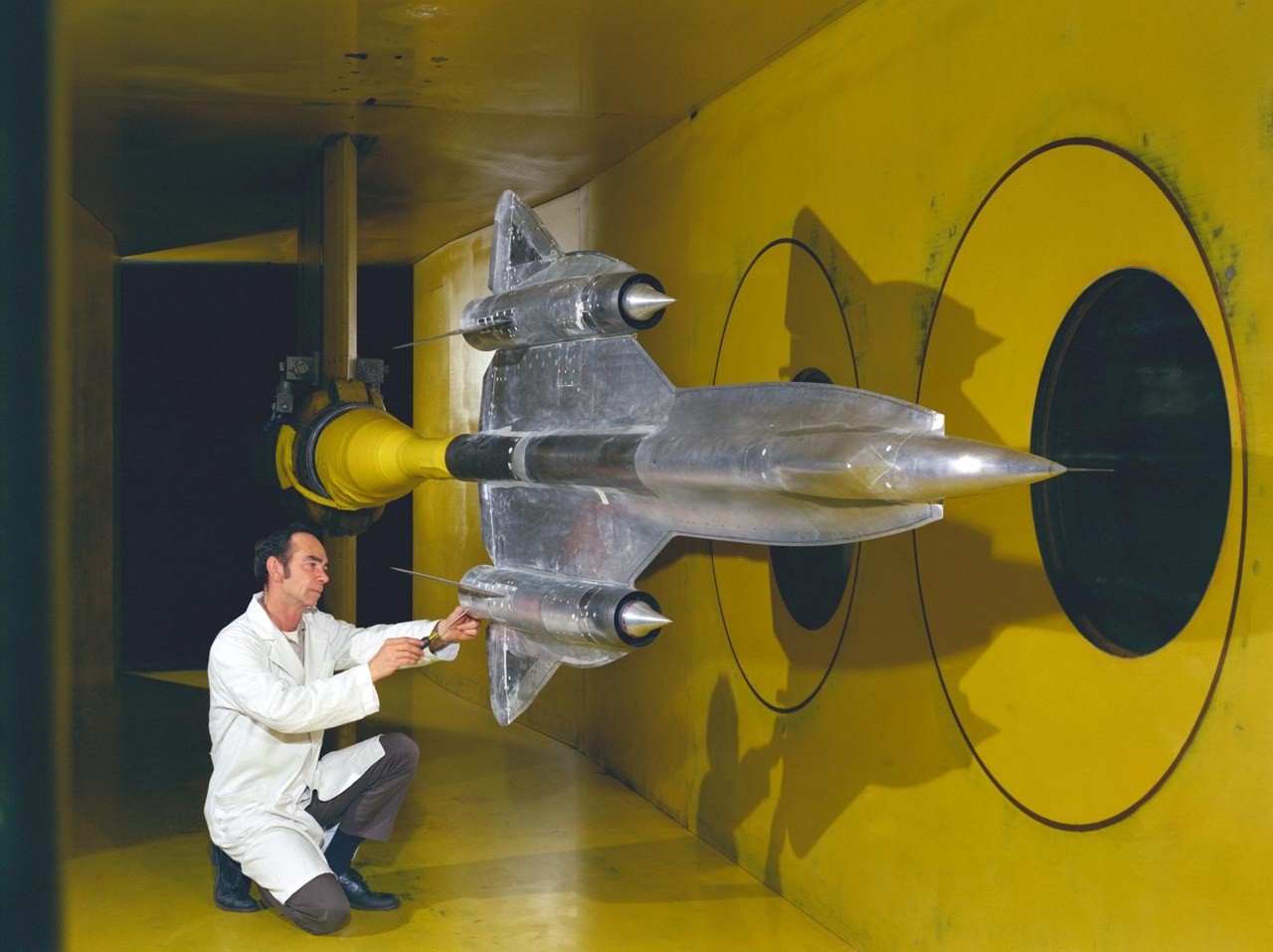
The NASA study that never left the desk
So what did Conners actually propose? Not cooling the engine structure. Cooling the air before it reached it.
The concept, he told TWZ, was spray cooling of the incoming airflow to lower its bulk temperature, used only when accelerating beyond about Mach 3.4. The aircraft would make brief excursions to a higher Mach number and then come back. The engineering name for the family of ideas is mass injection pre-compressor cooling: spray water, or water and liquid oxygen, ahead of the compressor so the engine sees cooler, denser air than the flight condition would give it. A later NASA Dryden study of the idea for F-4 Phantom II Und F-15 Eagle launch aircraft describes the engine seeing an apparent Mach number lower than the actual flight Mach number. DARPA studied it in its RASCAL space-launch programme, ground-testing it on F100 engines, before the programme was scaled back in 2006.
The catch, Conners said, is what happens when it fails. If the system clogs or freezes at high speed, the crew has to slow down in a hurry to protect the engines. His own work never got beyond sizing tank volume and choosing candidate coolants. NASA’s leadership, he said, was not interested in the risk, and nobody was asking for that Mach range.
Read that carefully, because it is the heart of the matter. The airframe, by the estimate NASA was given, could stand brief excursions near Mach 4. The engine could not. Change the engine and the limit moves to the airframe.
Heat, titanium and a fuel that would not burn
Everything else on the aircraft was also tuned to Mach 3.2. Titanium made up 85 per cent of the structure, and Lockheed chose an alloy that was easier to work but softened at a lower temperature. At cruise the outer skin ran well beyond 260 °C and the windscreen exterior could reach about 320 °C. The panels were deliberately loose on the ground and only closed up as the airframe heated and grew by several inches, which is why the aircraft famously leaked fuel on the ramp.
The fuel was the cooling system. JP-7 soaked up heat from the cockpit, the avionics and the hydraulics before it was burned, and it reached the engine fuel nozzles at about 316 °C. It was so stable that the J58 needed a shot of triethylborane, which ignites on contact with air, to light it, and the tell-tale green flash became part of Blackbird lore.
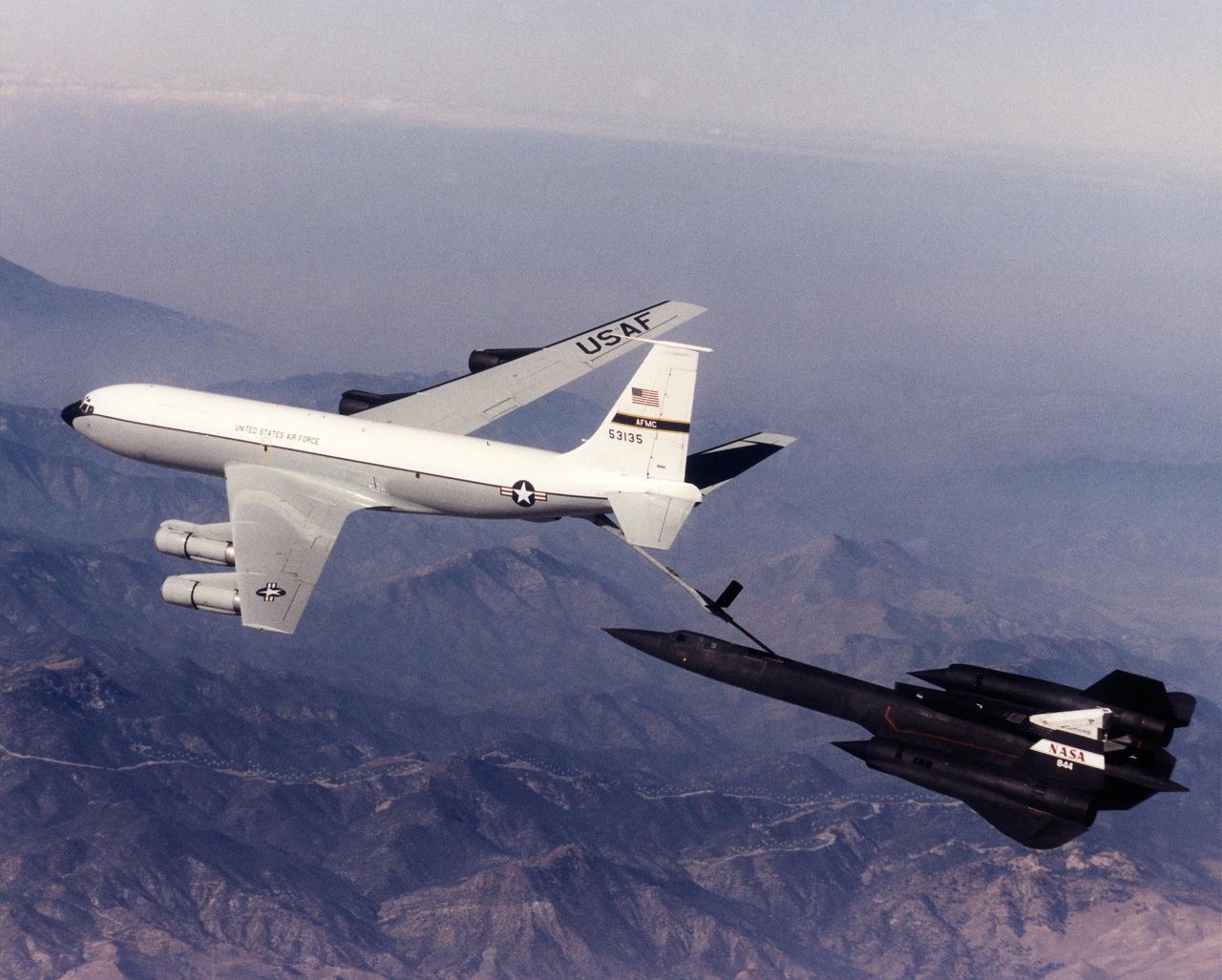
Push the stagnation temperature from roughly 390 °C to well over 600 °C and every one of those margins shrinks at once. More heat into the fuel, hotter skin, more thermal growth. Conners framed the boundary neatly when explaining why so many new systems cluster between Mach 2 and Mach 4: stay below the speed that demands more exotic metals, he said, and you stay in the titanium regime, flying up to Mach 3.5 with brief excursions to about Mach 4. That is the corner of the envelope a modified Blackbird would live in. Not a cruise. A dash.
And the fuel itself is gone. NASA’s JP-7 stockpile at Edwards was discarded about 20 years ago, Conners said, although he understood refiners believe a suitable surrogate can be made. That is not a showstopper. It is one more line in a very long list.
What an SR-71 Mach 4 testbed would actually be
Which brings us back to NASA 844. Conners told TWZ that, based on inspection, its J58s are unserviceable after 27 years of sitting still: flattened bearings, cracked seals, fuel turned to gunk in the lines. That is why, if the airframe flies again, he expects it to fly with something else.
Different engines, he said, would have to be high-Mach bypass systems, and he declined to say whose. The interesting part is what that would make the aircraft. An SR-71 Mach 4 project would not be a speed record attempt. It would be a flying test stand for exactly the regime where a combined-cycle engine hands over from its turbine to a ramjet or scramjet, the same concept behind Lockheed’s SR-72 idea, on an airframe that is no longer classified.
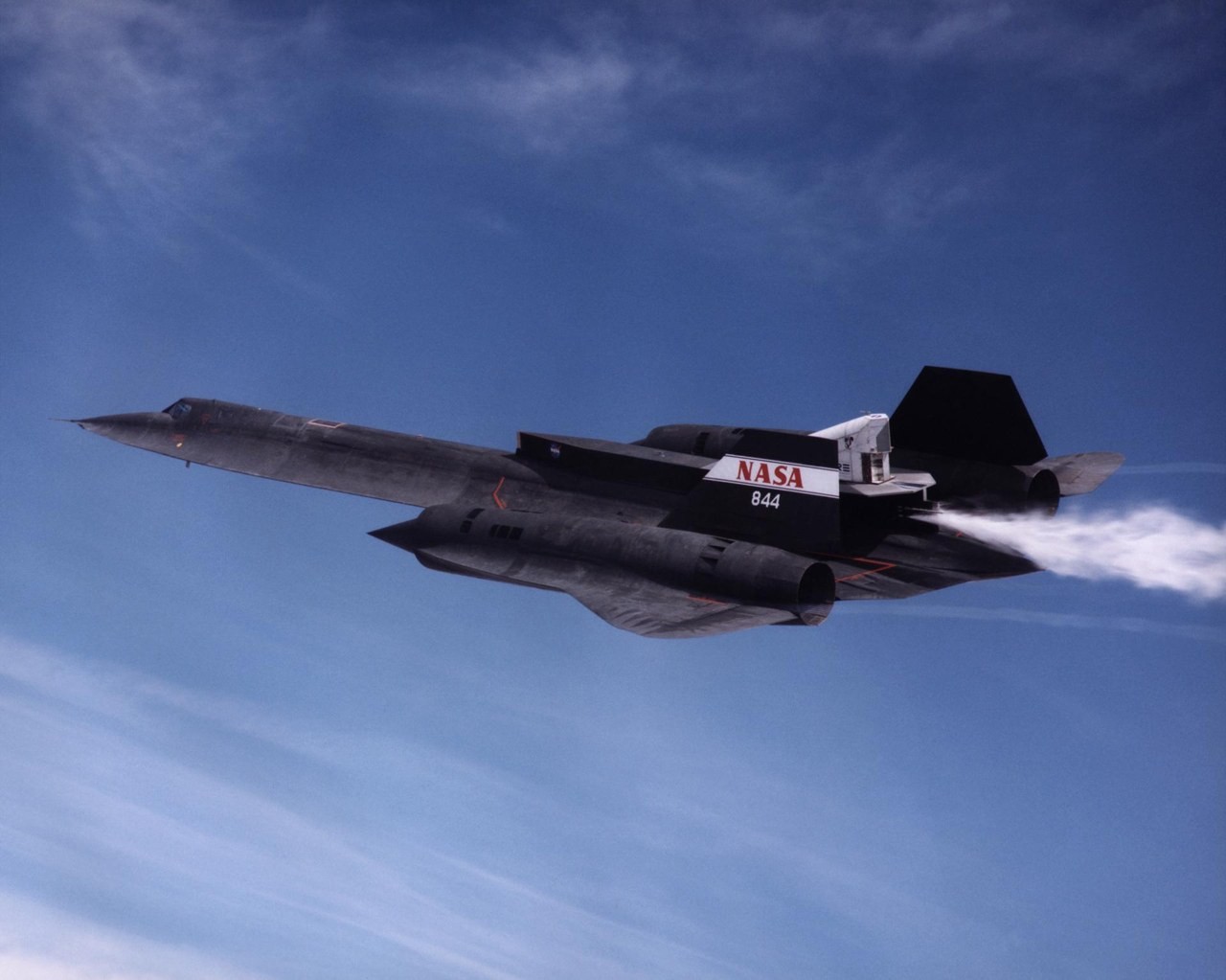
NASA has done this sort of thing to 844 before. In 1997 and 1998 it carried the Linear Aerospike SR-71 Experiment on its spine, a package Conners puts at 20,000 to 25,000 pounds. Getting the aircraft through the transonic drag rise with that load was part of his job. Armstrong still has a deep bench for modifying titanium structure, he said, if it wanted to.
TWZ’s editor-in-chief Tyler Rogoway made the wider point on X this week: learning how to get the aircraft back into the air could be as valuable as the flight testing itself.
NASA, for its part, has said nothing about engines, speeds or plans. Its latest statement on 844, given to Aviation Week, was that it has no additional information to share. Everything above is informed speculation from people who worked on the aircraft, and it should be read that way.
NASA Armstrong footage of 844 carrying the Linear Aerospike SR-71 Experiment over the Mojave, the last time the airframe was rebuilt around a propulsion test.
So, could it?
Strip away the bar-room version and the engineering answer is reasonably clear. The original SR-71 could not reach Mach 4: the J58 would have cooked its own front end around Mach 3.34 on a standard day, and the inlet would have lost its grip on the shock wave somewhere around Mach 3.55 even if it had not.
A modified SR-71 is another matter. Cool the incoming air, or install an engine built for that temperature, and reschedule the inlet, and the people who knew the aircraft best believed the airframe could make brief dashes near Mach 4. Not cruise there. Touch it, and come back.
For half a century the Blackbird’s speed has been a story about how fast it went. If NASA really is rebuilding 844 around new engines, the next chapter will be about something else entirely: what it can teach the aircraft that come after it. That would be a fitting second career for a jet that was always limited by the air, never by its nerve.
Sources: The War Zone, Howard Altman, Thomas Newdick and Tyler Rogoway, “Could NASA’s SR-71 Blackbird Be Modified To Reach Mach 4?” (7 October 2026) and Howard Altman and Tyler Rogoway, interview with Tim Conners (2 October 2026); Hush-Kit, interview with SR-71 pilot BC Thomas (6 February 2021); Habubrats SR-71 on X (6 October 2026); Edwards AFB / AFMC, “Mission Possible: Pilots, crew relive absolute speed record”; Vintage Aviation News, final flight of the SR-71; NASA image library captions (EC91-0365-7, EC95-43024-2, EC97-44295-114, EC98-44440-4, ARC-1971-AC71-1988); Kloesel and Clark, NASA Dryden, Preliminary MIPCC-Enhanced F-4 and F-15 Performance Characteristics for a First-Stage Reusable Launch Vehicle; The Aviationist, SR-71 engine nacelles (2019); Wikipedia, Lockheed SR-71 Blackbird and Pratt & Whitney J58. Stagnation temperatures are Afterburner’s own calculation for a standard atmosphere at minus 56.5 °C.
0 Comments