
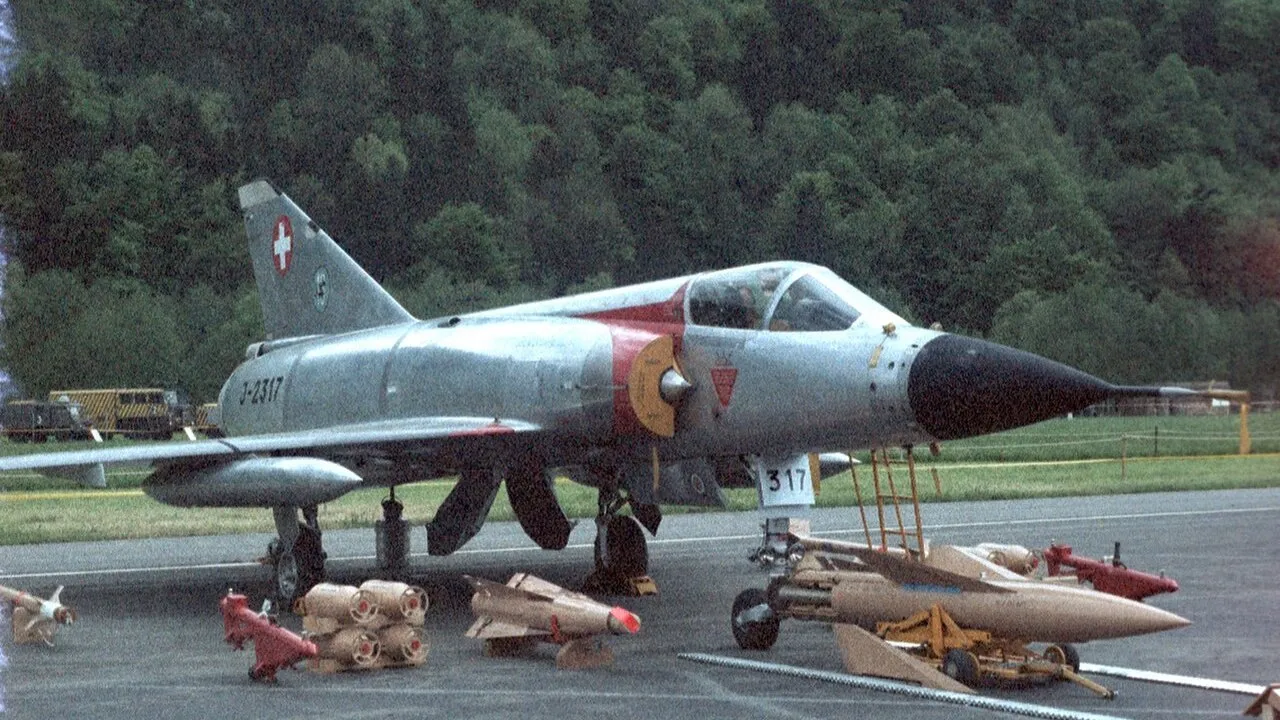
In the spring of 1964, the Swiss government put a number before parliament that took the country by surprise. The 100 French fighters it had bought three years earlier for 871 million francs would need another 576 million. Parliament refused to even debate the request. Instead it did something it had never done in the history of the federal state: it set up a parliamentary inquiry.
What followed was the Swiss Mirage affair. Within two years it had cut the fighter order almost in half, cost the commander of the air force his job, pushed out the chief of the general staff and ended the career of the defence minister. It also changed how Switzerland buys weapons to this day.
Kurzinfo
- Flugzeug: Dassault Mirage IIIS, licence-built in Switzerland
- Original order: 100 aircraft, 871 million francs (approved 21 June 1961)
- Extra credit requested: 576 million francs, dispatch dated 24 April 1964
- Projected total: 1,447 million francs for 100 aircraft
- Inquiry: First parliamentary inquiry commission in Swiss history, chaired by Kurt Furgler
- Report: 1 September 1964
- Final order: 57 aircraft: 36 IIIS interceptors, 18 IIIRS reconnaissance jets, plus trainers
- Consequences: Air force commander Etienne Primault removed; chief of general staff Jakob Annasohn left; Paul Chaudet resigned in 1966
- Last Swiss Mirage flight: 17 December 2003
A supersonic fighter for a small country
At the end of the 1950s the Swiss Air Force flew only subsonic jets, including the de Havilland Venom. A home-grown attack jet, the FFA P-16, had been cancelled after a crash. At the same time the army was reorganising around a more mobile doctrine that called for a modern air umbrella over its mechanised divisions.
The evaluation of a new fighter began in 1957. British, Swedish, Italian, American and French types were tested, and by November 1960 the choice had narrowed to the Saab 35 Draken und die Dassault Mirage III. On 28 December 1960 the Federal Council chose the French delta.
In its dispatch of 25 April 1961, the government asked parliament for 871 million francs: 827.9 million for 100 Mirage IIIS fighters with equipment, spares and ammunition, and 43.1 million for other air force material. On 21 June 1961 parliament approved it. The airframes and engines were to be built under licence in Switzerland.
The most Swiss Mirage ever built
The trouble was that the Mirage IIIS was not going to be an off-the-shelf Mirage. Instead of the standard French fit, Switzerland chose the American Hughes TARAN fire-control and navigation system and Hughes Falcon air-to-air missiles. The airframe was strengthened so the jets could be hauled in and out of mountain caverns and launched with rocket boosters from short strips.
One jet was meant to do everything: intercept, attack and reconnoitre. Each change added cost, and each was decided after the money had been voted. The later inquiry found that the price had been shaky even before parliament saw it. The working group’s own estimate of October 1959 put the Mirage purchase at 1,077 million francs. Cuts and changes, largely the removal of ancillary costs, brought it down to 828 million for the 1961 dispatch.
Archive film from 1968 showing JATO booster rockets being fitted to a Swiss Mirage III S and launches with them, one of the Swiss-specific features of the programme.
By the end of 1961 the Federal Council knew costs were rising. It did not go back to parliament. In a dispatch dated 24 April 1964 it finally asked for a supplementary credit of 576 million francs: 356 million in additional costs and 220 million for inflation. The inquiry later put the total for the 100-aircraft programme at 1,447 million francs.
Switzerland’s first parliamentary inquiry
Parliament felt deceived. Following a proposal by National Councillor Kurt Furgler, the two chambers set up a joint inquiry in June 1964, the first parliamentary inquiry commission in Swiss history, with Furgler in the chair. Two other members, Pierre Graber and Rudolf Gnägi, would later join Furgler in the Federal Council.
The commission’s report of 1 September 1964 was devastating. It found that cost estimating had been badly organised, that the project had been run with a perfectionism that ignored the budget, and that the government had illegally pooled separate credits so the work could continue.
The report did not find corruption. It stated that it had found no evidence of dishonourable conduct or personal gain, and it stressed the personal integrity of the defence minister and the chief of the general staff. But it laid the overall responsibility squarely on the Federal Council.
From 100 jets to 57
On 24 September 1964 the National Council voted to cut the order from 100 aircraft to 57, and the Council of States followed in October. The idea of one multi-role Mirage was dropped. Of the 57, 36 became Mirage IIIS interceptors and 18 became IIIRS reconnaissance jets, with two-seat trainers making up the rest. An additional credit of 150 million francs was approved in 1965 to finish the reduced programme.
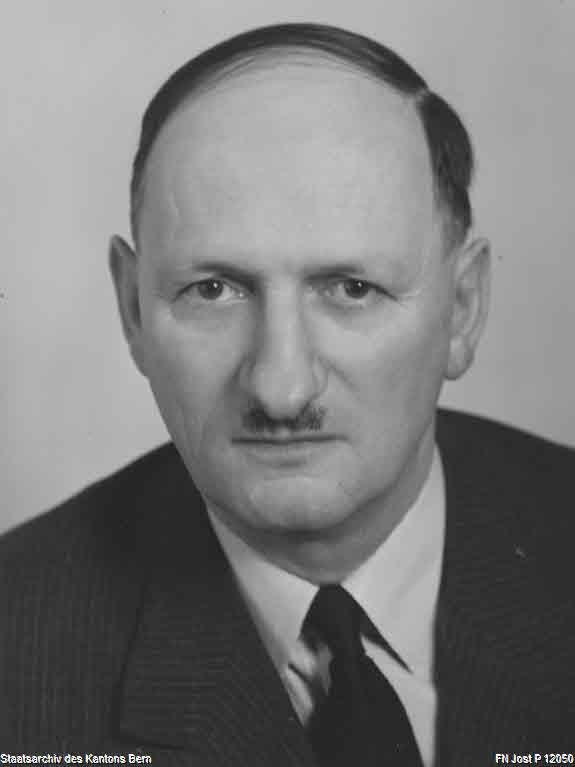
The heads rolled next. The commander of the air force, Divisionnaire Etienne Primault, was suspended for the rest of 1964 and relieved of his post from 1 January 1965. The chief of the general staff, Jakob Annasohn, offered his resignation and left at the end of 1964.
Defence minister Paul Chaudet clung on for two more years despite calls for his resignation. On 28 November 1966 he announced his departure, after leading members of his own Radical Party made clear they would not support him for the vice-presidency of the Federal Council.
RTS Archives tells the story of the 1964 Mirage affair and the fall of Federal Councillor Paul Chaudet (in French).
A scandal that became a success
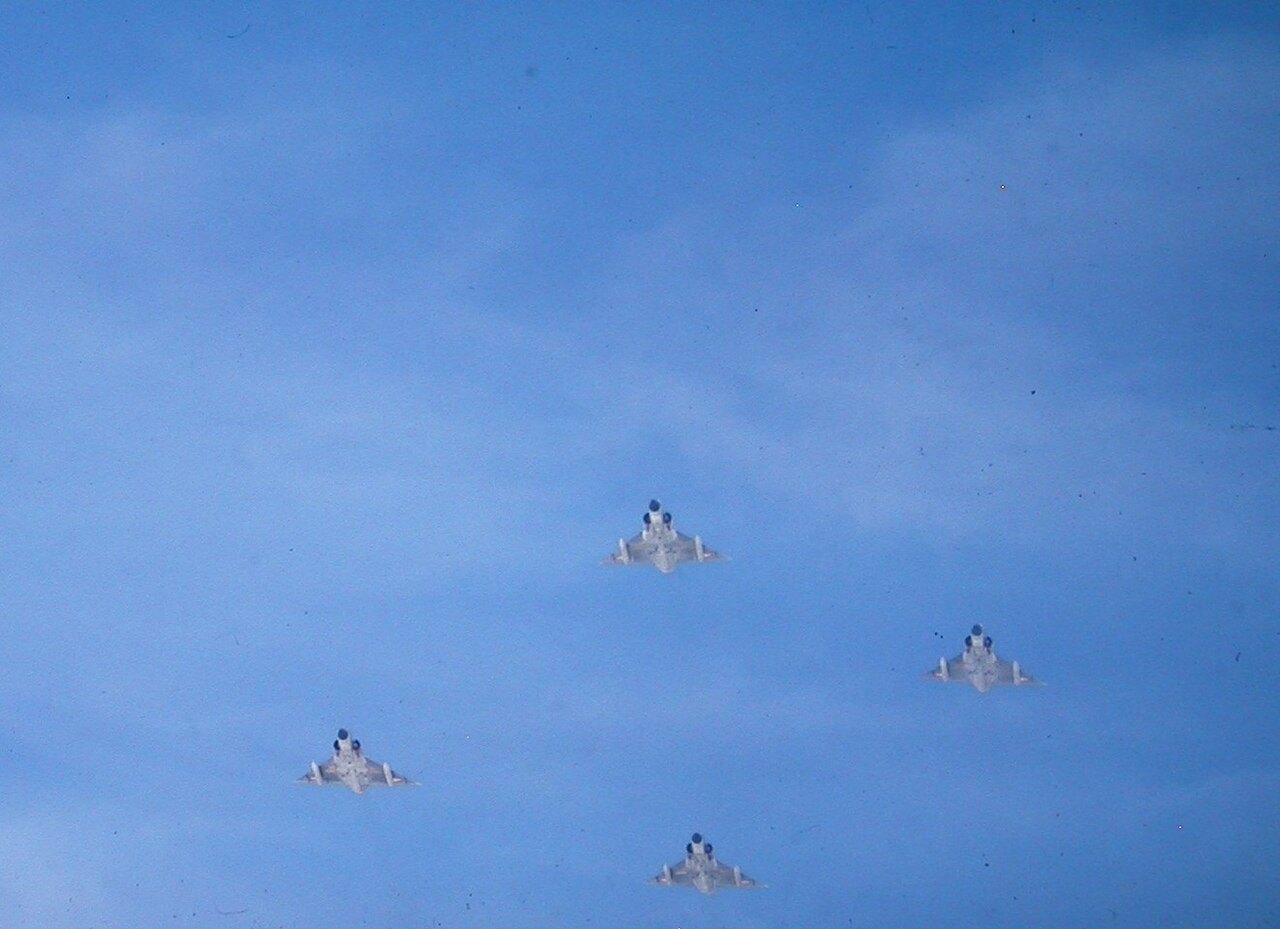
The irony is that the Swiss Mirages turned out well. Licence-built by F+W Emmen, the first production jets reached the squadrons in the second half of the 1960s. Fliegerstaffel 17 was the first unit to convert, and the last of the 57 aircraft was delivered in 1970.
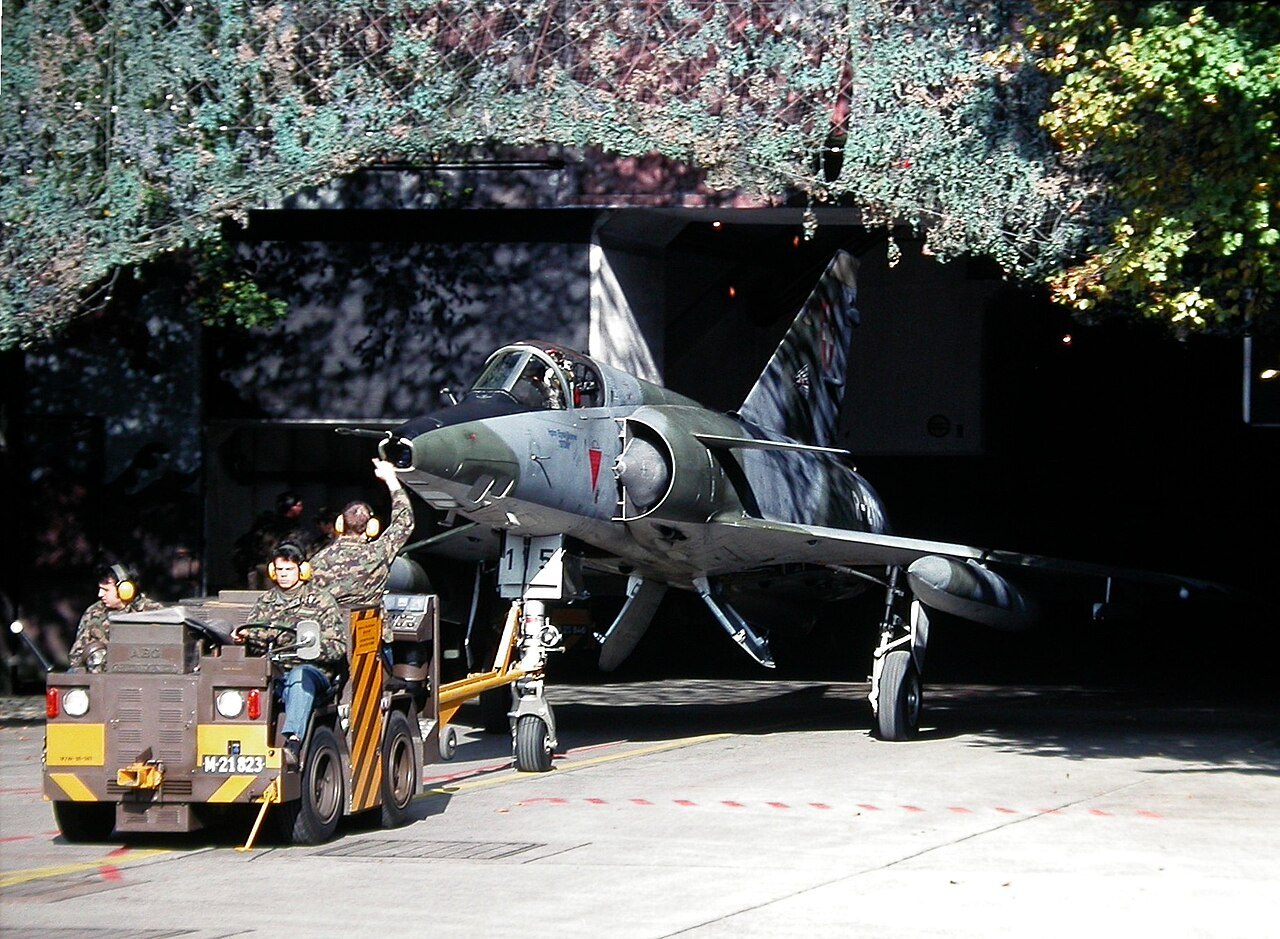
Switzerland kept upgrading them. From 1988 the Mirages were fitted with canards on the air intakes that sharpened their handling. The IIIS interceptors were retired in 1999, and the reconnaissance Mirages flew on until 2003. The last Swiss Air Force Mirage flight took place on 17 December 2003, exactly 100 years after the Wright brothers first flew.
A 1970 Swiss television report from SRF Archiv on a fighter pilot training for a high-altitude Mirage mission (in German).
The long shadow of 1964
The affair rewrote the rules. Parliamentary oversight was strengthened, including the creation of a documentation service for the Federal Assembly, and the Military Department was given the organisation and expertise to prepare such projects properly. The smaller fleet also forced the army to rethink the defence concept of 1961.
Sixty years on, the echo is hard to miss. In 2026 a Swiss parliamentary oversight committee reported that no blanket fixed price had ever been agreed for the F-35, and parliament was again asked for more money for a fighter it had already approved. Every Swiss fighter debate since 1964 has been fought in the shadow of the Mirage.
Sources: Federal Gazette (Bundesblatt, report of the Mirage inquiry commissions, 1 September 1964), Historical Dictionary of Switzerland (Paolo Urio, Mirage affair), Mirage-Verein Buochs, Swiss Federal Council, RTS Archives, SRF Archiv
0 Comments