
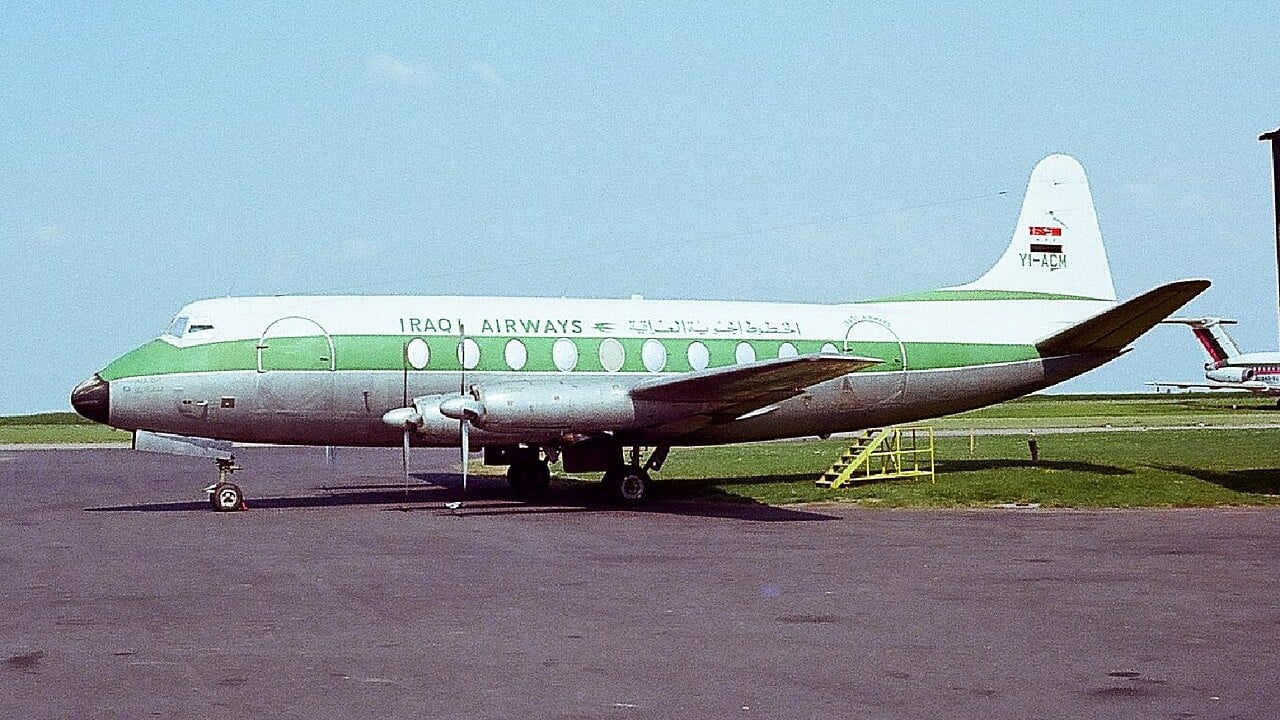
On 29 July 1950, fourteen paying passengers boarded an aircraft at RAF Northolt, west of London, and flew to Paris Le Bourget. Nothing about the trip was unusual except the engines. It was the first scheduled airline flight by any turbine-powered aircraft, and the aircraft was the prototype Vickers Viscount.
Within a few years the Viscount had done something rarer than making history: it made money. Smooth, quiet and fitted with enormous windows, it became one of the most successful airliners Britain ever built, sold to more than 60 operators in some 40 countries, including two big customers in North America. This is the story of the turboprop that sold air travel to a generation.
Kurzinfo
- Typ: Four-engined medium-range turboprop airliner
- Hersteller: Vickers-Armstrongs
- Erster Flug: 16 July 1948, prototype G-AHRF, Wisley
- First scheduled turbine flight: 29 July 1950, Northolt to Paris Le Bourget
- In Betrieb genommen: 18 April 1953 with British European Airways
- Motoren: Four Rolls-Royce Dart turboprops
- Gebaut: 445, from 1948 to 1963
A turboprop the committee did not want
The Viscount began with the wartime Brabazon Committee, which in 1943 sketched out the airliners Britain would need after the war. Its Type II was a small, pressurised, medium-range aircraft. Vickers argued for turboprop power; the committee was not convinced and split the requirement in two. A piston-engined Type IIA became the Airspeed Ambassador, while Vickers won the turboprop Type IIB in April 1945.
The design was originally named Viceroy, after Lord Louis Mountbatten, the Viceroy of India, and was renamed Viscount after Indian independence in 1947. Its engines were the Rolls-Royce Dart, favoured by Vickers' George Edwards, who took over as chief designer after Rex Pierson died in 1948. The first prototype, G-AHRF, flew from the grass airfield at Wisley on 16 July 1948 with Vickers' chief test pilot Joseph "Mutt" Summers at the controls.
A tour inside a surviving Vickers Viscount, the world's first turboprop airliner.
At first it looked like a commercial dead end. The 32-seat prototype was judged too small and too slow to pay its way, and British European Airways ordered piston-engined Ambassadors instead. But flight trials showed what a turboprop could do, and in 1949 the government ordered a stretched, more powerful version. The Type 700 prototype, G-AMAV, flew on 28 August 1950, and BEA ordered 20 aircraft that same month.
Smooth, quiet and full of light
Passengers in the early 1950s were used to piston airliners that shook, droned and smelled of exhaust. The Viscount's Darts turned smoothly with far less vibration, and its pressurised cabin let it cruise above much of the weather. Its windows were huge ellipses, about 19 by 26 inches, a shape chosen because it needed the least structural reinforcement in a pressurised fuselage.
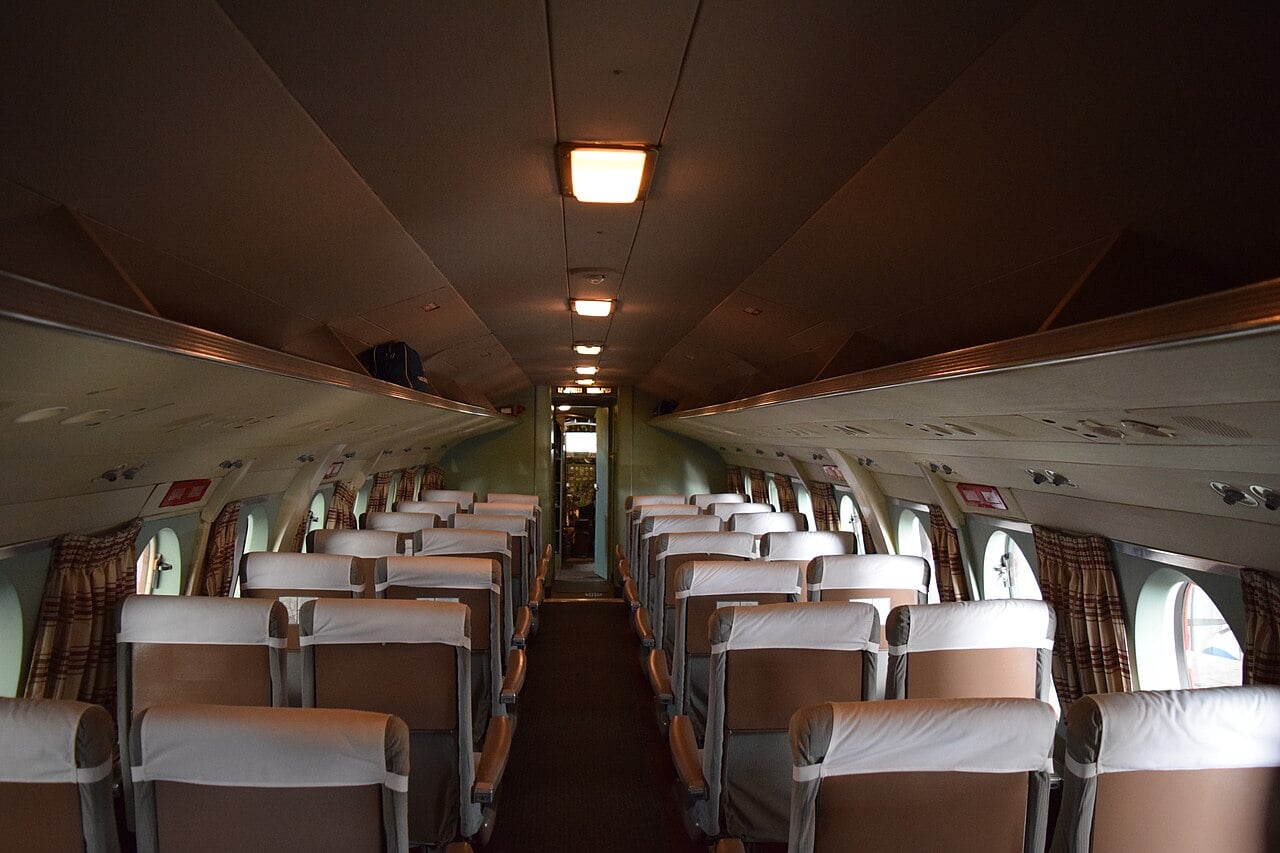
BEA put the Viscount into regular service on 18 April 1953, and orders followed from Air France, Aer Lingus and Trans Australia Airlines. Trans-Canada Air Lines ordered 15. Then came Capital Airlines in the United States with an order for 60, Britain's largest export order of its day. According to BAE Systems, 147 Viscounts were exported to North America, an unusual feat for a British airliner.
Vickers kept stretching the design. The Type 800 lengthened the fuselage for up to 65 passengers, and the more powerful Type 810 sold to airlines from All Nippon Airways to Lufthansa and Pakistan International. A second production line opened at Hurn, near Bournemouth. By the time production ended in 1963, 445 had been built.
Golden Age Travel on how the 1953 Viscount changed air travel.
A long goodbye
Jets eventually replaced the Viscount on the busiest routes, but the type kept flying for decades with smaller operators. The last Viscount passenger service in Britain was flown by Southend-based British Air Ferries in April 1996, and the last Viscounts in service anywhere were retired in 2009, more than 60 years after the first flight.
Its legacy runs further. The Viscount proved that turbine engines could make money for airlines, and the Rolls-Royce Dart went on to power the Fokker F27, the Hawker Siddeley 748 and many other turboprops. Every regional turboprop flying today owes something to those fourteen passengers who flew to Paris in 1950.
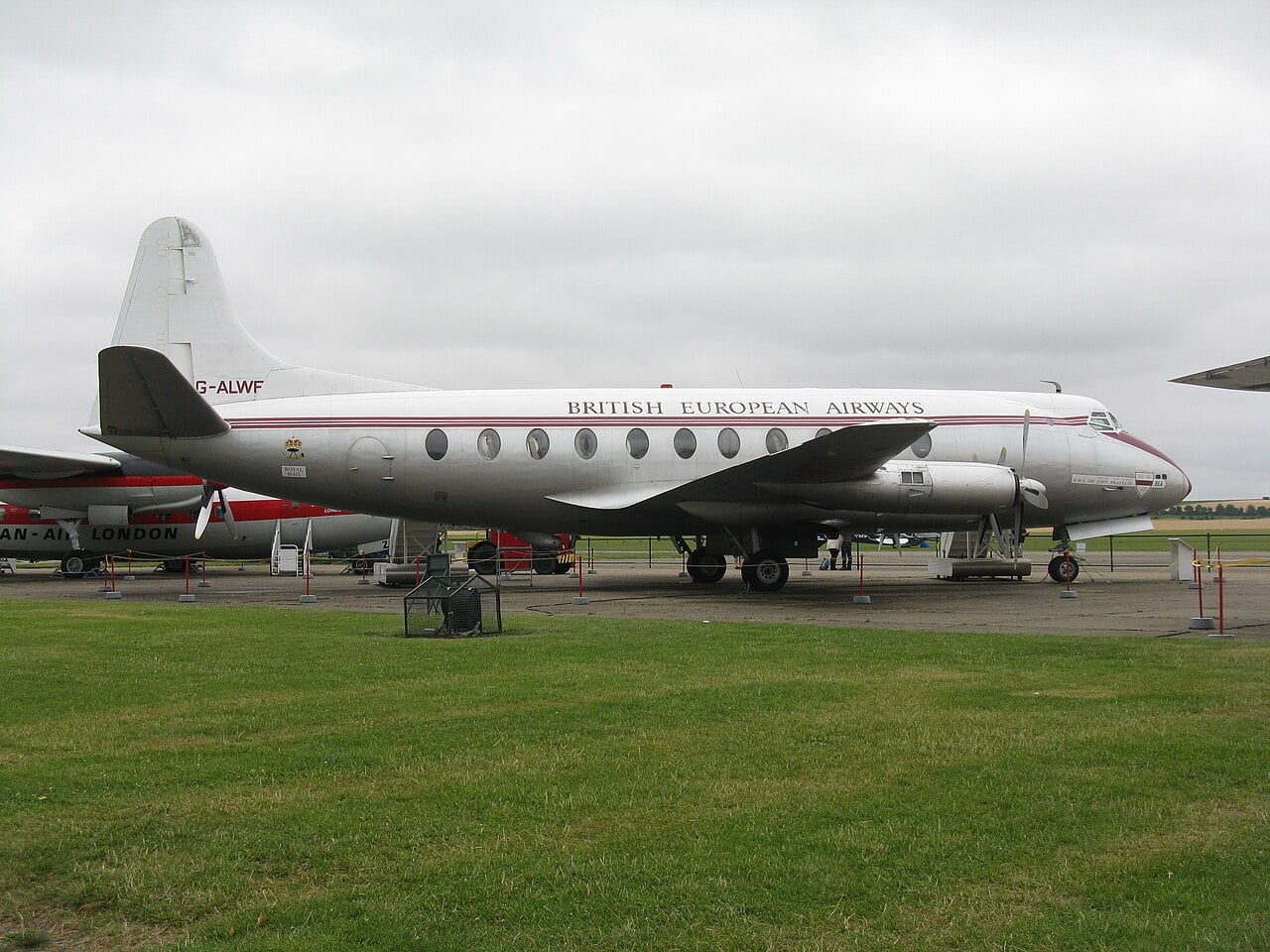
If you ever get the chance to sit beside one of those oval windows in a preserved Viscount, take it. It is the closest you can get to the moment air travel stopped shaking.
Several Viscounts survive in museums, among them the example at Duxford and G-APIM at Brooklands Museum in Surrey, close to where Vickers built the first Viscounts.
Flight Zone asks why nobody has built another airliner quite like the Viscount.
Sources: Wikipedia (Vickers Viscount), BAE Systems Heritage
0 Comments